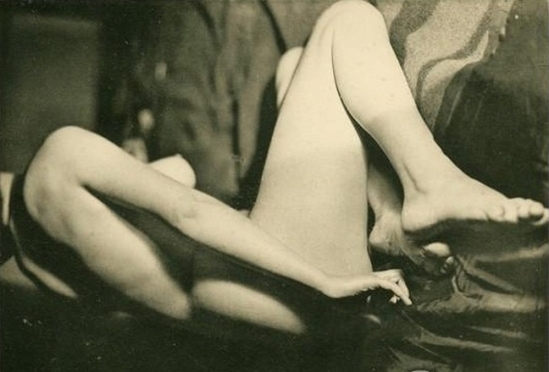
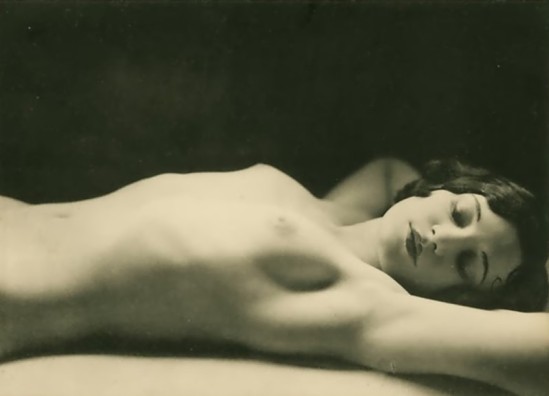
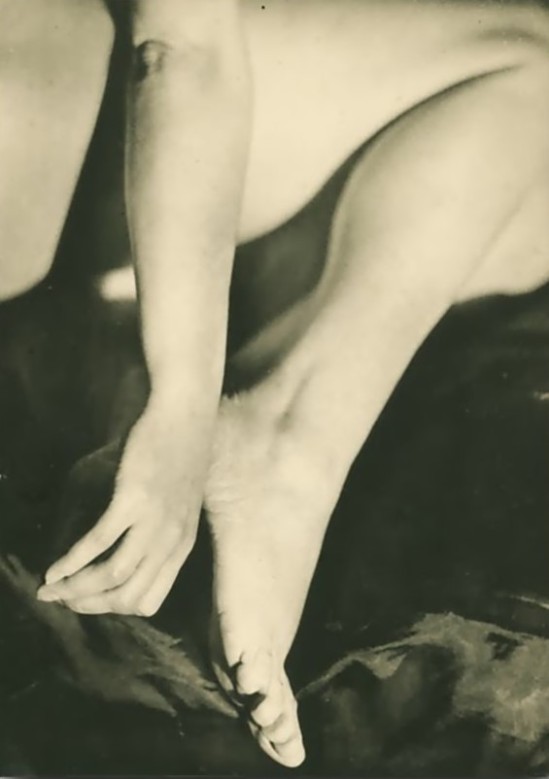
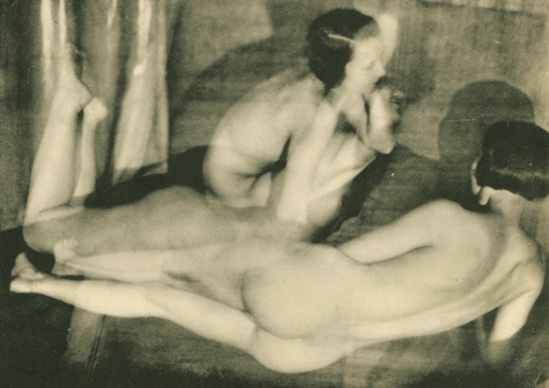
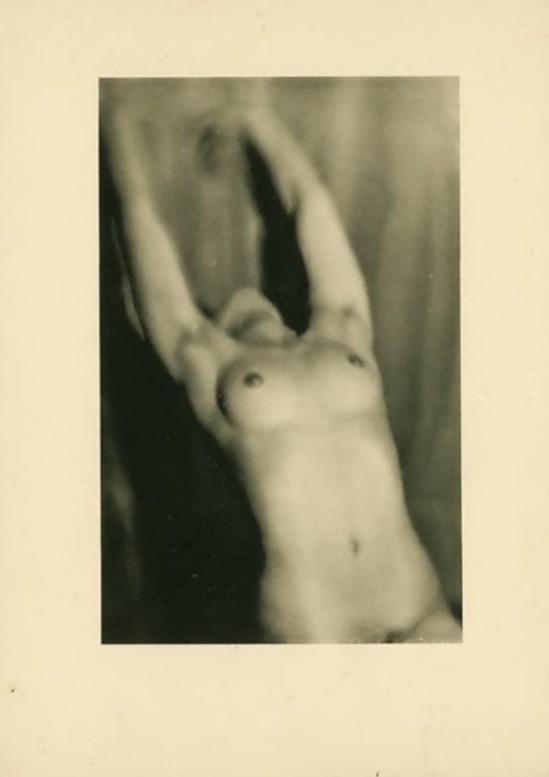
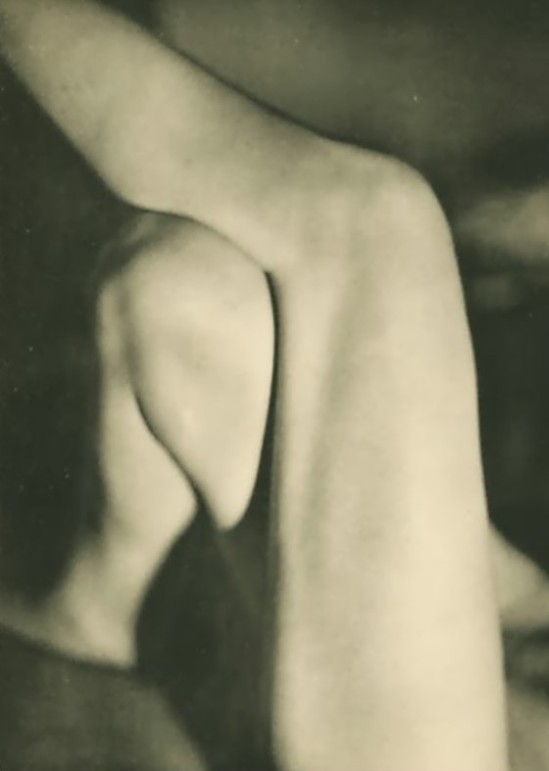
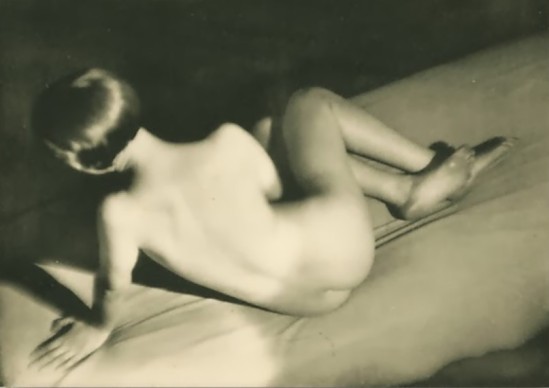
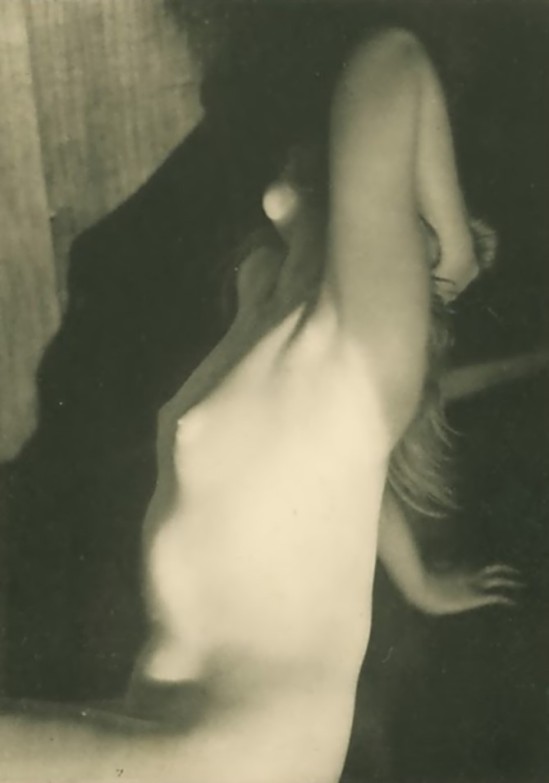
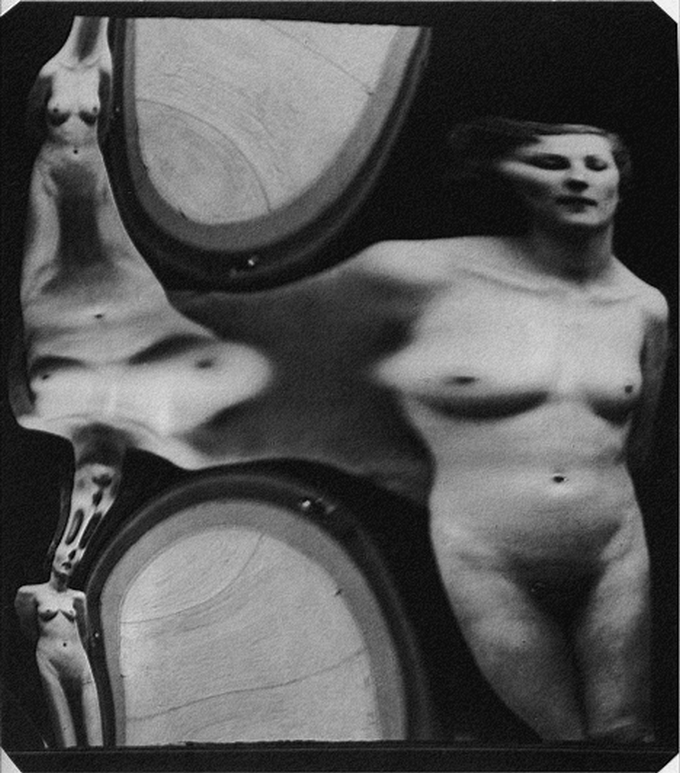
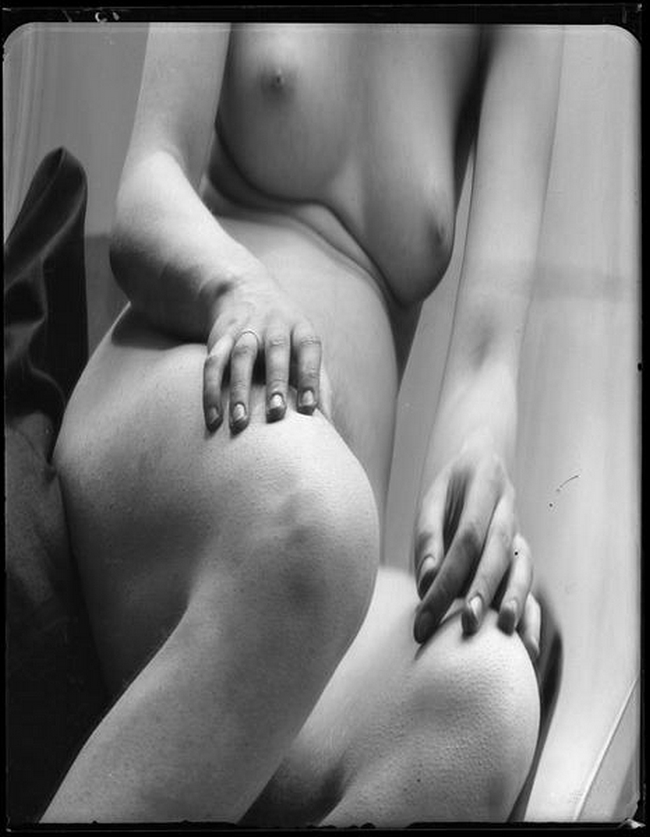
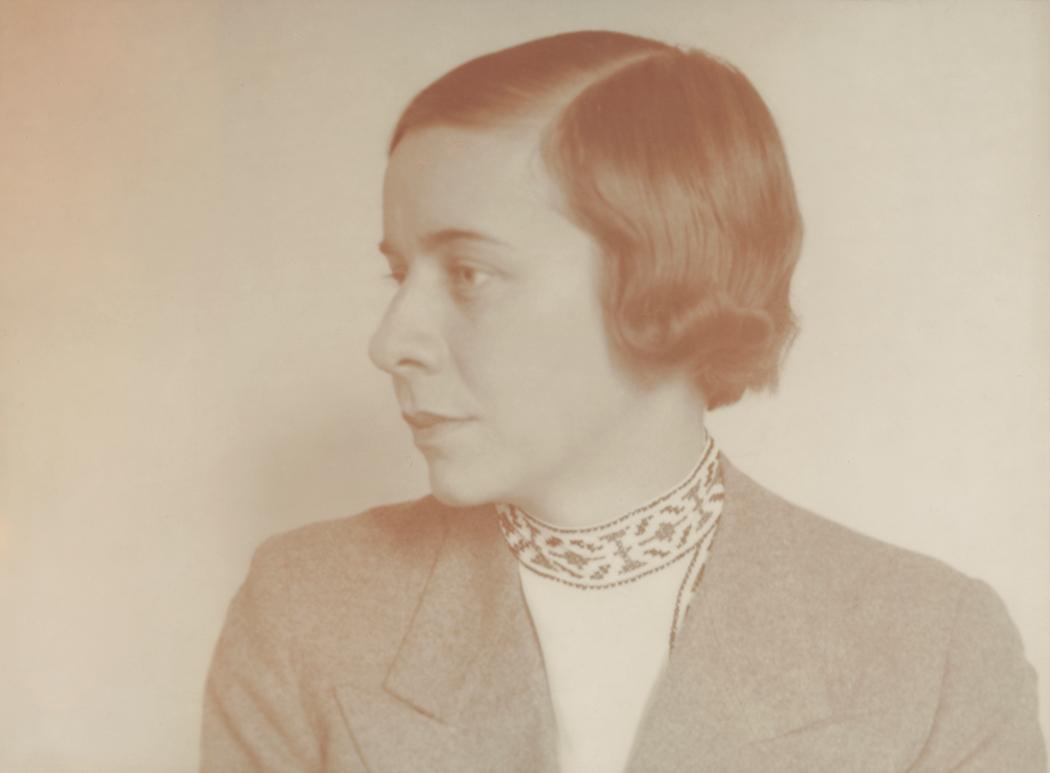
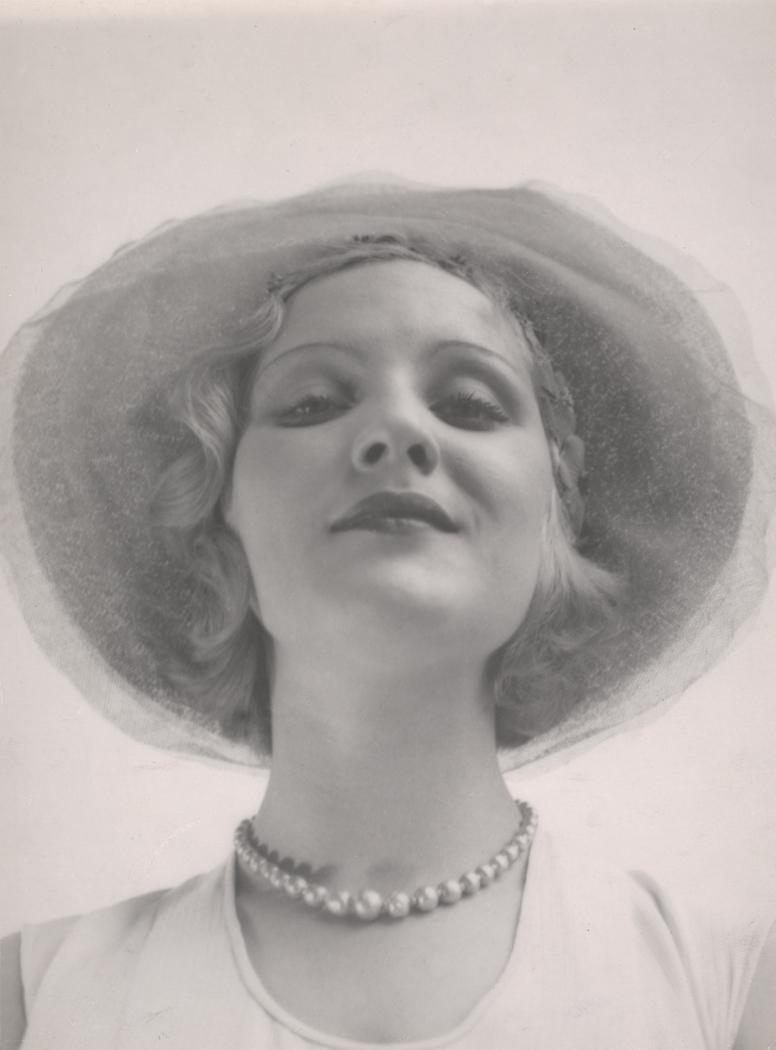
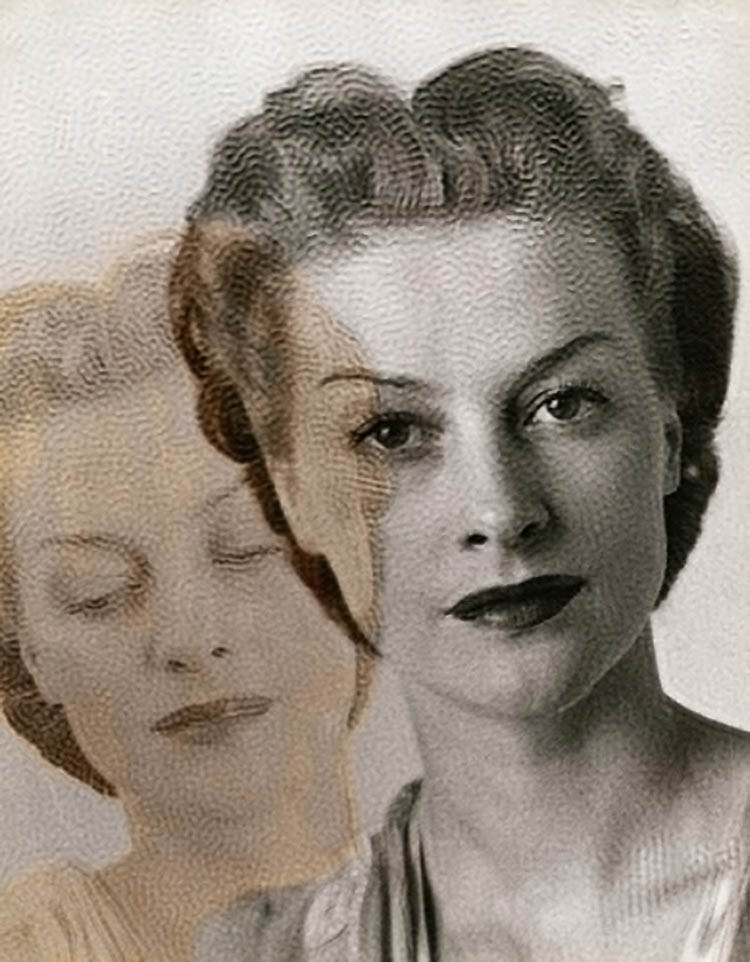
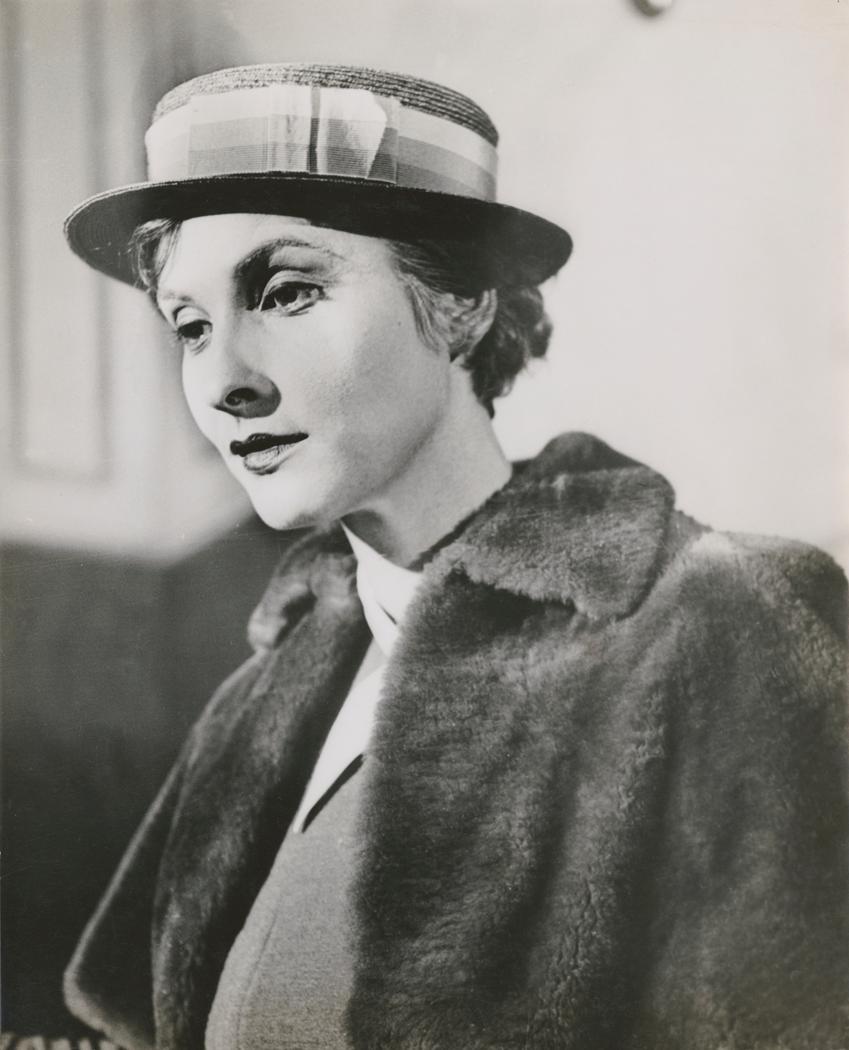
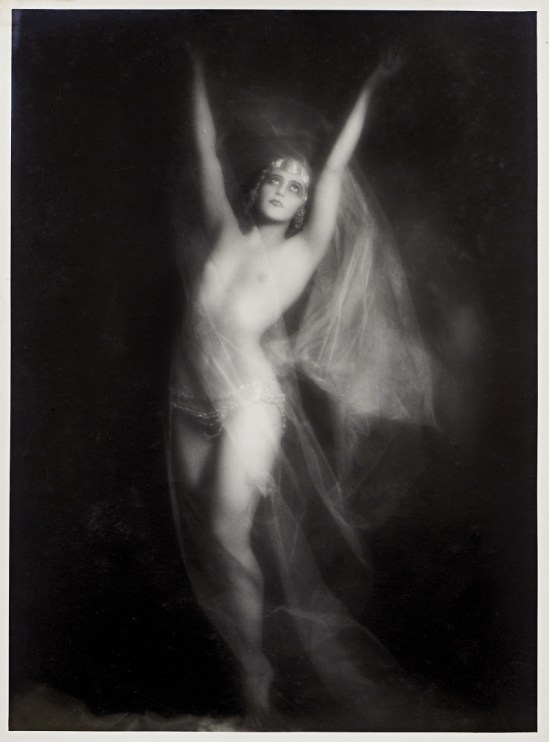
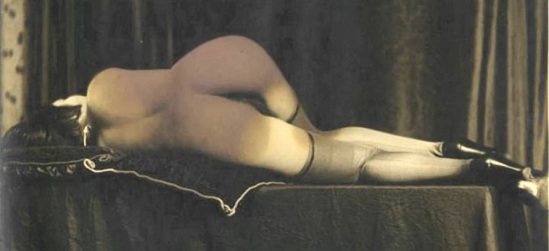
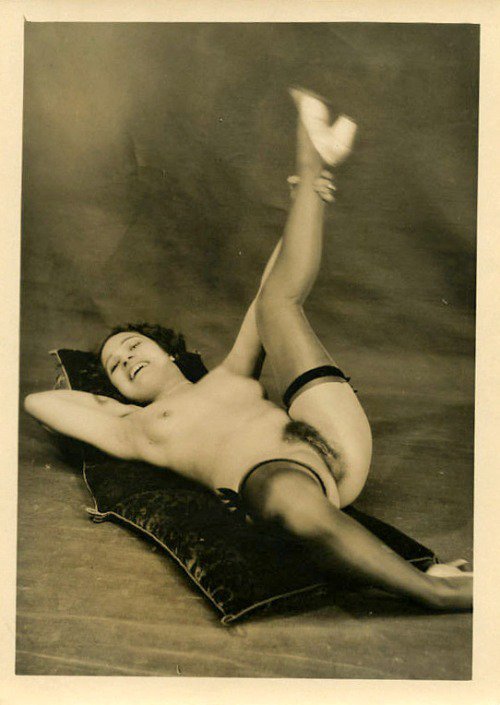
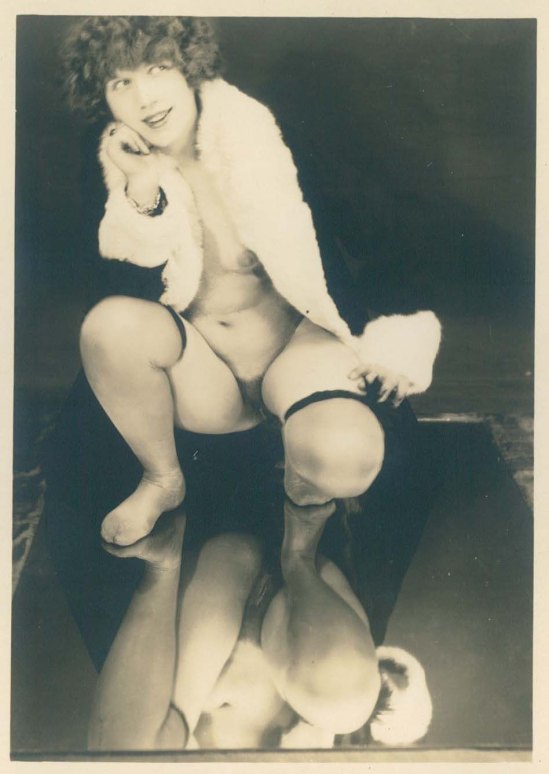
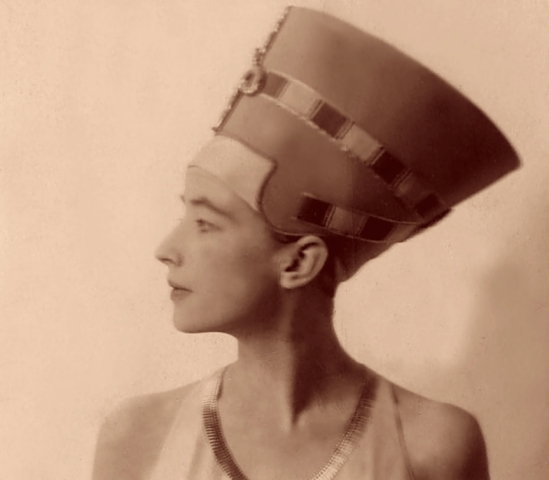
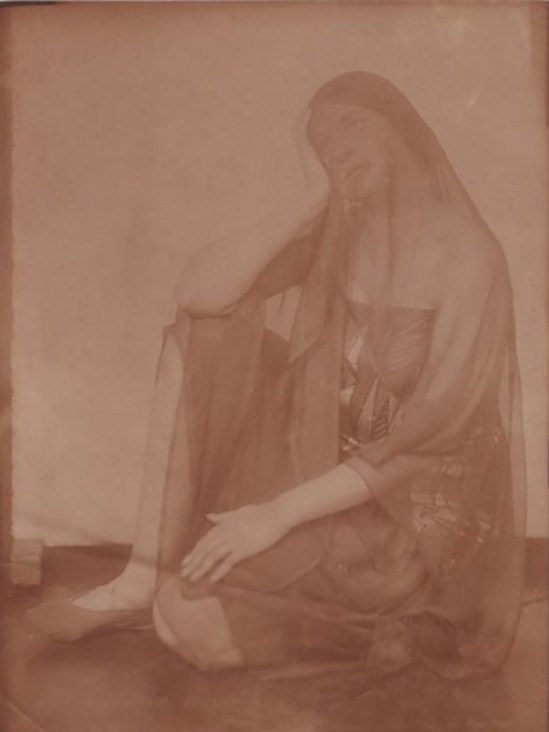
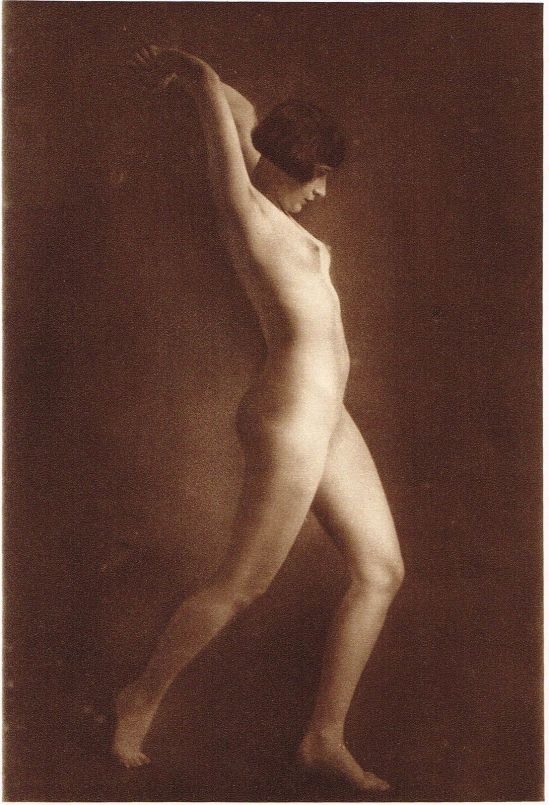
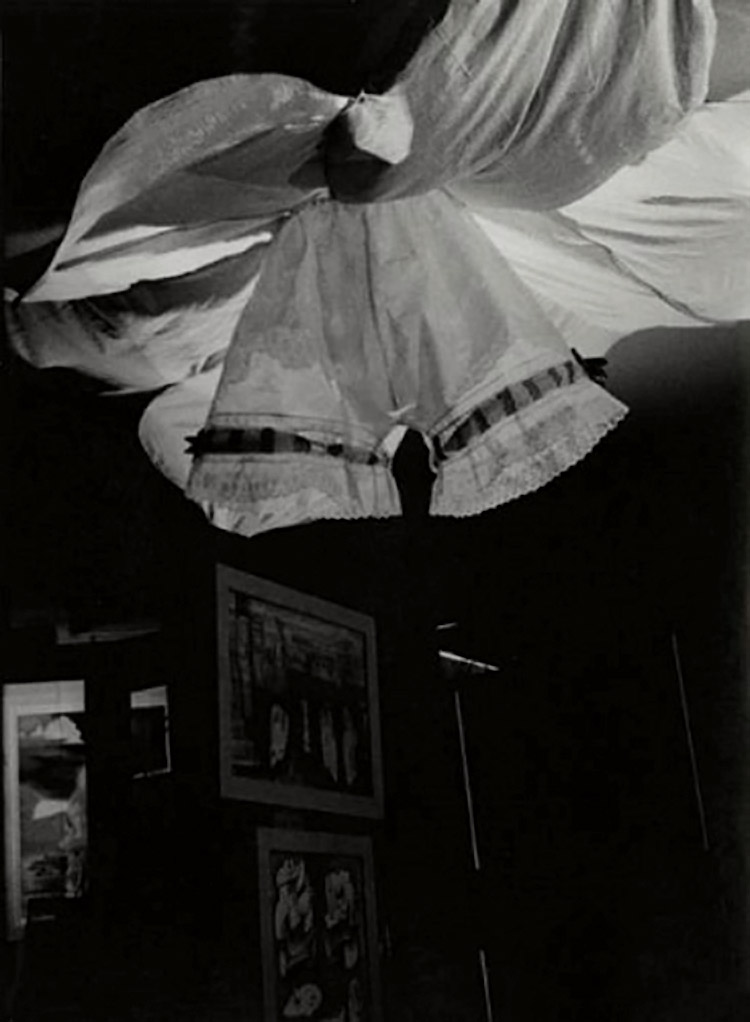
Studio Manassé


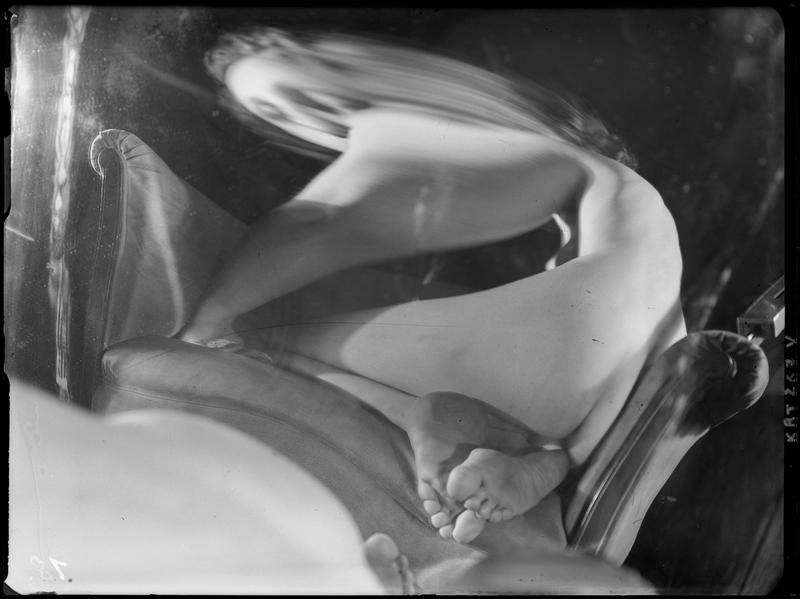
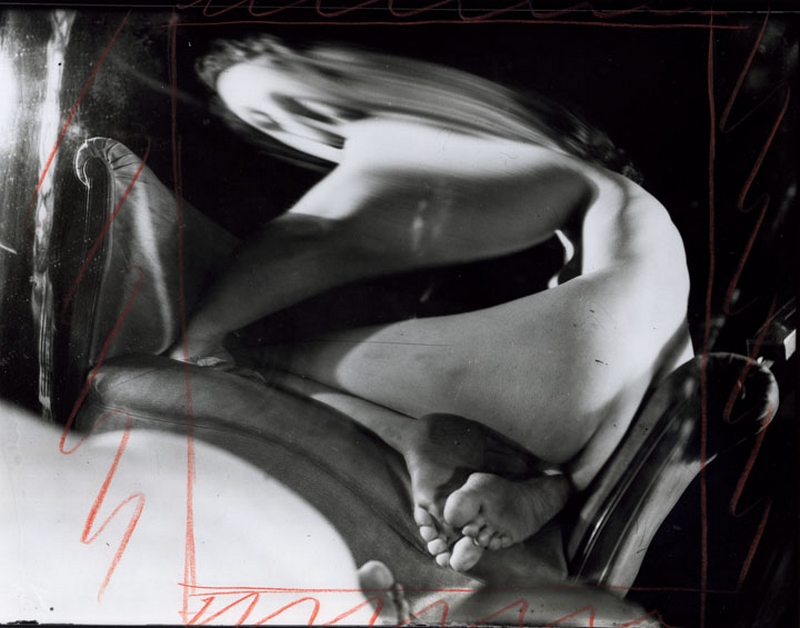
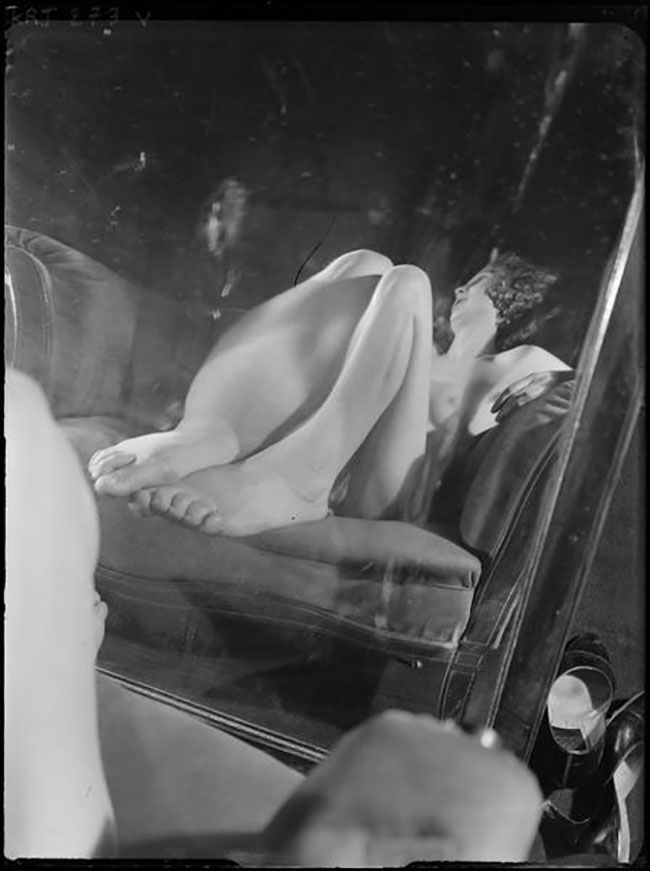
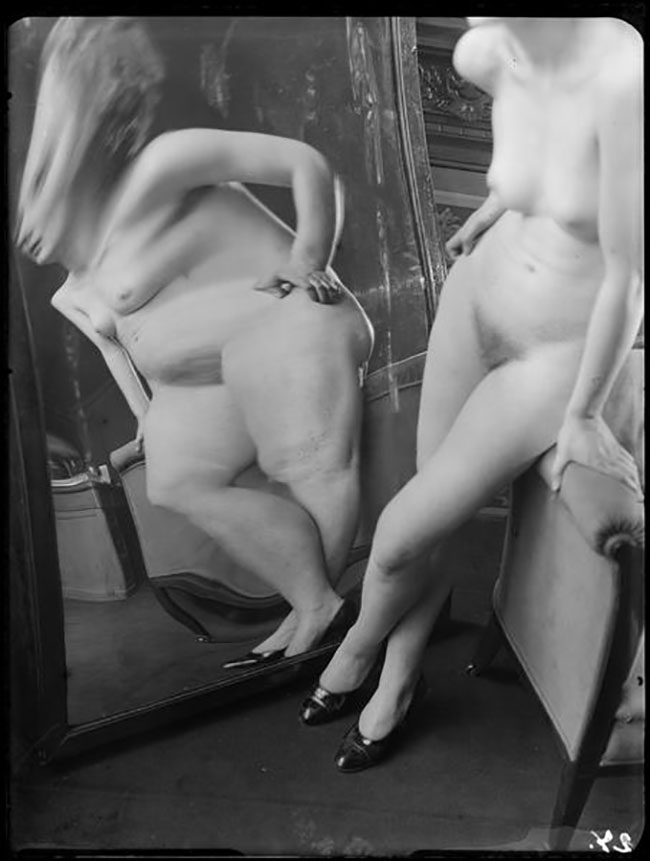
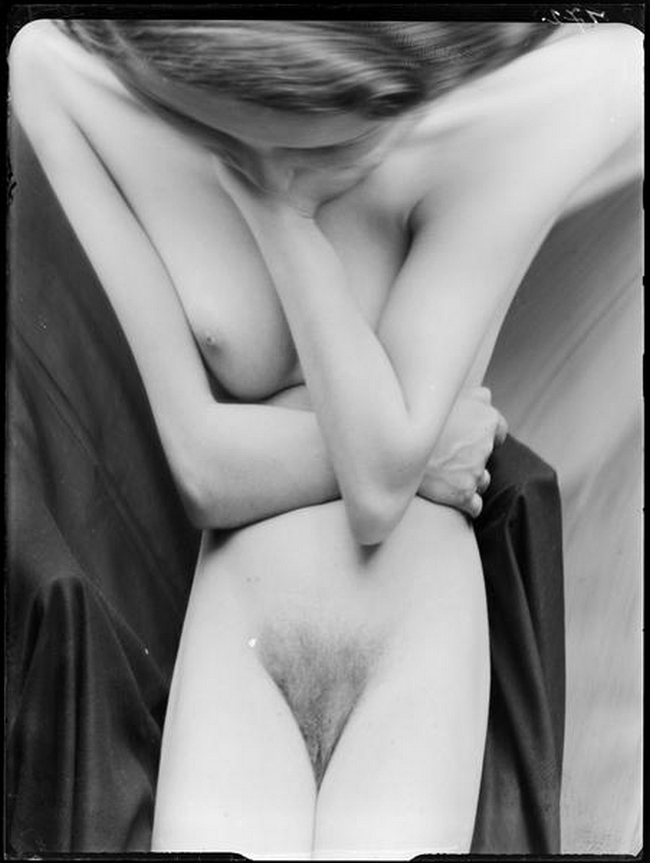
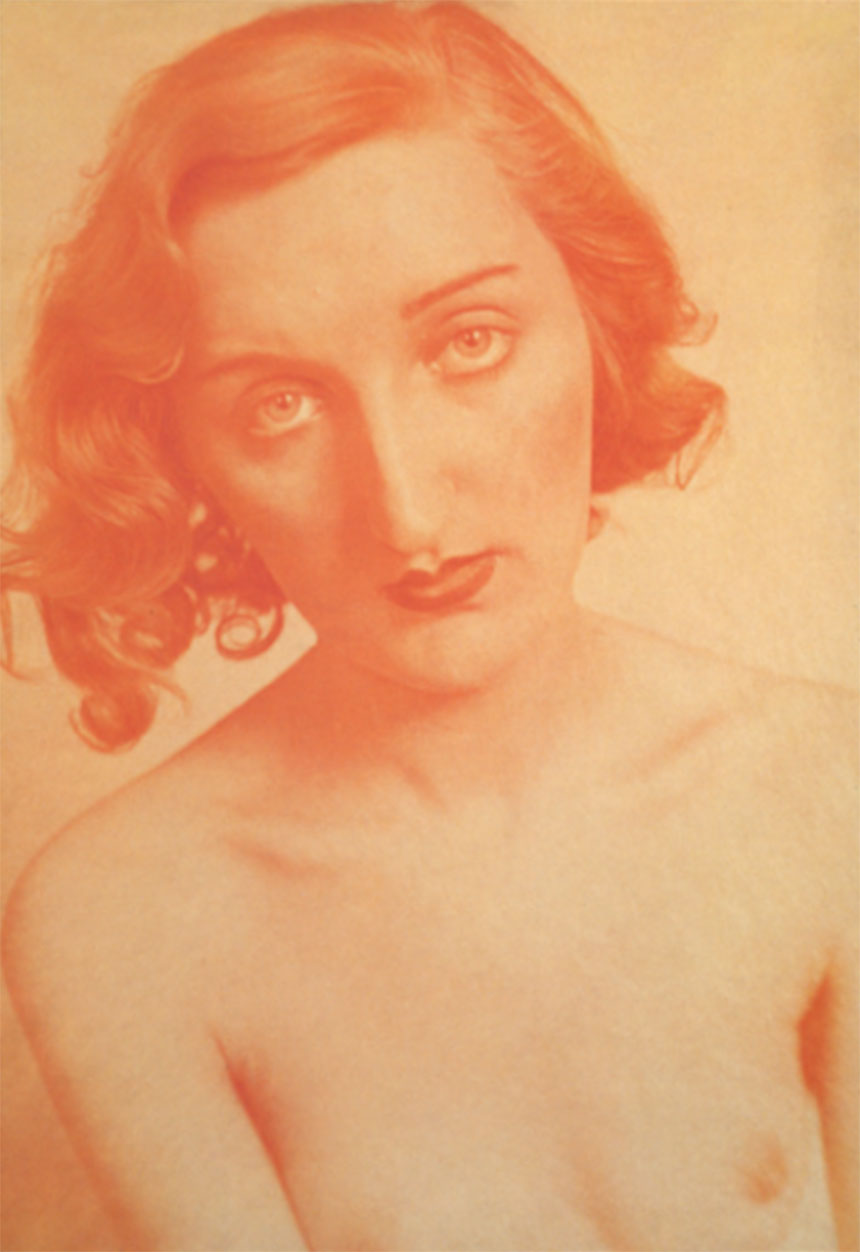
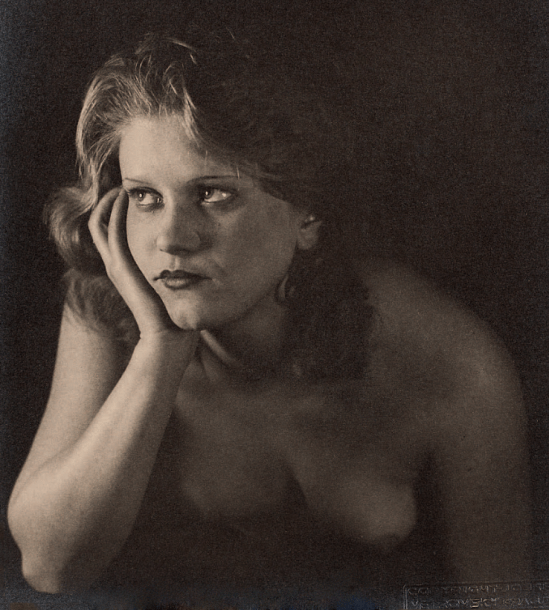
Studio Manassé - Nude with spider’s web , 1930

Studio Manassé – Nude with spider’s web , 1930


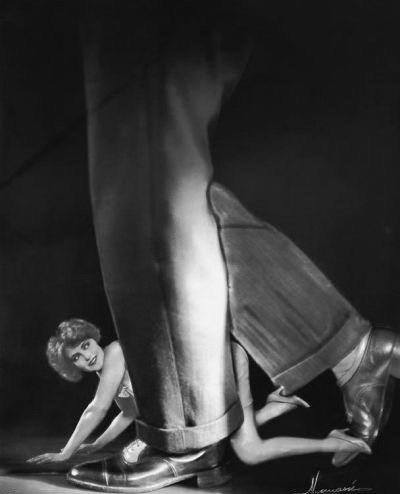
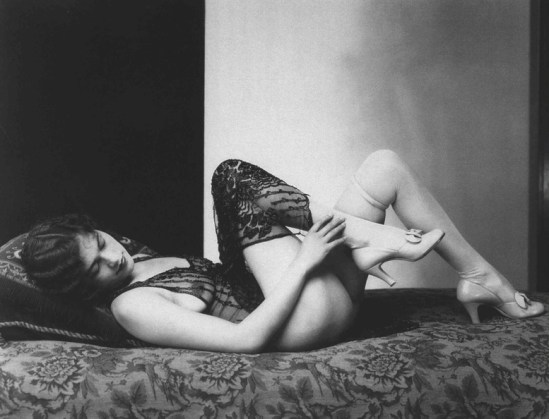
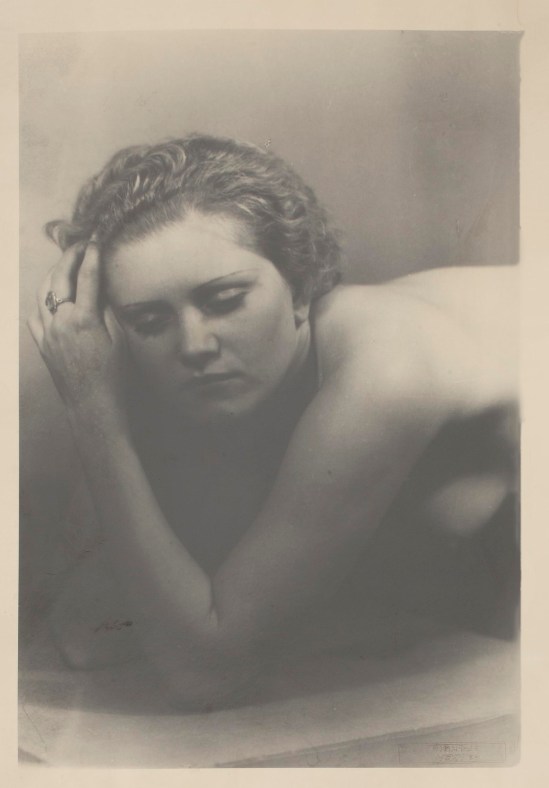
Studio Manassé -Fräulein Reporterin, 1930’s

Studio Manassé -Fräulein Reporterin, 1930’s


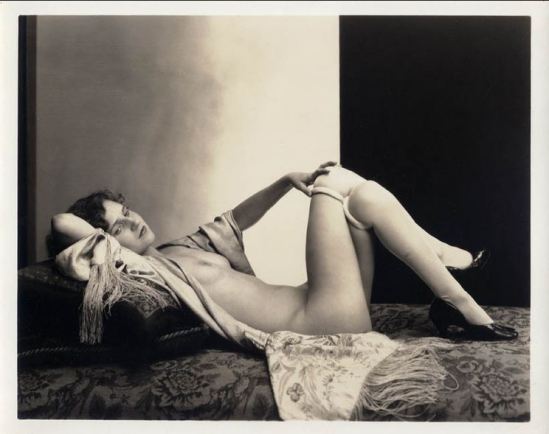
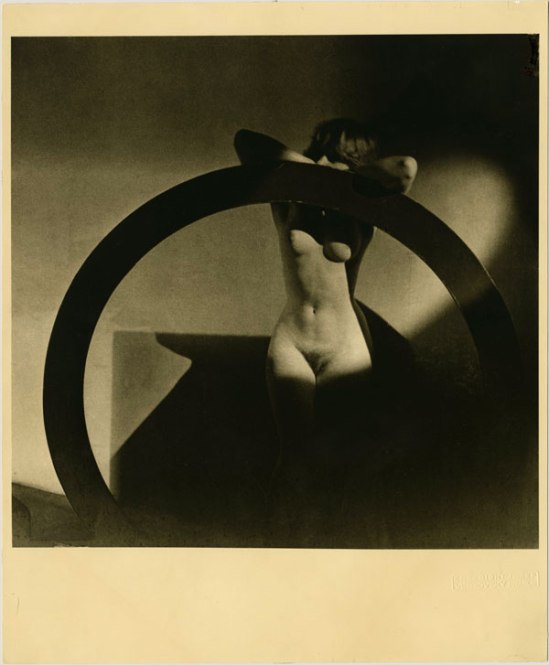
Atelier Manassé, The dancer Bea Egervári, Vienna c. 1928

Atelier Manassé, The dancer Bea Egervári, Vienna c. 1928

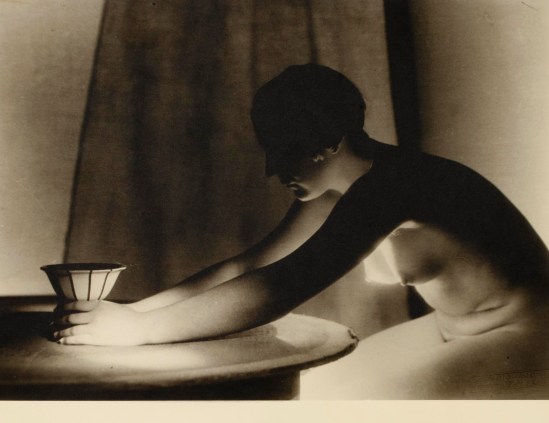
Studio Manassé -« Dans le Bain », 1933

Studio Manassé -« Dans le Bain », 1933

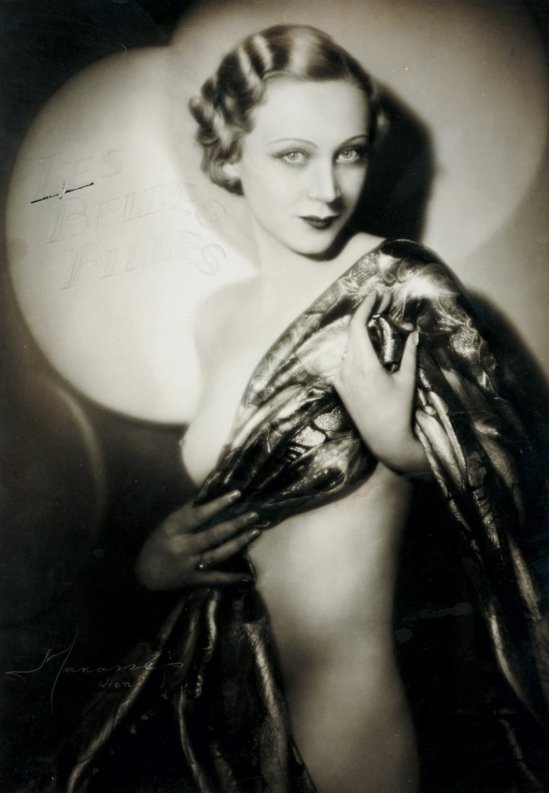
Atelier Manassé, Les Belles Filles, Vienna c. 1928

Atelier Manassé, Les Belles Filles, Vienna c. 1928

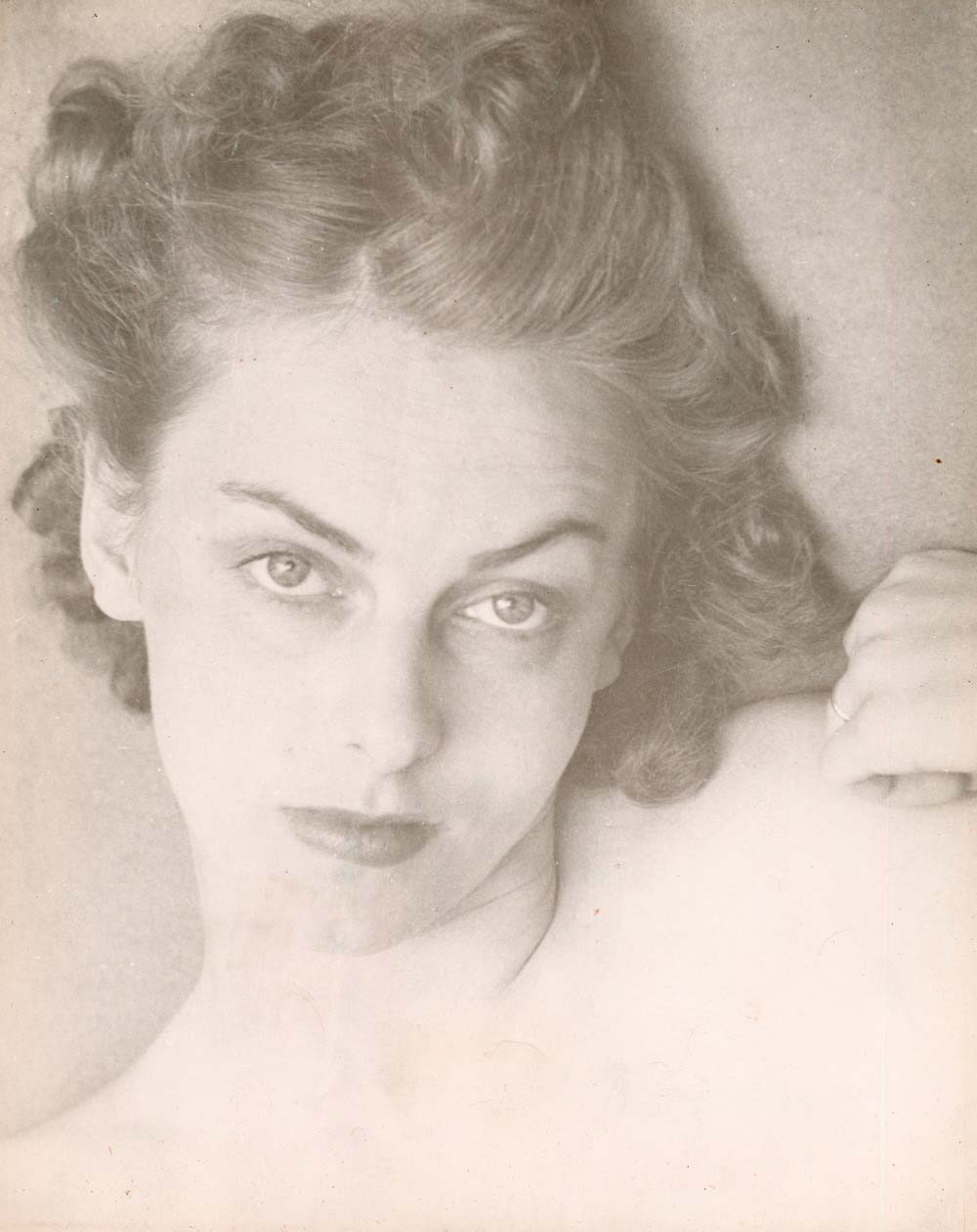
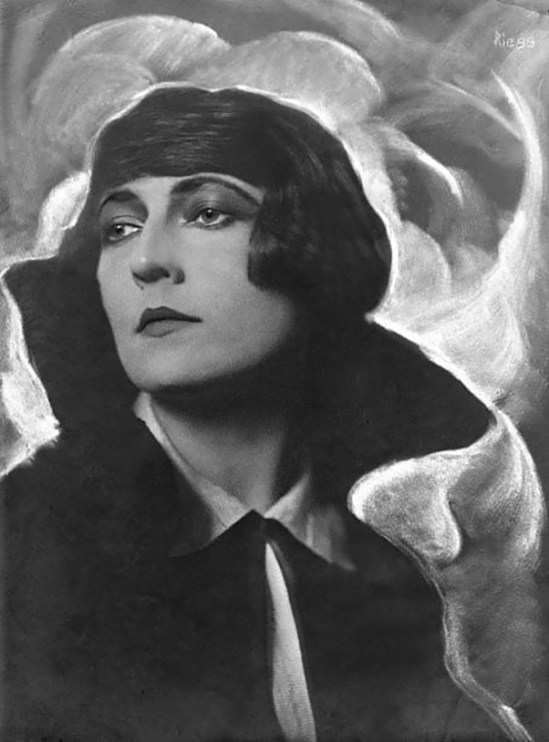
Atelier Manassé-portrait-Tala Birell , 1927

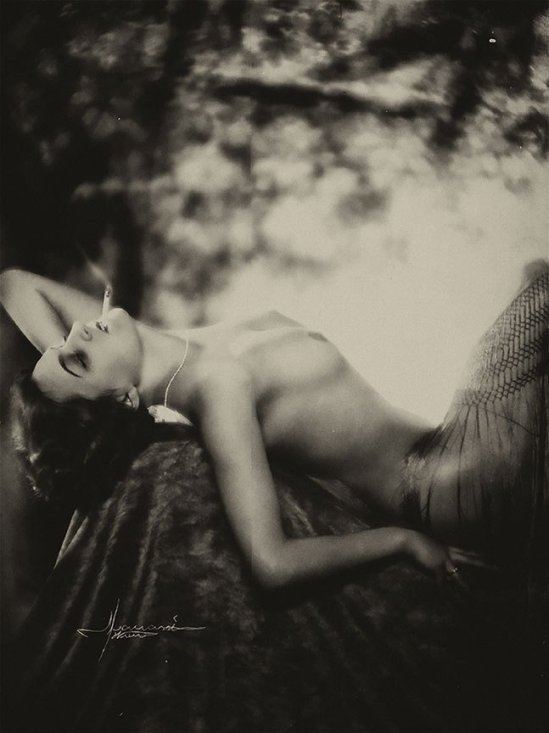
Atelier Manassé- Femme fumant, 1928

Atelier Manassé- Femme fumant, 1928

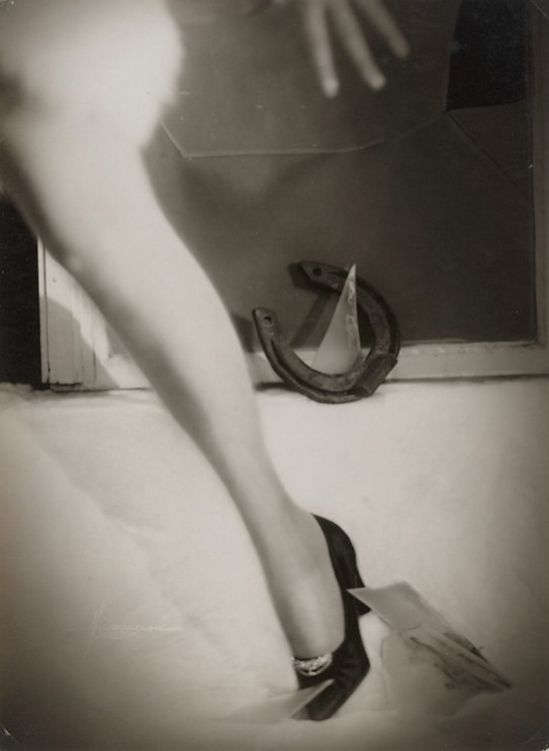
Atelier Manassé- Porte bonheur 1932

Atelier Manassé- Porte bonheur 1932

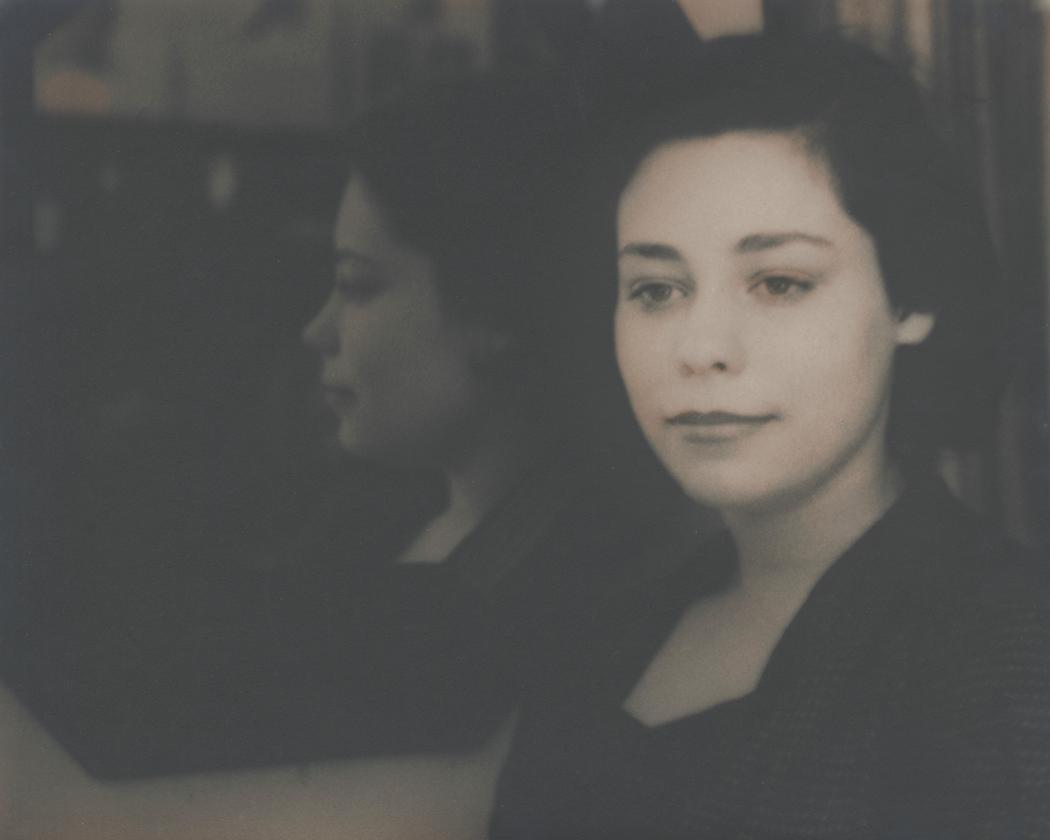
Studio Manassé- Untitled ,c.1932

Studio Manasse La Jana . 1930

Studio Manasse La Jana . 1930

Studio Manassé – Dagmar Helsing, Tanzerin, 1930

Studio Manassé – Dagmar Helsing, Tanzerin, 1930

Studio Manassé –Femme à la grappe c. 1928

Studio Manassé –Femme à la grappe c. 1928

Atelier Manassé- Rêve Doré,1926

Atelier Manassé- Rêve Doré,1926

Atelier Manassé- Studie / Study, Vienna c. 1935


Atelier Manassé- Darmora , 1927

Atelier Manassé- Darmora , 1927

Studio Manassé – Dagmar Helsing, Tanzerin, 1930

Studio Manassé – Dagmar Helsing, Tanzerin, 1930

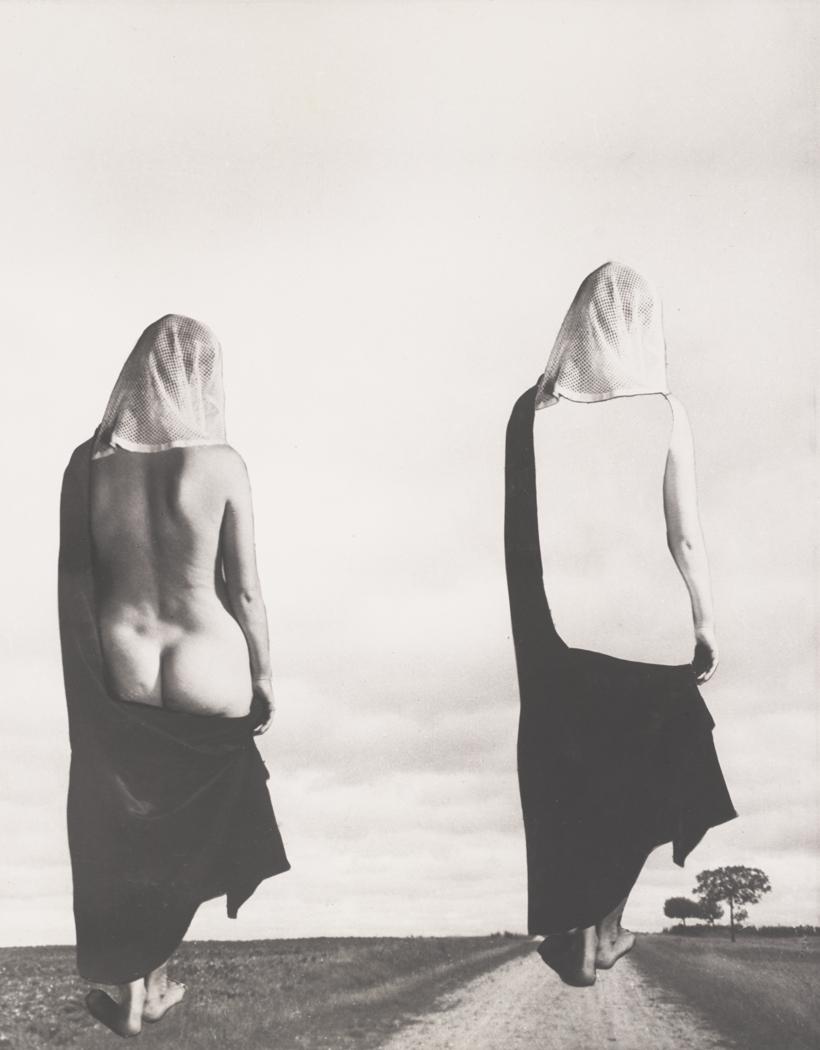
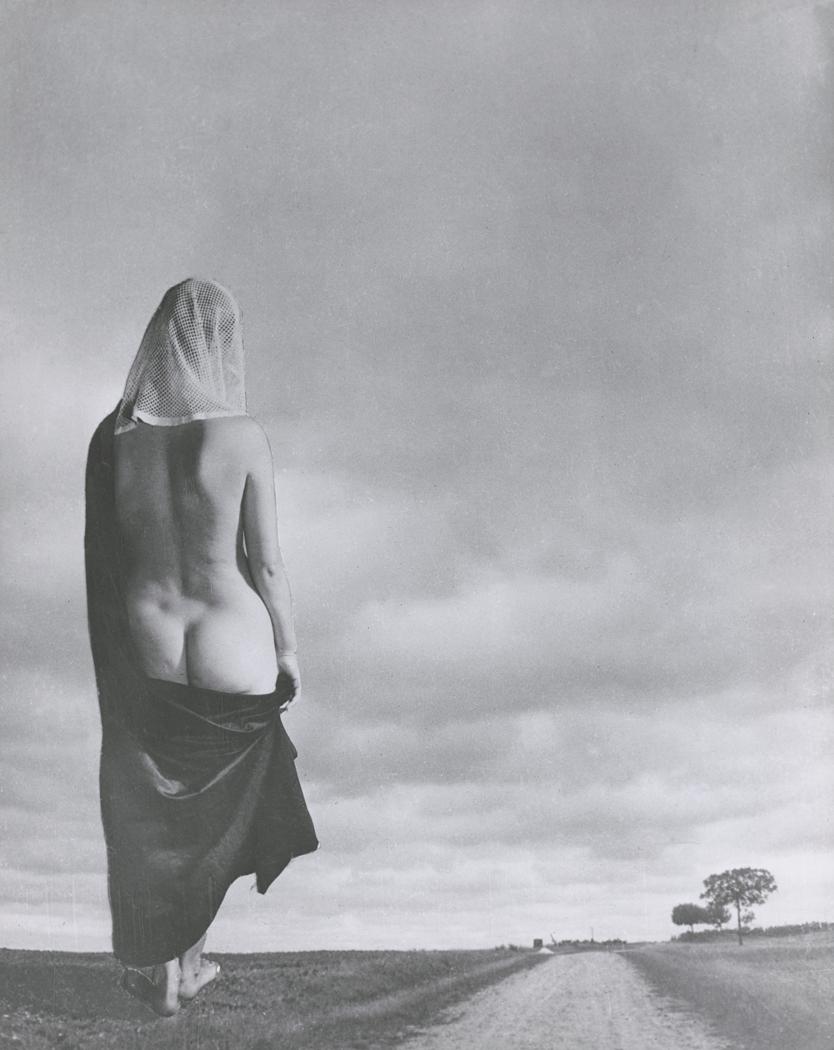
Atelier Manassé– Masked naked, 1931

Atelier Manassé– Masked naked, 1931

Studio Manassé –la valise, c.1930s

Studio Manassé –la valise, c.1930s

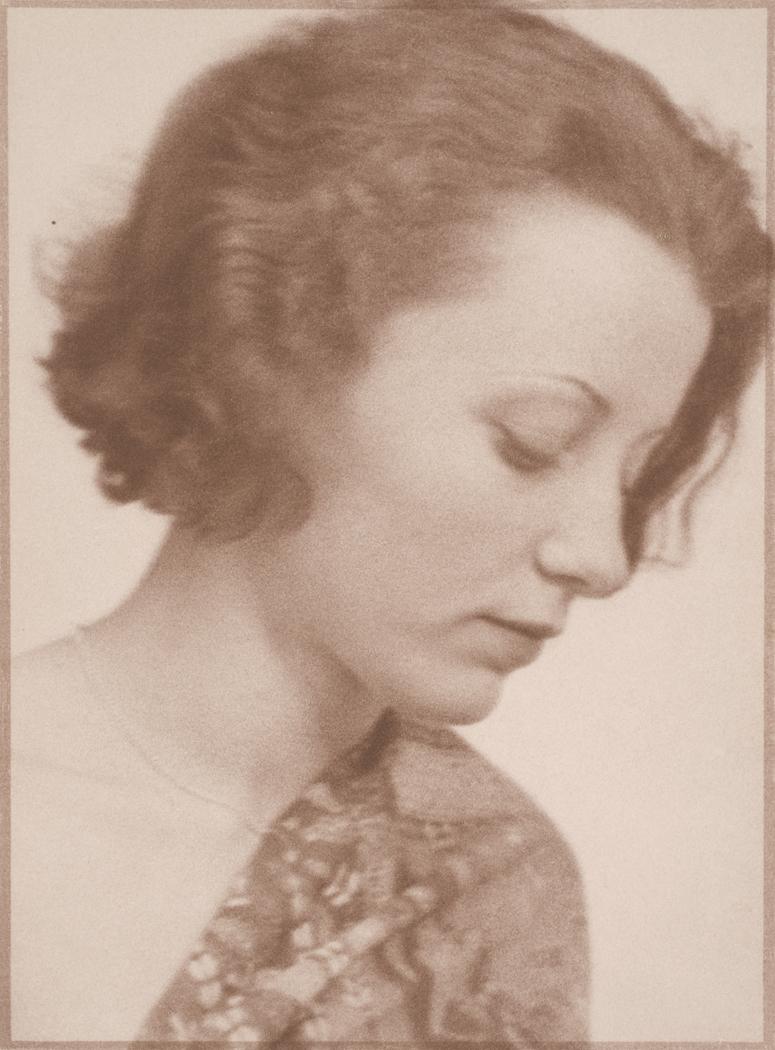
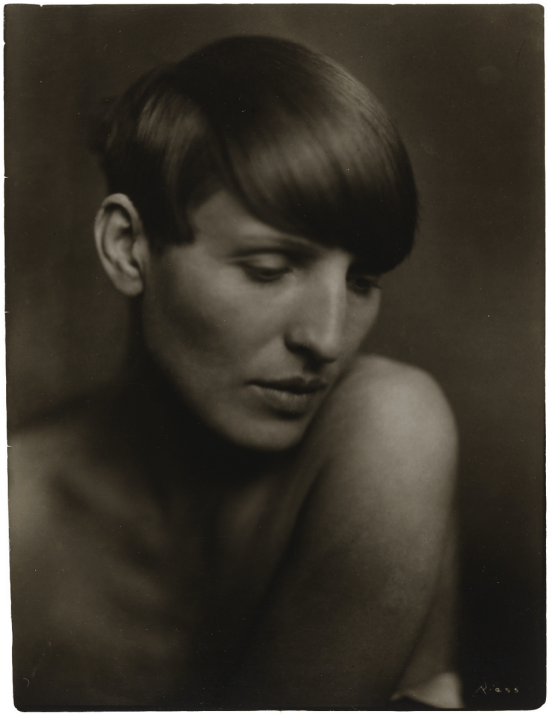
Atelier Manassé-Portrait de Grelt Berndt, 1930s

Atelier Manassé-Portrait de Grelt Berndt, 1930s


Studio Manassé- Ellentétes érzelmek, 1950

Studio Manassé- Ellentétes érzelmek, 1950

Atelier Manassé- Studie / Study, Vienna c. 1935

Atelier Manassé- Studie / Study, Vienna c. 1935


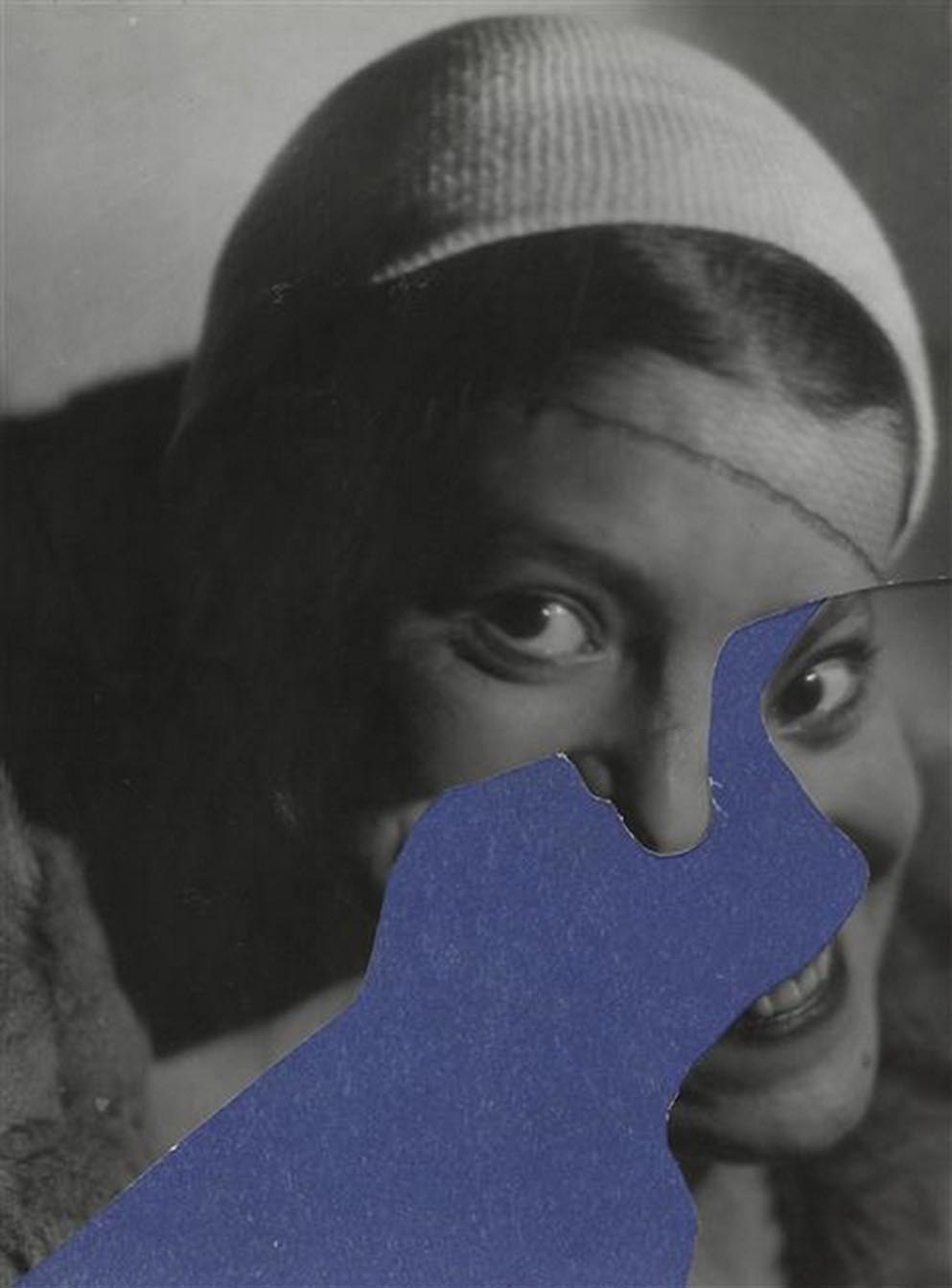
Studio Manassé -Portrait de femme, 1930. [Tirage argentique d’époque.]source verdeau

Studio Manassé -Portrait de femme, 1930. [Tirage argentique d’époque.]source verdeau

Atelier Manassé-Gry Doresku, 1928

Atelier Manassé-Griserie 1926.

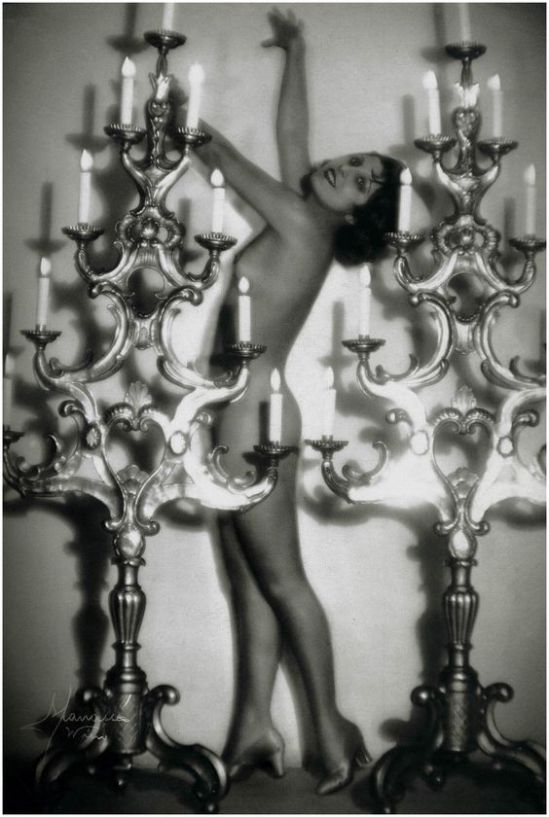
Atelier Manassé-portrait-Femme aux chandeliers, 1930

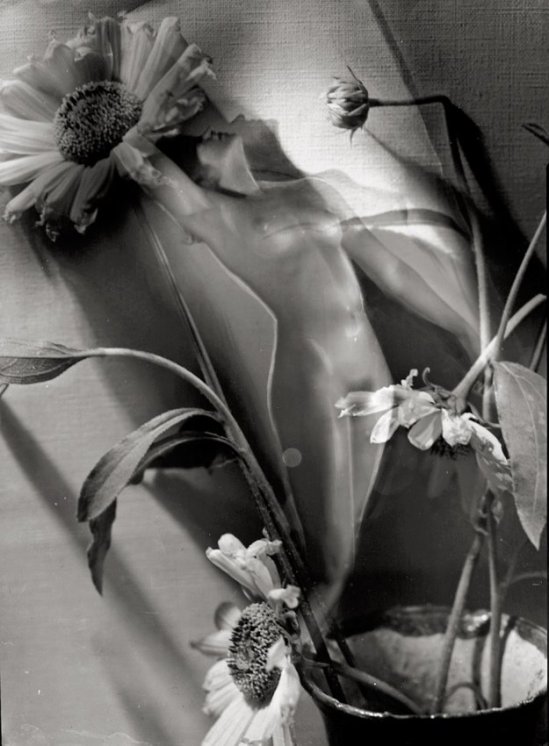
Studio Manassé- Photomontage with nude and flowers. Circa 1935

Studio Manassé- Photomontage with nude and flowers. Circa 1935

Atelier Manassé- Collectionneur de papillons, 1950

Atelier Manassé-l’ homme à la loupe, 1927

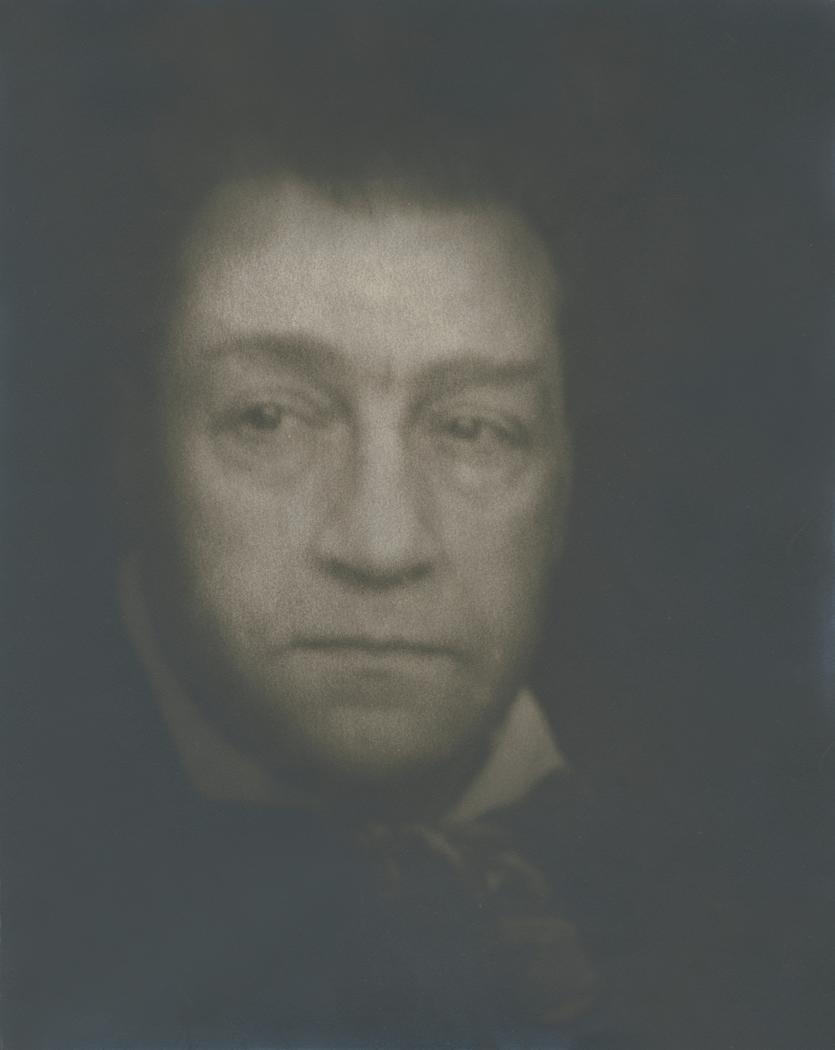
Manassé la cruauté (nosferatu)gelatin silver print, circa 1930

Manassé la cruauté (nosferatu)gelatin silver print, circa 1930


Studio Georges Louis Arlaud ( 1869 – 1944)

Portfolio Vingt Études de Nu en Plein Air, Editions Horos, Paris,1920

Toutes les planches de ce portfolio datent des années 1900, “Vingt études de Nu en Plein Air” (Twenty Outdoor Nude Studies), et ont été prises en Provence ( les lieux de prise de vue sont notifiés à la fin du portfolio, )

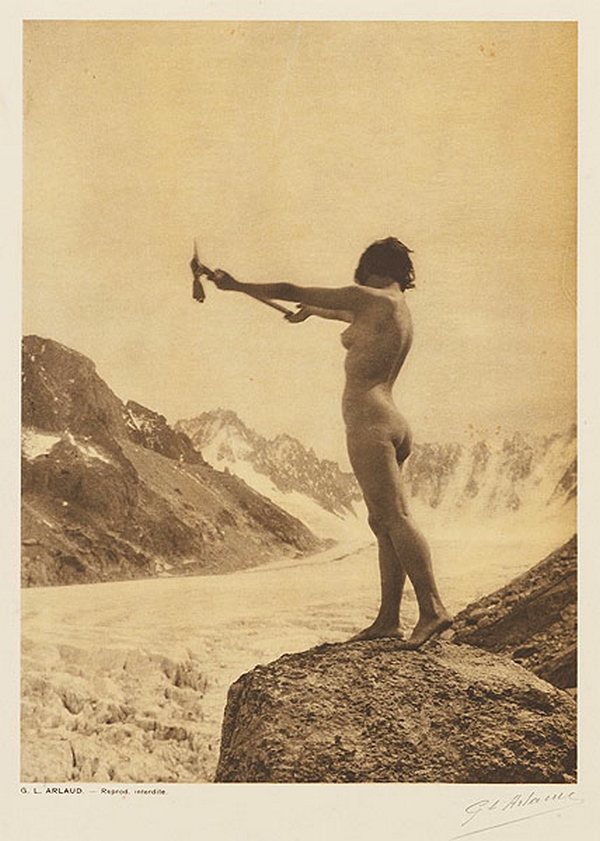
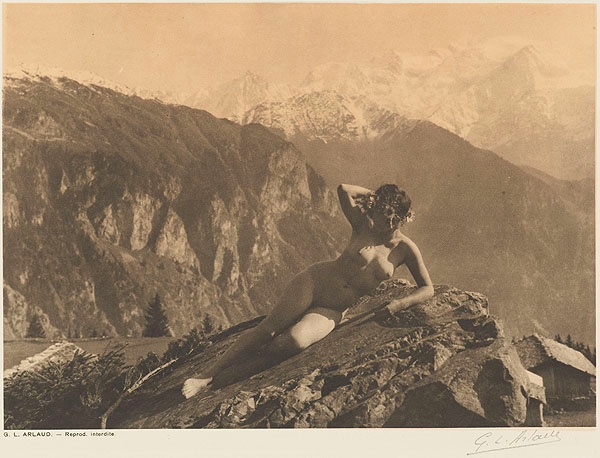
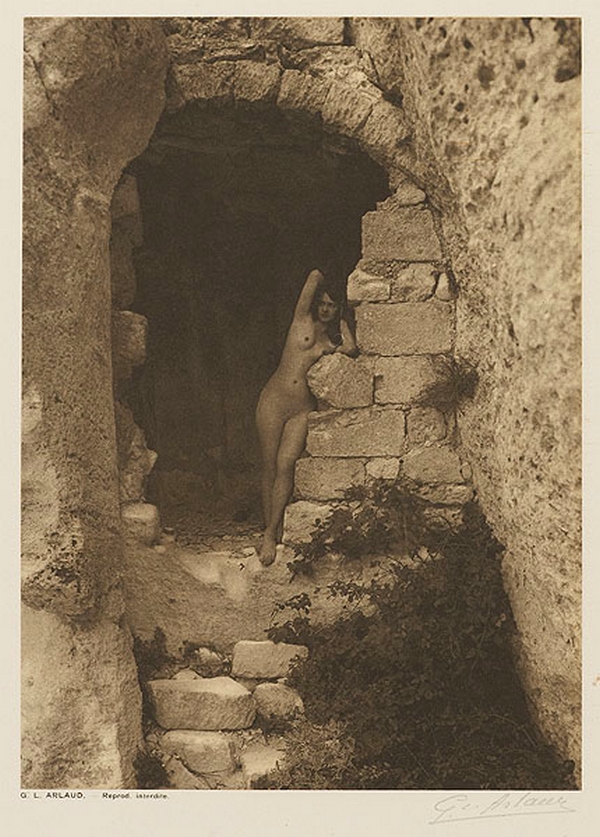
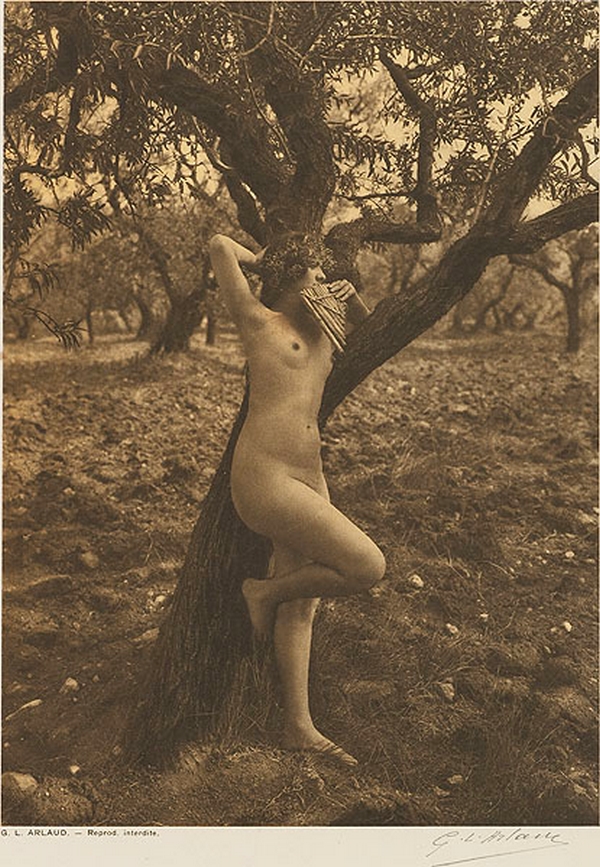
Le studio Arlaud était située à Lyon, et Dirigé par L. Arlaud lui même. Pour la série présentée aujourd’hui, ainsi que pour la série des cartes postales, Il s’est rendu dans les Alpes, dans des grottes de l’arrière pays, , au bord de la Méditerranée, et même sur un glacier, et a réalisé un série très connue de vingt études de nus en plein air. Ce travail évoquant les dryades et les naïades, mais les nus de Arlaud ne sont pas sans rappeler aussi les peintures de Maxfield Parrish par exemple.( cf google image ici).

Il a par ailleurs illustré plusieurs livres sur le sud de la France, et quelques autres régions, ( “Les Baux de Provence”, “La corse”,”Nîmes, Uzès, Aigues-Mortes”, “Vals-les-Bains et le bassin de l’Ardèche”, “Arles et la Camargue”,”La Côte des Maures et les Iles d’or de Toulon à Fréjus” et bien d’autres encore ) entre 1927 et 1937.

G. L Arlaud - La liseuse Vingt Études de Nu en Plein Air, 1920

G. L Arlaud – La liseuse Vingt Études de Nu en Plein Air, 1920

Etude G. L Arlaud -Cariatide, from Vingt Études de Nu en Plein Air, 1920

Etude G. L Arlaud -Cariatide, from Vingt Études de Nu en Plein Air, 1920

Etude G. L Arlaud -Surprise, from Vingt Études de Nu en Plein Air, 1920

Etude G. L Arlaud -Surprise, from Vingt Études de Nu en Plein Air, 1920

Etude G. L Arlaud -Printemps de Provence, from Vingt Études de Nu en Plein Air, 1920

Etude G. L Arlaud -Printemps de Provence, from Vingt Études de Nu en Plein Air, 1920

Etude G. L Arlaud -Le Sommet, from Vingt Études de Nu en Plein Air, 1920

Etude G. L Arlaud -Le Sommet, from Vingt Études de Nu en Plein Air, 1920

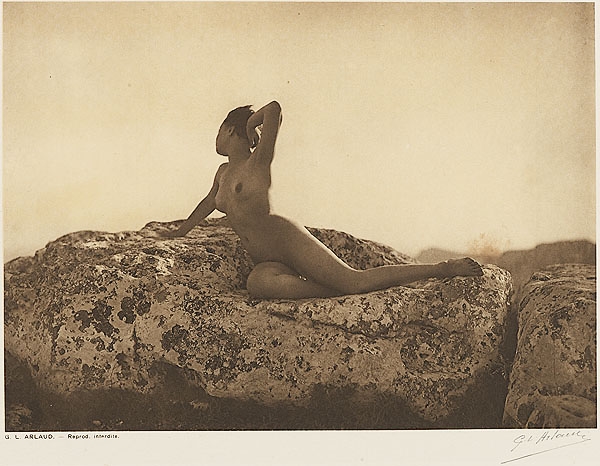
Etude G. L Arlaud -Mirage, from Vingt Études de Nu en Plein Air, 1920

Etude G. L Arlaud -Mirage, from Vingt Études de Nu en Plein Air, 1920


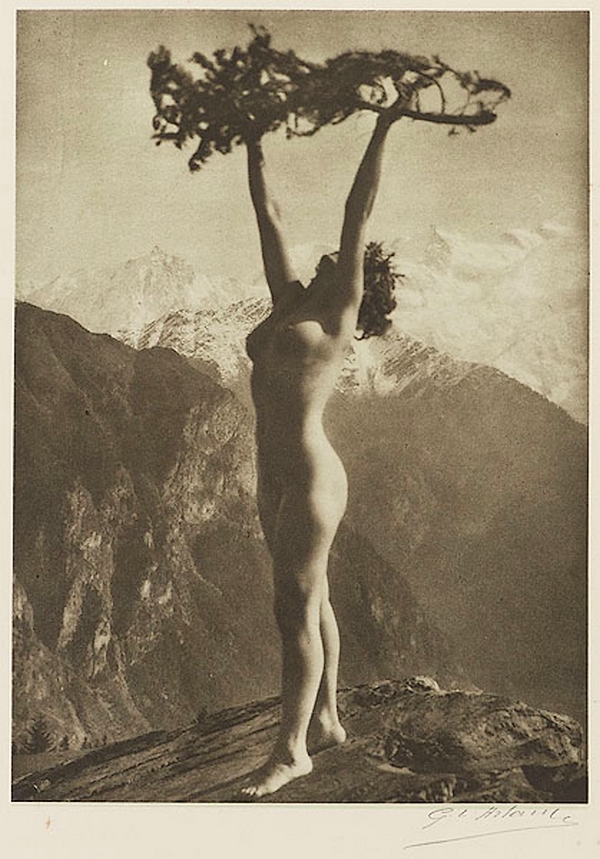
Etude G. L Arlaud -Le Sapin, from Vingt Études de Nu en Plein Air, 1920

Etude G. L Arlaud -Le Sapin, from Vingt Études de Nu en Plein Air, 1920

Etude G. L Arlaud -Pax, from Vingt Études de Nu en Plein Air, 1920

Etude G. L Arlaud -Pax, from Vingt Études de Nu en Plein Air, 1920

Etude G. L Arlaud -Le Vent, from Vingt Études de Nu en Plein Air, 1920

Etude G. L Arlaud -Le Vent, from Vingt Études de Nu en Plein Air, 1920

Etude G. L Arlaud -Plongeuse, from Vingt Études de Nu en Plein Air, 1920

Etude G. L Arlaud -Plongeuse, from Vingt Études de Nu en Plein Air, 1920

Etude G. L Arlaud -Lumiere, from Vingt Études de Nu en Plein Air, 1920

Etude G. L Arlaud -Lumiere, from Vingt Études de Nu en Plein Air, 1920

Etude G. L Arlaud -L'ondine, from Vingt Études de Nu en Plein Air, 1920

Etude G. L Arlaud -L’ondine, from Vingt Études de Nu en Plein Air, 1920

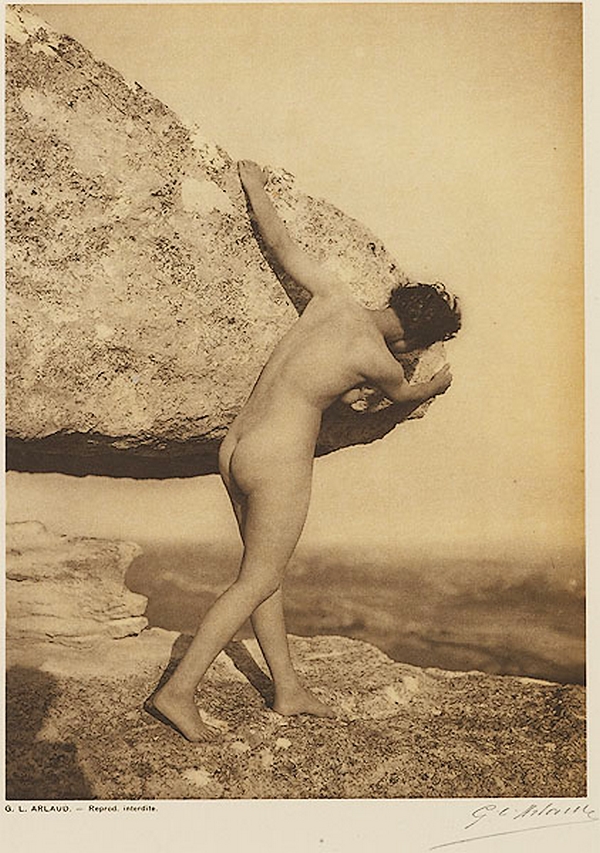
Etude G. L Arlaud -Le Roc, from Vingt Études de Nu en Plein Air, 1920

Etude G. L Arlaud -Le Roc, from Vingt Études de Nu en Plein Air, 1920

Etude G. L Arlaud -Baigneuse, from Vingt Études de Nu en Plein Air, 1920

Etude G. L Arlaud -Baigneuse, from Vingt Études de Nu en Plein Air, 1920

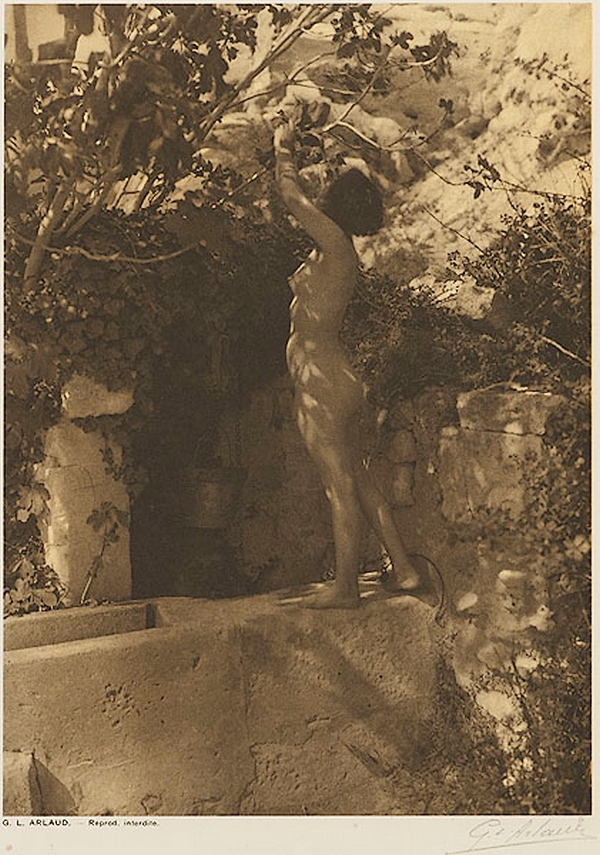
Etude G. L Arlaud -Le Puits, from Vingt Études de Nu en Plein Air, 1920

Etude G. L Arlaud -Le Puits, from Vingt Études de Nu en Plein Air, 1920

Etude G. L Arlaud -Le Lac Blanc, from Vingt Études de Nu en Plein Air, 1920

Etude G. L Arlaud -Le Lac Blanc, from Vingt Études de Nu en Plein Air, 1920

Etude G. L Arlaud -L'Appel de la Montagne, from Vingt Études de Nu en Plein Air, 1920

Etude G. L Arlaud -L’Appel de la Montagne, from Vingt Études de Nu en Plein Air, 1920

Etude G. L Arlaud -L'alpe, from Vingt Études de Nu en Plein Air, 1920

Etude G. L Arlaud -L’alpe, from Vingt Études de Nu en Plein Air, 1920

Etude G. L Arlaud -La Gardienne du Chateau, from Vingt Études de Nu en Plein Air, 1920

Etude G. L Arlaud -La Gardienne du Chateau, from Vingt Études de Nu en Plein Air, 1920

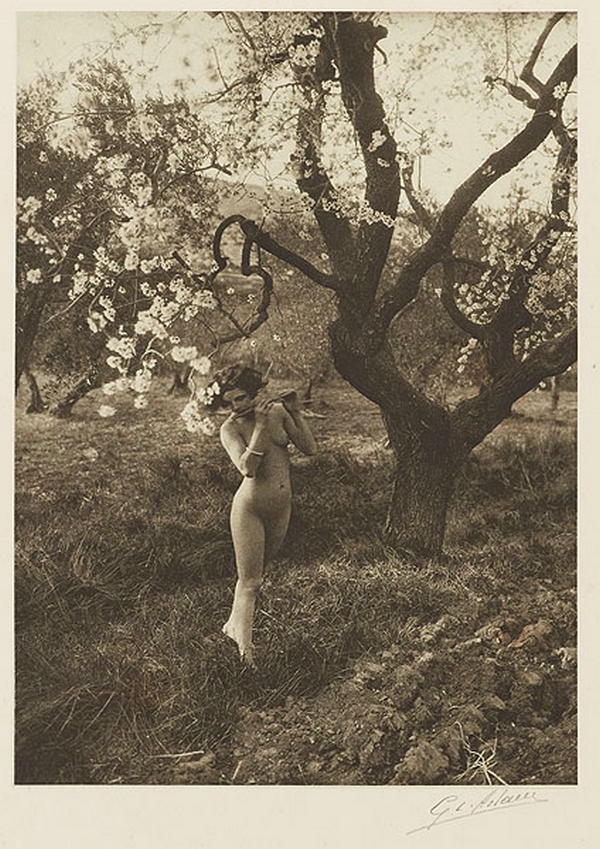
Etude G. L Arlaud -Joueuse de Flute, from Vingt Études de Nu en Plein Air, 1920

Etude G. L Arlaud -Joueuse de Flute, from Vingt Études de Nu en Plein Air, 1920

Etude G. L Arlaud -La Grotte, from Vingt Études de Nu en Plein Air, 1920

Etude G. L Arlaud -La Grotte, from Vingt Études de Nu en Plein Air, 1920

Etude G. L Arlaud -Printemps de Provence, from Vingt Études de Nu en Plein Air, 1920

Etude G. L Arlaud -Printemps de Provence, from Vingt Études de Nu en Plein Air, 1920


G.L. Arlaud  Portfolio cover for G.L. Arlaud Vingt Etudes de Nu en Plein Air (Paris, Horos Editions, 1920)  [Vingt Etudes de Nu en Plein Air]  1920

G.L. Arlaud Portfolio cover for G.L. Arlaud Vingt Etudes de Nu en Plein Air (Paris, Horos Editions, 1920) [Vingt Etudes de Nu en Plein Air] 1920

G.L. Arlaud  Portfolio G.L. Arlaud Vingt Etudes de Nu en Plein Air (Paris, Horos Editions, 1920)  [Vingt Etudes de Nu en Plein Air]  1920

G.L. Arlaud Portfolio G.L. Arlaud Vingt Etudes de Nu en Plein Air (Paris, Horos Editions, 1920) [Vingt Etudes de Nu en Plein Air] 1920

G.L. Arlaud  Portfolio  G.L. Arlaud Vingt Etudes de Nu en Plein Air (Paris, Horos Editions, 1920)  [Vingt Etudes de Nu en Plein Air]  1920

G.L. Arlaud Portfolio G.L. Arlaud Vingt Etudes de Nu en Plein Air (Paris, Horos Editions, 1920) [Vingt Etudes de Nu en Plein Air] 1920

G.L. Arlaud  Portfolio  G.L. Arlaud Vingt Etudes de Nu en Plein Air (Paris, Horos Editions, 1920)  [Vingt Etudes de Nu en Plein Air]  1920

G.L. Arlaud Portfolio G.L. Arlaud Vingt Etudes de Nu en Plein Air (Paris, Horos Editions, 1920) [Vingt Etudes de Nu en Plein Air] 1920

G.L. Arlaud  Portfolio cover for G.L. Arlaud Vingt Etudes de Nu en Plein Air (Paris, Horos Editions, 1920)  [Vingt Etudes de Nu en Plein Air]  1920

G.L. Arlaud Portfolio cover for G.L. Arlaud Vingt Etudes de Nu en Plein Air (Paris, Horos Editions, 1920) [Vingt Etudes de Nu en Plein Air] 1920

Vous pouvez retrouvez ces planches sur Luminous

Autres Etudes de Nus qui restent dans le même esprit et qui ont aussi étés réalisées dans le sud de la France, mais éditées en format carte postales et réalisées entre les années 1920 et 1930

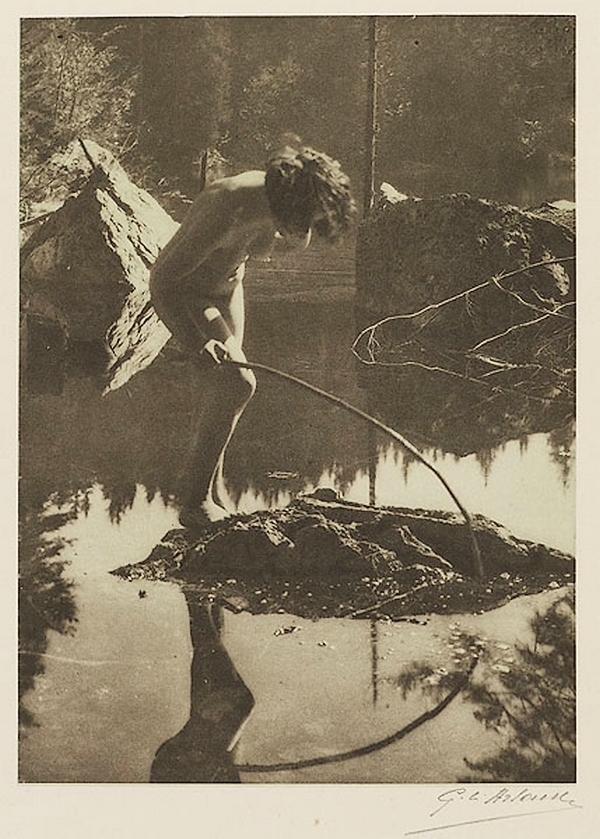
Etude G. L Arlaud - La Barque, 1930

Etude G. L Arlaud – La Barque, 1930


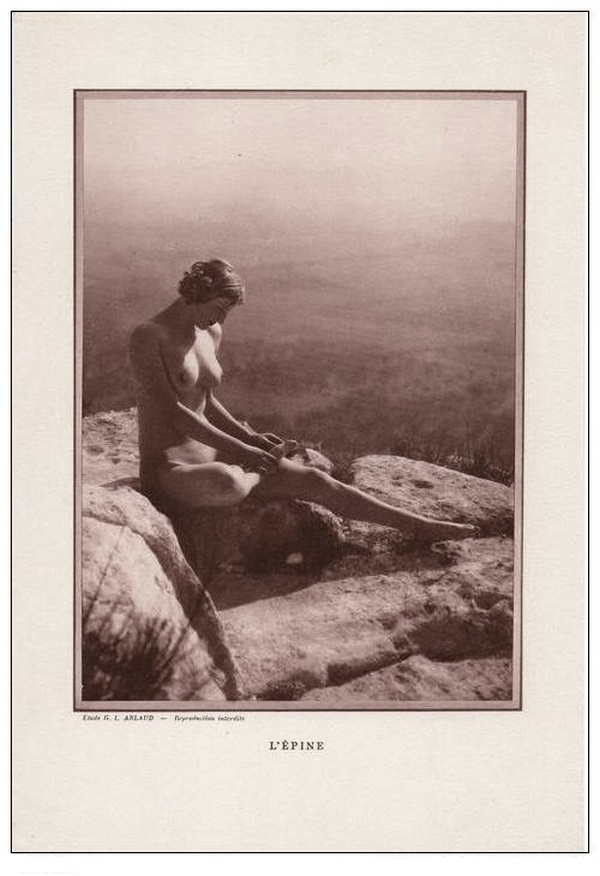
Etude G. L Arlaud - l'Epine, nu érotique 1930

Etude G. L Arlaud – l’Epine, nu érotique 1930


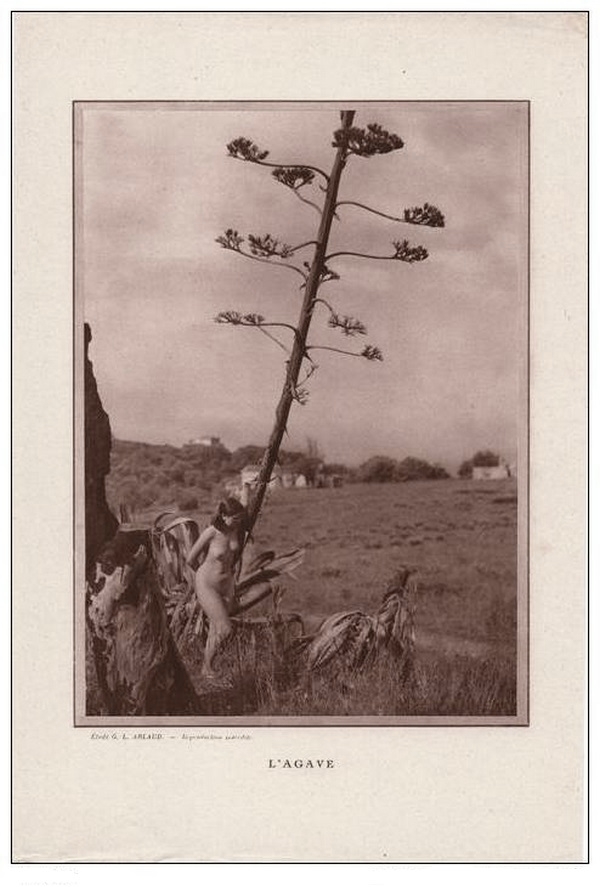
Etude G. L Arlaud -l'Agave, nu érotique 1930

Etude G. L Arlaud -l’Agave, nu érotique 1930


Etude G. L Arlaud  -Reverie, 1930

Etude G. L Arlaud -Reverie, 1930


Etude G. L Arlaud -  Voute Ruines, 1930

Etude G. L Arlaud – Voute  1930

Etude G. L Arlaud  -Andromède, 1930

Etude G. L Arlaud -Andromède, 1930

Etude G. L Arlaud - l'Océan, nu érotique 1930

Etude G. L Arlaud – l’Océan, nu érotique 1930

Etude G. L Arlaud - La Cueillette, 1930

Etude G. L Arlaud – La Cueillette, 1930

Etude G. L Arlaud  -La Lande, 1930

Etude G. L Arlaud -La Lande, 1930

Série en Studio

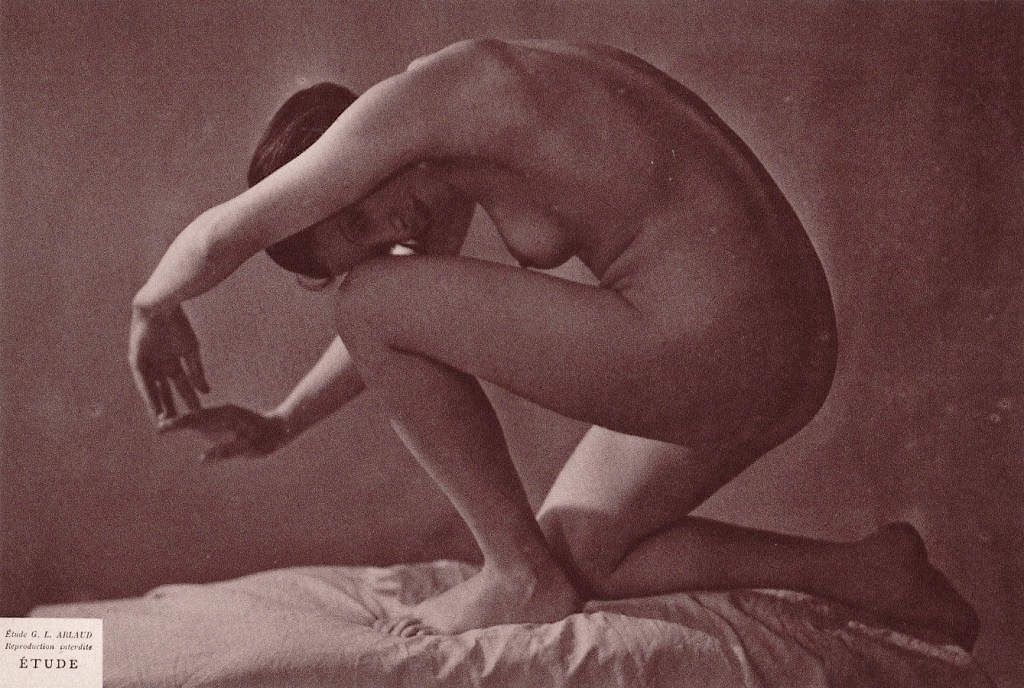
Etude G. L Arlaud - Etude, ,1930

Etude G. L Arlaud – Etude, ,1930

Etude G. L Arlaud - Potiche , nu érotique 1920-30

Etude G. L Arlaud – Potiche , nu érotique 1920-30

Etude G. L Arlaud - L'éveil ,1930

Etude G. L Arlaud – L’éveil ,1930

Etude G. L Arlaud - Bouddha, 1930

Etude G. L Arlaud – Bouddha, 1930

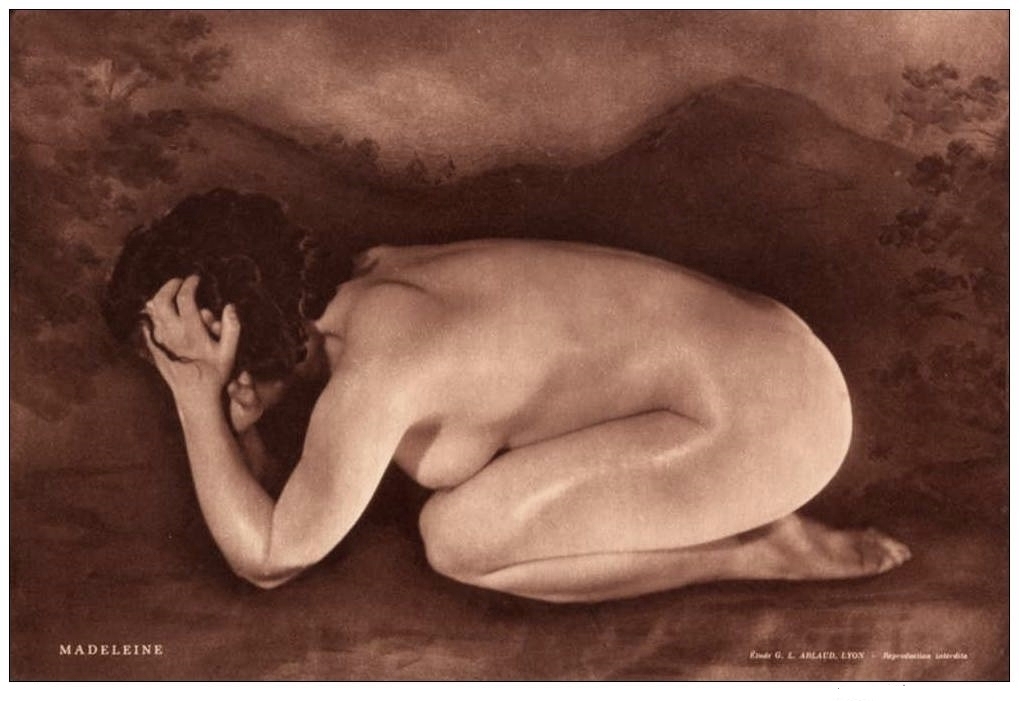
Etude G. L Arlaud -Madeleine, 1930

Etude G. L Arlaud -Madeleine, 1930

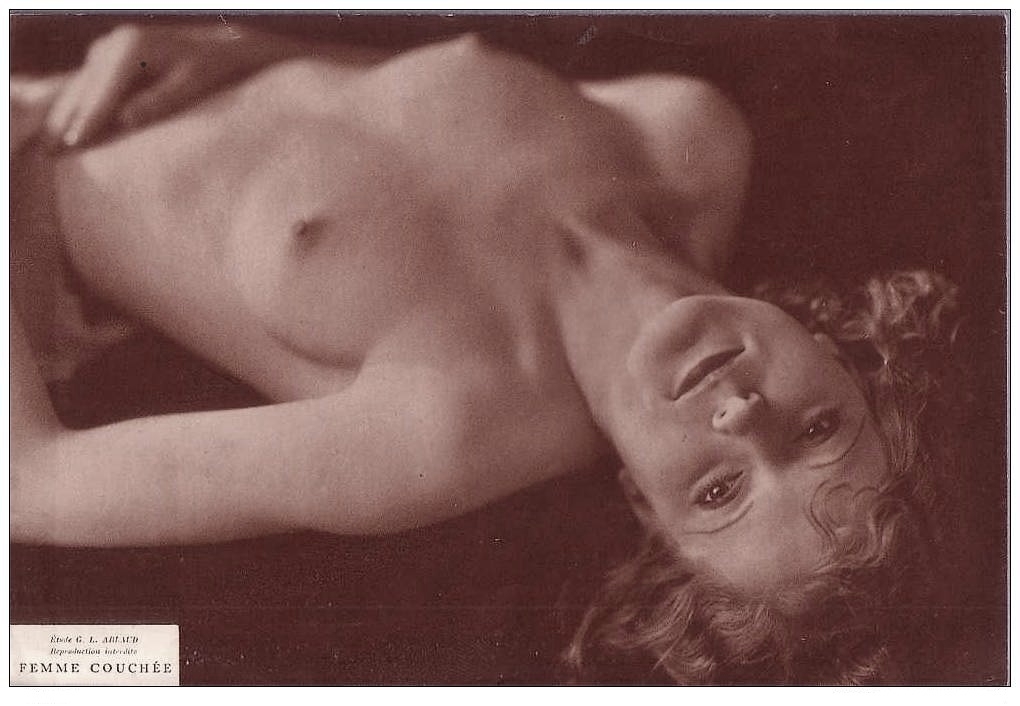
Etude G. L Arlaud - Femme couchée, 1930

Etude G. L Arlaud – Femme couchée, 1930

je vous ajoute celle ci car je l’aime beaucoup

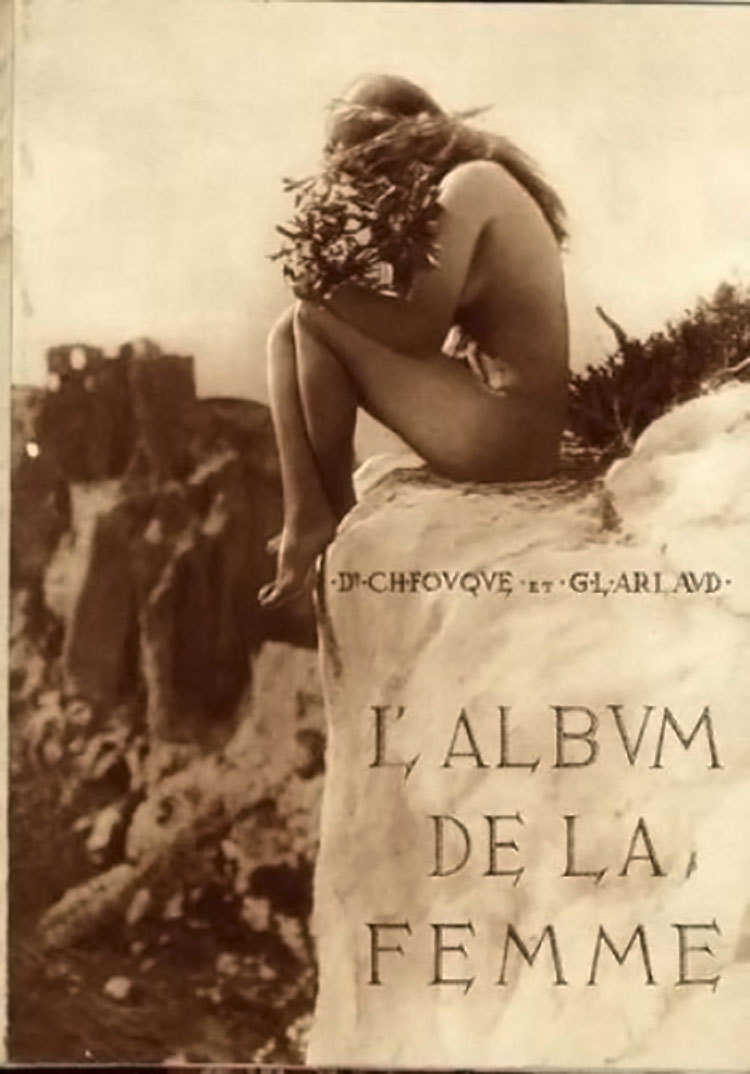
Dr Ch. Fouqué & G.L. Arlaud L'album de la femme. La morphologie esthétique d'après l'étude du nu. Considérations physiologiques et philosophiques. Editions G. L. Arlaud, Lyon, 1936

Dr Ch. Fouqué & G.L. Arlaud L’album de la femme. La morphologie esthétique d’après l’étude du nu. Considérations physiologiques et philosophiques. Editions G. L. Arlaud, Lyon, 1936

Germaine Krull the book « Études de nu ». Par Germaine Krull. Preface by Jean Cocteau.1930


Germaine Krull – study of nude, before 1930 from « Études de nu ». Par Germaine Krull. Preface by Jean Cocteau.With 24 loose illustrations after photographs printed in photogravure, Paris, Librairie des Arts décoratifs, ,1930.


Germaine Krull est né le 29 Novembre 1897 à Wilda, Poznań, près de la frontière entre l’Allemagne et la Pologne en Prusse orientale, d’une famille allemande aisée. Dans ses premières années, sa famille déménage fréquemment dans toute l’Europe. Elle n’a pas reçu une éducation dite « formelle », mais a reçu des cours à la maison  de son père  Johann Friedrich Krull, un ingénieur accompli et un libre penseur. Ce dernier l’a très certainement influencé , en laissant ses robes au placard et la laissant s’habiller  comme un garçon quand elle était jeune. Cette liberté d’esprit ne peut qu’avoir contribué à forger ses idées sur le rôle des femmes et leurs places au sein de la société ,  et son education la probablement aussi prédisposée à la prise de position politique radicale.

Entre 1915 et 1918, elle a pris des cours à  « Lehr- und Versuchsanstalt für Photographie », une école de photographie de Munich, en Allemagne, periode durant  laquelle  elle suit l’enseignement de Frank Eugene (voir article à son sujet ici) , l’un des maîtres du Pictorialisme .

Elle a ouvert un studio à Munich en 1918.Elle se lie d’amitié avec despersonnalités tels que Rainer Maria Rilke, Friedrich Pollock, et Max Horkheimer. A cette periode ( 1918-1921) Germaine Krull était très active politiquement . En 1919, elle est passée du Parti socialiste indépendant de Bavière au Parti communiste de l’Allemagne, et a été arrêtée et emprisonnée pour aider la tentative de fuite d’un émissaire bolchevik à l’Autriche. Elle fût expulsée de  Bavière en 1920 pour ses activités communistes, et s’ est rendu en Russie avec son amant Samuel Levit. Après que Levit ne l’ait quittée en 1921, Krull a été emprisonné comme un « anti-bolchevique» et expulsé de Russie.

Entre 1922 et 1925, elle vivra à Berlin où elle a reprendra sa carrière de photographe. Elle et Kurt Hübschmann (plus tard connu sous le nom de Kurt Hutton) ont travaillé ensemble dans un studio de Berlin entre 1922 et 1924. Parmi les autres photos de Krull produites à Berlin à cette période, il y a notament la serie de  nus  » les amies de chambre » qui furent comparées à « des satires de la pornographie lesbienne. » VOIR CETTE SERIE LES AMIES ICI

Après avoir rencontré le cinéaste communiste néerlandais Joris Ivens  en 1923, elle s’ installe à Amsterdam en 1925.  Krull revient à Paris en 1926, Ivens et Krull conclu un mariage de convenance entre 1927 et 1943, afin que Krull puisse optenir un passeport néerlandais.

Entre 1922 et 1925, elle vivra à Berlin où elle reprend sa carrière de photographe. Elle et Kurt Hübschmann (plus tard connu sous le nom Kurt Hutton) ont travaillé ensemble dans un studio de Berlin entre 1922 et 1924. Parmi les autres photos Krull produite à Berlin étaient nus qui ont été comparés à ‘des satires de la pornographie lesbienne.’Elle a commencé à photographier des nus, essentiellement féminin,  nombre de ces images illustre des publications scientifiques et naturistes et de nombreux magazines. ( par exemple ici un exemple de couverture pour naturiste)

Krull a vécu à Paris entre 1926 et 1928, où elle a ouvert son atelier en 1926 . Elle se lie d’amitié avec l’élite intellectuelle française (Valéry, Gide, Malraux, Morand, Frank Eugene Cocteau, Colette, etc), ainsi que de nombreux artistes et créateurs (l’acteur Louis Jouvet, le réalisateur Jean Renoir, le photographe Eli Lotar  , qui realisera une superbe photo d’elle nue, vêtue de gants, voir plus bas, les peintres Robert et Sonia Delaunay, etc) mais sera surtout amie avec Sonia et Robert Delaunay, Eli Lotar, André Malraux, Colette, Jean Cocteau, André Gide  Son travail consistait essentiellement à faire de la photographie de mode, et portraits et travailler pour des magazines . Néanmoins, le nu a continuera d’être un thème de prédilection dans la photographie de Krull , ( elle est d’ailleurs publiée à cette époque dans la célèbre « Revue des Monats », par exemple) très fréquemment.

Pendant cette période, elle a publié le portfolio Métal ,1928. ayant épousé le réalisateur Joris Ivens,  elle travaillera avec lui  pour le documentaire ‘El Puente’ (Le pont) en 1928 qui réveillera en elle une fascination pour un sujet inhabituel: le paysage industriel. Krull présente dans ce livre 64 photographies en noir et blanc paysage de Paris, Marseille, et de Hollande . Les sujetsphotographiés sont  des ponts, des  bâtiments (par exemple, la Tour Eiffel), et les navires à roues de bicyclette, il peut être lu comme étant une célébration de la machine ou une critique à leur égard. Beaucoup de photographies ont été prises sous des angles dramatiques, et dans l’ensemble du travail a été comparé à celui de László Moholy-Nagy ( Voir tous les articles qui lui sont consacrés ICI)  et Alexander Rodchenko. ( Voir  tous les articles qui lui sont consacrés ICI). En 1999-2004 le portefeuille a été choisi comme l’un des albums photos les plus importants de l’histoire.

En 1928, Krull a été considéré comme l’une des meilleurs photographes de Paris, avec André Kertész ( Voir les articles qui lui consacrés) et Man Ray( Voir les articles qui lui consacrés) . Entre 1928 et 1933, son travail photographique est composée principalement de photojournalisme, comme ses photographies pour le magazine Vu.  En 1930, elle  édite le portfolio « Étude de nu  » avec 24 photos , préfacé par son ami Jean Cocteau aux Librairie des Arts décoratifs. ces clichés expliquera t- elle auront pour vocation de témoigner de la transformation dans laquelle la nudité, est à la fois reliée à l’esthétique et séparée de l’éthique (ses travaux dans ce domaine sont réputés pour sa série les amies).

Quand la seconde guerre mondiale éclate, krull quittera la France et voyagera dès lors à travers le monde entier (Afrique (1941-1942)  Brésil, où elle a photographié la ville d’Ouro Preto. Entre 1942 et 1944, elle était à Brazzaville en République du Congo, après quoi elle a passé plusieurs mois à Alger ) Après la Seconde Guerre mondiale, elle a voyagé en Asie du Sud-Est en tant que correspondant de guerre, et en 1946 elle  devient un des co-propriétaires de l’Hôtel Oriental à Bangkok, en Thaïlande, un rôle qu’elle a entrepris jusqu’en 1966. Ensuite elle déménagera dans le Nord de l’Inde et convertira à l’école Sakya du bouddhisme tibétain. Son grand projet photographique finale a été la publication d’un livre de 1968 « Tibétains en Inde » qui comprenait un portrait du dalaï-lama. Après un AVC, elle a déménagé dans une maison de soins infirmiers à Wetzlar, en Allemagne, où elle est morte le 31 Juillet, 1985.

Cette femme a eu un esprit libertaire toute sa vie, combattant pour la liberté sociale, la condition de la femme des peuples, sa liberté intellectuelle fait d’elle une artiste majeure du 20 siècle.

bien sûr je ne vous présente qu’une partie de son travail, et comme toujours celui autour du nu, mais cela reste une partie de son immense travail.bJe vous présente les planches du porfolio de 1930 qui sont des héliogravures, ainsi que d’autres nus et ses portraits. Vous pouvez retrouverez la séries Les amies, rencontres de lesbiennes ( postés il y a longtemps ici), et le reste de sont travil sur le net.

« L’objectif est un œil mieux fait que l’œil.  Il mérite de voir le monde mieux fait que le monde, ou autrement fait, ce qui est déjà très bien.  Chaque angle nouveau  multiplie le monde par lui même » G.Krull 1931


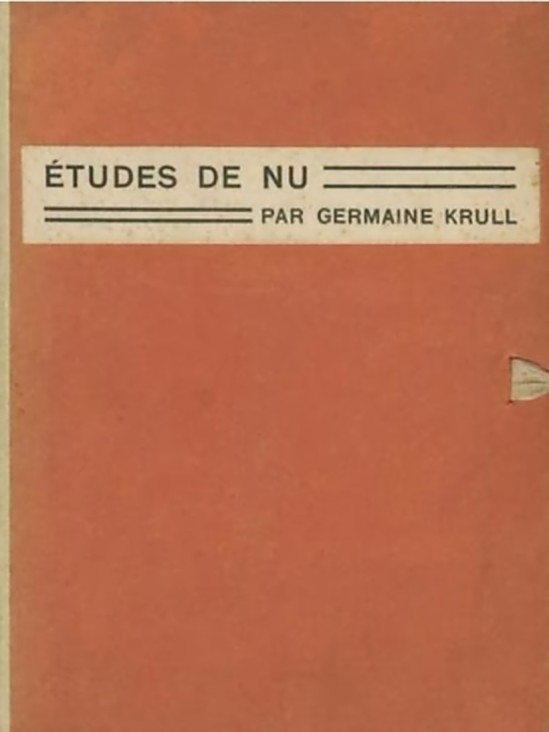
Germaine Krull Book cover for Germaine Krull, Études de nu, (Paris, Librairie des Arts Décoratifs – A. Calavas Éditeur, (1930)) 1930

Germaine Krull - Etude de nu, 1930 from "Études de nu". Par Germaine Krull. Preface by Jean Cocteau.With 24 loose illustrations after photographs printed in photogravure, Paris, Librairie des Arts décoratifs, ,1930.

Germaine Krull – Etude de nu, 1930 from « Études de nu ». Par Germaine Krull. Preface by Jean Cocteau.With 24 loose illustrations after photographs printed in photogravure, Paris, Librairie des Arts décoratifs, ,1930.

ÉTUDES DE NU is the second publication to feature Germaine Krull’s nude studies. It was published twelve years after her nude work first appeared in Der Akt – Zwanzig photographische Aufnahmen weiblicher Körper nach der Natur (The nude – twenty photographs of the female body taken from life) together with work by Prof. Jozsef Pésci and Wanda von Debschitz-Kunowski. ÉTUDES DE NU is Krull’s solo celebration of the female form.

The small portfolio is rather simple in design and construction. A small white paper label with the title and author’s name is mounted on the orange paper covered card of the front cover. The portfolio contains 24 photographic plates and two folded leaves with title and introduction by Jean Cocteau. Twenty-two of the plates contain one photograph of one model. Two of the plates show montages or multiple exposures. Twenty photographs show the figures cropped, at least on one side of the image. The photographs come across as a playful mix of styles and techniques just as one finds with Krull’s work in general.

Germaine Krull – Etude de nu, 1930 from « Études de nu ». Par Germaine Krull. Preface by Jean Cocteau.With 24 loose illustrations after photographs printed in photogravure, Paris, Librairie des Arts décoratifs, ,1930.


Germaine Krull- Étude de nu, 1930

Germaine Krull- Étude de nu, 1930 from « Études de nu ». Par Germaine Krull. Preface by Jean Cocteau.With 24 loose illustrations after photographs printed in photogravure, Paris, Librairie des Arts décoratifs, ,1930.

Germaine Krull – Etude de nu, 1930 from « Études de nu ». Par Germaine Krull. Preface by Jean Cocteau.With 24 loose illustrations after photographs printed in photogravure, Paris, Librairie des Arts décoratifs, ,1930.

Germaine Krull – Etude de nu, 1930 from « Études de nu ». Par Germaine Krull. Preface by Jean Cocteau.With 24 loose illustrations after photographs printed in photogravure, Paris, Librairie des Arts décoratifs, ,1930.

Germaine Krull – Etude de nu, 1930 from « Études de nu ». Par Germaine Krull. Preface by Jean Cocteau.With 24 loose illustrations after photographs printed in photogravure, Paris, Librairie des Arts décoratifs, ,1930.


Germaine Krull-Etude de nu, 1930 from « Études de nu ». Par Germaine Krull. Preface by Jean Cocteau.With 24 loose illustrations after photographs printed in photogravure, Paris, Librairie des Arts décoratifs, ,1930.

Germaine Krull – Etude de nu, 1930 from « Études de nu ». Par Germaine Krull. Preface by Jean Cocteau.With 24 loose illustrations after photographs printed in photogravure, Paris, Librairie des Arts décoratifs, ,1930.

Germaine Krull-Etude de nu, 1930 from « Études de nu ». Par Germaine Krull. Preface by Jean Cocteau.With 24 loose illustrations after photographs printed in photogravure, Paris, Librairie des Arts décoratifs, ,1930.

Germaine Krull – Etude de nu, 1930 from « Études de nu ». Par Germaine Krull. Preface by Jean Cocteau.With 24 loose illustrations after photographs printed in photogravure, Paris, Librairie des Arts décoratifs, ,1930.

Germaine Krull – Etude de nu, 1930 from « Études de nu ». Par Germaine Krull. Preface by Jean Cocteau.With 24 loose illustrations after photographs printed in photogravure, Paris, Librairie des Arts décoratifs, ,1930.

Germaine Krull – Etude de nu, 1930 from « Études de nu ». Par Germaine Krull. Preface by Jean Cocteau.With 24 loose illustrations after photographs printed in photogravure, Paris, Librairie des Arts décoratifs, ,1930.

Germaine Krull – Etude de nu, 1930 from « Études de nu ». Par Germaine Krull. Preface by Jean Cocteau.With 24 loose illustrations after photographs printed in photogravure, Paris, Librairie des Arts décoratifs, ,1930.

Germaine Krull – Etude de nu, 1930

Germaine Krull-Etude de nu, 1930 from « Études de nu ». Par Germaine Krull. Preface by Jean Cocteau.With 24 loose illustrations after photographs printed in photogravure, Paris, Librairie des Arts décoratifs, ,1930.

Germaine Krull – Etude de nu, 1930 from « Études de nu ». Par Germaine Krull. Preface by Jean Cocteau.With 24 loose illustrations after photographs printed in photogravure, Paris, Librairie des Arts décoratifs, ,1930.

Germaine Krull- EROTIC NUDE , circa 1930 Vintage silver printfrom "Études de nu". Par Germaine Krull. Preface by Jean Cocteau.With 24 loose illustrations after photographs printed in photogravure, Paris, Librairie des Arts décoratifs, ,1930.

Germaine Krull- EROTIC NUDE , circa 1930 Vintage silver printfrom « Études de nu ». Par Germaine Krull. Preface by Jean Cocteau.With 24 loose illustrations after photographs printed in photogravure, Paris, Librairie des Arts décoratifs, ,1930.


« Photographing is a profession. Craftsmanship. A job that one learns, that one makes more or less well, like all trades. The photographer is a witness. The witness of his time. The true photographer is the witness of every day, they are the reporter. » Germaine Krull
Sur ce lien, en podcast, une autre chronique à propos de Germaine Krull, Les vivants et les morts, Radio Zibeline.

Roger Parry (1905-1977) part I

Né en 1905, Roger Parry se forme à l’Ecole nationale des Arts décoratifs avant de découvrir la photographie. Il devient l’assistant de Maurice Tabard en 1928, au studio de photographie publicitaire Deberny-Peignot. A l’aide d’images aussi dépouillées qu’efficaces, il introduit dans cet art appliqué qu’est la photographie publicitaire les audaces formelles des avant-gardes (photogrammes, photomontages, solarisations…).

Très vite, il prépare avec Fabien Loris l’illustration photographique d’un recueil de poèmes de Léon-Paul Fargue, Banalité. Sa publication en 1931 va le faire apprécier des milieux intellectuels ; il participe alors aux expositions collectives qui réunissent de nombreux talents de l’époque comme Kertész ou Man Ray.

A partir de 1931, Parry est chargé de la promotion de romans publiés à la NRF (Nouvelle Revue Française) qui lui commande plus de 200 couvertures pour des collections populaires.

Il est aussi photographe de plateau sur L’Atalante de Jean Vigo, illustrateur et portraitiste pour Gallimard ou collaborateur de Voilà et Détective.

En 1932, il s’embarque pour un long voyage vers les îles de la Polynésie française, où il réalise un reportage « tendant simplement à présenter un tableau aussi fidèle que possible de la vie actuelle à Tahiti et aux Iles sous le Vent» (Préface de « Tahiti »).
Ces photographies sont publiées dans Tahiti en 1934, ouvrage élaboré avec la complicité de Malraux.

En 1938, utilisant le prétexte de la publication de Zuyderzee (roman de Jeff Last aux éditions Gallimard), il effectue un reportage dans les polders hollandais. Dans une recherche constante de l’envers du décor, il y affine l’orientation documentaire de sa pratique personnelle.

Réformé en 1939, il intègre pendant la guerre la rédaction de Match et de Marie-Claire, avant de publier régulièrement dans La Semaine, principal hebdomadaire de divertissement sous l’Occupation. Il photographie alors les galas, les expositions ou les pièces de théâtre d’un Paris occupé dont la vie culturelle continue malgré tout.

En août 1944, il rejoint le Comité de Libération des reporters photographes de presse après avoir photographié le soulèvement populaire de Paris.

En tant que correspondant de guerre, il suit ensuite les Alliés jusqu’au printemps 1945, de l’Alsace à la poche de Royan.

Après la guerre, il couvre pour l’AFP la visite officielle du Général de Gaulle à New York en 1945 et la Conférence de Moscou en 1947. A la fin des années 1940 il délaisse progressivement le reportage de presse.

A partir de 1948, aux côtés d’André Malraux, il collabore aux collections de la « Galerie de La Pléiade » et surtout de « l’Univers des formes » dont il est le directeur technique pour les premiers volumes, révélant ainsi la vaste palette de ses talents d’illustrateur, de graphiste, de maquettiste et de photographe.

Il décède en 1977, quelques mois après André Malraux.

 Voir tous les articles sur Roger Parry

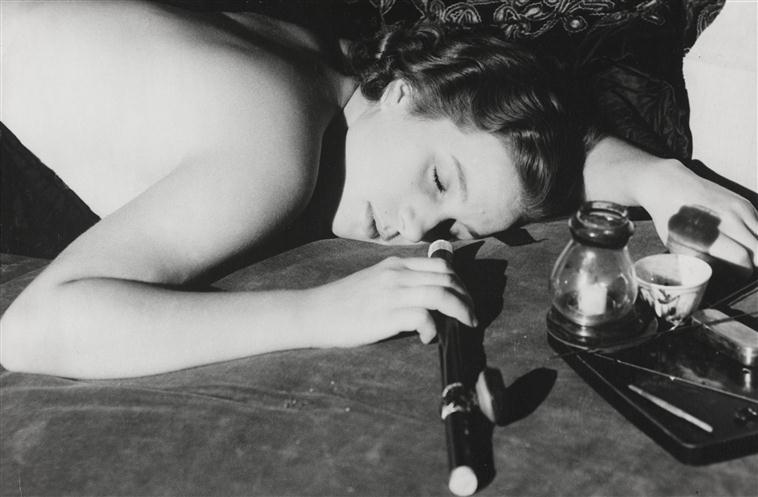
Roger Parry -Etude pour la couverture de Les Trois jeunes filles de Vienne (fumeuse d'opium), 1934

Roger Parry -Etude pour la couverture de Les Trois jeunes filles de Vienne (fumeuse d’opium), 1934

Roger Parry - Sans Titre, 1933-1934

Roger Parry – Sans Titre, 1933-1934

Roger Parry-Nu couché , 1933-34

Roger Parry -Nu (bras allongés°, 1930

Roger Parry -Nu (bras allongés°, 1930

Roger Parry-Nu, années 1930

Roger Parry-Nu, années 1930

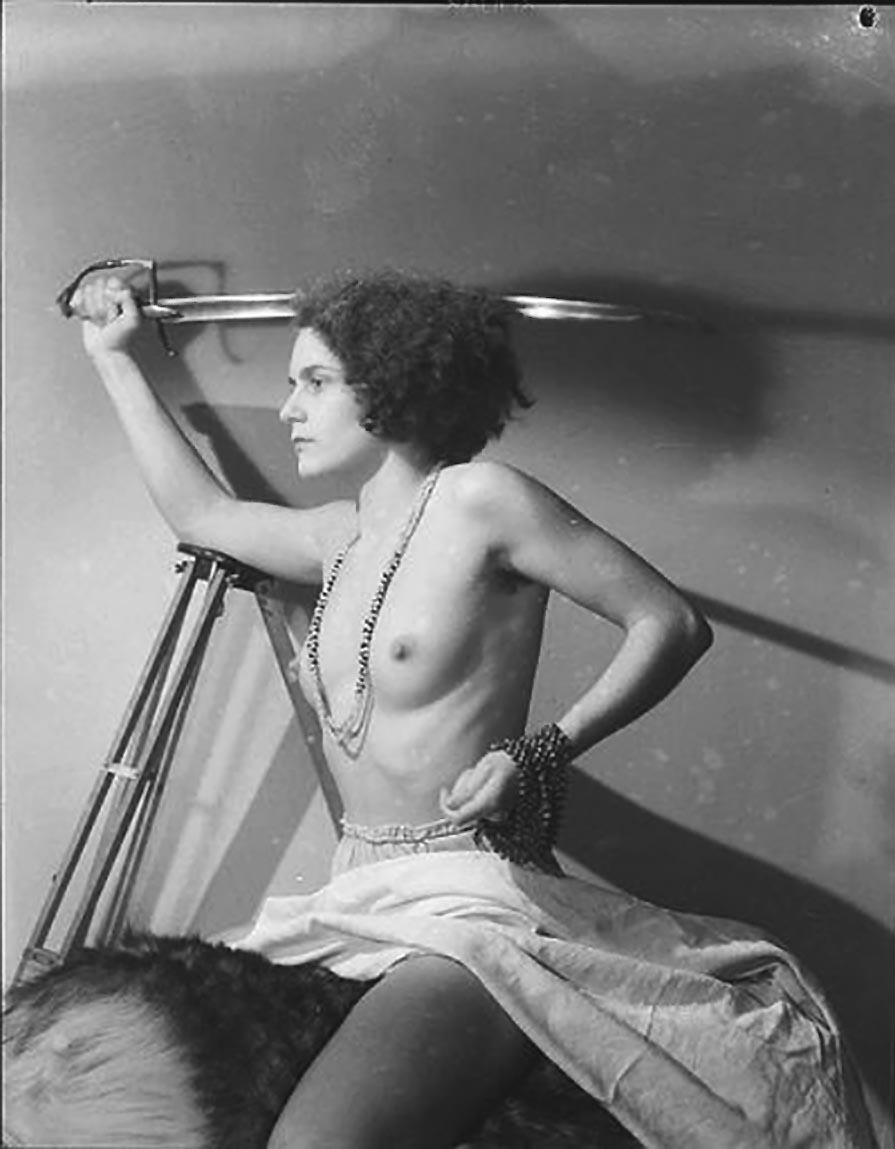
Roger Parry- Une femme aux seins nus brandit un sabre à cheval sur une peau de bête, 1933-34( Etudes ; Illustrations de romans populaires, Collection Détective de Gallimard

Roger Parry- Une femme aux seins nus brandit un sabre à cheval sur une peau de bête, 1933-34( Etudes ; Illustrations de romans populaires, Collection Détective de Gallimard

Roger Parry-Bas et porte-jarretelles, 1935

Roger Parry-Bas et porte-jarretelles, 1935

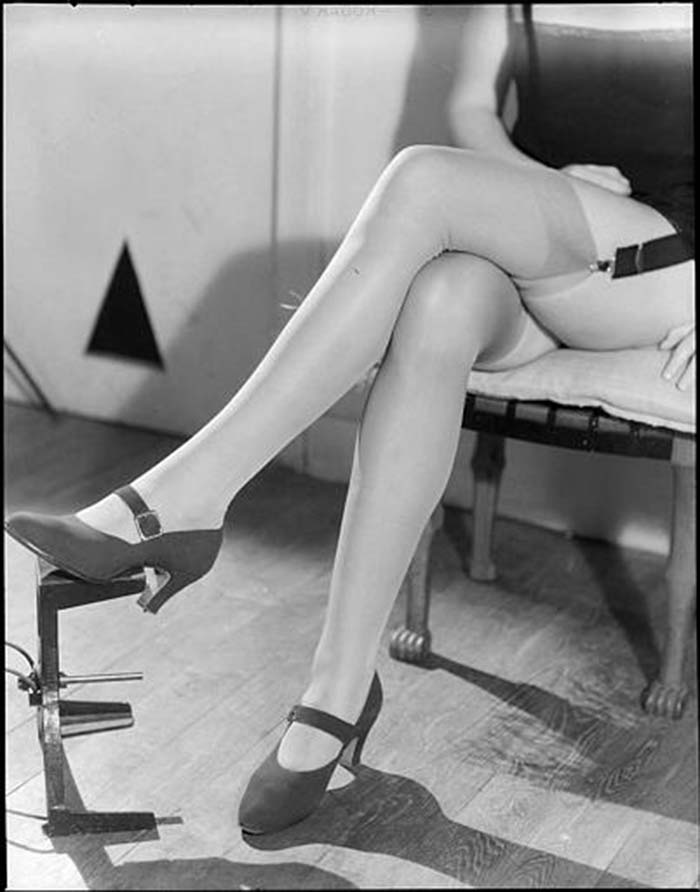
Roger Parry-Femme les jambes croisées portant des bas, 1935

Roger Parry-Femme les jambes croisées portant des bas, 1935

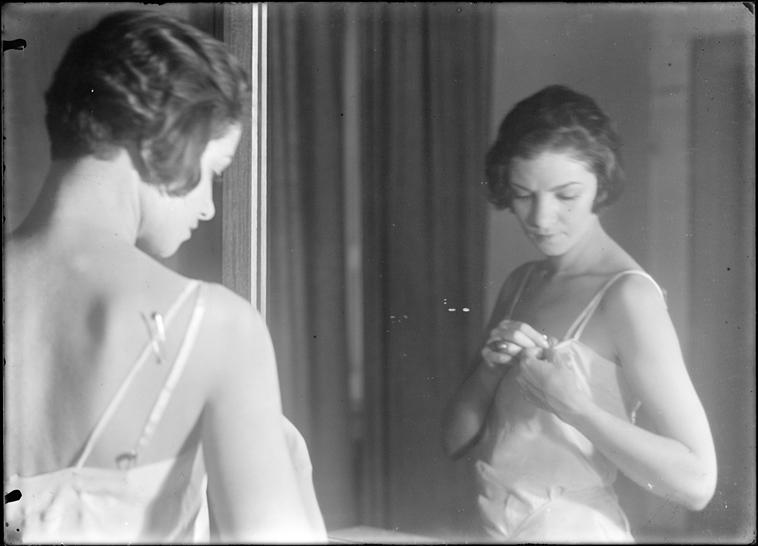
Roger Parry Femme s'habillant devant un miroir, Reportage. Publicité pour grande maison de blanc - Mode vers 1930

Roger Parry Femme s’habillant devant un miroir, Reportage. Publicité pour grande maison de blanc – Mode vers 1930

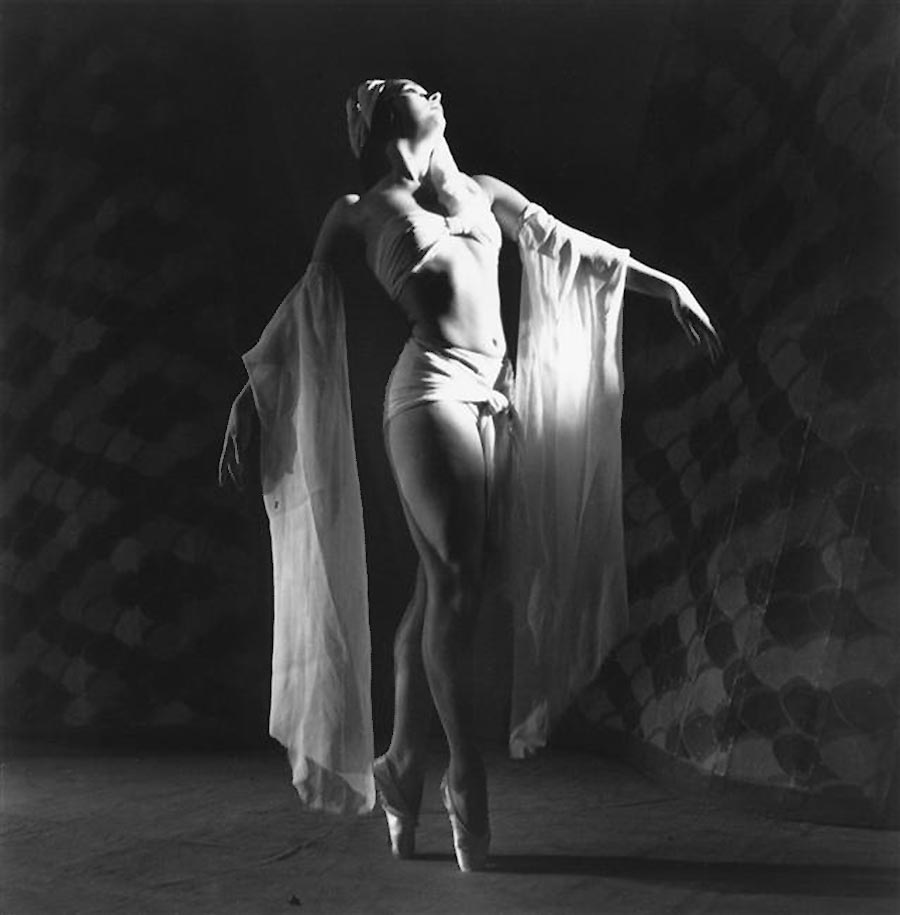
Roger Parry- Ludmilla Tcherina pour un spectacle de danse à Nice-Monte-Carlo , novembre 1943

Roger Parry- Ludmilla Tcherina pour un spectacle de danse à Nice-Monte-Carlo , novembre 1943

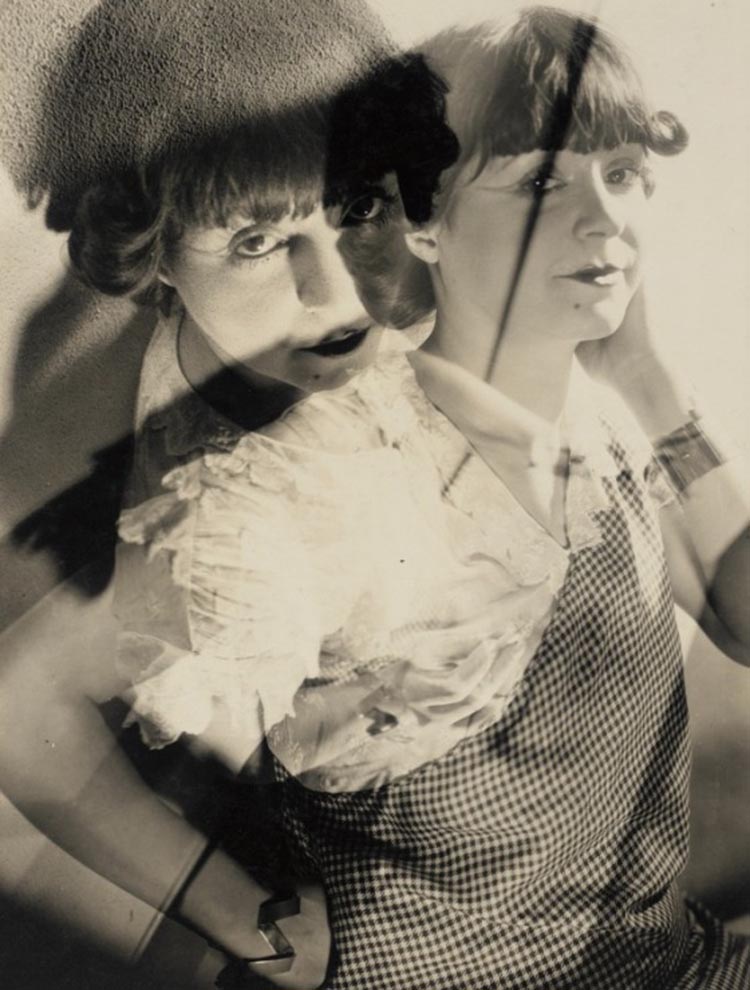
Roger Parry -Portrait de Femme Double Image, 1928

Roger Parry -Portrait de Femme Double Image, 1928

Roger Parry -Nu, 1928

Roger Parry -Nu, 1928

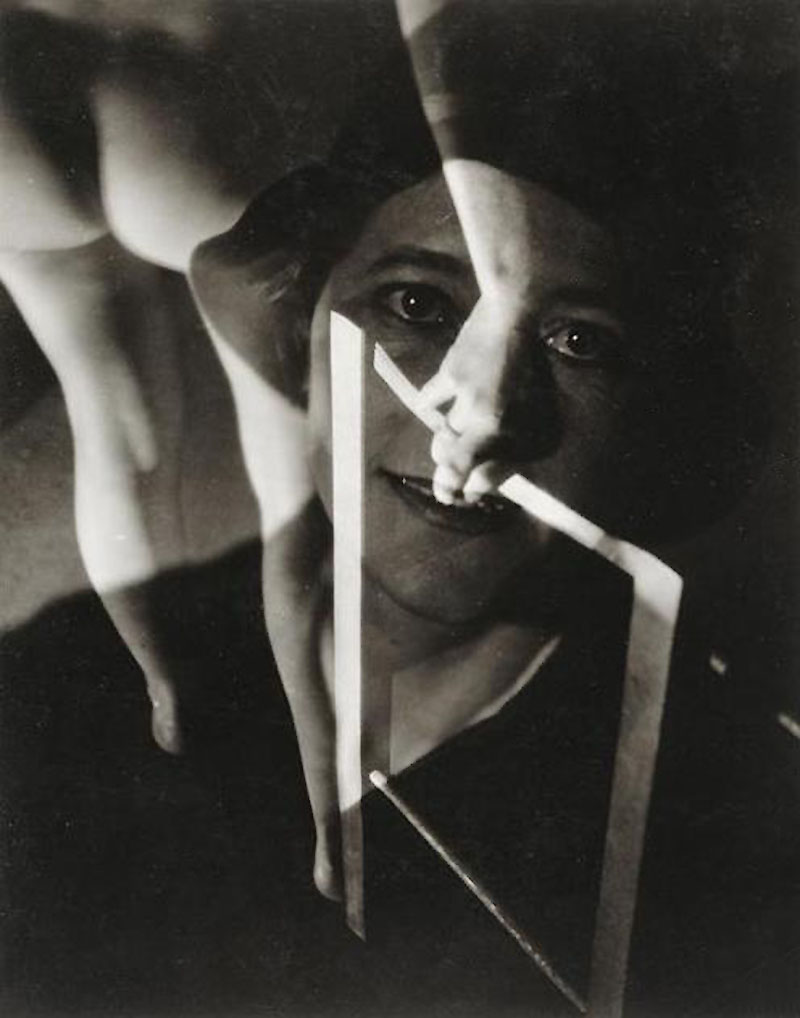
Roger Parry - Sans Titre, 1928 - 1930

Roger Parry – Sans Titre, 1928 – 1930

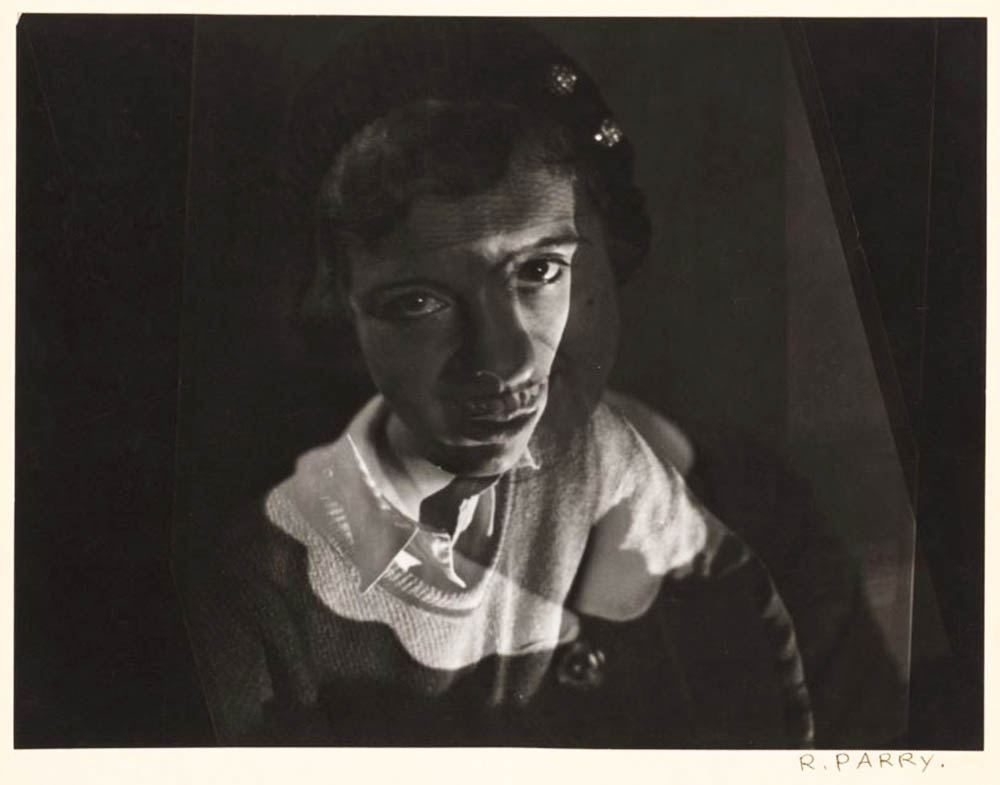
Roger Parry. Double Exposure, Robert Couturier, 1931© Ministère de la Culture - Médiathèque du Patrimoine

Roger Parry. Double Exposure, Robert Couturier, 1931© Ministère de la Culture – Médiathèque du Patrimoine

Roger Parry.- femme dans un lit, double exposition 1933.© Ministère de la Culture - Médiathèque du Patrimoine.&

Roger Parry.- femme dans un lit, double exposition 1933.© Ministère de la Culture – Médiathèque du Patrimoine.&

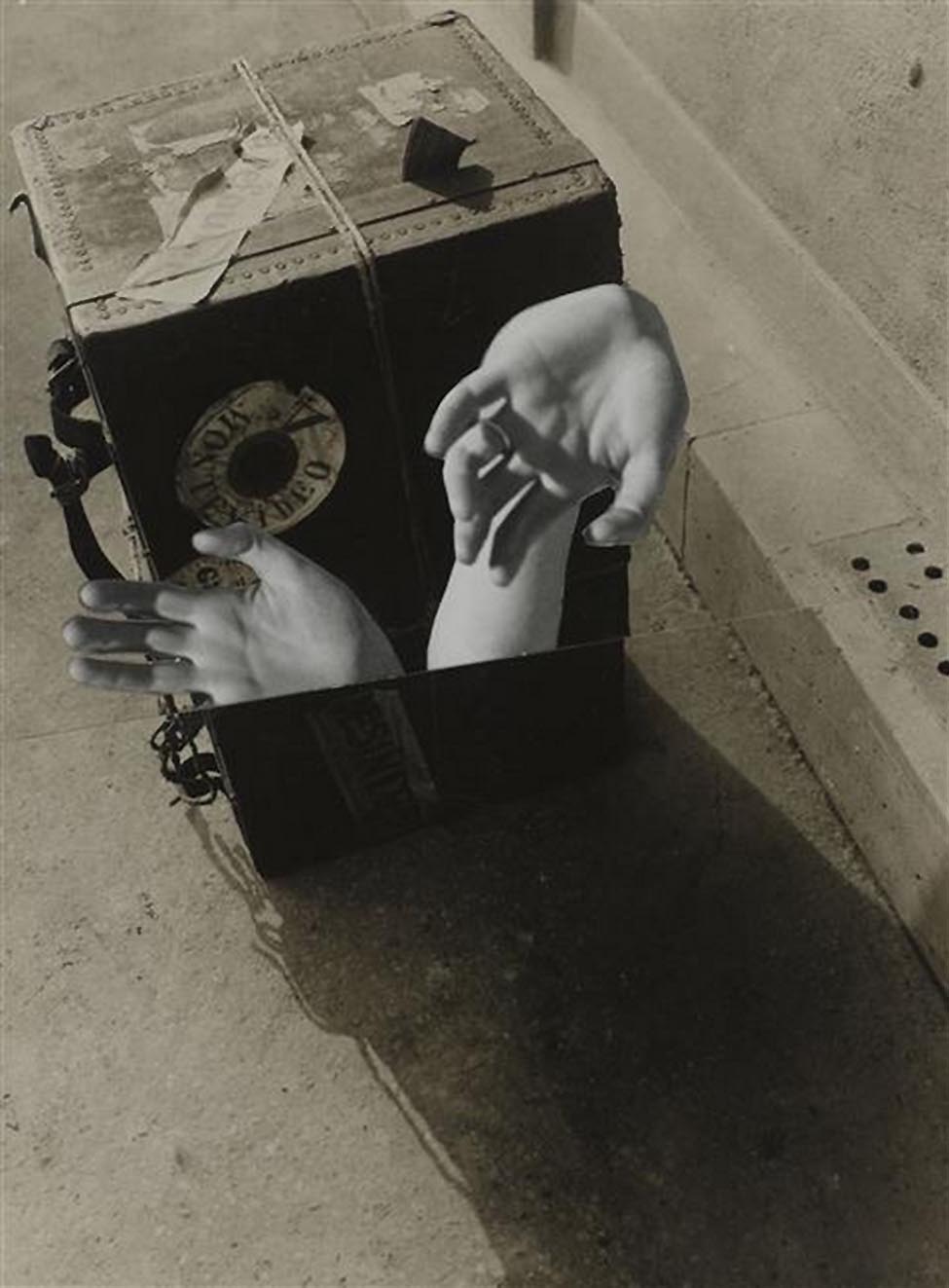
Roger Parry- La Malle,vers 1929

Roger Parry- La Malle,vers 1929

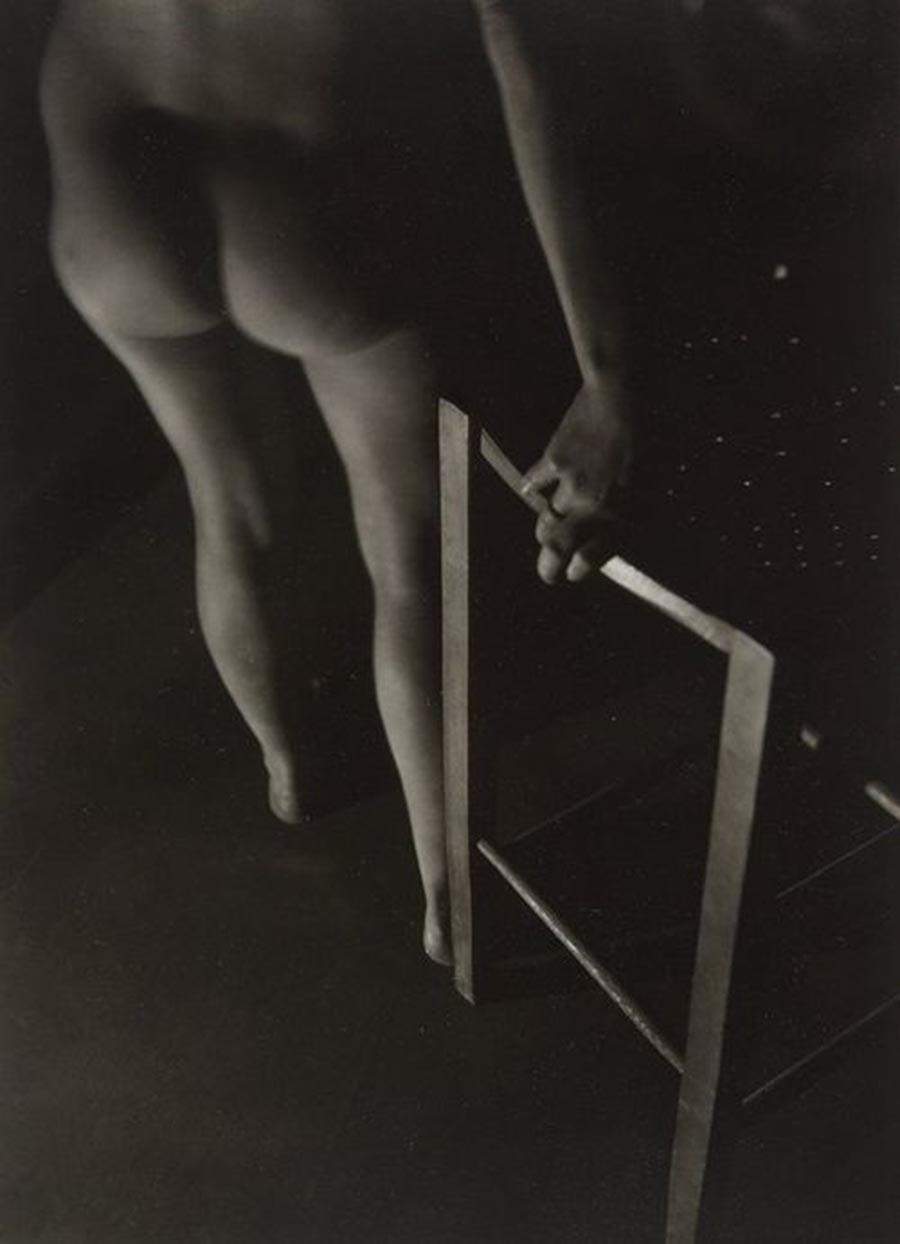
Roger Parry- Untitled, 1930s

Roger Parry- Untitled, 1930s

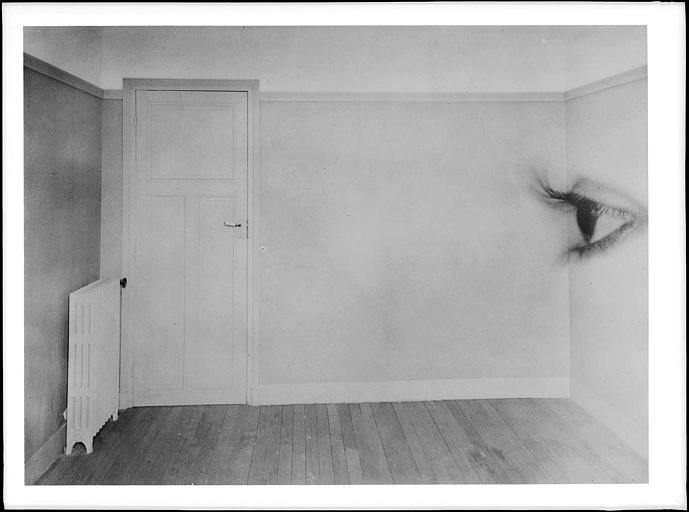
Roger Parry -Pièce vide et œil (double exposition), 1929

Roger Parry -Pièce vide et œil (double exposition), 1929

Roger Parry-Banalité 3, 1930

Roger Parry-Banalité 3, 1930

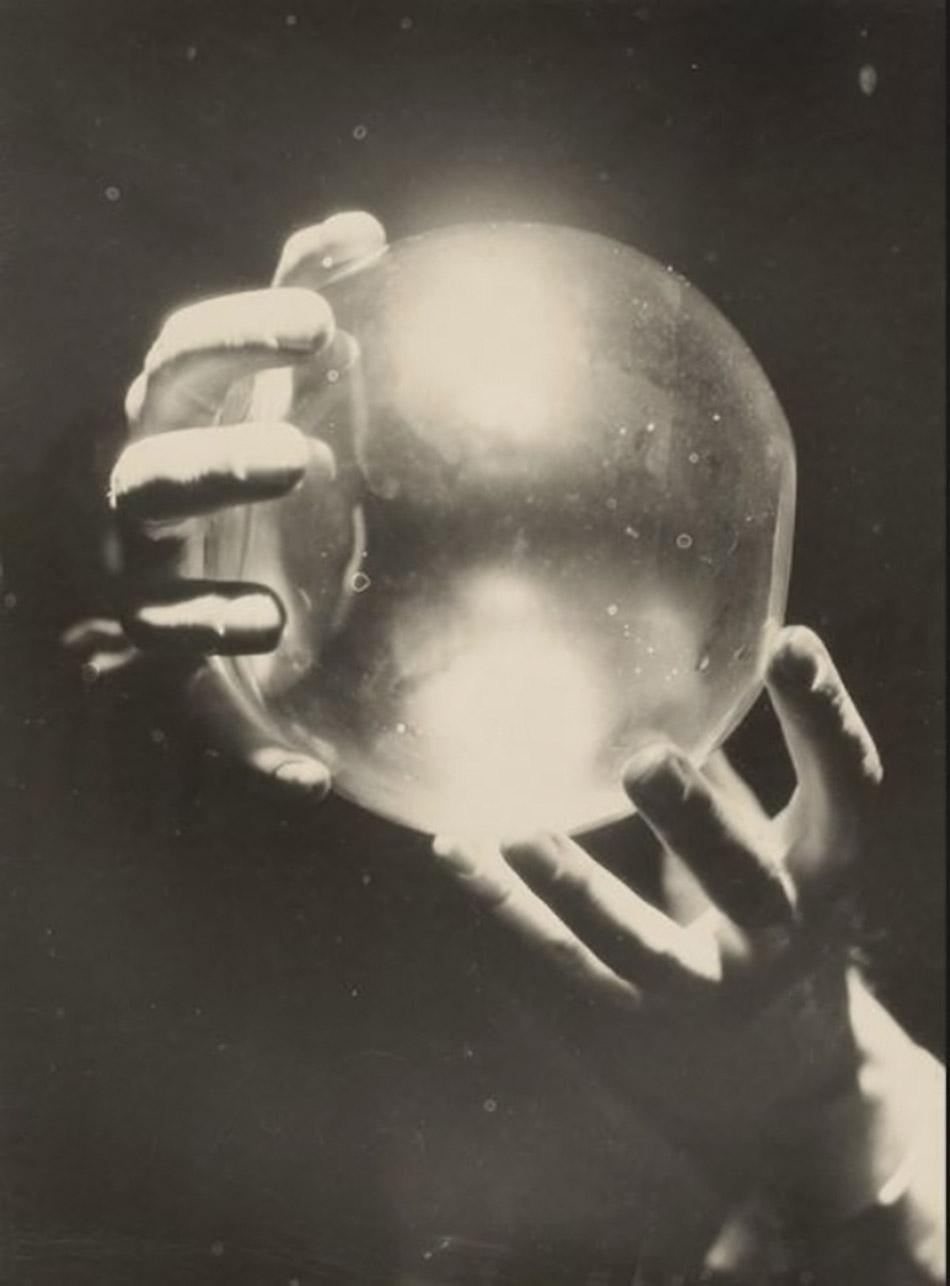
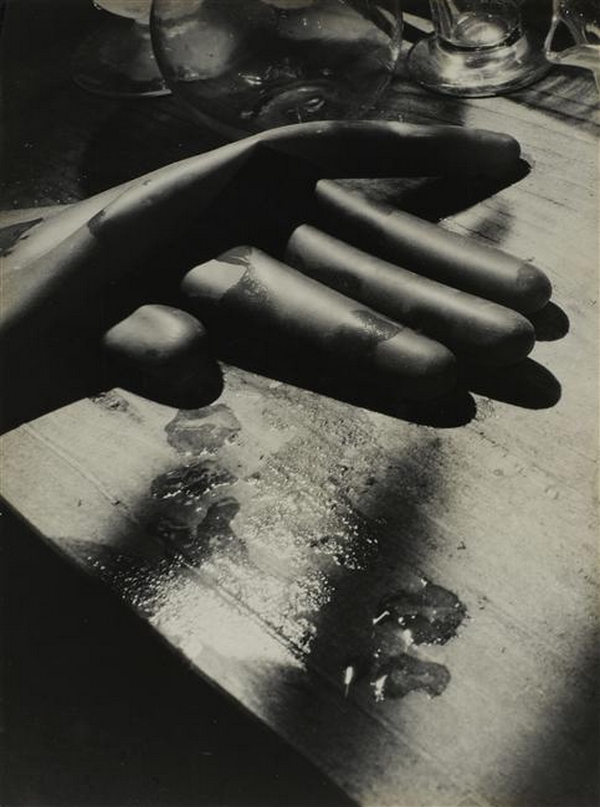
Roger Parry- Mains avec boule de cristal, Variation, 1930 © Ministère de la Culture - Médiathèque du Patrimoine edité pour for André Maurois’ Le peseur d’âmes en1932

Roger Parry- Mains avec boule de cristal, Variation, 1930 © Ministère de la Culture – Médiathèque du Patrimoine edité pour for André Maurois’ Le peseur d’âmes en1932

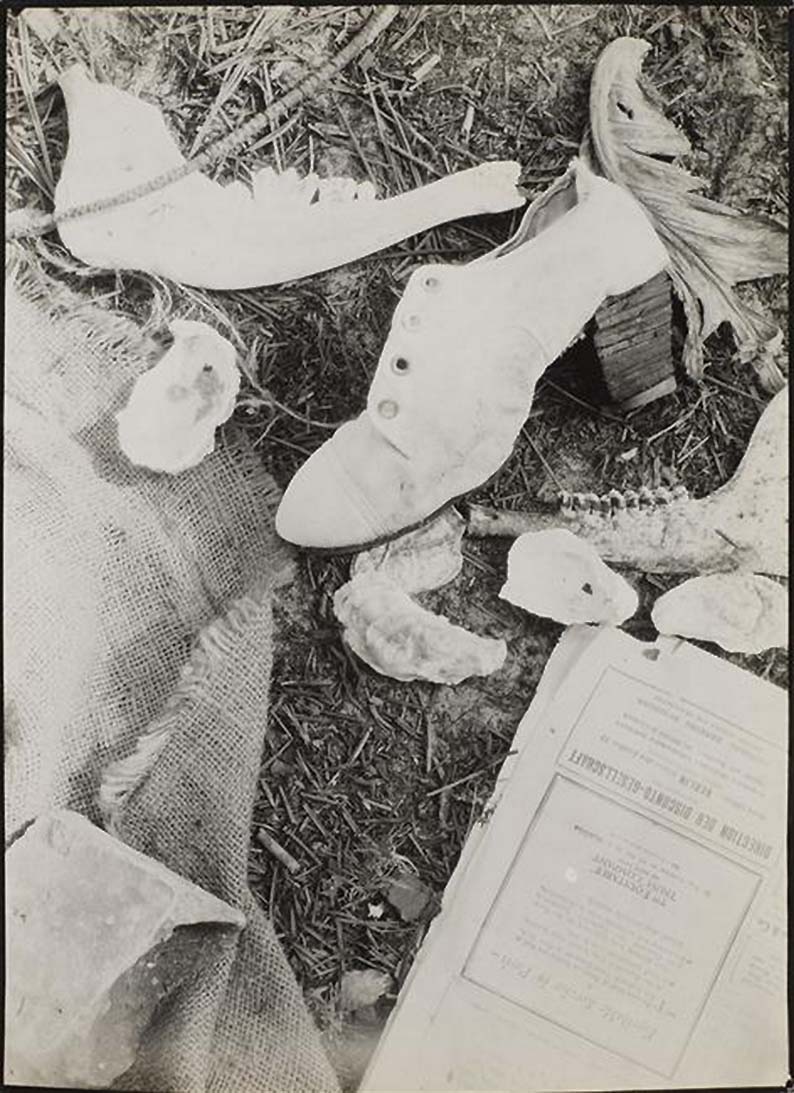
Roger Parry- Nature morte, 1929

Roger Parry- Nature morte, 1929

Roger Parry- Etude, 1930

Roger Parry- Etude, 1930

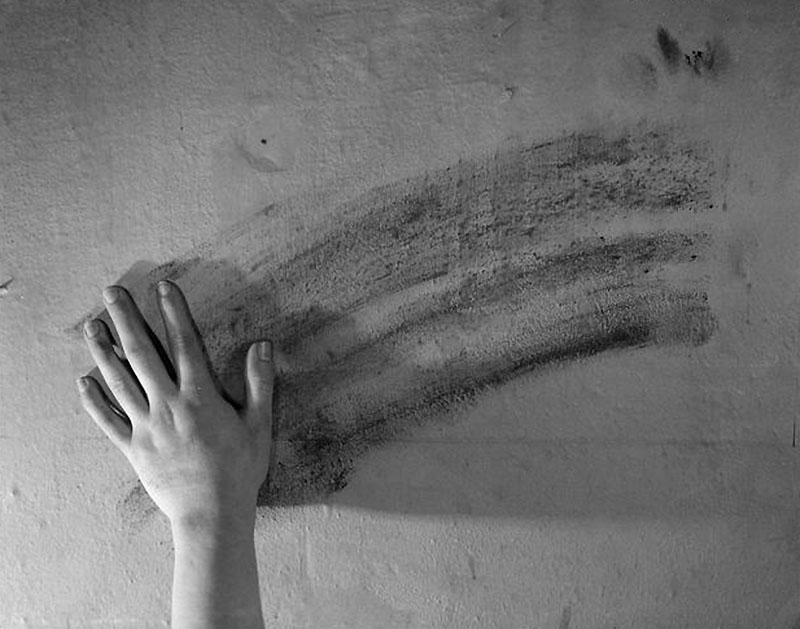
Roger Parry Main sur crépis avec traînée, 1928

Roger Parry Main sur crépis avec traînée, 1928

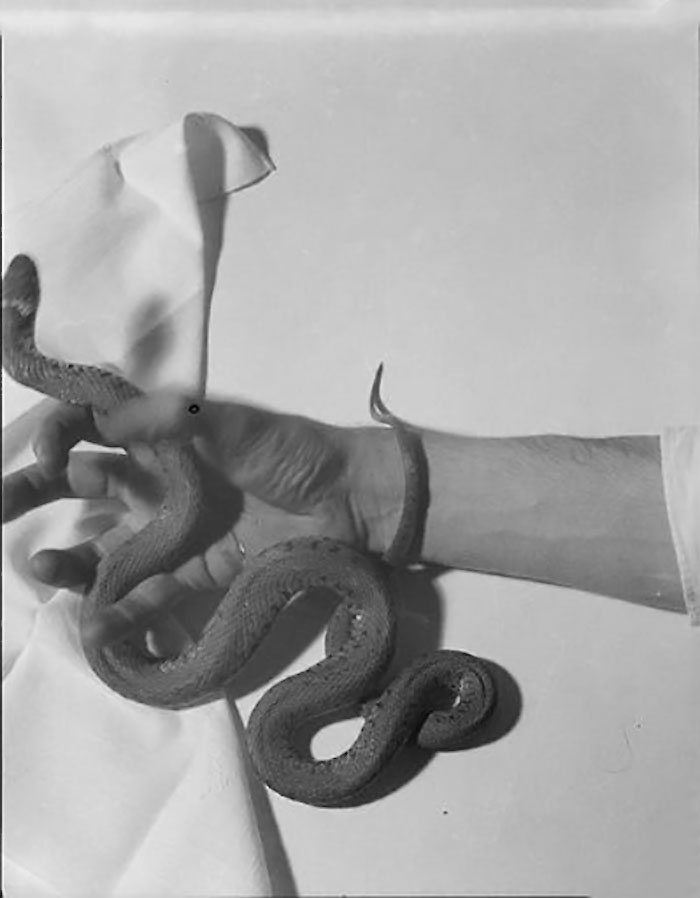
Roger Parry-Un serpent s'enroule autour des doigts et du poignet d'un homme 1933

Roger Parry-Un serpent s’enroule autour des doigts et du poignet d’un homme 1933

Roger Parry -Illustration pour la couverture d'un roman de Sidney Fairway , Un serpent et une main crispée,1933

Roger Parry -Illustration pour la couverture d’un roman de Sidney Fairway , Un serpent et une main crispée,1933

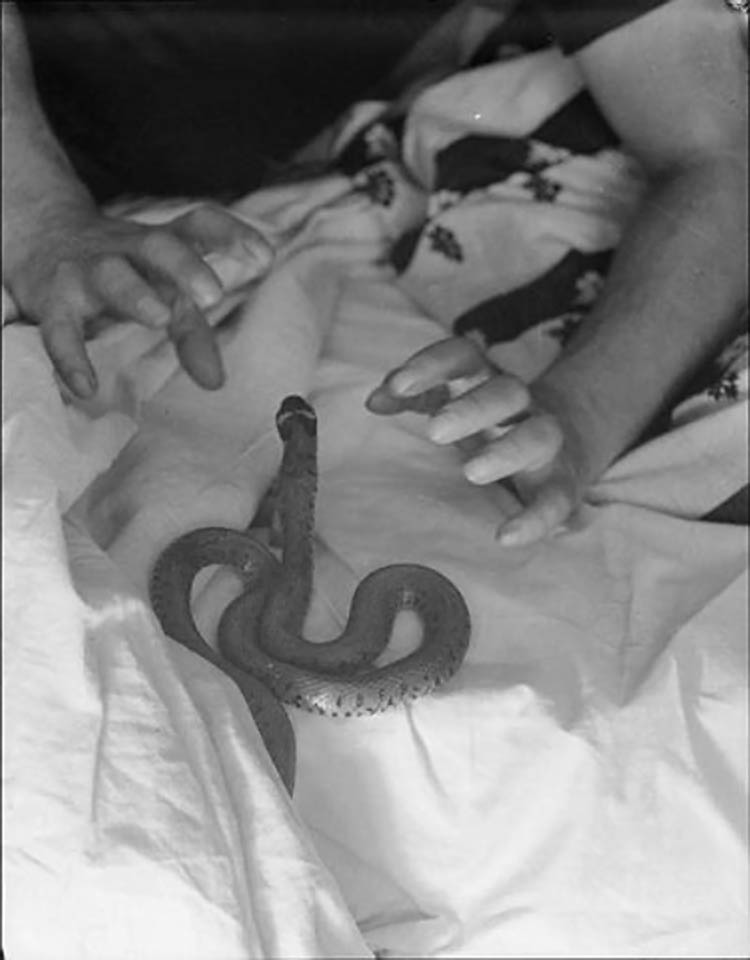
Roger Parry- Un serpent dans des draps et deux mains crispées, 1933

Roger Parry- Un serpent dans des draps et deux mains crispées, 1933

Roger Parry-Illustration de la couverture d'un roman de Maurice Marrou ; Une femme renversée et une valise1933

Roger Parry-Illustration de la couverture d’un roman de Maurice Marrou ; Une femme renversée et une valise, 1933

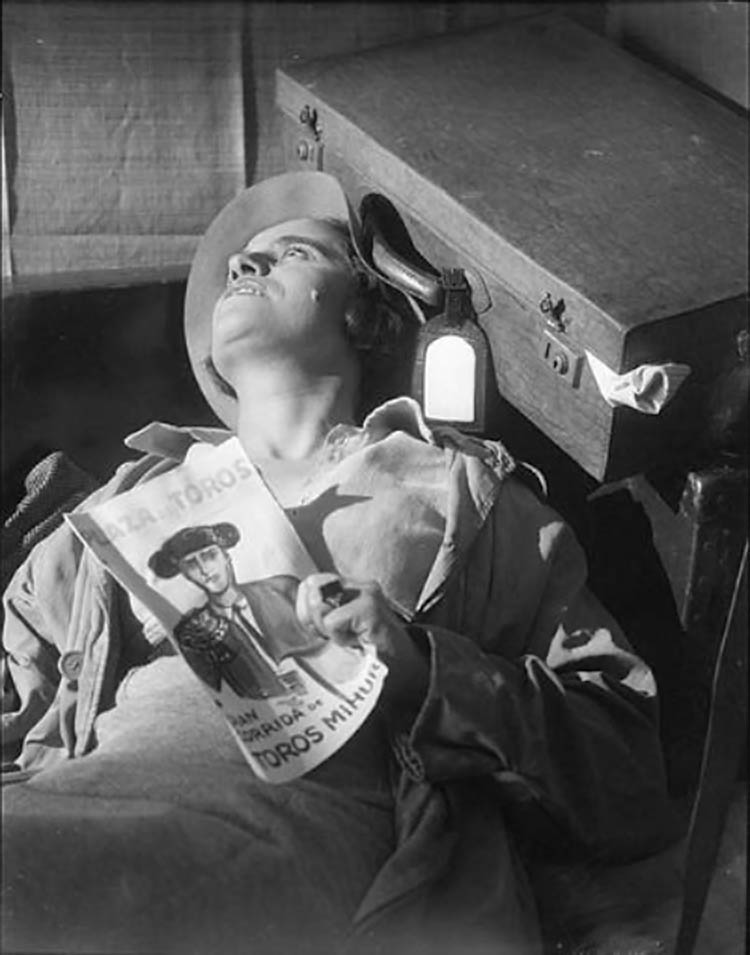
Roger Parry- Une femme étendue sur le dos, les yeux ouverts, la tête contre une valise et une revue de tauromachie dans une main1933

Roger Parry- Une femme étendue sur le dos, les yeux ouverts, la tête contre une valise et une revue de tauromachie dans une main, 1933

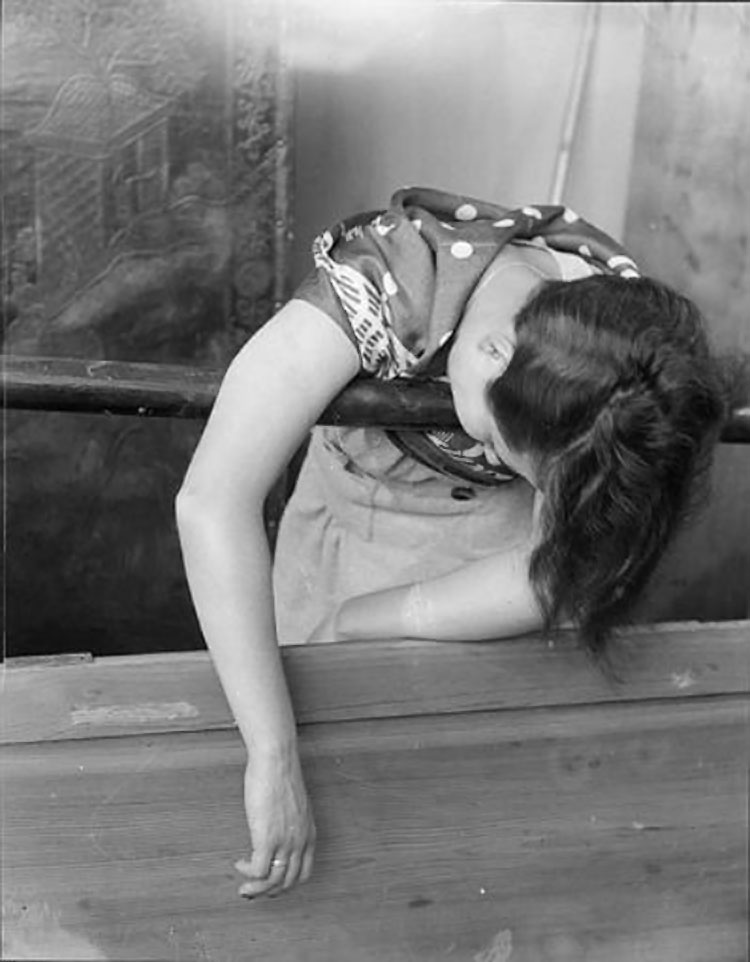
Roger Parry Une femme inconsciente est soutenue par une rambarde 1934

Roger Parry Une femme inconsciente est soutenue par une rambarde 1934

Roger Parry- Femme soufflant dans un gros coquillage,nd1

Roger Parry- Femme soufflant dans un gros coquillage,nd1

Roger Parry- Femme soufflant dans un gros coquillage,nd

Roger Parry- Femme soufflant dans un gros coquillage,nd

Roger Parry-autoportrait, , 1942

Roger Parry-autoportrait, , 1942

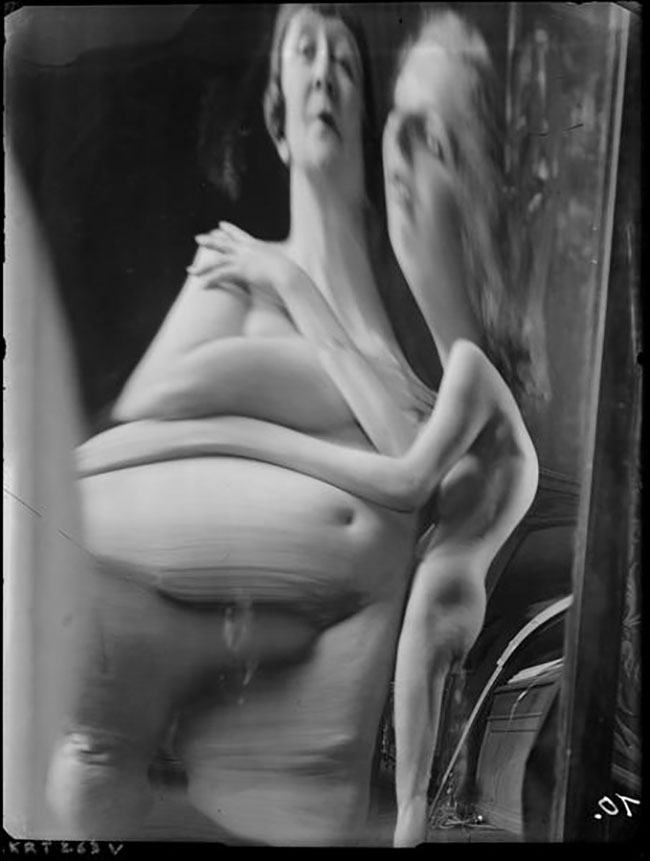
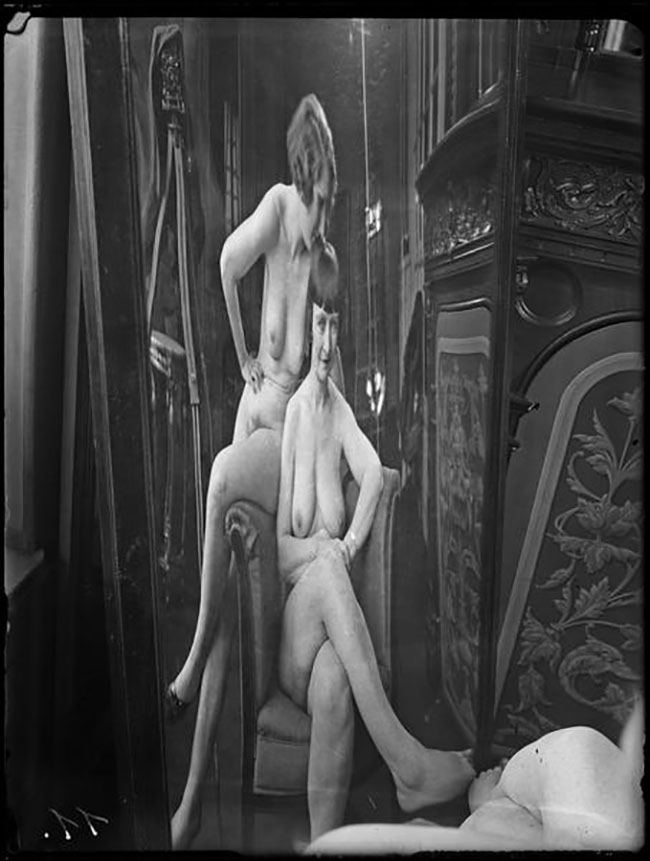
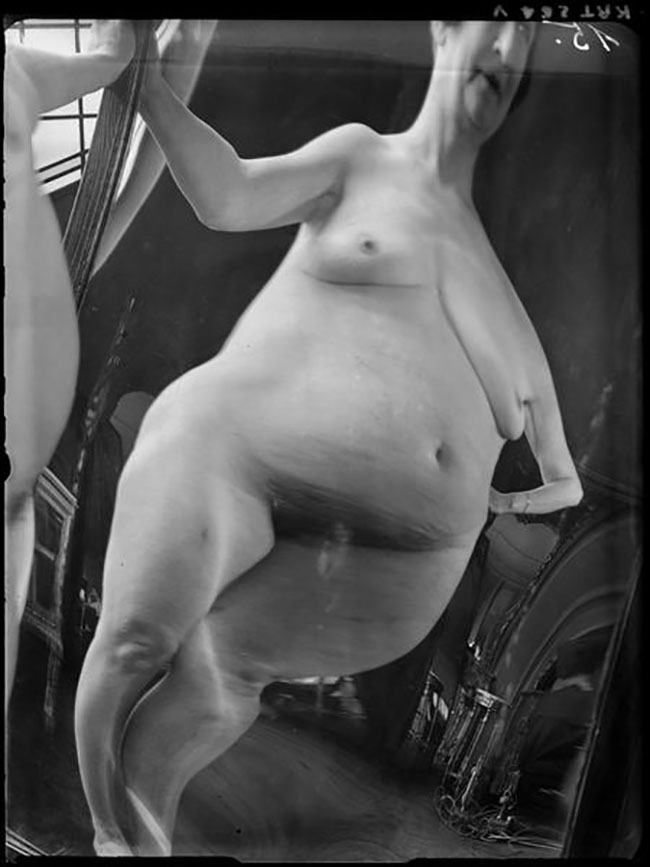
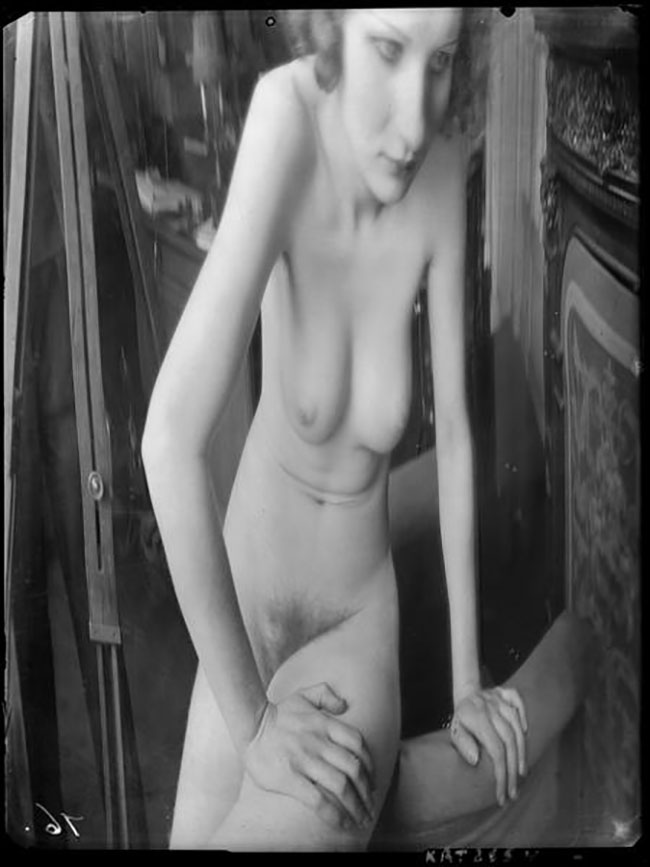
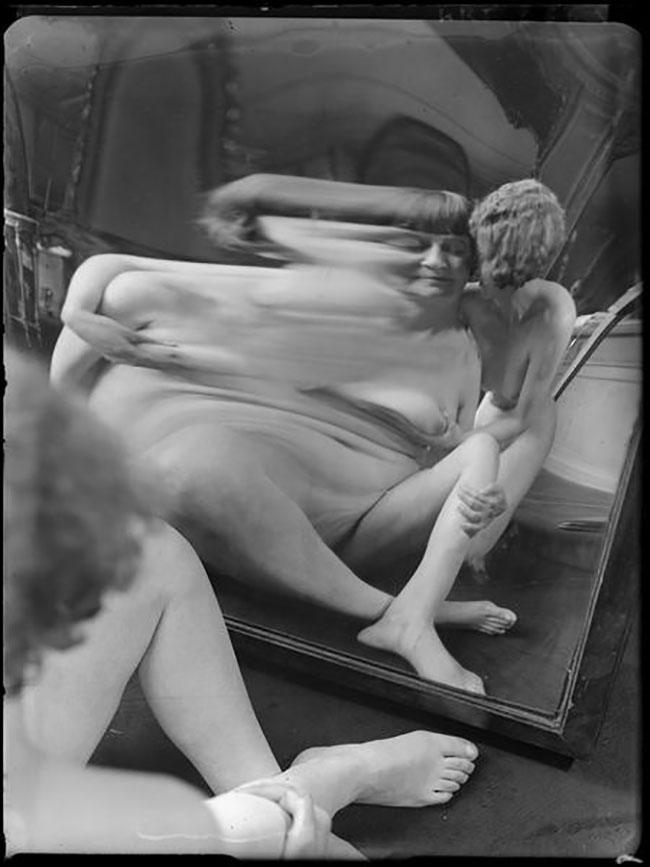
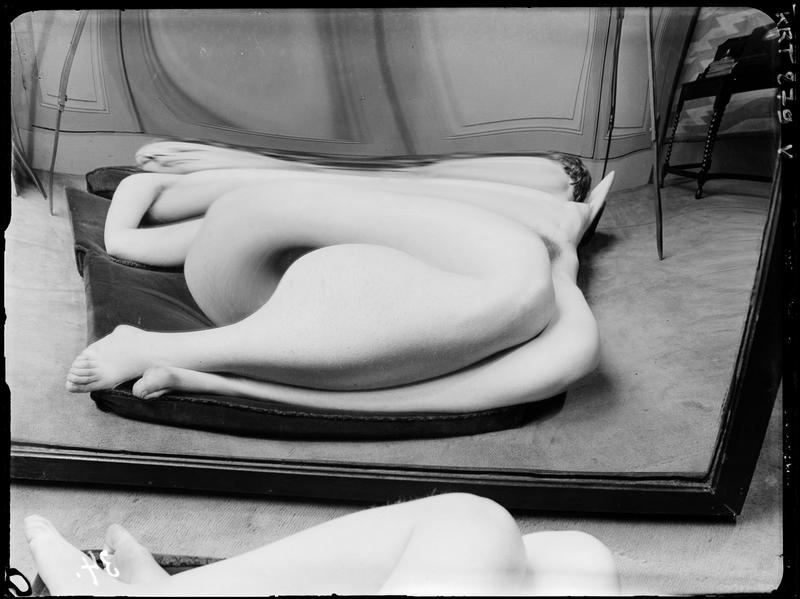
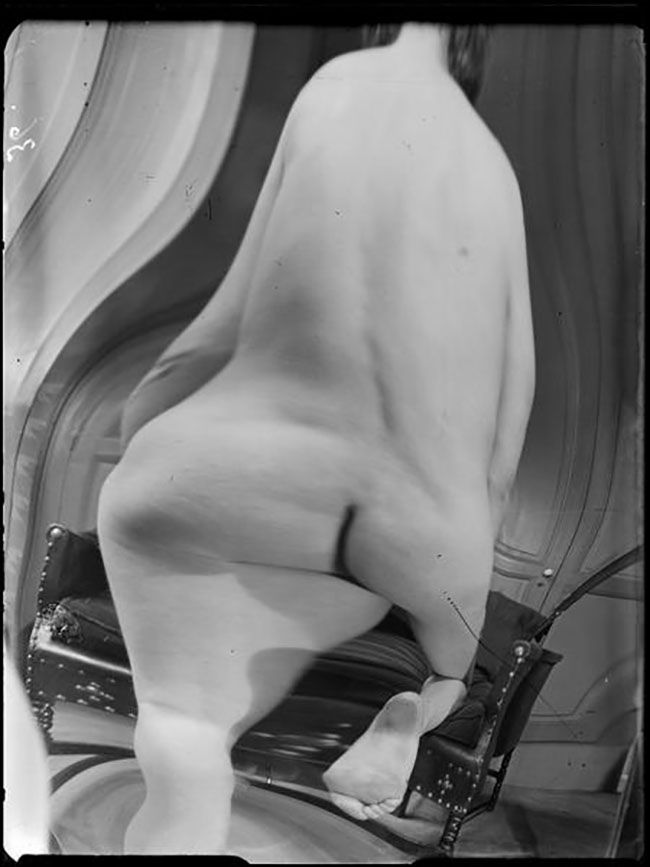
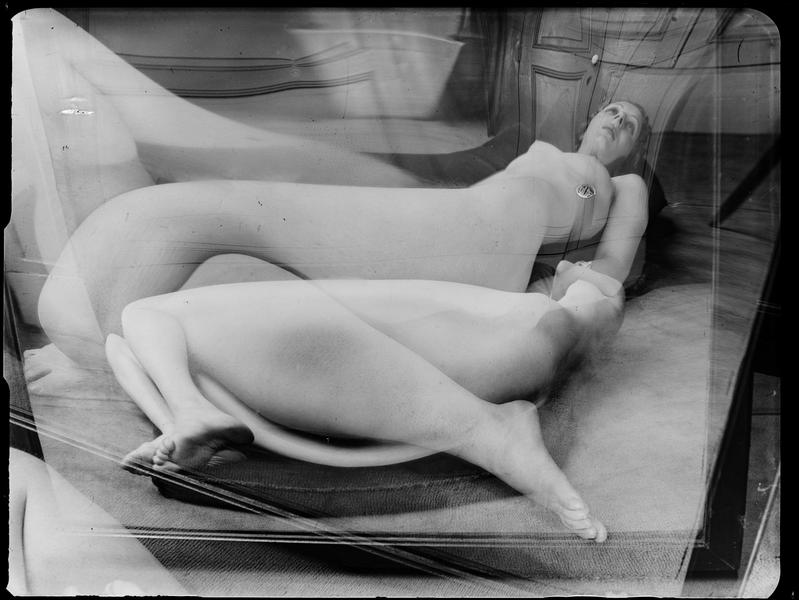
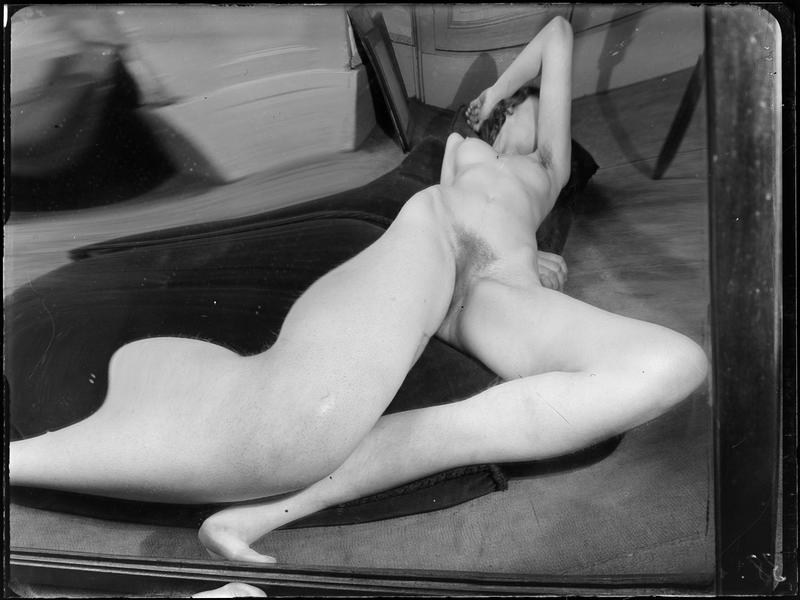
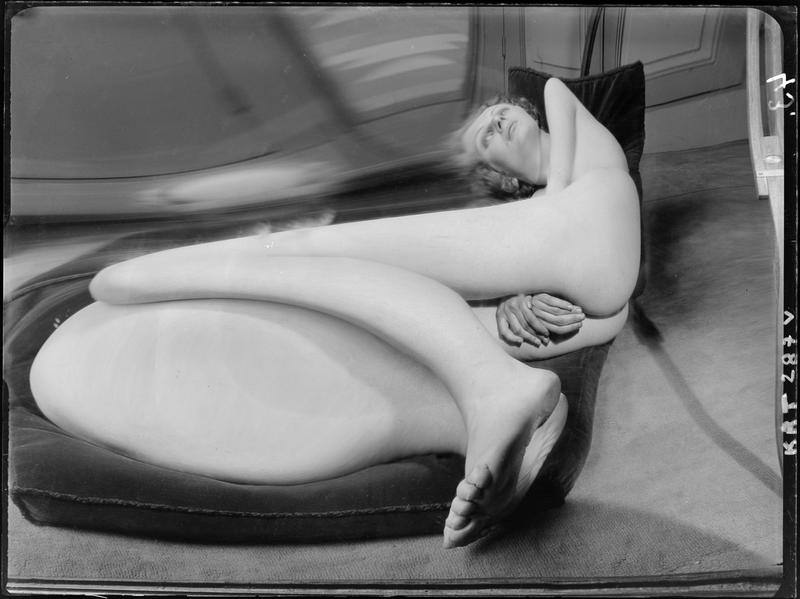
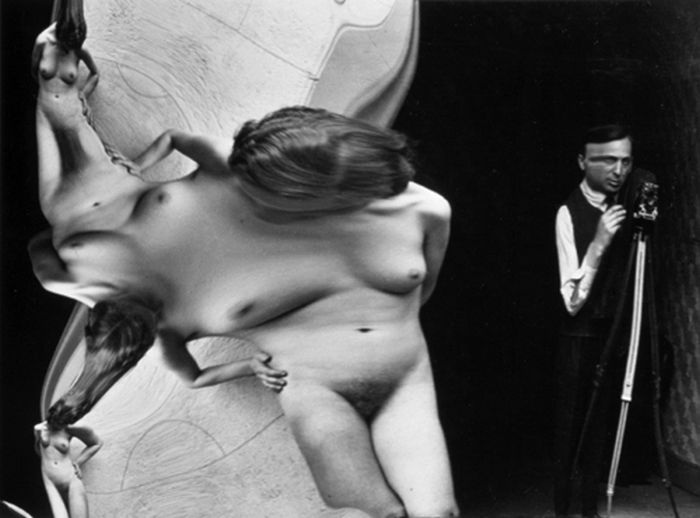
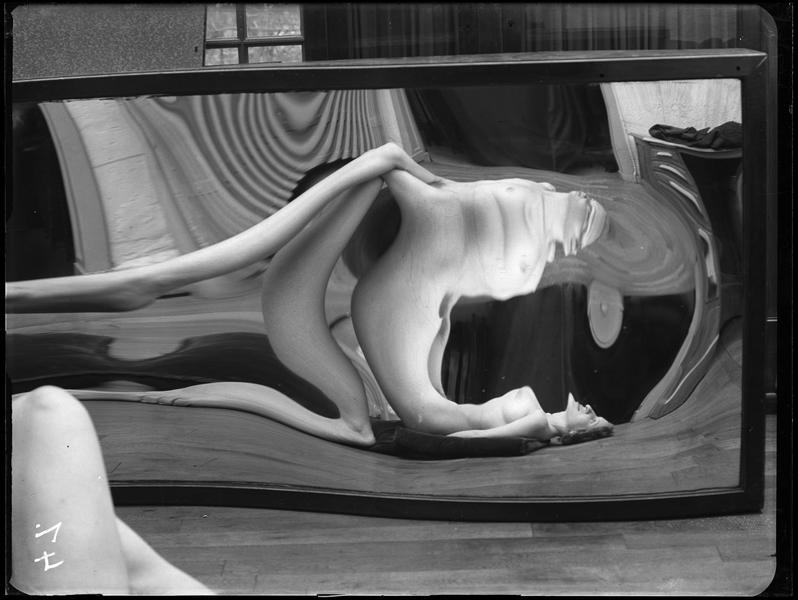
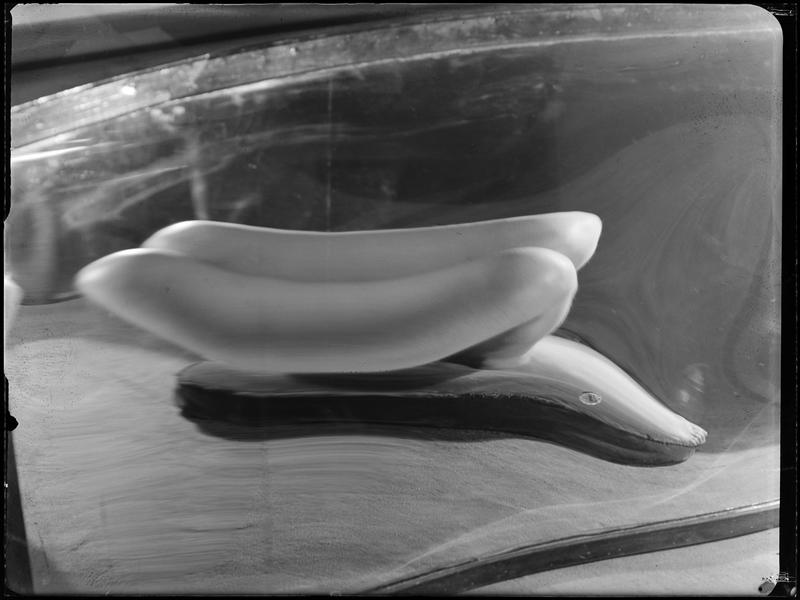
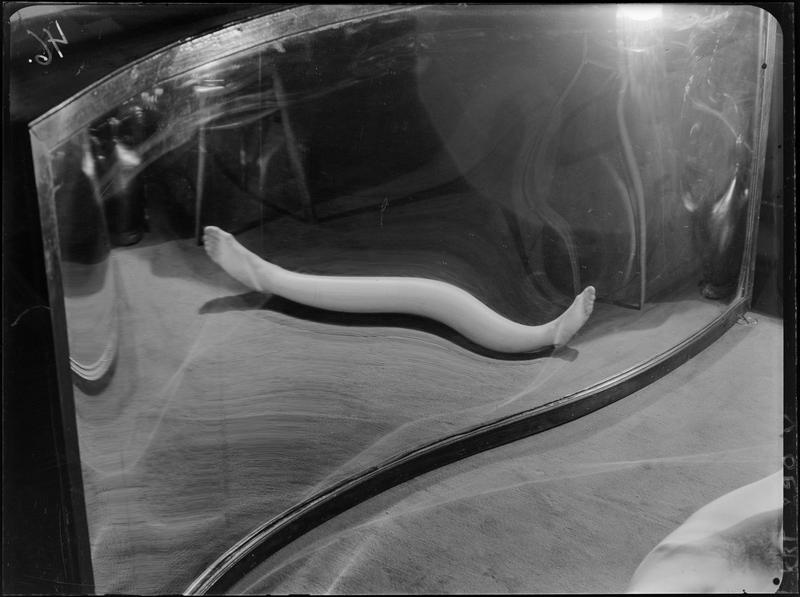
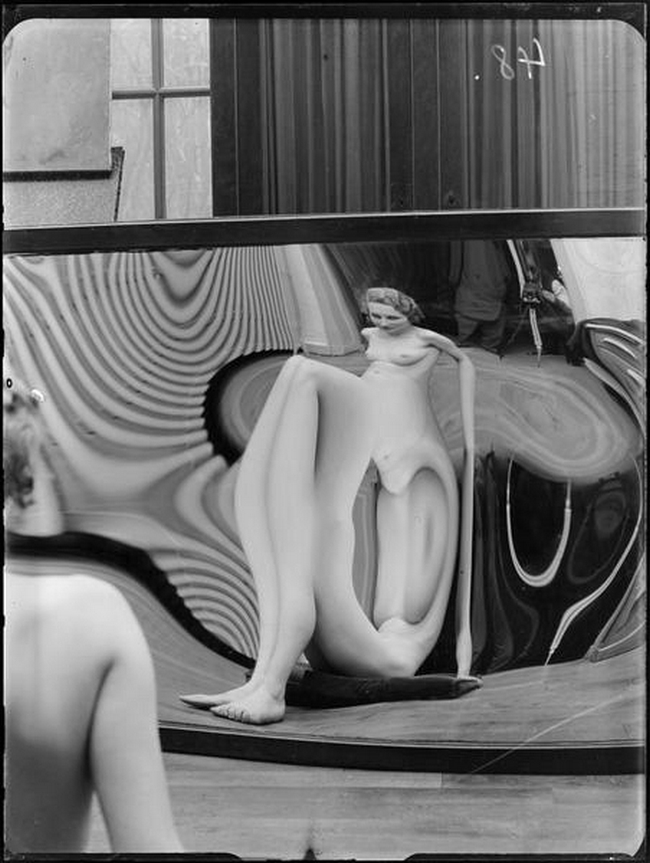
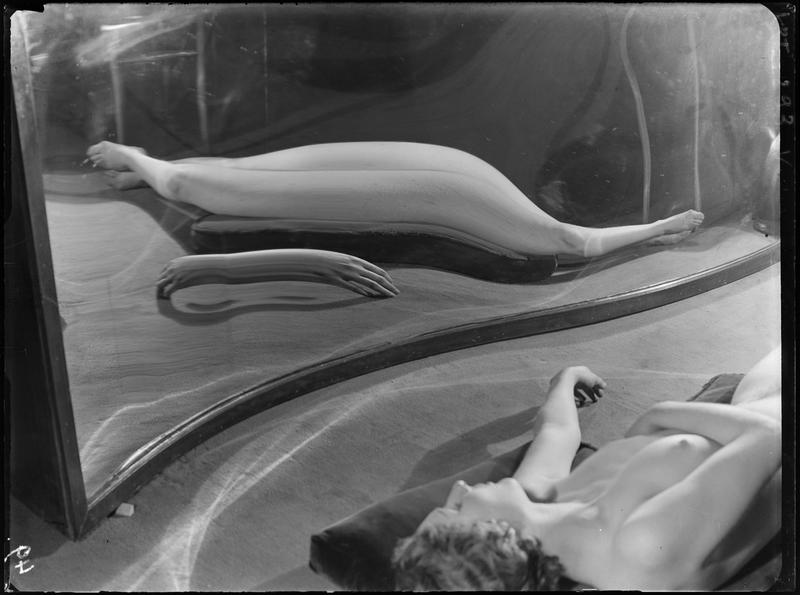
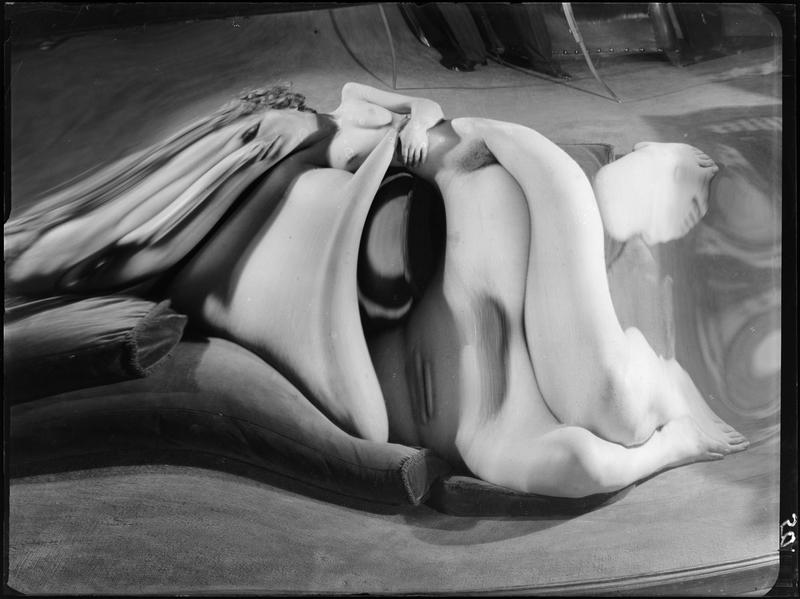
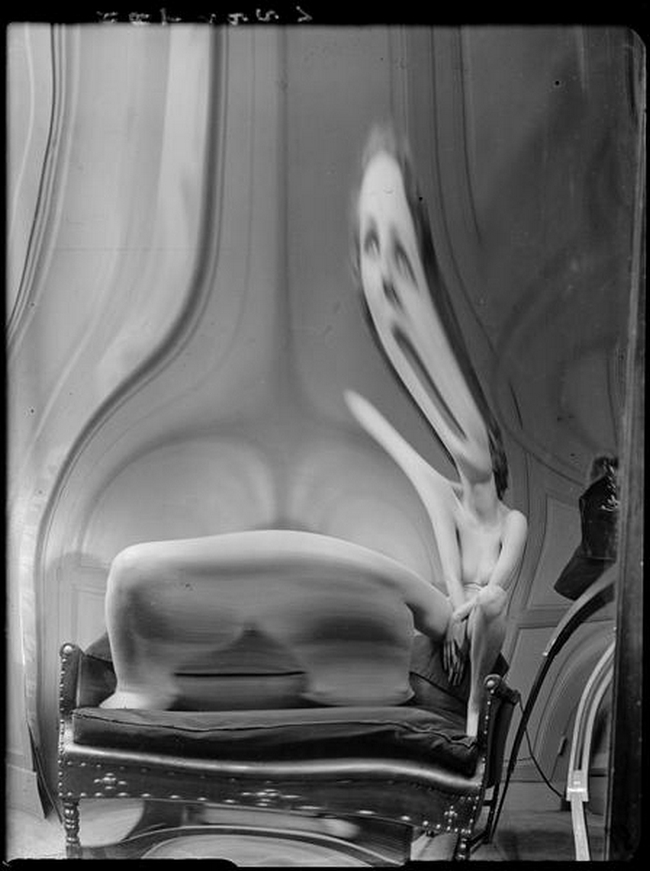
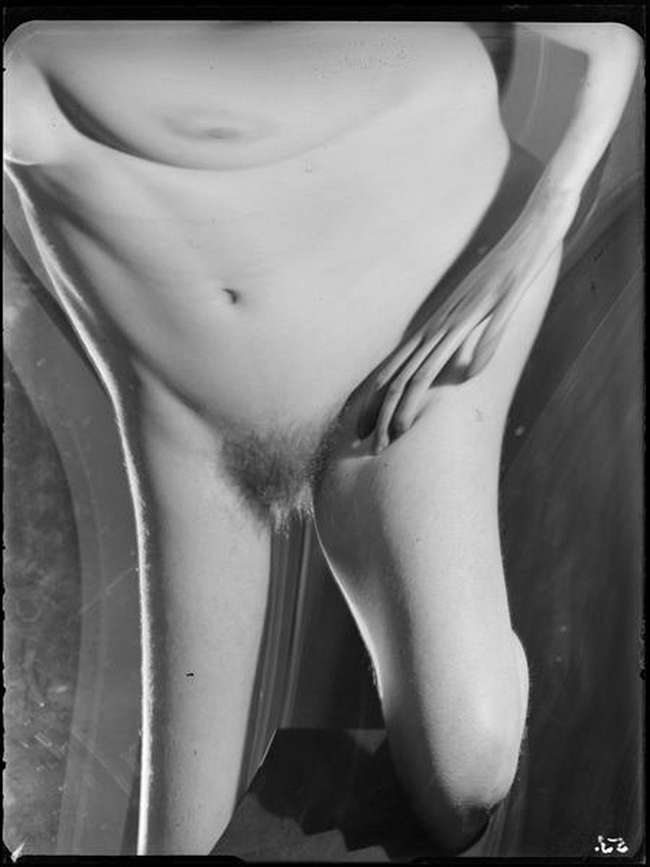
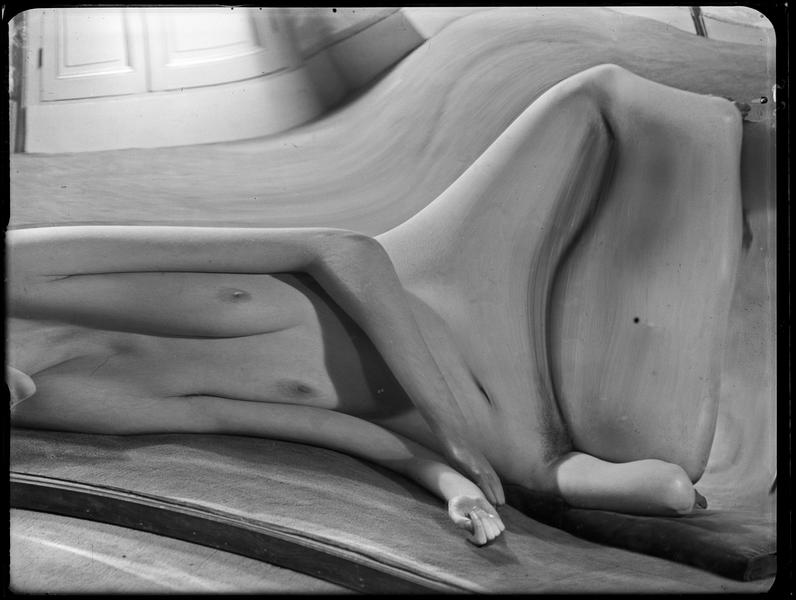
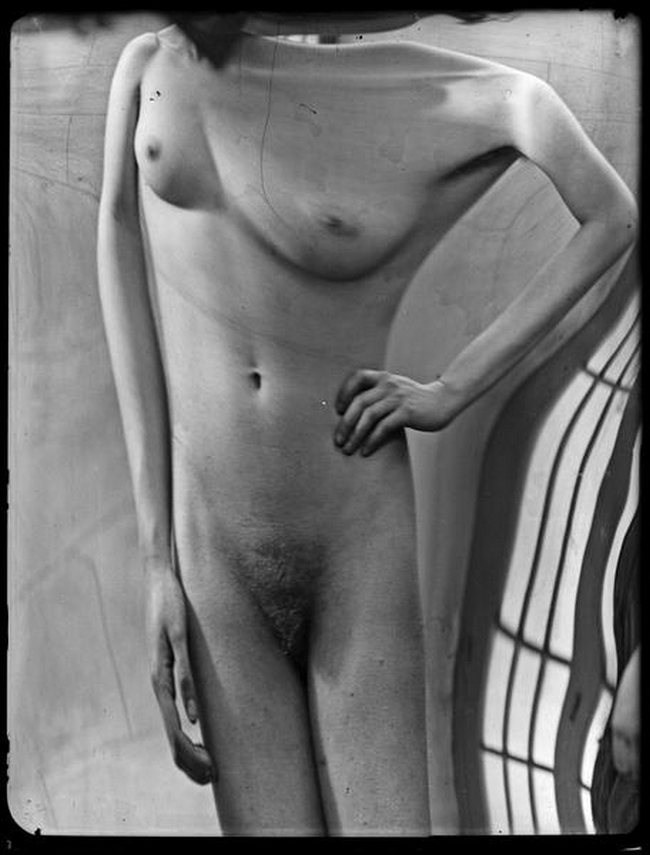
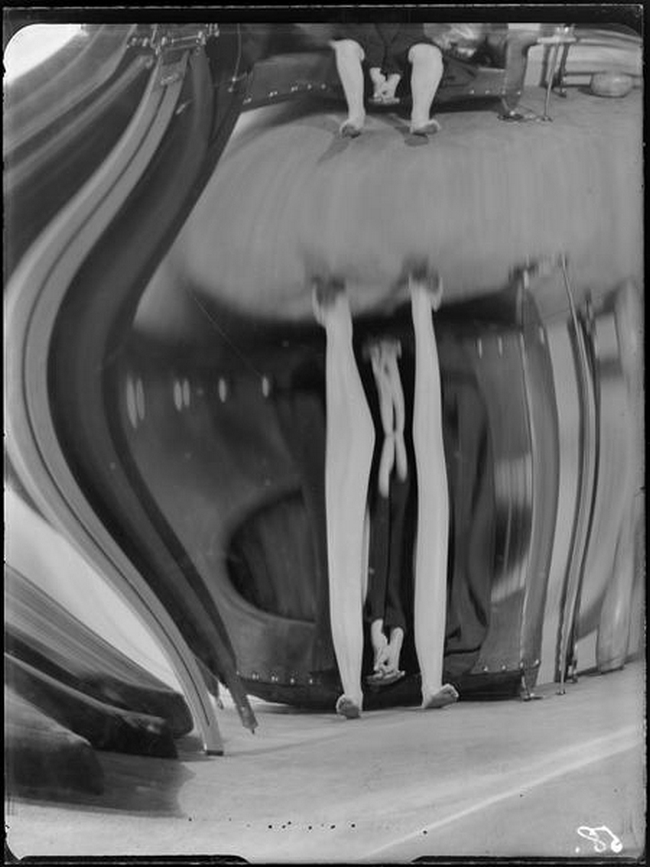
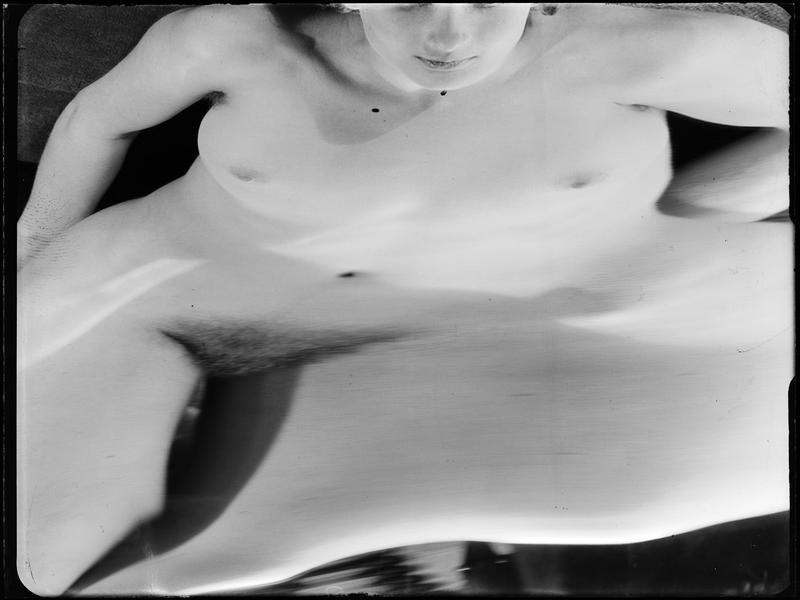
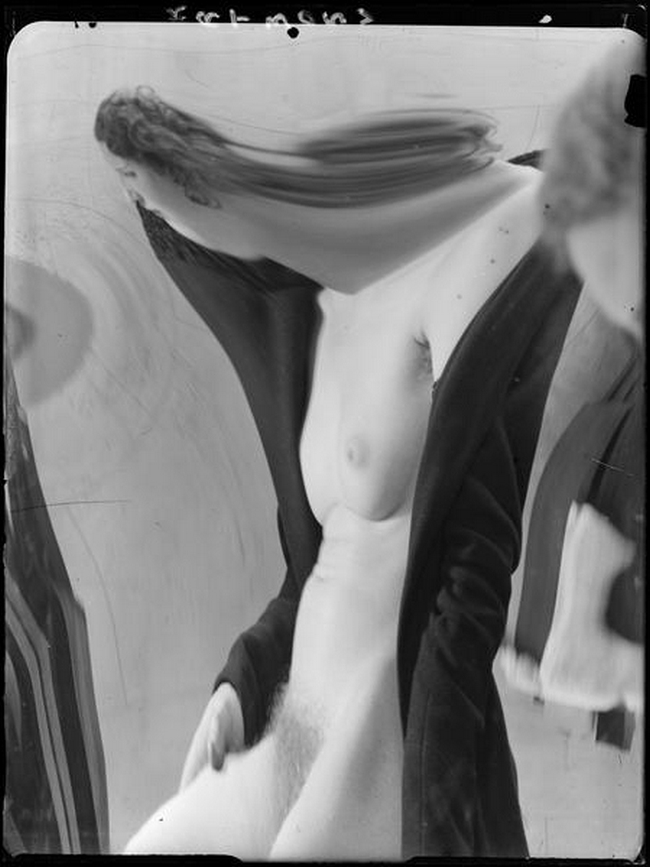
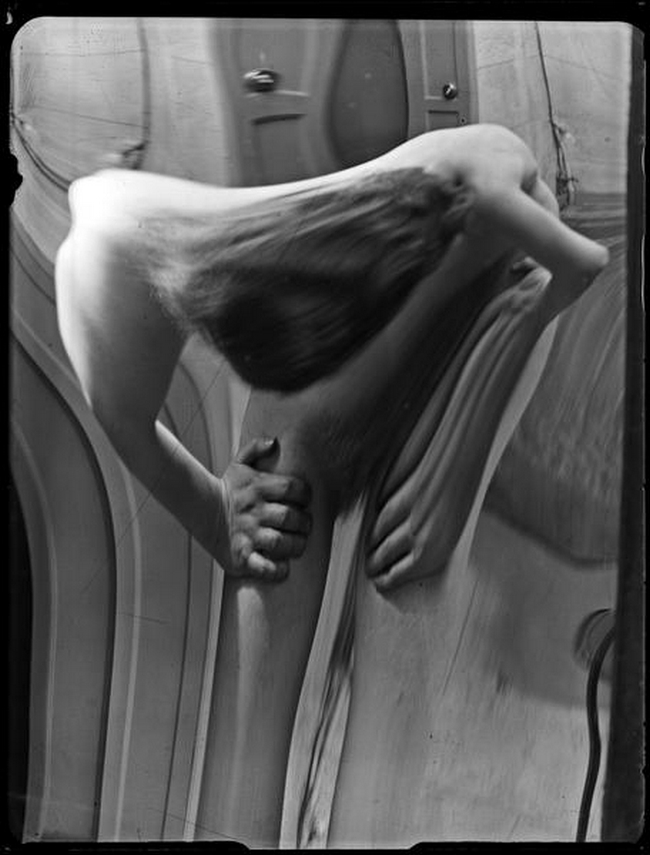
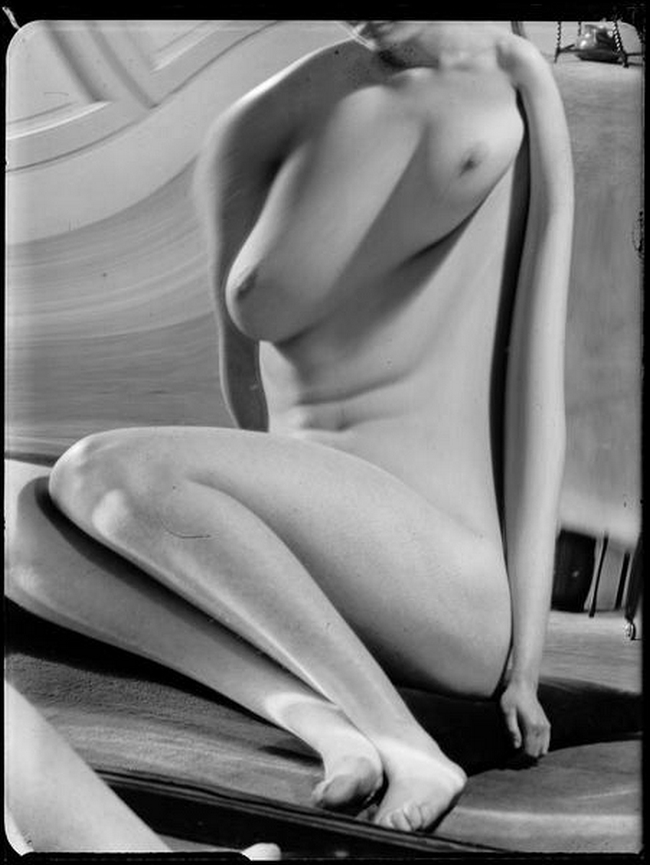
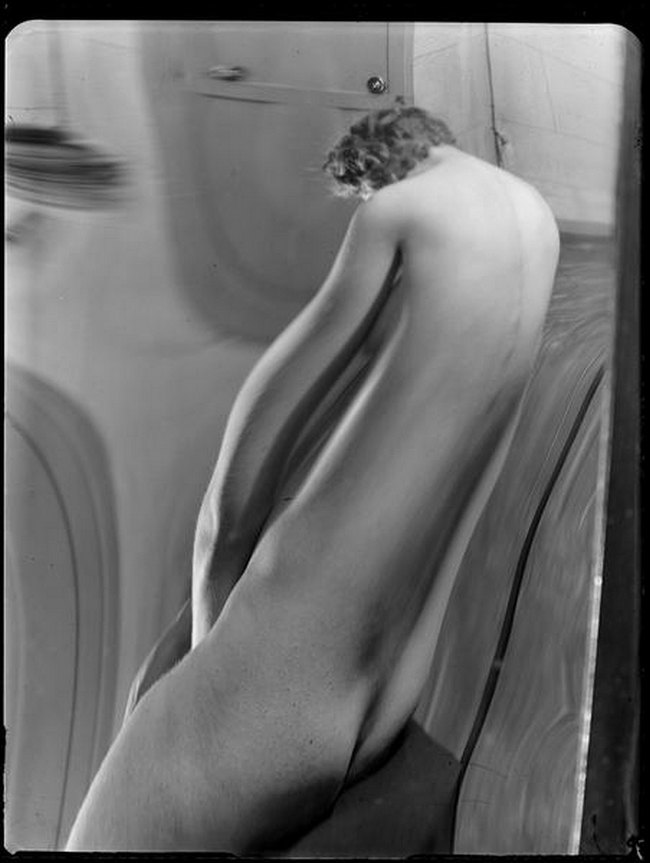
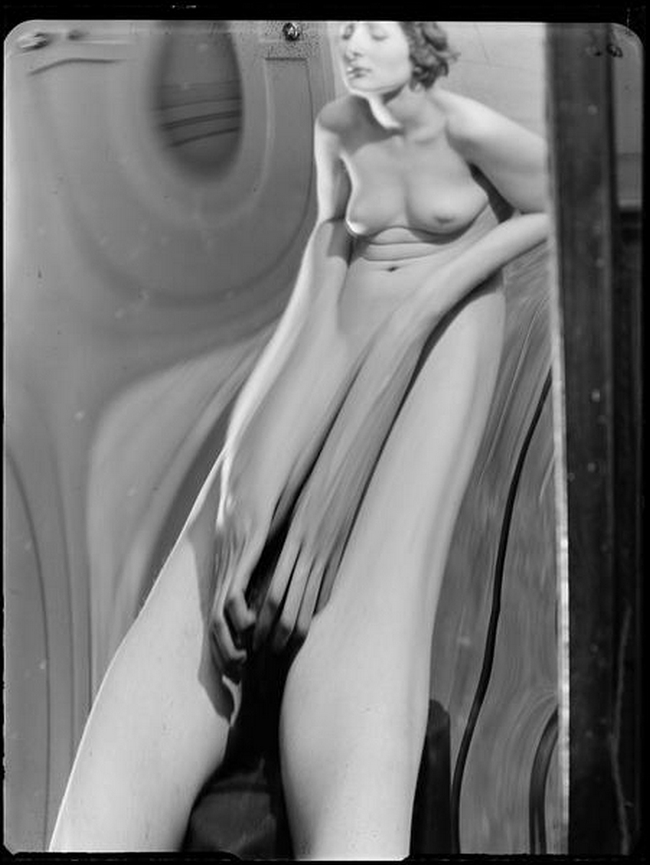
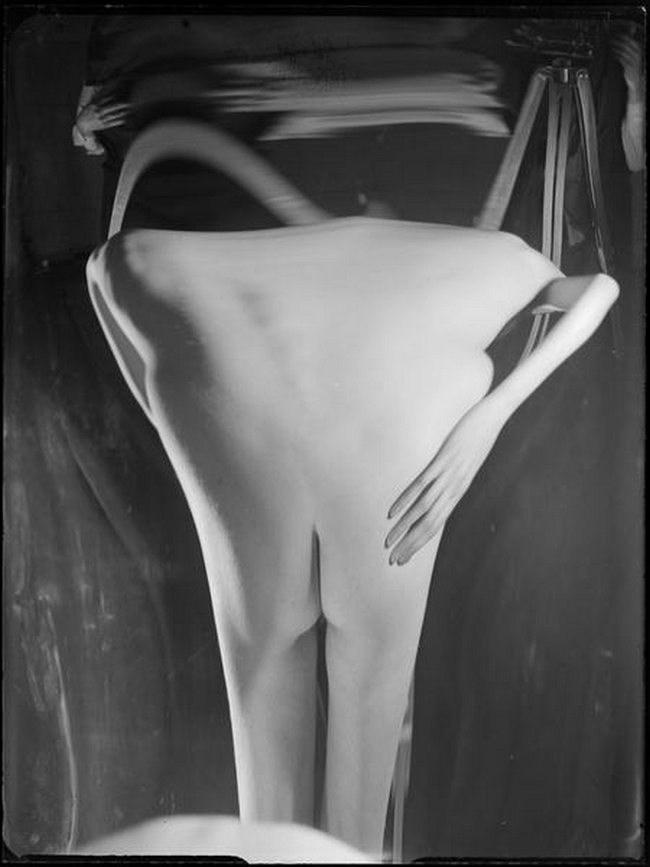
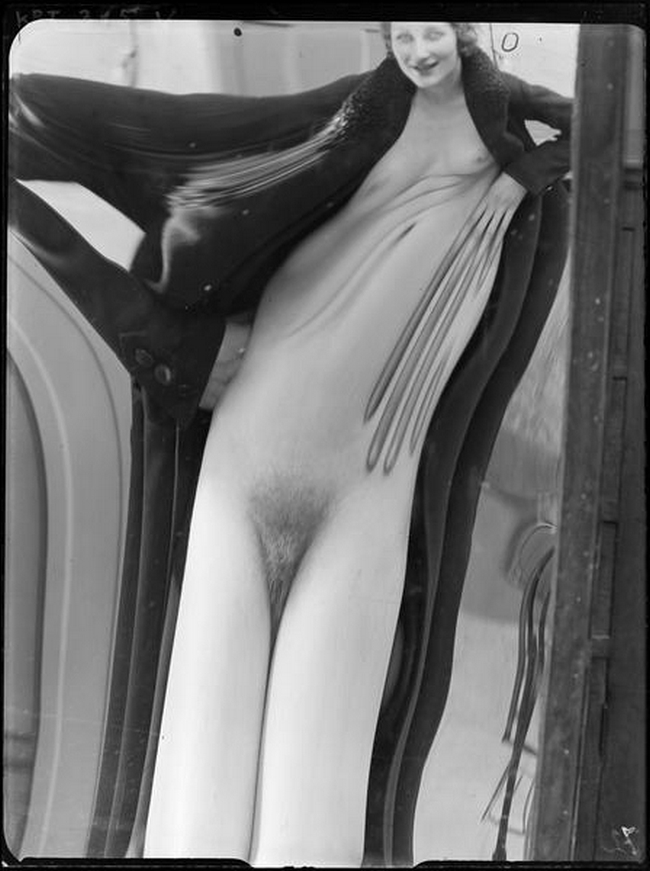
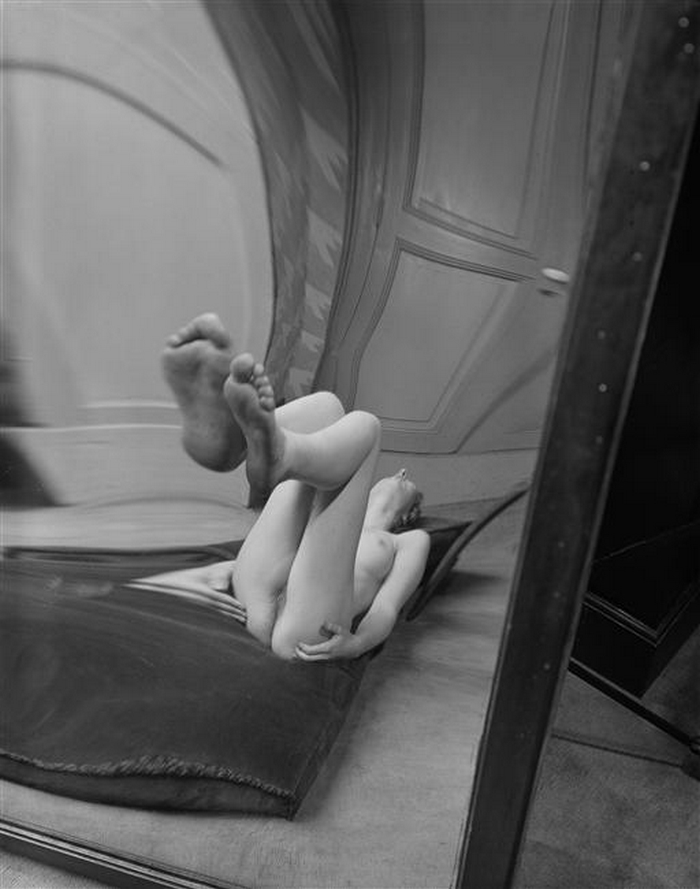
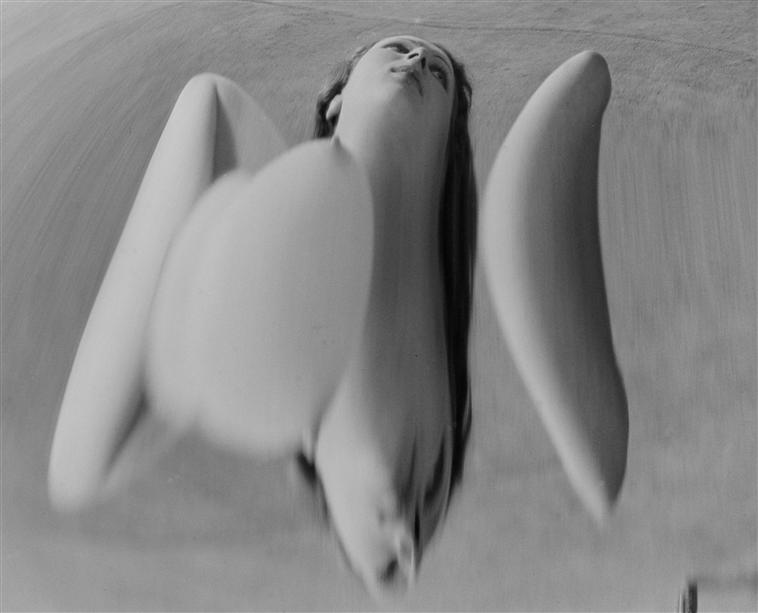
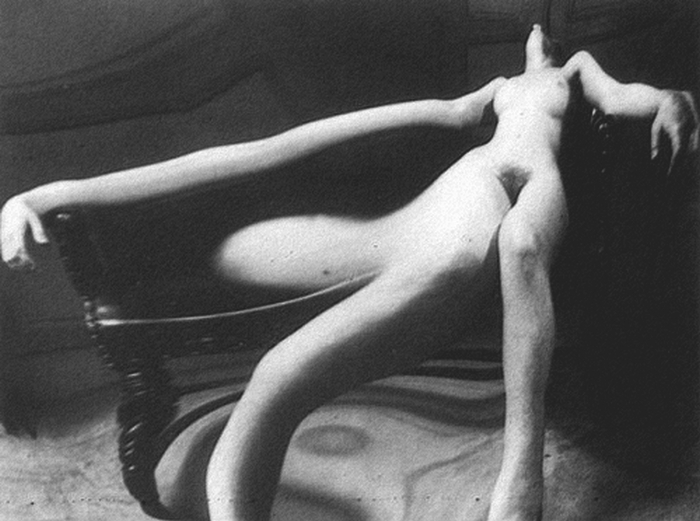
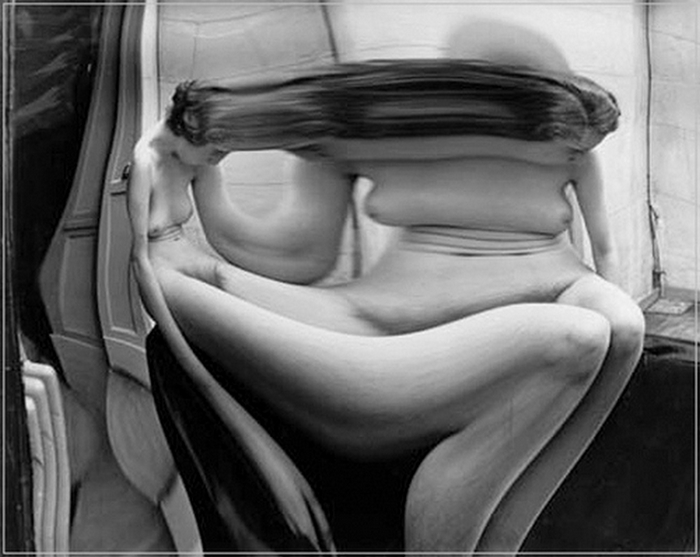
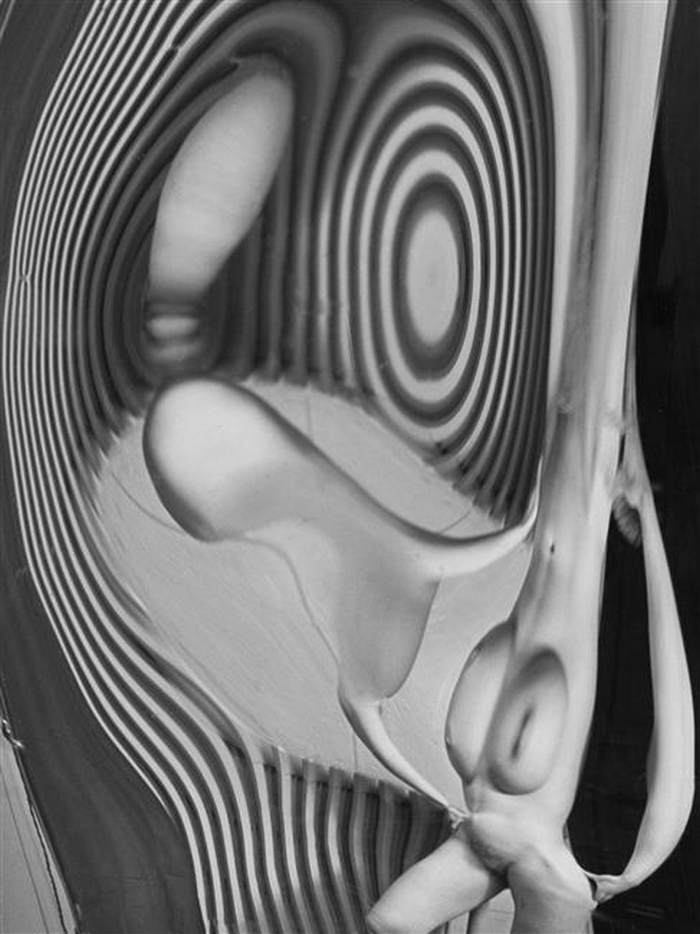
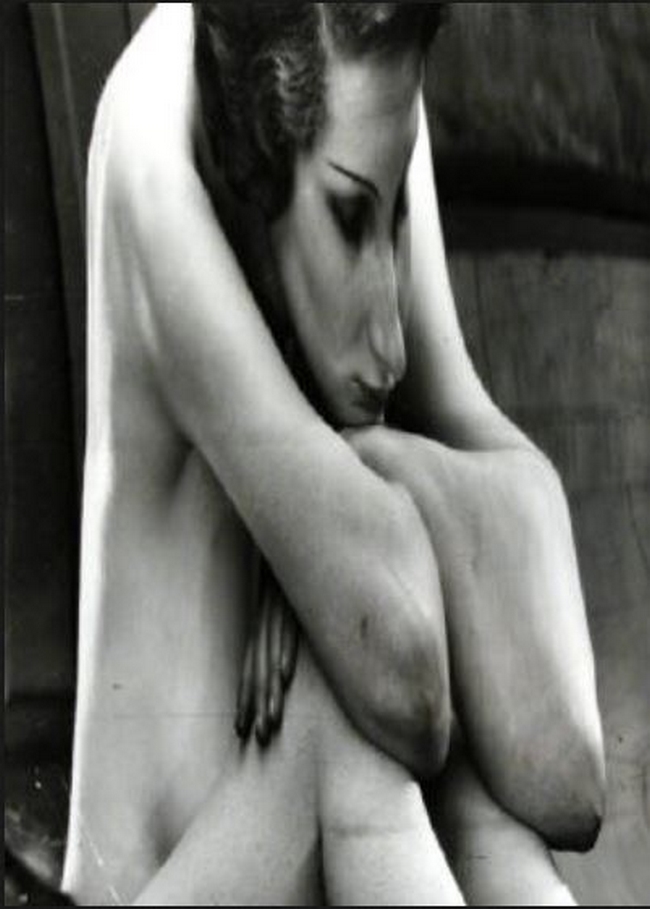
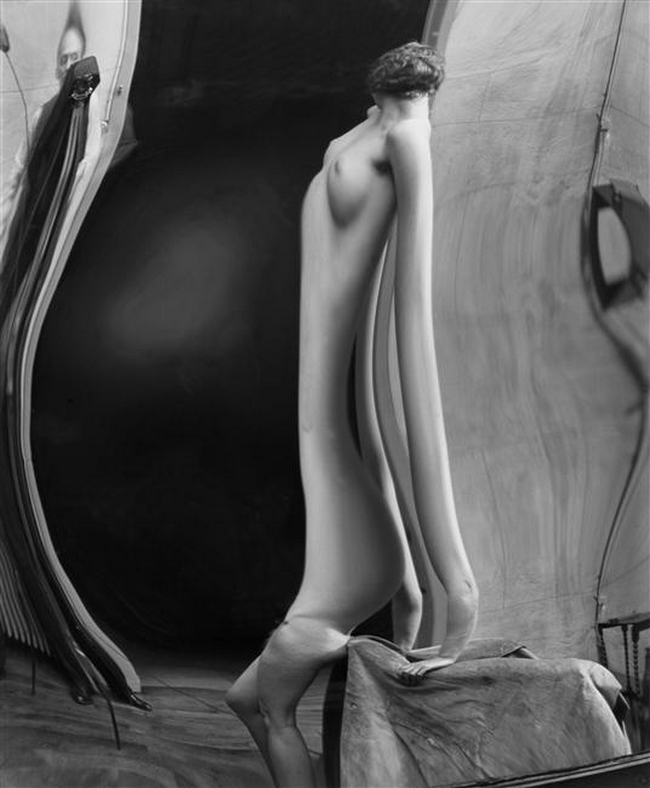
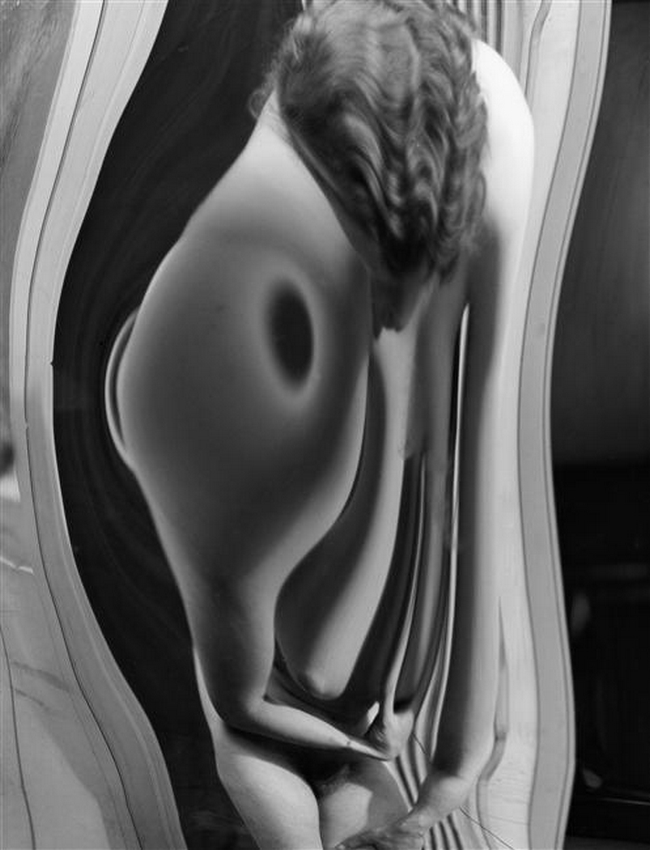
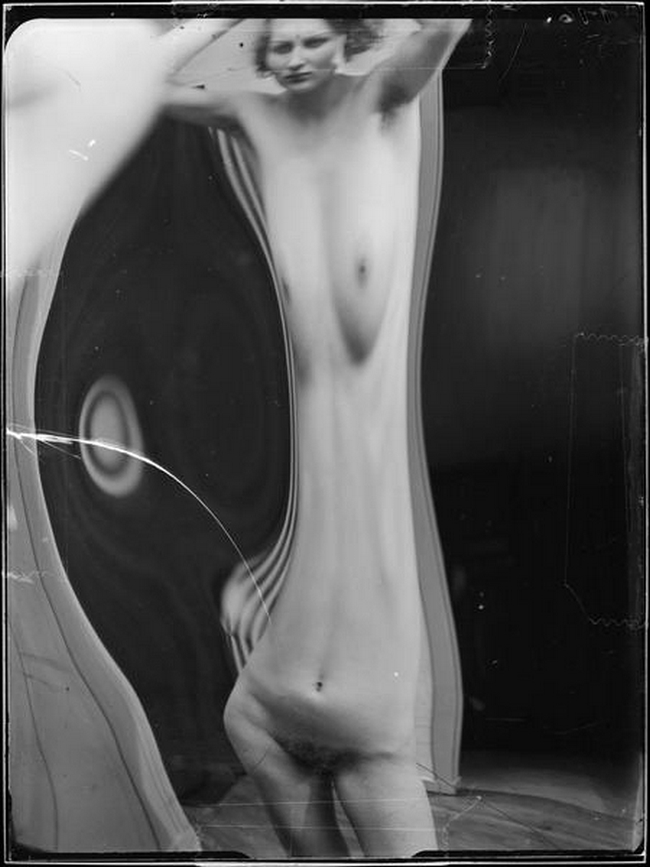
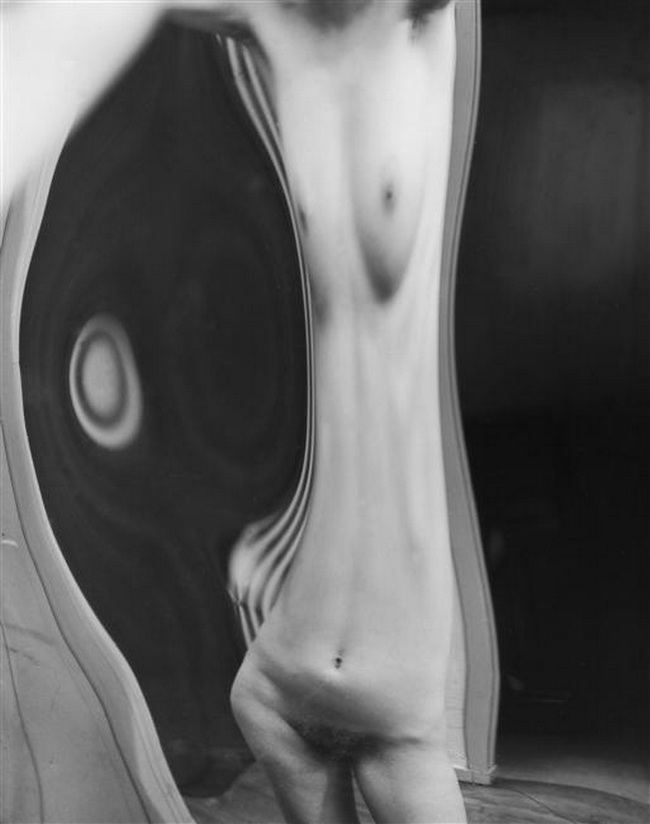
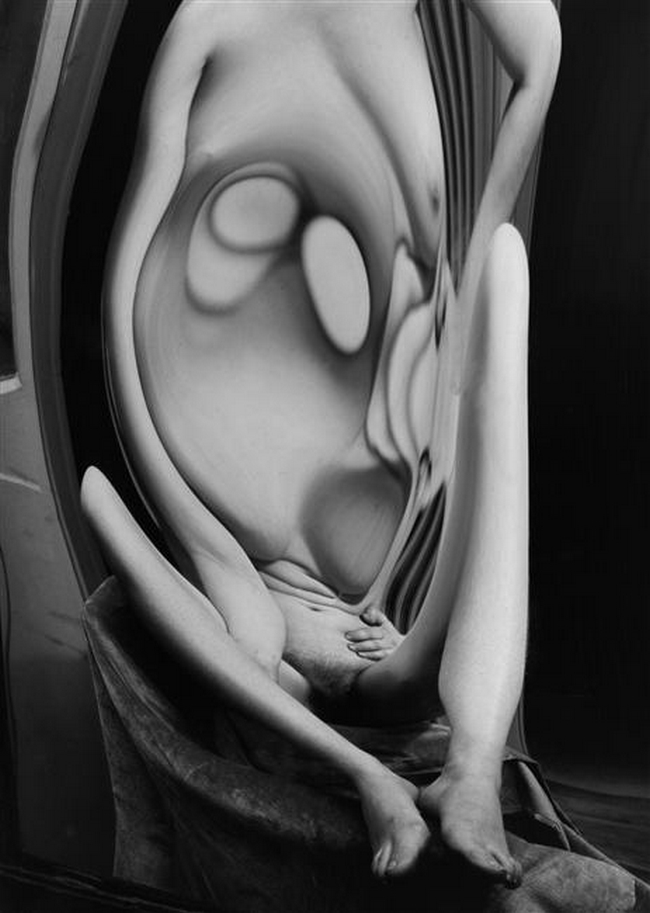
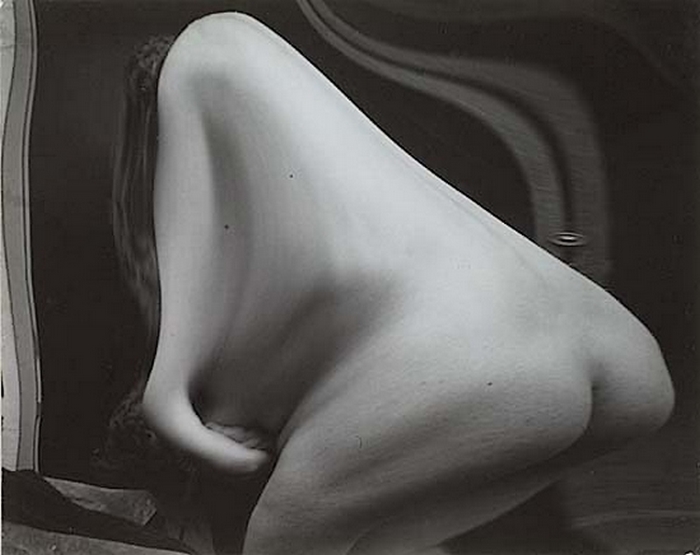
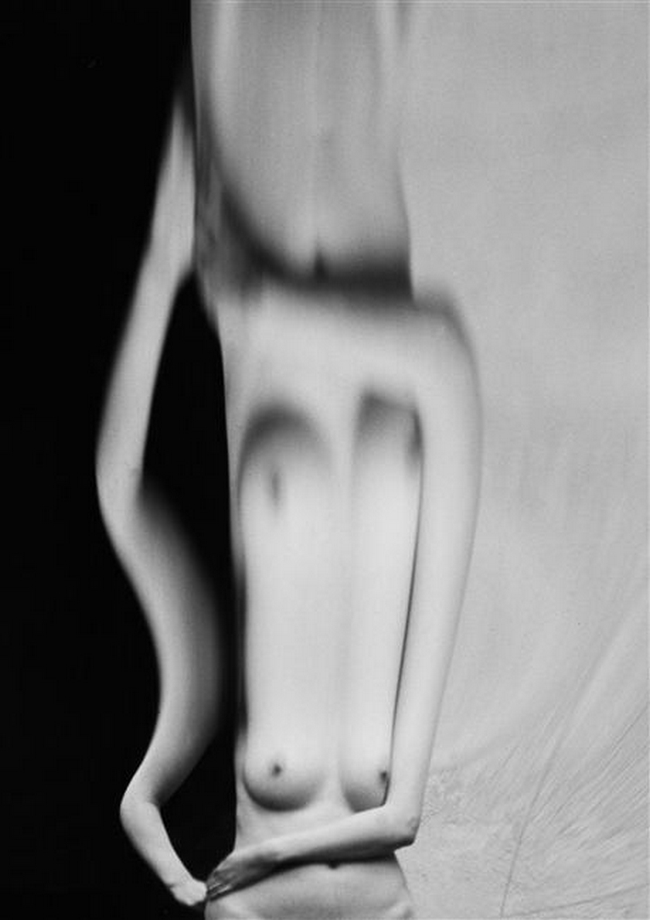
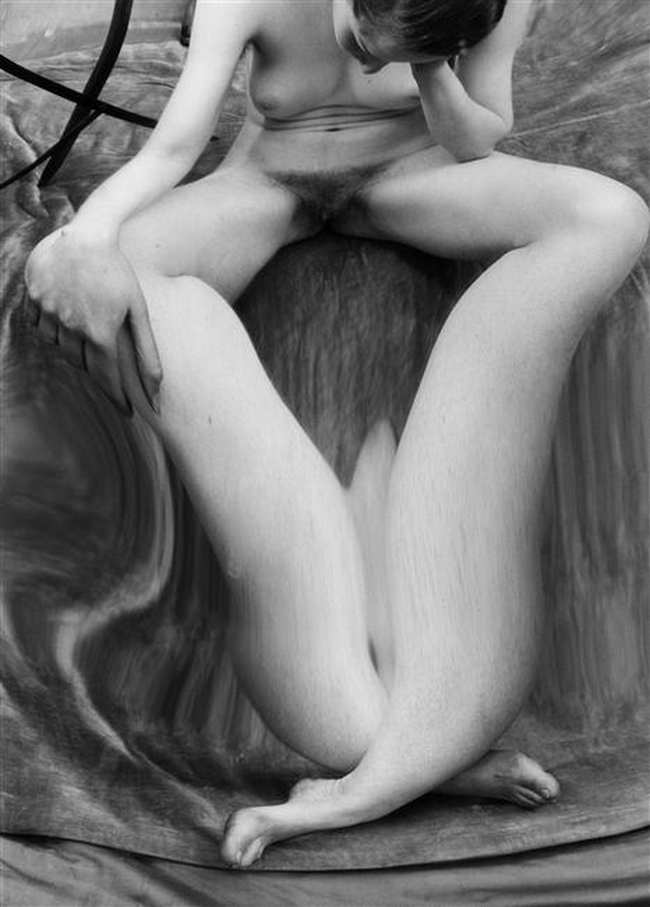
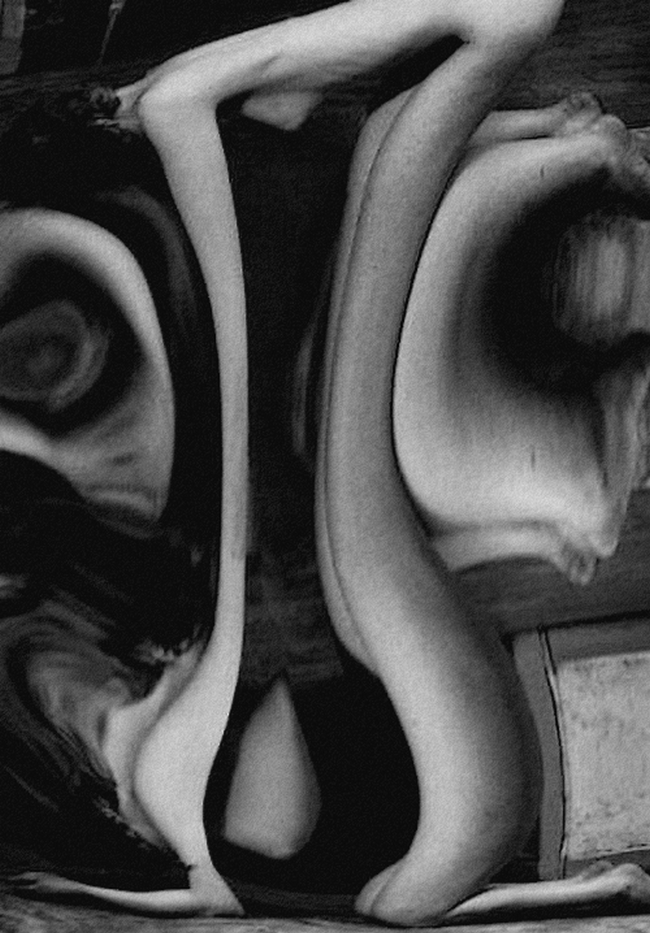
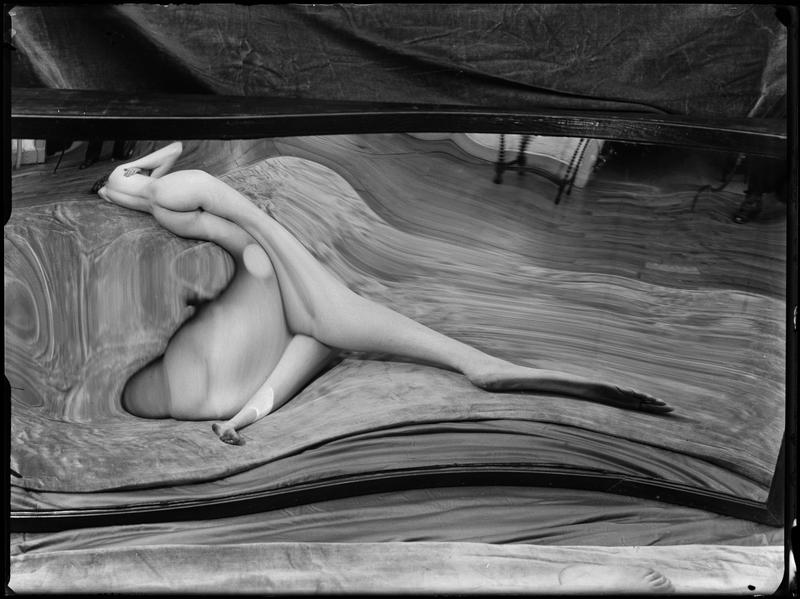
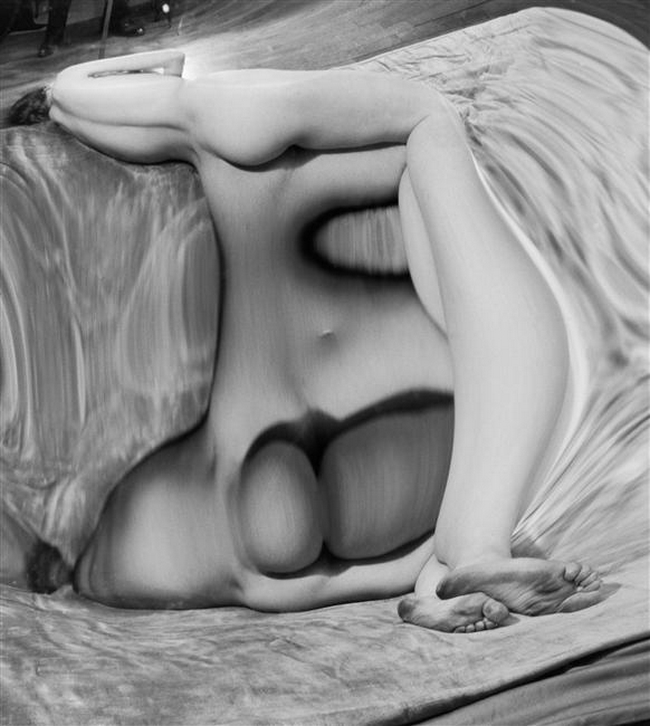
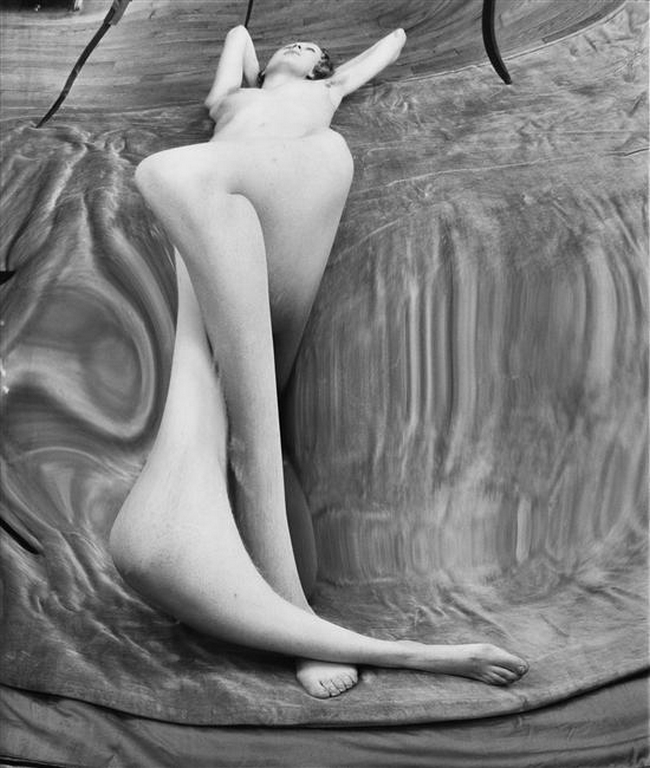
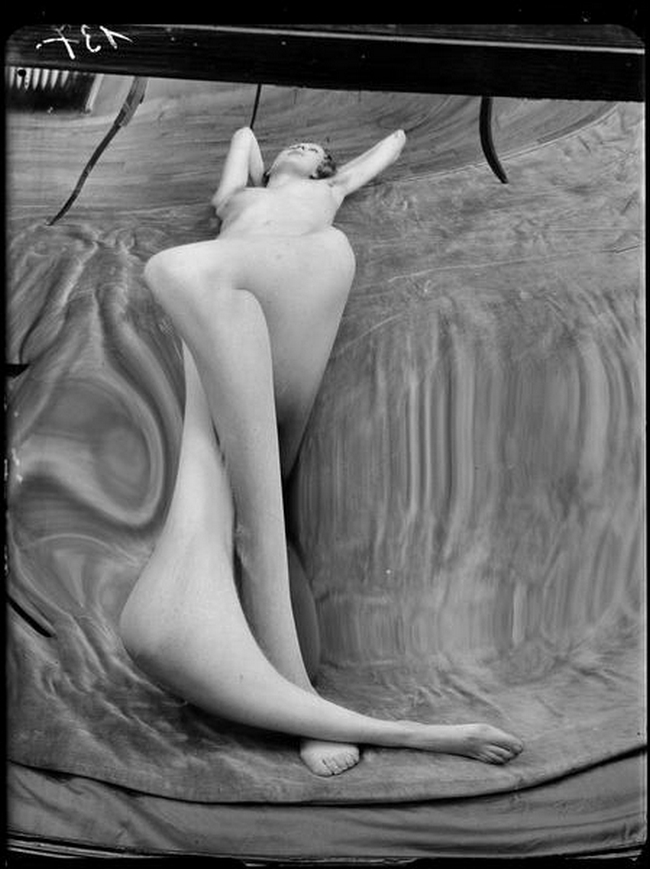
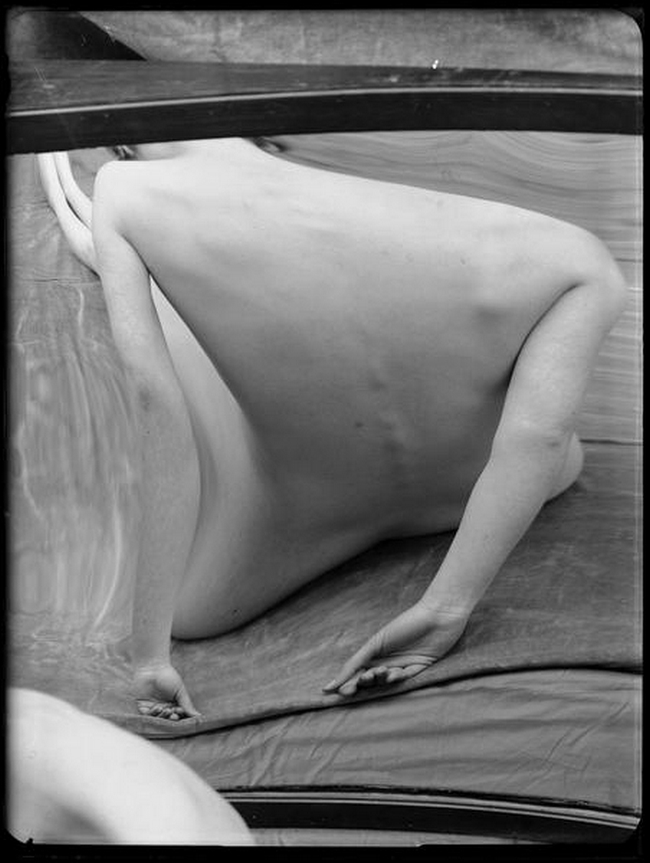
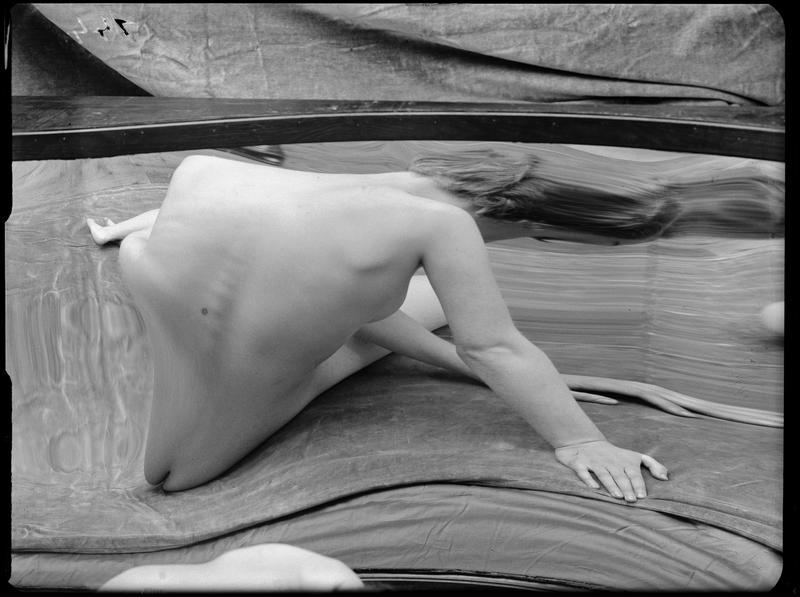
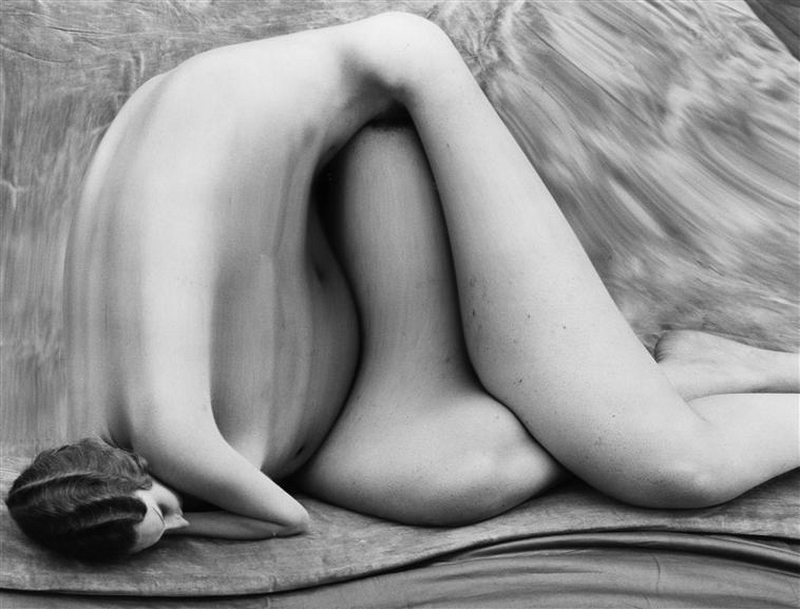
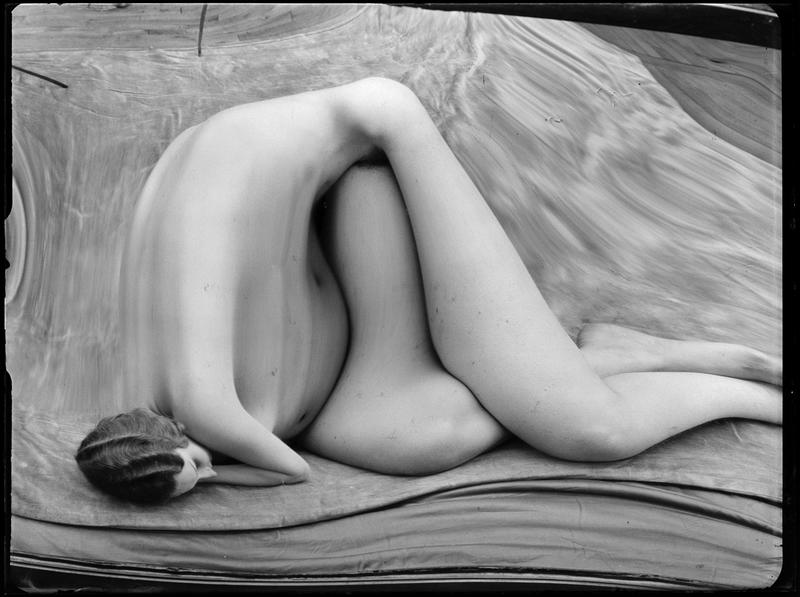
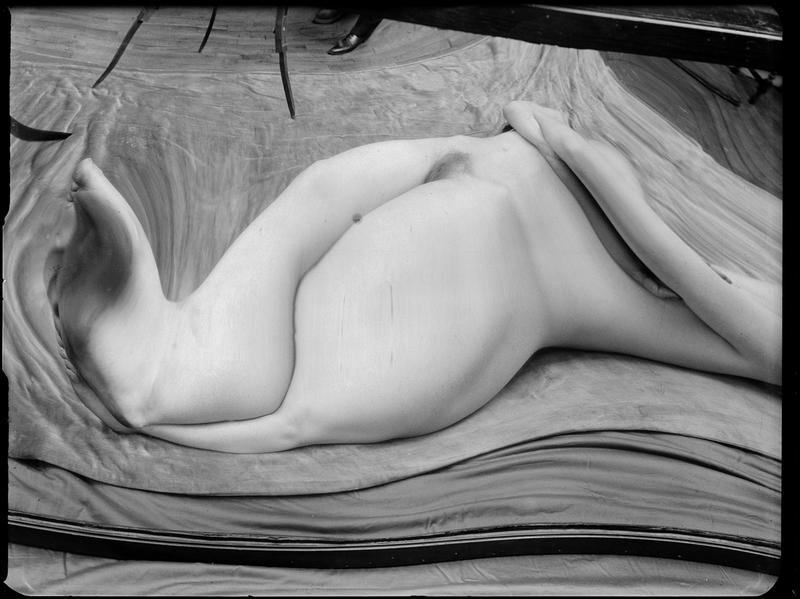
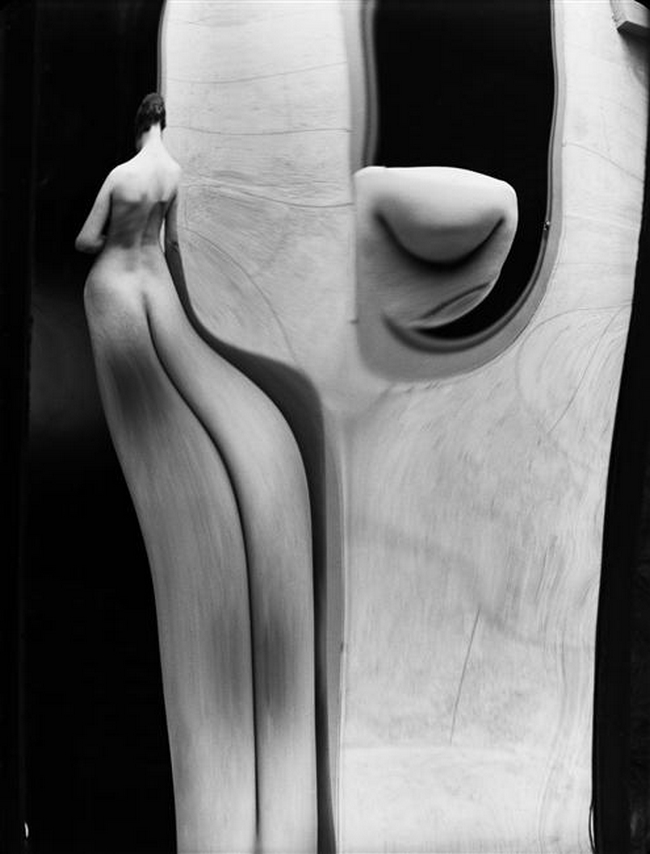
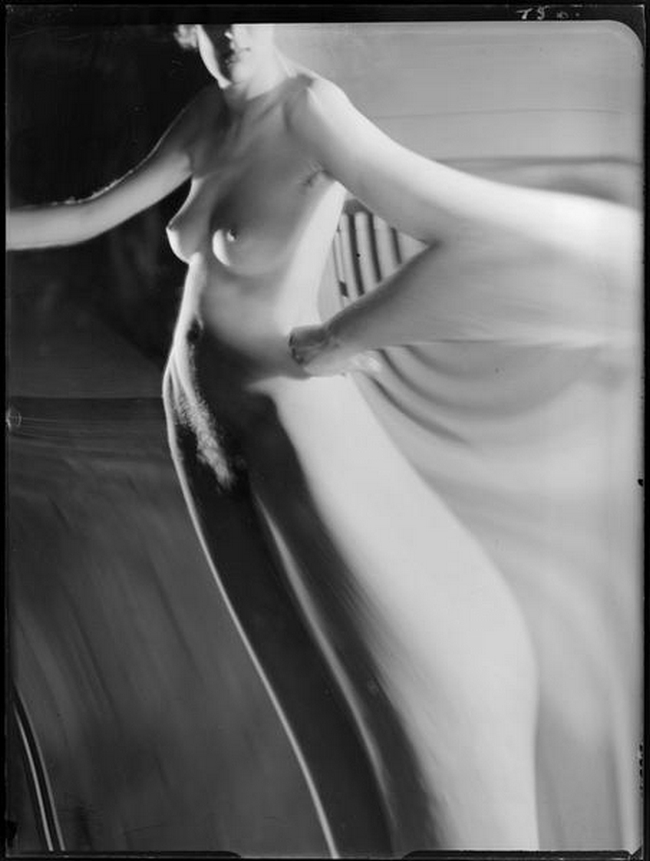
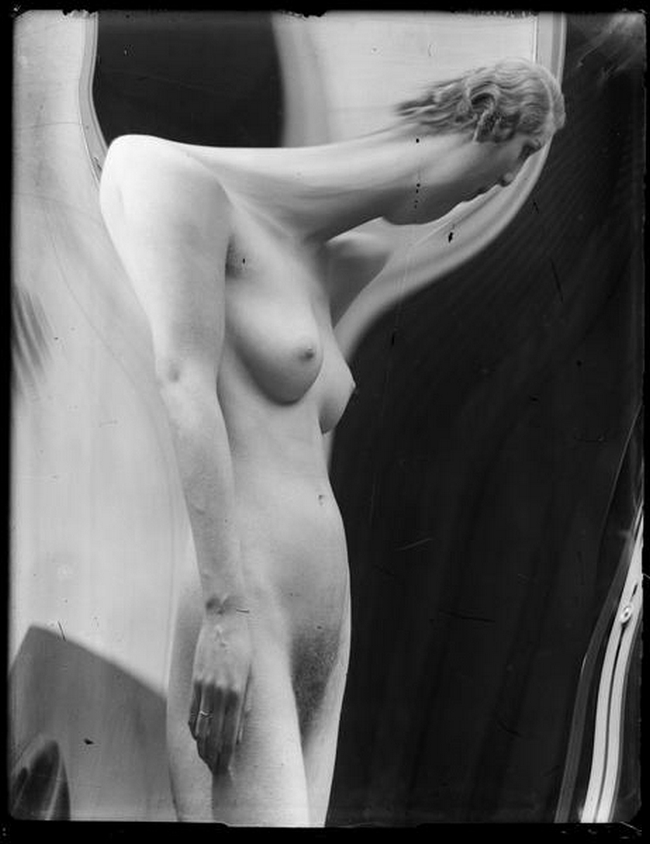
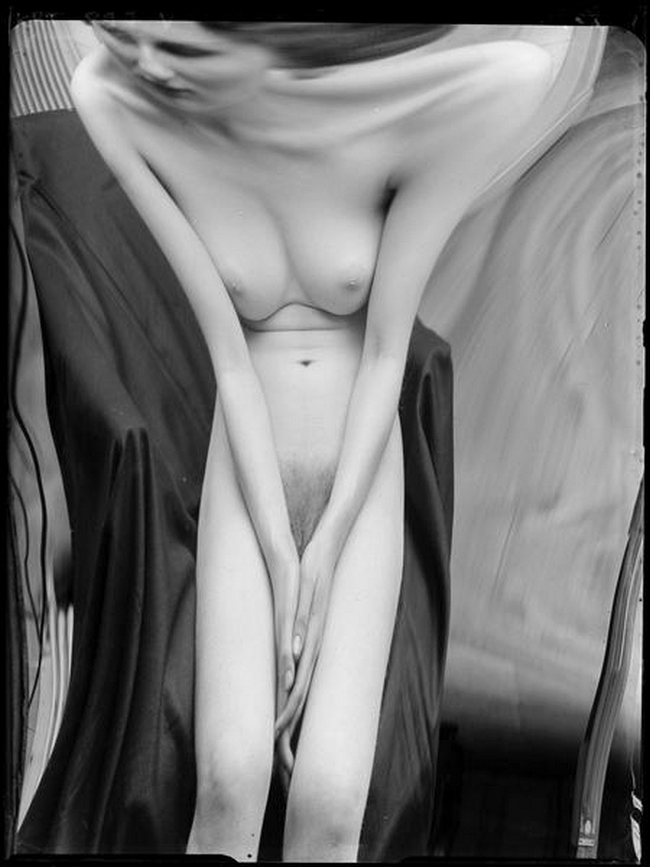
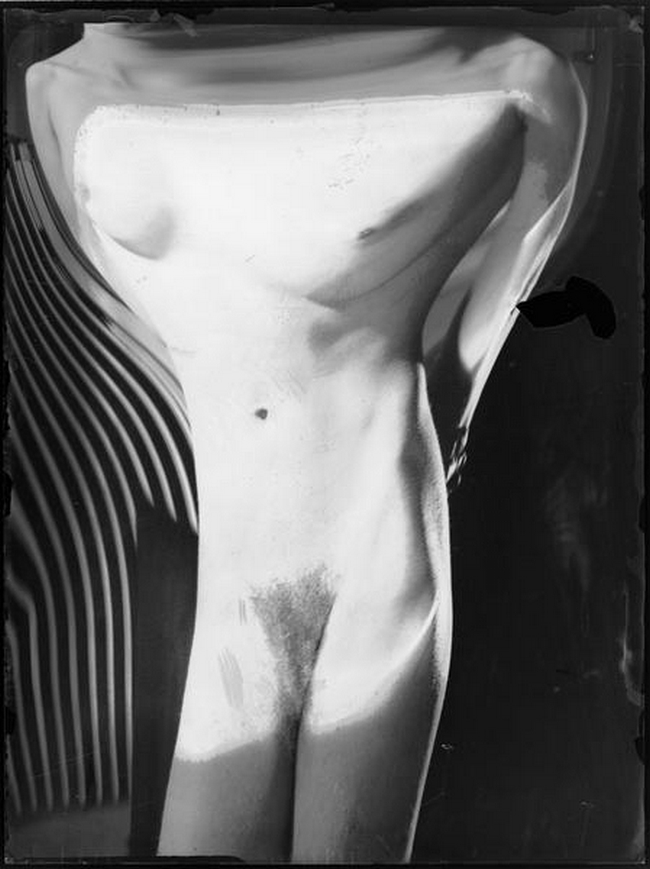
André Kertész – Distortions, 1933

En 1933, suite à la demande de la revue de charme, Le Sourire, Kertész  produit  des photographies de nus féminins distordus. Plus connue sous le nom de Distorsions. Environ 200 photographies de Najinskaya Verackhatz et Nadia Kasine, deux modèles nues ( qu’on identifie très bien) sont photographiées dans des poses différentes, avec leur reflet pris dans une combinaison de miroirs provoquant la distorsion.Sur certaines photographies, seuls certains membres sont visibles dans la réflexion. elles sont plus ou moins belles, elle provoque parfois le beau comme le laid et le monstrueux, c’est ce qui en fait tout sont interet . je n’ai donc pas chosi les plus  » agréables  » à contempler, mais j’ai tenté de mettre l’ensemble. ils manques quelques pieces. Volontairement. je ne trouvais pas bien de mettre tout le livre. Il doit en manquer un 1/4.

La plupart des photographies présentées aujourd’hui sont des planches contacts et sont numérotées, j’ai préféré ce choix, ainsi aucun doute sur la numérotation qui est assez aléatoire sur le net. ( Vous pouvez trouvez dans un autre format ces planches dans  » Distorsions  » André Kertész, Editions du Chêne, Paris, 1976)

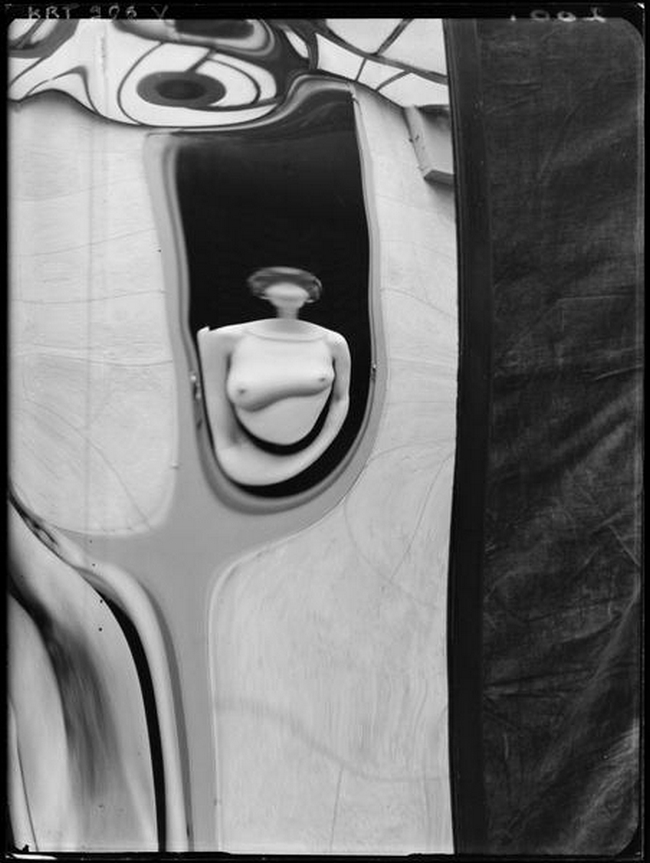
André Kertész -  Distortion #  02, 1933

André Kertész – Distortion # 02, 1933

André Kertész -  Distortion #  04, 1933

André Kertész – Distortion # 04, 1933

André Kertész -  Distortion #  05, 1933

André Kertész – Distortion # 05, 1933

André Kertész -  Distortion #  05, 1933 detail

André Kertész – Distortion # 05, 1933 detail

André Kertész -  Distortion #  06, 1933

André Kertész – Distortion # 06, 1933

André Kertész -  Distortion #  07, 1933

André Kertész – Distortion # 07, 1933

André Kertész -  Distortion #  09, 1933

André Kertész – Distortion # 09, 1933

André Kertész -  Distortion #  10, 1933

André Kertész – Distortion # 10, 1933

André Kertész -  Distortion #  11, 1933

André Kertész – Distortion # 11, 1933

André Kertész -  Distortion #  14, 1933

André Kertész – Distortion # 14, 1933

André Kertész -  Distortion #  15, 1933

André Kertész – Distortion # 15, 1933

André Kertész -  Distortion #  16, 1933

André Kertész – Distortion # 16, 1933

André Kertész -  Distortion #  17, 1933

André Kertész – Distortion # 17, 1933

André Kertész -  Distortion #  18, 1933

André Kertész – Distortion # 18, 1933

André Kertész- Distortion # 18, 1933

André Kertész- Distortion # 18, 1933 Planche de travail


André Kertész -  Distortion #  19, 1933

André Kertész – Distortion # 19, 1933

André Kertész -  Distortion #  20 , 1933

André Kertész – Distortion # 20 , 1933

André Kertész -  Distortion #  21 , 1933

André Kertész – Distortion # 21 , 1933

André Kertész -  Distortion #  22 , 1933

André Kertész – Distortion # 22 , 1933

André Kertész -  Distortion #  23 , 1933

André Kertész – Distortion # 23 , 1933

André Kertész -  Distortion #  24 , 1933

André Kertész – Distortion # 24 , 1933

André Kertész - Distortion # 25, 1933

André Kertész – Distortion # 25, 1933

André Kertész - Distortion# 28, 1933

André Kertész – Distortion# 28, 1933

André Kertész - Distortion # 29, 1933

André Kertész – Distortion # 29, 1933

André Kertész -  Distortion # 31,  1933

André Kertész – Distortion # 31, 1933

Andre Kertesz-Distortion #33 ,1933

Andre Kertesz-Distortion #33 ,1933


André Kertész -  Distortion #  34 , 1933

André Kertész – Distortion # 34 , 1933

André Kertész -  Distortion #  35 , 1933

André Kertész – Distortion # 35 , 1933

André Kertész -  Distortion #  36 , 1933

André Kertész – Distortion # 36 , 1933

André Kertész -  Distortion #  37 , 1933

André Kertész – Distortion # 37 , 1933

André Kertész -  Distortion #  38 , 1933

André Kertész – Distortion # 38 , 1933

André Kertész -  Distortion #  39 , 1933

André Kertész – Distortion # 39 , 1933

André Kertész -  Distortion #  40 Ou 43 , 1933

André Kertész – Distortion # 40 Ou 43 , 1933

André Kertész - Distortion # 41 avec autoportrait de Kertész, 1933

André Kertész – Distortion # 41 avec autoportrait de Kertész, 1933


André Kertész -  Distortion #  41, 1933

André Kertész – Distortion # 41, 1933

André Kertész -  Distortion #  42, 1933

André Kertész – Distortion # 42, 1933

André Kertész- Distorsion #43 , 1933

André Kertész- Distorsion #43 , 1933


André Kertész -  Distortion #  44, 1933

André Kertész – Distortion # 44, 1933

André Kertész -  Distortion #  45, 1933

André Kertész – Distortion # 45, 1933

André Kertész -  Distortion #  46, 1933

André Kertész – Distortion # 46, 1933

André Kertész -  Distortion #  47, 1933

André Kertész – Distortion # 47, 1933

André Kertész -  Distortion #  48, 1933

André Kertész – Distortion # 48, 1933

André Kertész -  Distortion #  49, 1933

André Kertész – Distortion # 49, 1933

André Kertész -  Distortion #  50, 1933

André Kertész – Distortion # 50, 1933

André Kertész -  Distortion #  51, 1933

André Kertész – Distortion # 51, 1933

André Kertész -  Distortion #  52, 1933

André Kertész – Distortion # 52, 1933

André Kertész -  Distortion #  53, 1933

André Kertész – Distortion # 53, 1933

André Kertész -  Distortion # 54, 1933

André Kertész – Distortion # 54, 1933

André Kertész -  Distortion #55, 1933

André Kertész – Distortion #55, 1933

André Kertész -  Distortion # 56, 1933

André Kertész – Distortion # 56, 1933

André Kertész- Distortion  # 57 , 1933 ( scan  André Kertész, Distorsions, Editions du Chêne, Paris, 1976)

André Kertész- Distortion # 57 , 1933

André Kertész -  Distortion # 58, 1933

André Kertész – Distortion # 58, 1933

André Kertész -  Distortion # 59, 1933

André Kertész – Distortion # 59, 1933

André Kertész- Distortion # 60 , 1933

André Kertész- Distortion # 60 , 1933

André Kertész -  Distortion #61, 1933

André Kertész – Distortion #61, 1933

André Kertész -  Distortion #  62, 1933

André Kertész – Distortion # 62, 1933

André Kertész -  Distortion #  63, 1933

André Kertész – Distortion # 63, 1933

André Kertész -  Distortion #  64, 1933

André Kertész – Distortion # 64, 1933

André Kertész -  Distortion #  65, 1933

André Kertész – Distortion # 65, 1933

André Kertész -  Distortion # 66, 1933

André Kertész – Distortion # 66, 1933

André Kertész -  Distortion #67, 1933

André Kertész – Distortion #67, 1933

André Kertész -  Distortion #  68, 1933

André Kertész – Distortion # 68, 1933

André Kertész-  Distortion # 68, Paris, 1933

André Kertész- Distortion # 68 A, 1933

André Kertész -  Distortion #69, 1933

André Kertész – Distortion #69, 1933

André Kertész - Distortion  # 70, 1933

André Kertész – Distortion # 70, 1933

André Kertész - Distortion  # 71, 1933

André Kertész – Distortion # 71, 1933

André Kertész -Distorsion  #72, 1933

André Kertész -Distorsion #72, 1933

André Kertész -  Distortion #  73, 1933

André Kertész – Distortion # 73, 1933

André Kertész - Distortion # 74, 1933

André Kertész – Distortion # 74, 1933

André Kertész - Distortion  # 76, 1933

André Kertész – Distortion # 76, 1933

André Kertész -Distortion # 78,  1933

André Kertész -Distortion # 78, 1933


André Kertész - Distortion #79, 1933

André Kertész – Distortion #79, 1933

André Kertész - Distortion #80, 1933

André Kertész – Distortion #80, 1933


André Kertész- Distortion # 86, 1933

André Kertész- Distortion # 86, 1933

André Kertész- Distortion # 88 , 1933

André Kertész- Distortion # 88 , 1933


André Kertész - Distortion  # 92, 1933

André Kertész – Distortion # 92, 1933

André Kertész-  Distortion # 93,  1933

André Kertész- Distortion # 93, 1933


André Kertész- Distortion # 98 (variante), 1933

André Kertész- Distortion # 98 (variante), 1933

André Kertész- Distortion # 101, 1933

André Kertész- Distortion # 101, 1933


André Kertész - Distortion #102, 1933

André Kertész – Distortion #102, 1933

André Kertész - Distortion # 111, 1933

André Kertész – Distortion # 111, 1933

André Kertész - Distortion # 113, 1933

André Kertész – Distortion # 113, 1933


André Kertész - Distortion # 114, 1933

André Kertész – Distortion # 114, 1933

André Kertész- Distortion # 116 , 1933

André Kertész- Distortion # 116 , 1933


André Kertész - Distortion # 116, 1933

André Kertész – Distortion # 116, 1933 detail

André Kertész - Distortion # 117, 1933

André Kertész – Distortion # 117, 1933


André Kertész - Distortion #118., 1933

André Kertész – Distortion #118., 1933

André Kertész - Distortion  # 121, 1933

André Kertész – Distortion # 121, 1933

André Kertész - Distortion # 123, 1933

André Kertész – Distortion # 123, 1933

André Kertész- Distortion # 125 , 1933

André Kertész- Distortion # 125 , 1933

André Kertész-  Distortion # 128, 1933

André Kertész- Distortion # 128, 1933

André Kertész- Distortion # 130 , 1933

André Kertész- Distortion # 130 , 1933


André Kertész- Distortion # 131 , 1933

André Kertész- Distortion # 131 , 1933

André Kertész- Distortion # 132 , 1933

André Kertész- Distortion # 132 , 1933


André Kertész- Distortion # 133 , 1933

André Kertész- Distortion # 133 , 1933

André Kertész- Distortion # 134 , 1933

André Kertész- Distortion # 134 , 1933


André Kertész - Distortion # 135, 1933

André Kertész – Distortion # 135, 1933

André Kertész- Distortion # 136 , 1933

André Kertész- Distortion # 136 , 1933


André Kertész - Distortion # 137, 1933

André Kertész – Distortion # 137, 1933

André Kertész- Distortion # 137 , 1933

André Kertész- Distortion # 137 , 1933


André Kertész- Distortion # 138 , 1933

André Kertész- Distortion # 138 , 1933


André Kertész- Distortion # 139 , 1933

André Kertész- Distortion # 139 , 1933


André Kertész- Distortion # 140 , 1933

André Kertész- Distortion # 140 , 1933

André Kertész- Distortion # 141 , 1933

André Kertész- Distortion # 141 , 1933


André Kertész- Distortion # 142 , 1933

André Kertész- Distortion # 142 , 1933

André Kertész- Distortions # 143 , 1933 ( scan  André Kertész, Distorsions, Editions du Chêne, Paris, 1976)

André Kertész- Distortions # 143 , 1933

André Kertész- Distortions # 144 , 1933

André Kertész- Distortions # 144 , 1933


André Kertész- Distortions # 145 , 1933

André Kertész- Distortions # 145 , 1933

André Kertész- Distortions # 146 , 1933

André Kertész- Distortions # 146 , 1933


André Kertész - Distortion #147,  1933

André Kertész – Distortion #147, 1933 deatail


André Kertész- Distortions # 147 , 1933

André Kertész- Distortions # 147 , 1933

André Kertész- Distortions # 148 , 1933

André Kertész- Distortions # 148 , 1933


André Kertész- Distortions # 149 , 1933

André Kertész- Distortions # 149 , 1933


André Kertész - Distortion #150, 1933

André Kertész – Distortion #150, 1933


André Kertész- Distortion # 151 , 1933

André Kertész- Distortion # 151 , 1933

André Kertész- Distortion # 154 , 1933

André Kertész- Distortion # 154 , 1933


André Kertész- Distortion # 155 , 1933 ( scan  André Kertész, Distorsions, Editions du Chêne, Paris, 1976)

André Kertész- Distortion # 155 , 1933

André Kertész- Distortion # 156 , 1933

André Kertész- Distortion # 156 , 1933


André Kertész- Distortion # 157 , 1933

André Kertész- Distortion # 157 , 1933


André Kertész- Distortion # 159 , 1933

André Kertész- Distortion # 159 , 1933

André Kertész- Distortion # 160 , 1933

André Kertész- Distortion # 160 , 1933

André Kertész- Distortion # 161 , 1933

André Kertész- Distortion # 161 , 1933

André Kertész- Distortion # 162 , 1933

André Kertész- Distortion # 162 , 1933

André Kertész- Distortion # 163 , 1933

André Kertész- Distortion # 163 , 1933

André Kertész- Distortion # 164 , 1935

André Kertész- Distortion # 164 , 1935

André Kertész- Distortion # 165 , 1933

André Kertész- Distortion # 165 , 1933

André Kertész- Distortion # 166 , 1933

André Kertész- Distortion # 166 , 1933

André Kertész- Distortions # 167 , 1933

André Kertész- Distortions # 167 , 1933

André Kertész- Distortions # 168 , 1933

André Kertész- Distortions # 168 , 1933

André Kertész- Distortions # 169 , 1933

André Kertész- Distortions # 169 , 1933

André Kertész- Distortions # 172 , 1933

André Kertész- Distortions # 172 , 1933

André Kertész- Distortions # 173 , 1933

André Kertész- Distortions # 173 , 1933


André Kertész- Distortions # 174 , 1933

André Kertész- Distortions # 174 , 1933

André Kertész- Distortions # 200 , 1933

André Kertész- Distortions # 200 , 1933


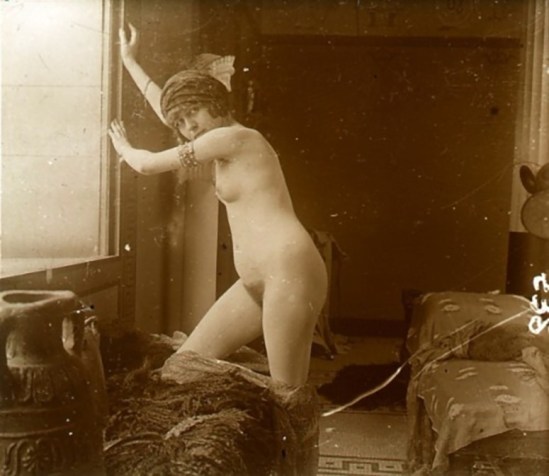
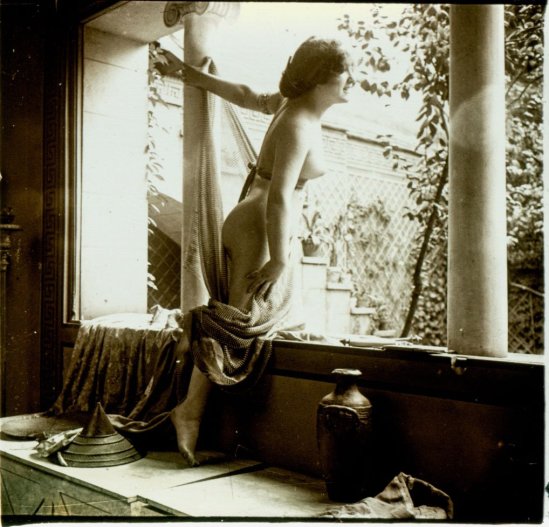
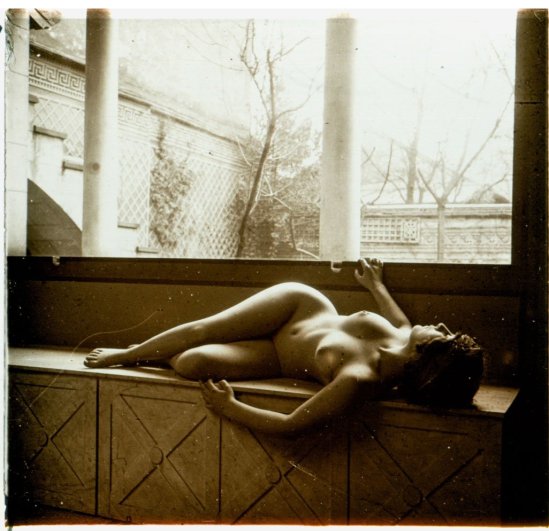
Femme 1900 tirage à partir de Plaque de verre photo

Femme nue dans son boudoir, 1900 tirage à partir de Plaque de verre photo


Femme nue dans son boudoir, 1900 tirage à partir de Plaque de verre photo

Femme drapée- tirage à partir de plaque verre, avant 1900 via photolumiere ebay

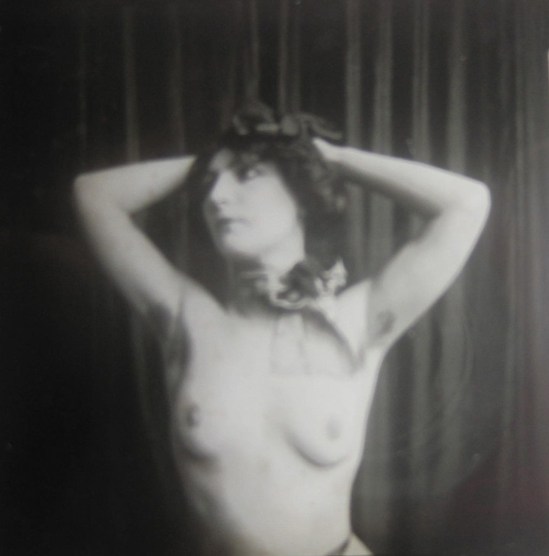
anonyme -nu voilé,négatif plaque de verre,1900s

Anonymous- The none, 1900 plaque de verre

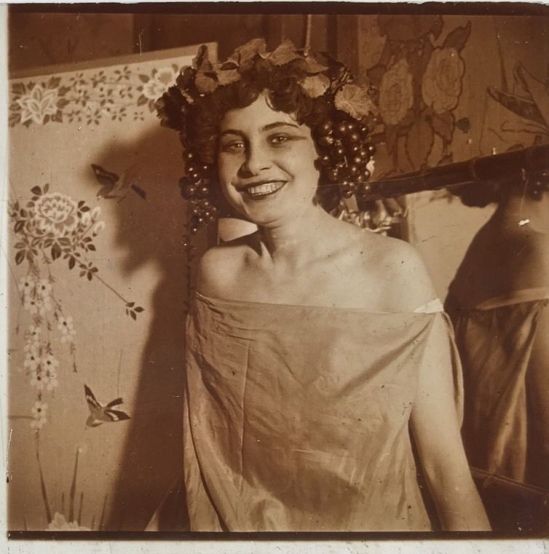
Anonymous- Portrait de femmpe, 1900 plaque de verre

anonyme -Portrait de femme voilée, plaque de verre, 1900s

Albert Arthur Allen-Nude Follies


Albert Arthur Allen-Nude Follies

Nude Follies C Evelane Hadden Albert Arthur Allen

Albert Arthur Allen-Nude Follies A Ruth Melbourne

Albert Arthur Allen-Nude Follies C Evelane Hadden


Albert Arthur Allen-Nude Follies C Evelane Hadden

More Articles about Albert Arthur Allen

Jules Richard

Jules Richard ( Attribued to)- Andrée nude , [crop from] stéréoview, 1900-1910

Jules Richard ( Attribued to)- Andrée nude , [crop from] stéréoview, 1900-1910

Jules Richard ( Attribued to)- Andrée nude , [crop from] stéréoview, 1900-1910

Jules Richard ( Attribued to)- Andrée nude , [crop from] stéréoview, 1900-1910

Jules Richard ( Attribued to-) Andrée nude , [crop from] stéréoview, 1900-1910

Jules Richard ( Attribued to)- Andrée nude , [crop from] stéréoview, 1900-1910 (2)

Jules Richard- French Nude, 1908-10


Jules Richard – Nude Study, 1900s

Jules Richard- French Nude, [ crop stéréotype], 1908-10

Jules Richard- French Nude, [ crop stéréotype], 1908-10

Jules Richard- French Nude, [ crop stéréotype], 1908-10

Jules Richard- French Nude, [ crop stéréotype], 1908-10

Jules Richard- French Nude, [ crop stéréotype], 1908-10

Jules Richard- French Nude, [ crop stéréotype], 1908-10

Jules Richard- French Nude, [ crop stéréotype], 1908-10

Jules Richard- French Nude, [ crop stéréotype], 1908-10

Jules Richard- French Nude, [ crop stéréotype], 1908-10

Jules Richard ( Attribued to) – Zibeline ,[crop from] stéréoview, 1900-1910

Jules Richard ( Attribued to- Andrée Untitled , [crop from] stéréoview, 1900-1910

Jules Richard ( Attribued to- Andrée nude , [crop from] stéréoview, 1900-1910

Josef Breitenbach (1896 – 1984) Part II

Je vous propose aujourd’hui de poursuivre la découverte de Josef Breitenbach. Cette fois-ci nous laisserons de côté ses influences surréalistes et nous admirons ses fabuleux portraits, et nus et quelques photographies de voyages .

[Je vous suggère de ne pas manquer le premier article qui complète ce dernier, et qui vous permettra d’avoir une vue d’ensemble de l’entendue de son oeuvre ]

En 1932, Breitenbach ouvre son premier studio de photographie. Ses clients étaient des membres éminents de la bohème de Munich, (y compris les acteurs et actrices de la scène dans le théâtre de Munich.)  qui était alors un bastion des défenseurs des libertés et des personnes raffinées. Mais ce  monde a disparu en 1933 avec la prise de pouvoir d’Hitler.Plus que ses racines juives, le passé politique du photographe fait de  lui une cible à persécuter.  En Août 1933, avec son passeport, Breitenbach arrive en France, rejoignant d’autres exilés Allemands qui cherchent refuge à Paris.

La «révolution» surréaliste allait alors devenir dominante dans la scène artistique parisienne. Peu après son arrivée, Breitenbach est entré en contact avec André Breton et son entourage. Préférant conserver son indépendance, il n’a jamais été un membre du groupe surréaliste, mais a participé à des expositions importantes de la photographie surréaliste aux côtés de Man Ray, Jacques-André Boiffard, Brassaï, Eli Lotar, Henri Cartier-Bresson, et Roger Parry.

Breitenbach n’a vécu à Paris  que six ans, jusqu’à ce que la guerre  éclate en 1939, et pourtant, pendant cette période , il a produit certains de ses travaux les plus inventifs.  (Il a adopté plusieurs techniques favorisées par de nouveaux photographes tels que la surimpression, le montage, la solarisation, l’impression en négatif, et le photogramme. Plus important encore, il était l’un des rares artistes des années d’avant-guerre à produire des photographies en couleurs, ce qu’il a fait en utilisant des procédés tels que le blanchiment, la tonification et la pigmentation.)

La guerre interrompit ce deuxième chapitre de la vie du photographe. Interné par les Français comme un étranger suspect, puis rédigé dans un corps civil composé d’étrangers, Breitenbach finalement échappé à la France  de Marseille en 1941 pour New York . Il parvient à retenir l’attention de Walker Evans, qui  publie ses travaux  dans Fortune .

À l’été 1944,  à l’invitation de Josef Albers,  Breitenbach enseigne la photographie au Black Mountain College.  En 1946, il est devenu un citoyen des États-Unis et a rejoint la faculté de la Cooper Union .

For a biography in English go down Article
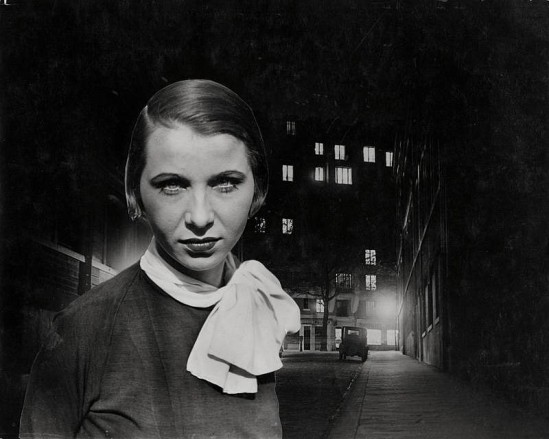
 

Josef Breitenbach- Night, Paris (Edith Schultze-Westrum)c. 1935, Vintage gelatin silver print collage

Josef Breitenbach- Night, Paris (Edith Schultze-Westrum), 1935, Vintage gelatin silver print collage ©The Josef Breitenbach Trust.
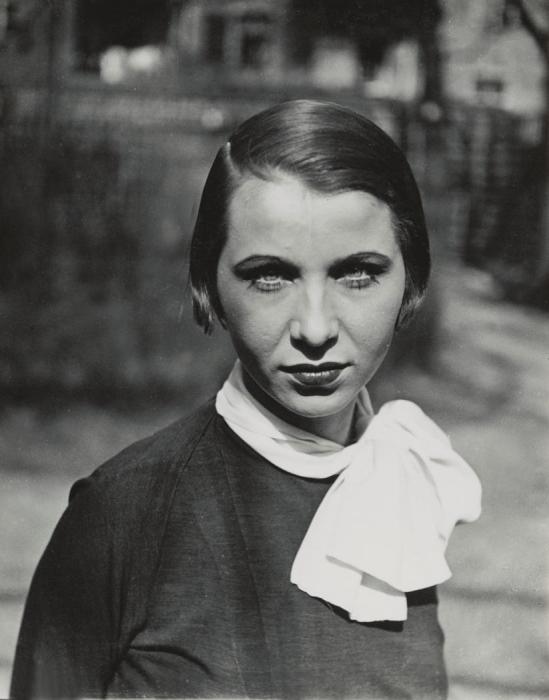
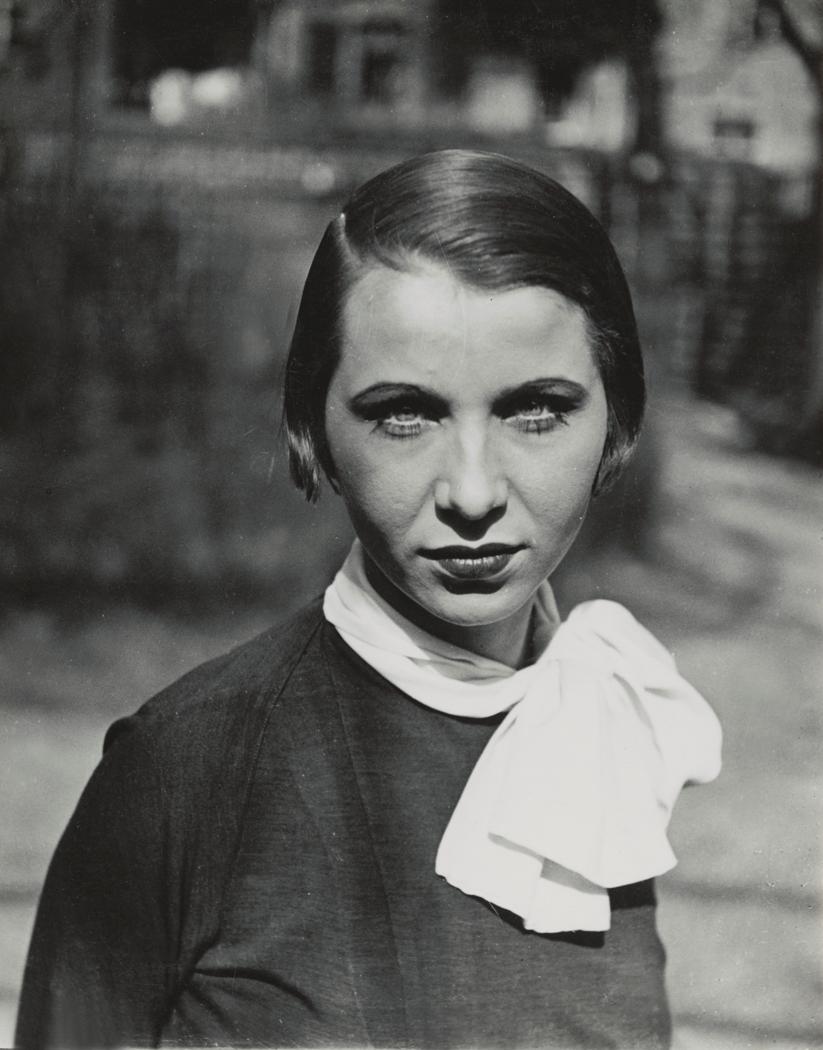
Josef Breitenbach-Edith Schultze-Westrum, 1932, Gelatin silver print© The Josef Breitenbach Trust.
Josef Breitenbach-Edith Schultze-Westrum, 1932, Gelatin silver print© The Josef Breitenbach Trust.


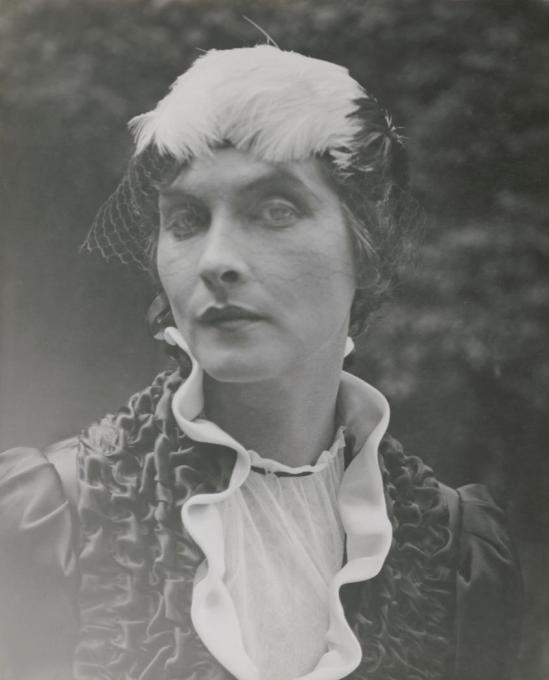
Josef Breitenbach- Portrait of the  actress Sybille Binder, Munich, Before 1933, Gelatin silver print© The Josef Breitenbach Trust.

Josef Breitenbach- Portrait of the actress Sybille Binder, Munich, Before 1933, Gelatin silver print© The Josef Breitenbach Trust.
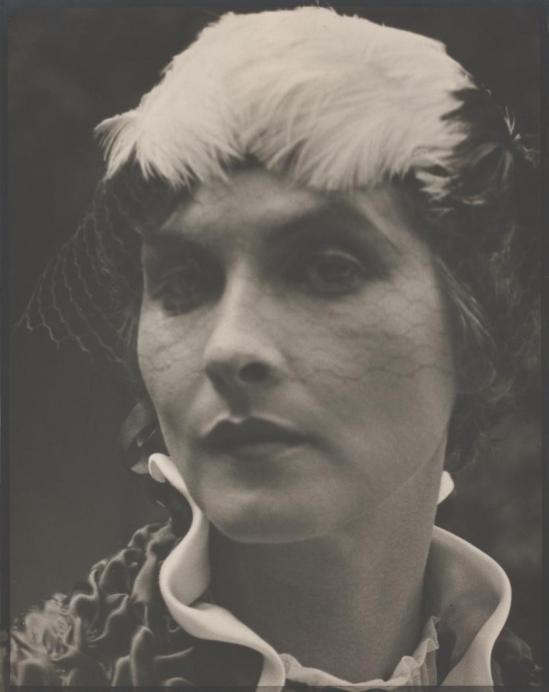

Josef Breitenbach- Portrait of the  actress Sybille Binder, Munich, Before 1933, Gelatin silver print© The Josef Breitenbach Trust

Josef Breitenbach- Portrait of the actress Sybille Binder, Munich, Before 1933, Gelatin silver print© The Josef Breitenbach Trust
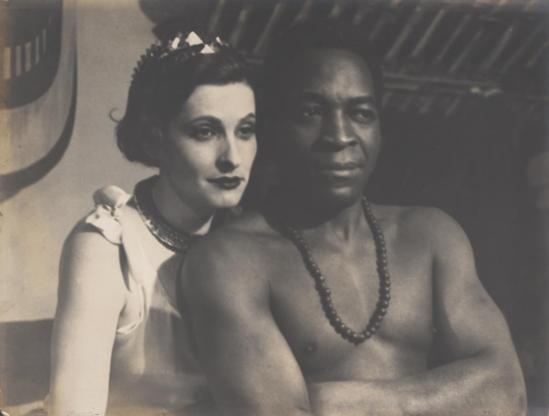

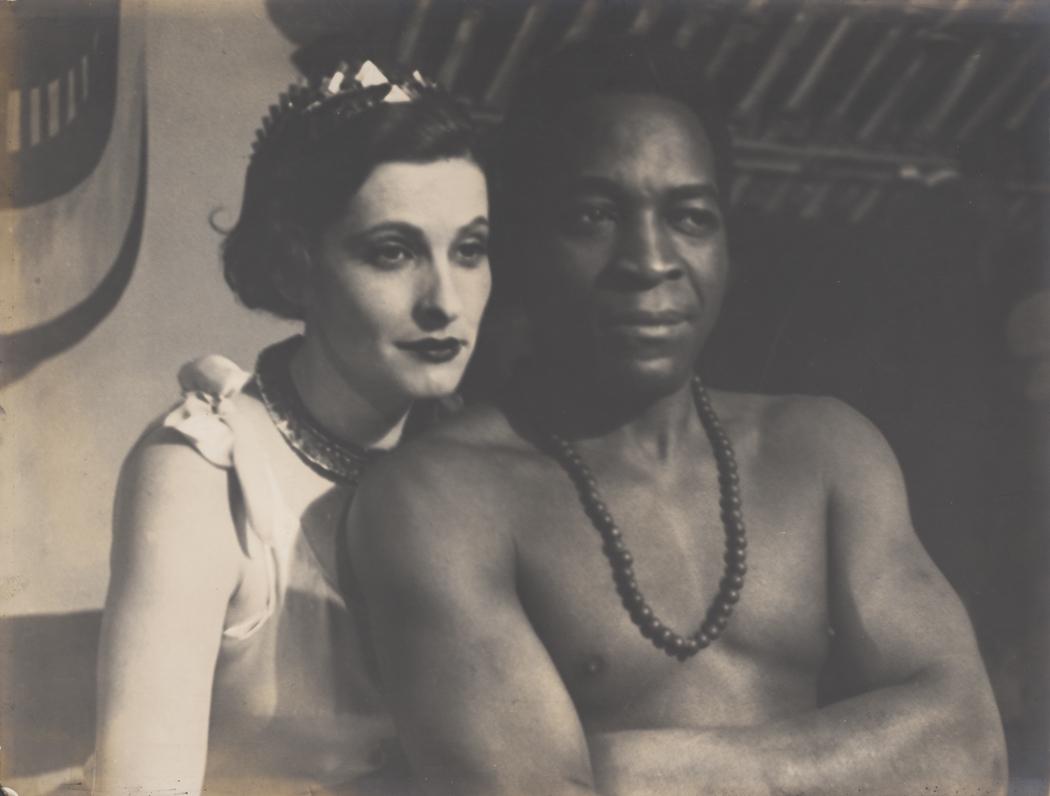
Josef Breitenbach- Portrait of the  actress Sybille Binder and Paul Robeson, in Othello, Munich,  1932, Gelatin silver print© The Josef Breitenbach Trust

Josef Breitenbach- Portrait of the actress Sybille Binder and Paul Robeson, in Othello, Munich, 1932, Gelatin silver print© The Josef Breitenbach Trust


Josef Breitenbach- Portrait of the  actressSybille Binder  Circa 1932, gelatin silver print, © The Josef Breitenbach Trust.

Josef Breitenbach- Portrait of the actressSybille Binder Circa 1932, gelatin silver print, © The Josef Breitenbach Trust.


Josef Breitenbach – Portrait of the actress Marianne Hoppe, 1933

Josef Breitenbach – Portrait of the actress Marianne Hoppe, 1933 ©The Josef Breitenbach Trust.


Josef Breitenbach-  Sheila ,New York, 1942

Josef Breitenbach- Sheila ,New York, 1942 ©The Josef Breitenbach Trust.
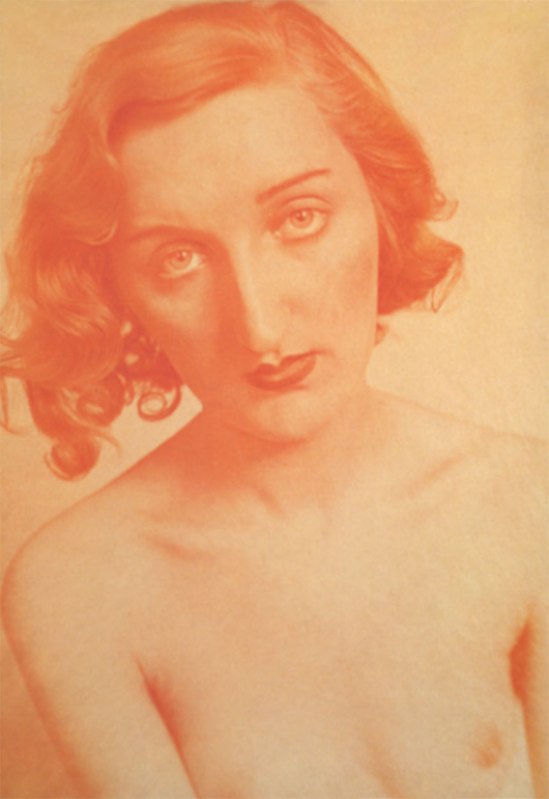

Josef Breitenbach-Aktportrait, Paris, 1933-1939 ©The Josef Breitenbach Trust.

Josef Breitenbach-Aktportrait, Paris, 1933-1939. © The Josef Breitenbach Trust.


Josef Breitenbach-Portrait,  1930s , Gelatin silver print © The Josef Breitenbach Trust.

Josef Breitenbach-Portrait, 1930s , Gelatin silver print © The Josef Breitenbach Trust.


Josef Breitenbach-Portrait,  1930s , Gelatin silver print © The Josef Breitenbach Trust.

Josef Breitenbach-Portrait, 1930s , Gelatin silver print © The Josef Breitenbach Trust.


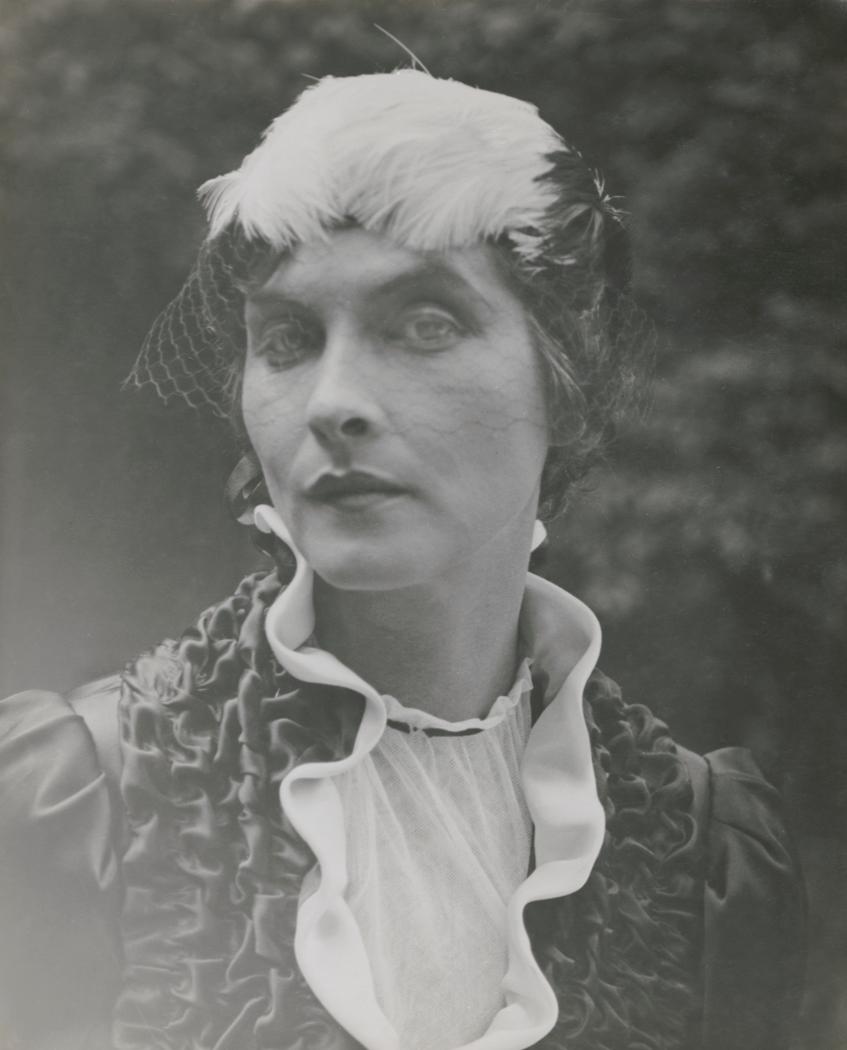
Josef Breitenbach- Portrait of a lady, Munich, 1932,  Munich,, Gelatin silver print© The Josef Breitenbach Trust.

Josef Breitenbach- Portrait of a lady, Munich, 1932, Munich,, Gelatin silver print© The Josef Breitenbach Trust.


Josef Breitenbach-untitled , Paris 1936

Josef Breitenbach-Untitled , Paris 1936 © The Josef Breitenbach Trust.
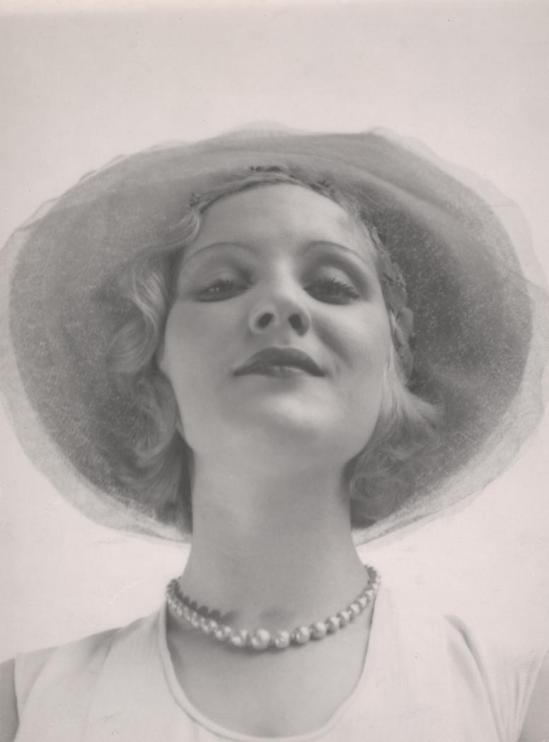

Josef Breitenbach-Edith d'Amara, 1932,  Munich,, Gelatin silver print© The Josef Breitenbach Trust.

Josef Breitenbach-Edith d’Amara, 1932, Munich,, Gelatin silver print© The Josef Breitenbach Trust.


Josef Breitenbach- Patricia, New York, 1942, Vintage toned gelatin silver print © The Josef Breitenbach Trust
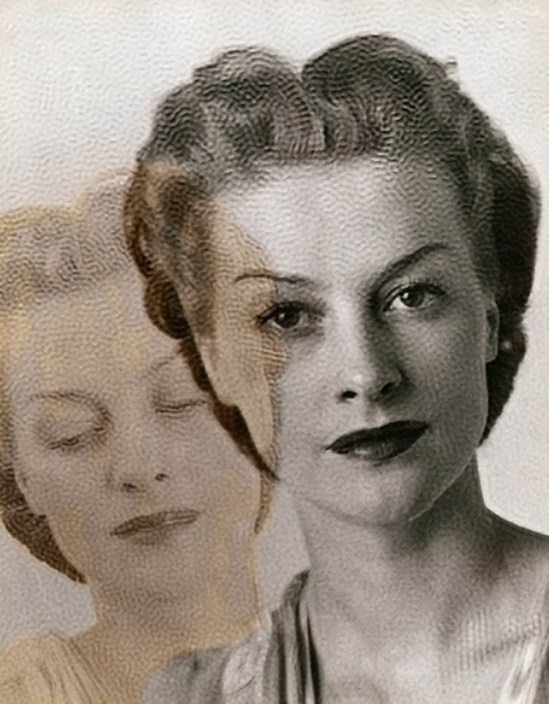
Josef Breitenbach- Patricia, New York, 1942, Vintage toned gelatin silver print © The Josef Breitenbach Trust


Josef Breitenbach- A Woman and Her Conscience, New York, 1945, Vintage toned gelatin silver print ©The Josef Breitenbach Trust.
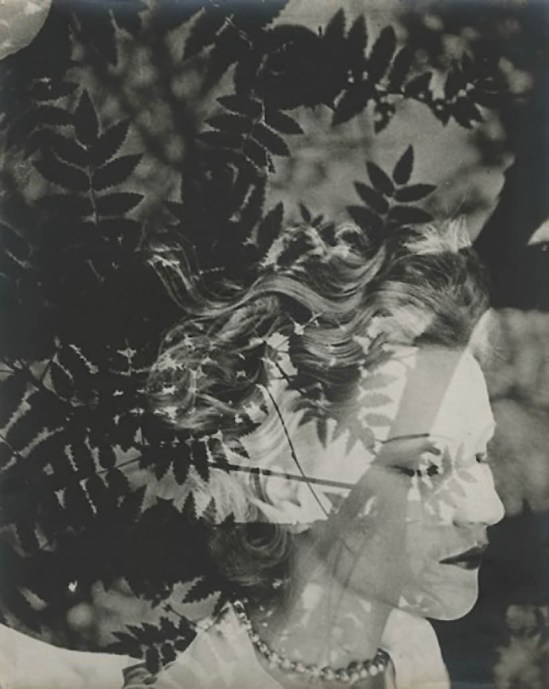
Josef Breitenbach- A Woman and Her Conscience, New York, 1945, Vintage toned gelatin silver print ©The Josef Breitenbach Trust.


Josef Breitenbach- Annabella, 1933-39, Vintage gelatin silver print ©The Josef Breitenbach Trust.

Josef Breitenbach- Annabella, 1933-39, Vintage gelatin silver print ©The Josef Breitenbach Trust.


Josef Breitenbach-woman in costume of shiny material with cape and hood, 1930s

Josef Breitenbach- Woman in costume of shiny material with cape and hood, 1930s © The Josef Breitenbach Trust


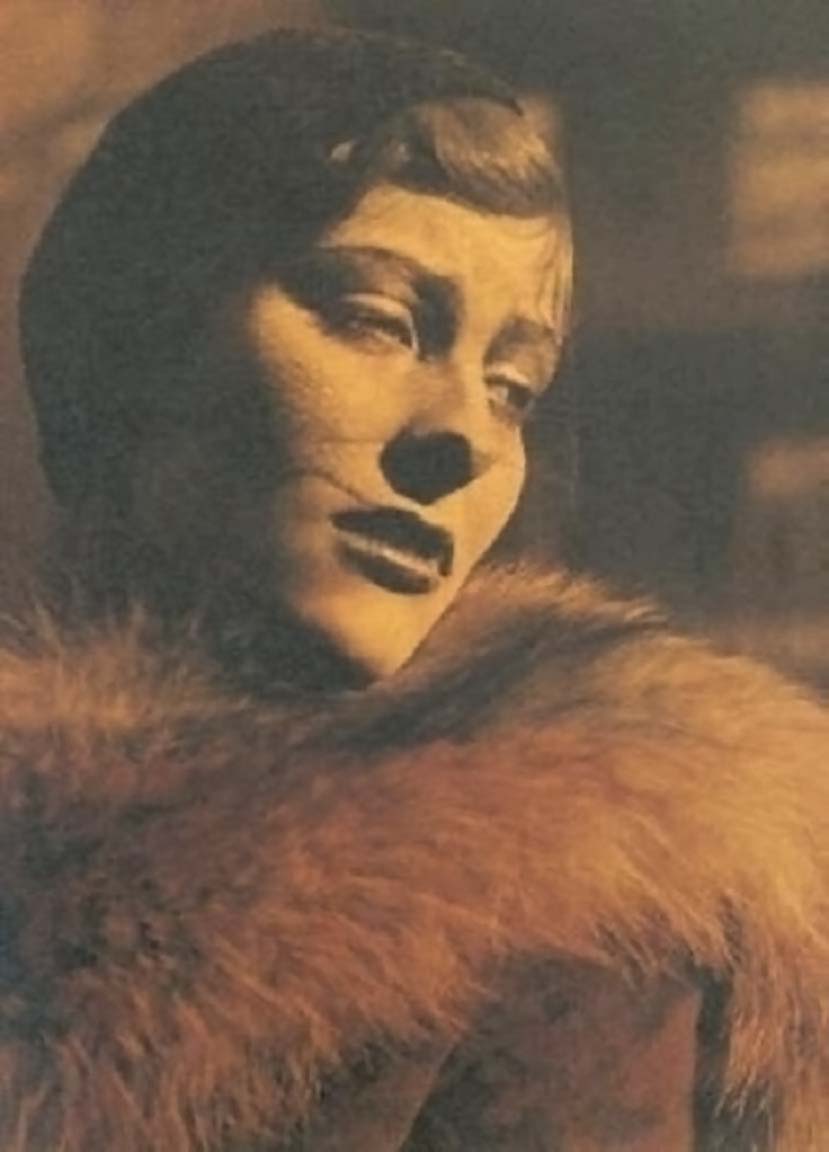
Josef Breitenbach-Sybille Binder, in fur coat. 1932

Josef Breitenbach-Sybille Binder, 1932 © The Josef Breitenbach Trust
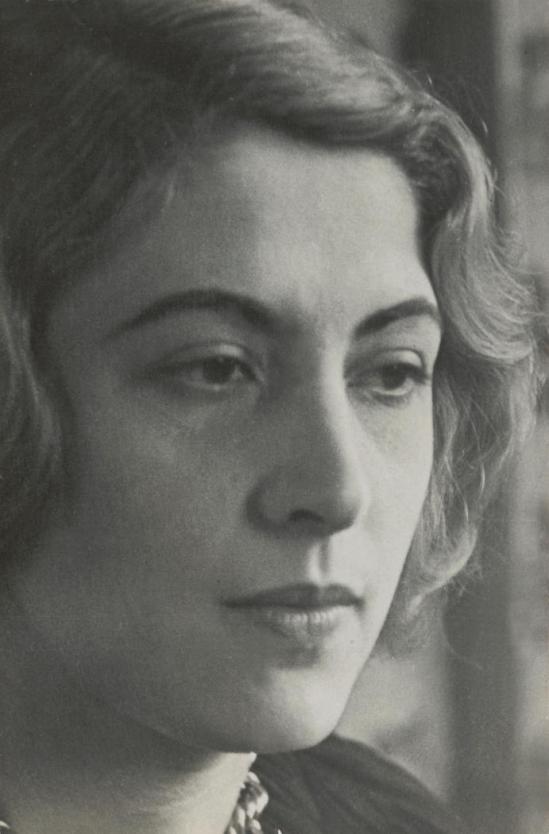

Josef Breitenbach-Portrait ofSchoura Alperin, 1934 Paris, Gelatin silver print © The Josef Breitenbach Trust.

Josef Breitenbach-Portrait ofSchoura Alperin, 1934 Paris, Gelatin silver print © The Josef Breitenbach Trust.


Josef Breitenbach-Portrait,  1935 Paris, Gelatin silver print © The Josef Breitenbach Trust.

Josef Breitenbach-Portrait, 1935 Paris, Gelatin silver print © The Josef Breitenbach Trust.


Josef Breitenbach-Portrait of Ruth Harris 1933-39 Paris, Gelatin silver print © The Josef Breitenbach Trust.

Josef Breitenbach-Portrait of Ruth Harris 1933-39 Paris, Gelatin silver print © The Josef Breitenbach Trust.


Josef Breitenbach-Aristide Maillol, Marly-Le-Roy, 1934  © The Josef Breitenbach Trust
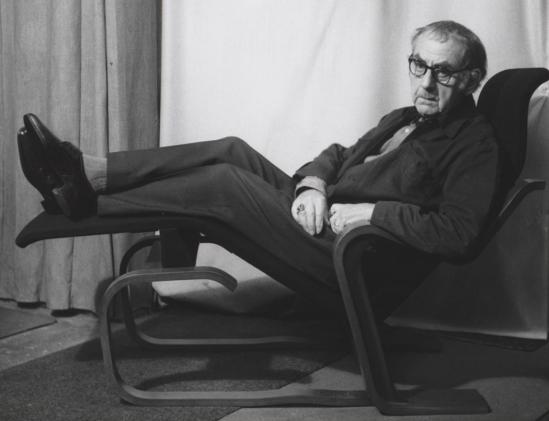
Josef Breitenbach-Aristide Maillol, Marly-Le-Roy, 1934 © The Josef Breitenbach Trust


Josef Breitenbach- Portrait of Man Ray, 1967, Gelatin silver print © The Josef Breitenbach Trust.

Josef Breitenbach- Portrait of Man Ray, 1967, Gelatin silver print © The Josef Breitenbach Trust.


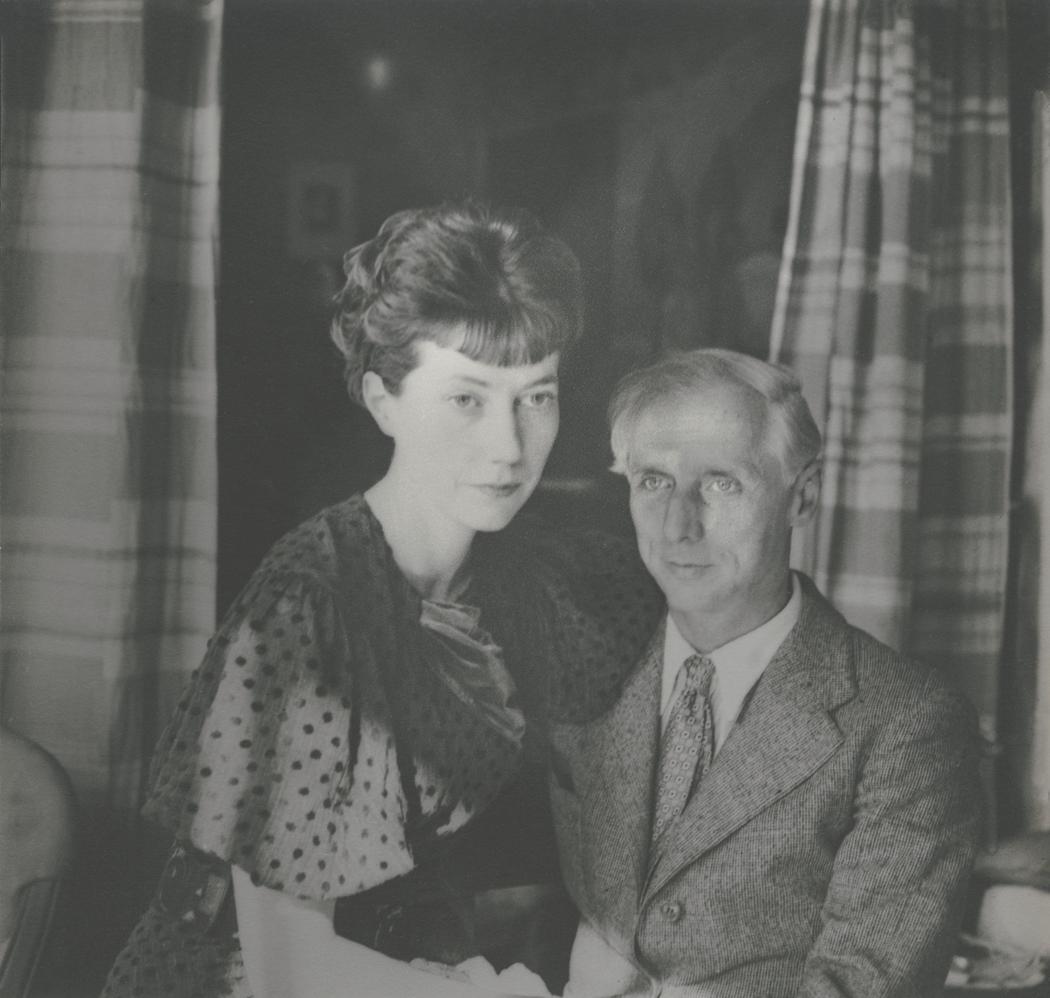
Josef Breitenbach-Portrait of Max Ernst and Marie-Berthe Aurenche, 1936 Paris, Gelatin silver print © The Josef Breitenbach Trust.

Josef Breitenbach-Portrait of Max Ernst and Marie-Berthe Aurenche, 1936 Paris, Gelatin silver print © The Josef Breitenbach Trust.


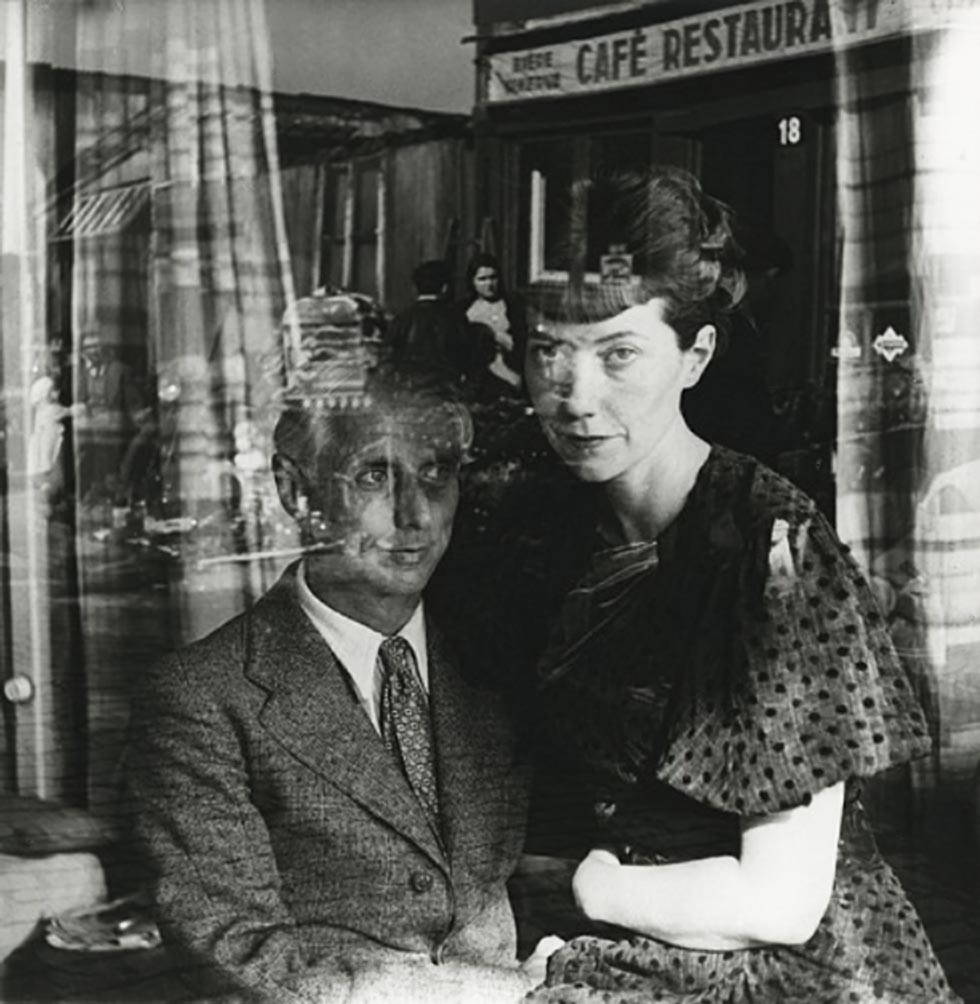
Josef Breitenbach-Portrait of Max Ernst and Marie-Berthe Aurenche, 1936 Paris, Gelatin silver print © The Josef Breitenbach Trust.

Josef Breitenbach-Portrait of Max Ernst and Marie-Berthe Aurenche, 1936 Paris, Gelatin silver print © The Josef Breitenbach Trust.


Josef Breitenbach-Portrait of Max Ernst , 1938 Paris, Gelatin silver print © The Josef Breitenbach Trust.

Josef Breitenbach-Portrait of Max Ernst , 1938 Paris, Gelatin silver print © The Josef Breitenbach Trust.


Josef Breitenbach- Max Ernst and his wife, Marie-Berthe Aurenche, Paris, 1936, Early gelatin silver print; printed c. 1942-1948 © The Josef Breitenbach Trust
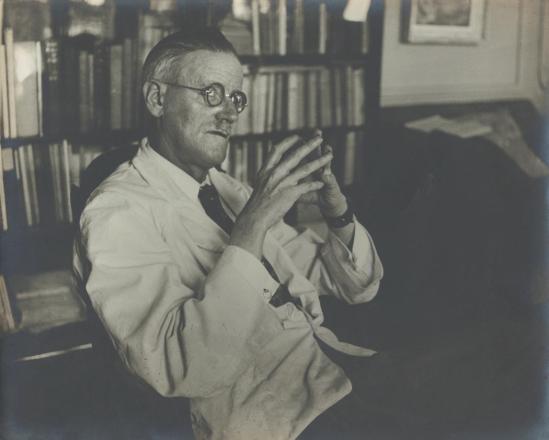
Josef Breitenbach- Max Ernst and his wife, Marie-Berthe Aurenche, Paris, 1936, Early gelatin silver print; printed c. 1942-1948 © The Josef Breitenbach Trust


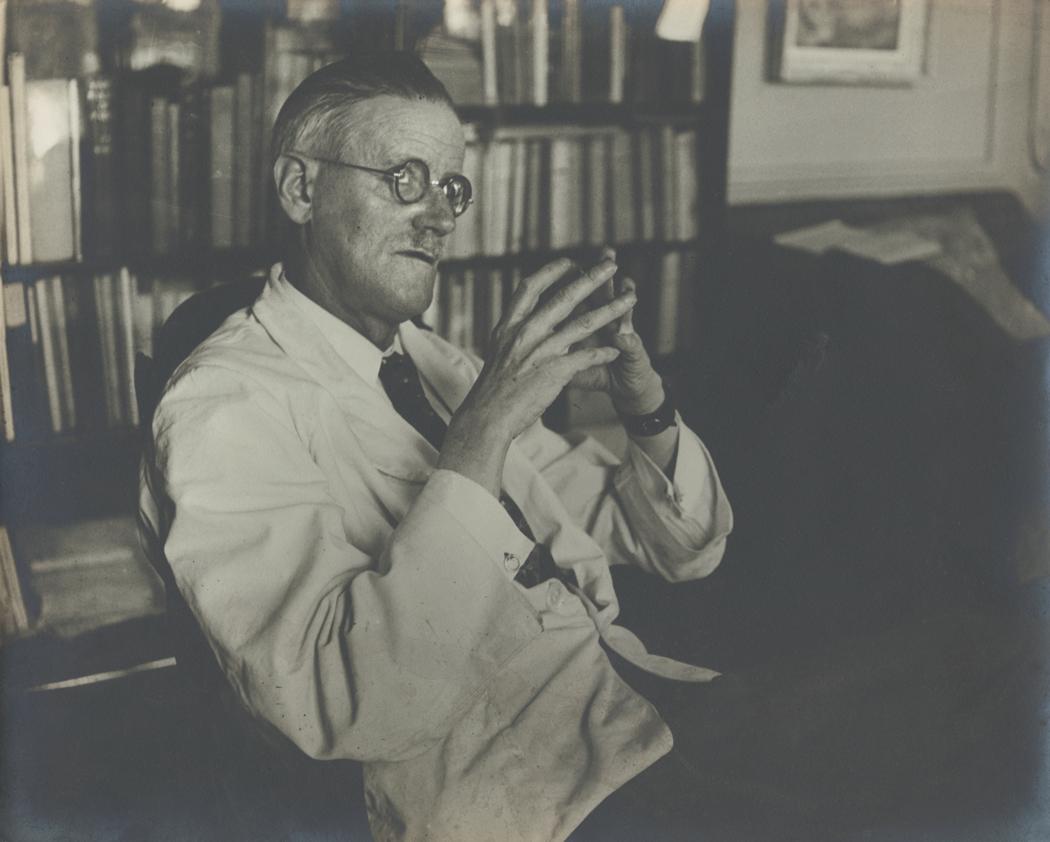
Josef Breitenbach-James Joyce, Paris , 1937

Josef Breitenbach- James Joyce, Paris, 1937 © The Josef Breitenbach Trust


Josef Breitenbach-Wassily Kandinsky, Neuilly-sur-Seine 1938

Josef Breitenbach-Wassily Kandinsky, Neuilly-sur-Seine 1938 © The Josef Breitenbach Trust
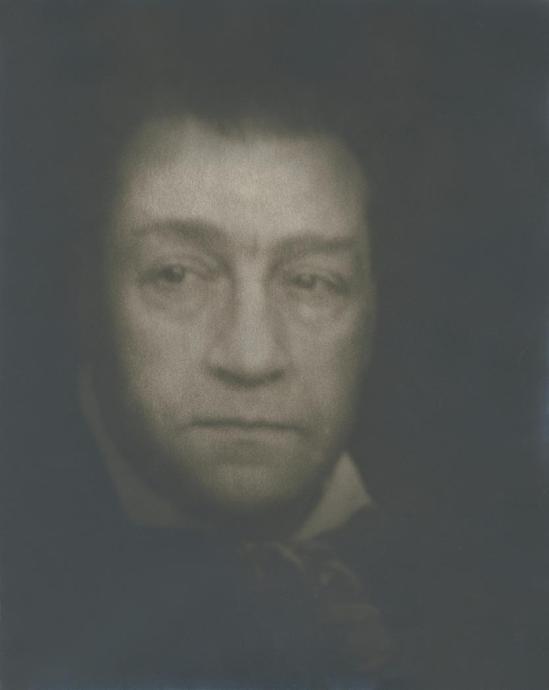
 

Josef Breitenbach- Portrait  of the Actor Sacha Guitry, Paris, 1938, Gelatin silver print © The Josef Breitenbach Trust.

Josef Breitenbach- Portrait of the Actor Sacha Guitry, Paris, 1938, Gelatin silver print © The Josef Breitenbach Trust.


Josef Breitenbach-Japanese female mask, fabric background], ca. 1940s

Josef Breitenbach-Japanese female mask, fabric background], ca. 1940s


Josef Breitenbach-Close-up of woman’s eye, 1940s © The Josef Breitenbach Trust


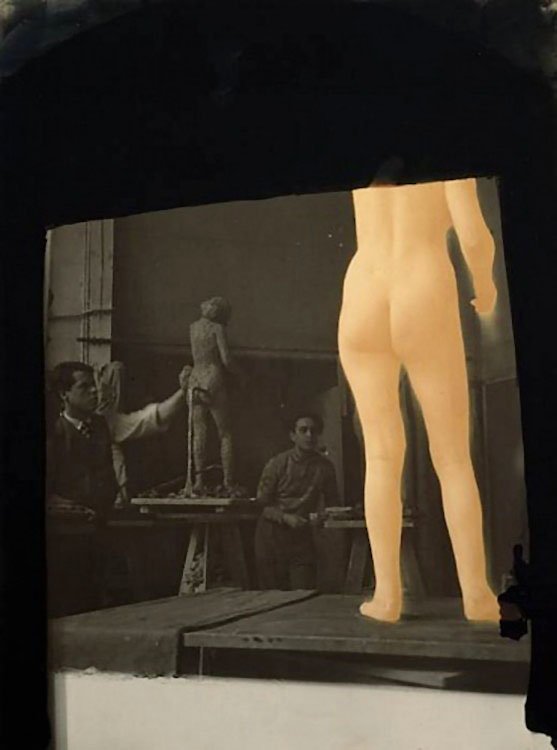
Josef Breitenbach-Sculpture Academy, Paris,  1935, gelatin silver print © The Josef Breitenbach Trust

Josef Breitenbach-Sculpture Academy, Paris, 1935, gelatin silver print © The Josef Breitenbach Trust


Josef Breitenbach-Sculpture Academy, Paris,  1935, gelatin silver print © The Josef Breitenbach Trust

Josef Breitenbach-Sculpture Academy, Paris, 1935, gelatin silver print © The Josef Breitenbach Trust


Josef Breitenbach-Standing Nude (Back), 1930-39, Gelatin silver print© The Josef Breitenbach Trust.
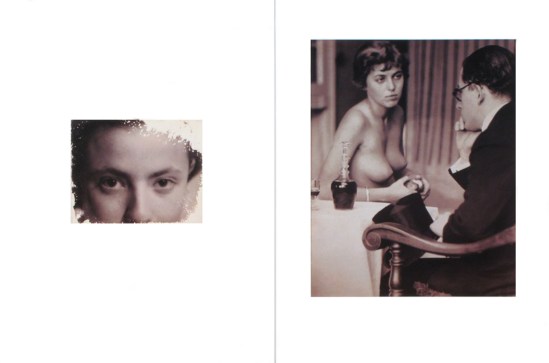
Josef Breitenbach-Standing Nude (Back), 1930-39, Gelatin silver print© The Josef Breitenbach Trust.


Josef Breitenbach-Dr. Riegler & J. Greno, Munich 1933 © The Josef Breitenbach Trust. from Manifesto By Josef Breitenbach , Ed° Nazraeli Press , 2008
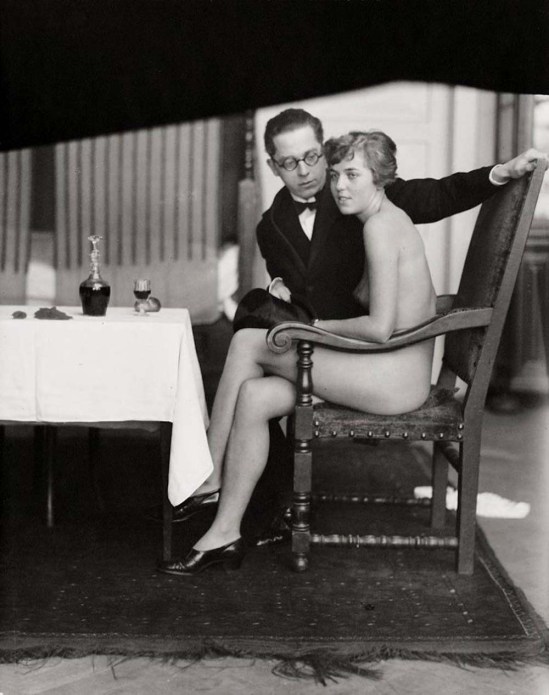
Josef Breitenbach-Dr. Riegler & J. Greno, Munich 1933 © The Josef Breitenbach Trust. from Manifesto By Josef Breitenbach , Ed° Nazraeli Press , 2008


Josef Breitenbach, Dr. Riegler and J. Greno, Munich, 1933

Josef Breitenbach, Dr. Riegler and J. Greno, Munich, 1933  © The Josef Breitenbach Trust


Josef Breitenbach.Dr. Riegler and J. Greno - Munich,1933 Photogravure on wove paper

Josef Breitenbach.Dr. Riegler and J. Greno – Munich,1933 Photogravure on wove paper © The Josef Breitenbach Trust
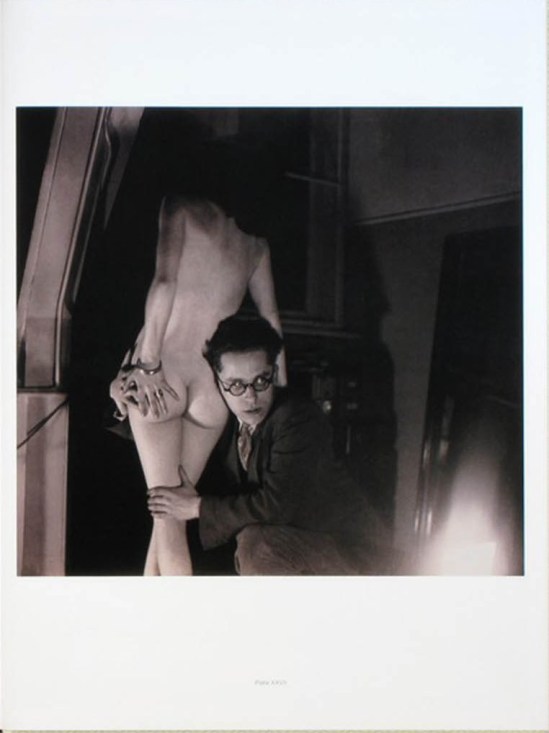

Josef Breitenbach-Dr. Riegler & J. Greno, Munich 1933 © The Josef Breitenbach Trust. from Manifesto By Josef Breitenbach , Ed° Nazraeli Press , 2008
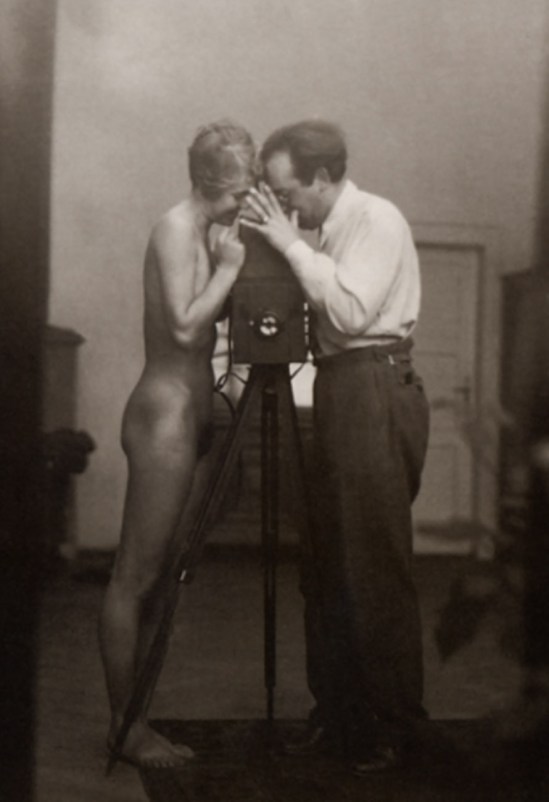
Josef Breitenbach-Dr. Riegler & J. Greno, Munich 1933 © The Josef Breitenbach Trust. from Manifesto By Josef Breitenbach , Ed° Nazraeli Press , 2008


Josef Breitenbach - Self-Portrait with J. Greno ,1933 © The Josef Breitenbach Trust
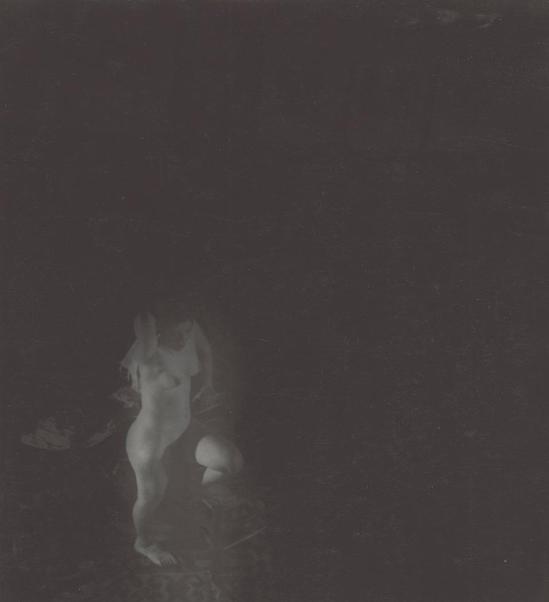
Josef Breitenbach – Self-Portrait with J. Greno ,1933 © The Josef Breitenbach Trust


Josef Breitenbach-Female Nude posing, , Nd,, Gelatin silver print© The Josef Breitenbach Trust.
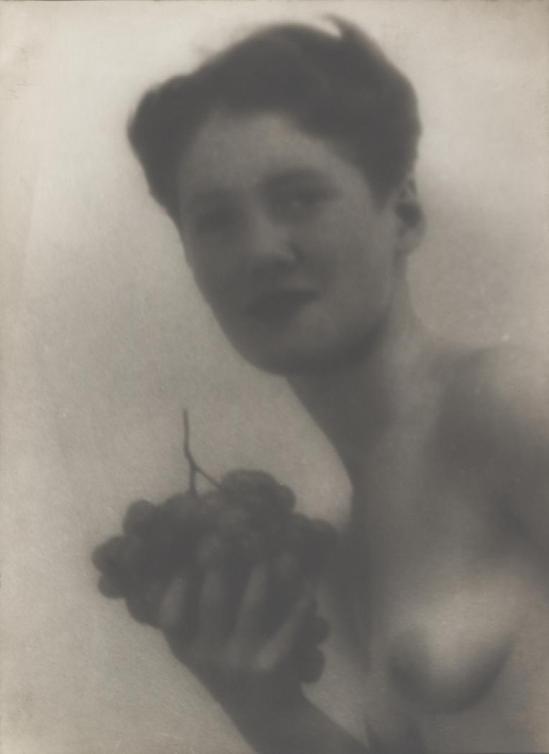
Josef Breitenbach-Female Nude posing, , Nd,, Gelatin silver print© The Josef Breitenbach Trust.


Josef Breitenbach-soft-focus bust of nude woman holding grapes, Paris, . 1933

Josef Breitenbach- Soft-focus bust of nude woman holding grapes, Paris, 1933   © The Josef Breitenbach Trust
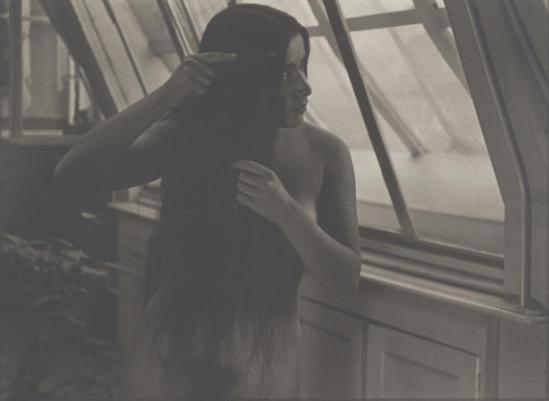

Josef Breitenbach-Sonja, Munich, 1930-33, Gelatin silver print© The Josef Breitenbach Trust.

Josef Breitenbach-Sonja, Munich, 1930-33, Gelatin silver print© The Josef Breitenbach Trust.


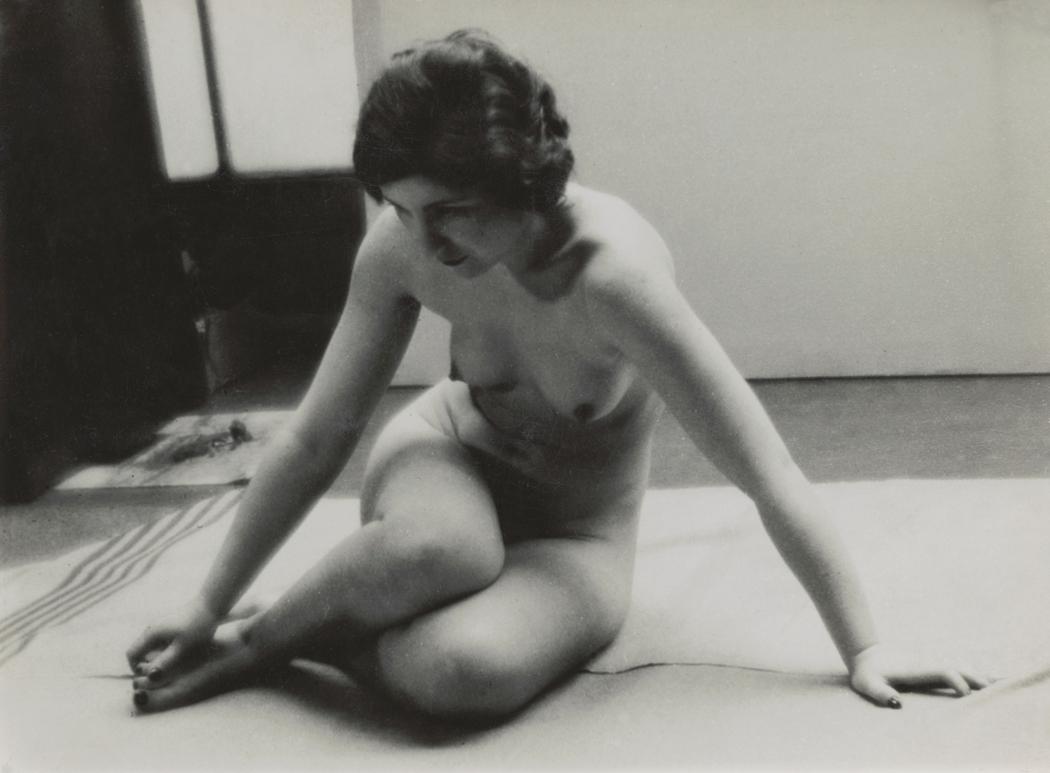
Josef Breitenbach- Female nude sitting on blanket,  1935, Gelatin silver print © The Josef Breitenbach Trust.

Josef Breitenbach- Female nude sitting on blanket, 1935, Gelatin silver print © The Josef Breitenbach Trust.
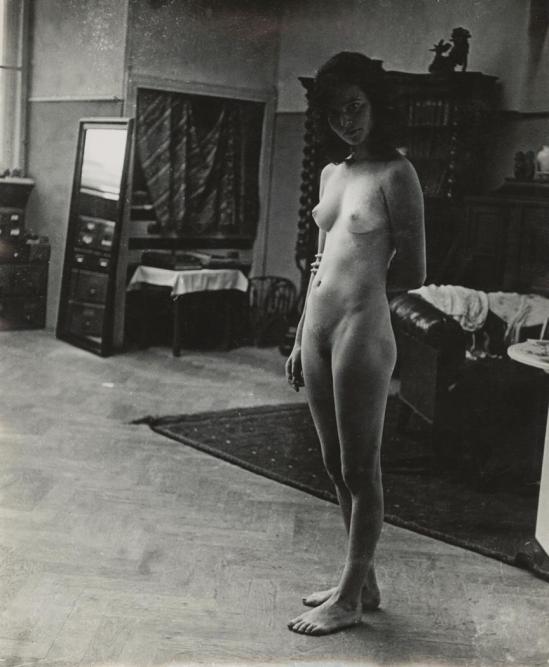

Josef Breitenbach-standing female nude - front view, furnishings, 1932

Josef Breitenbach- Standing female nude – front view, furnishings, 1932 © The Josef Breitenbach Trust


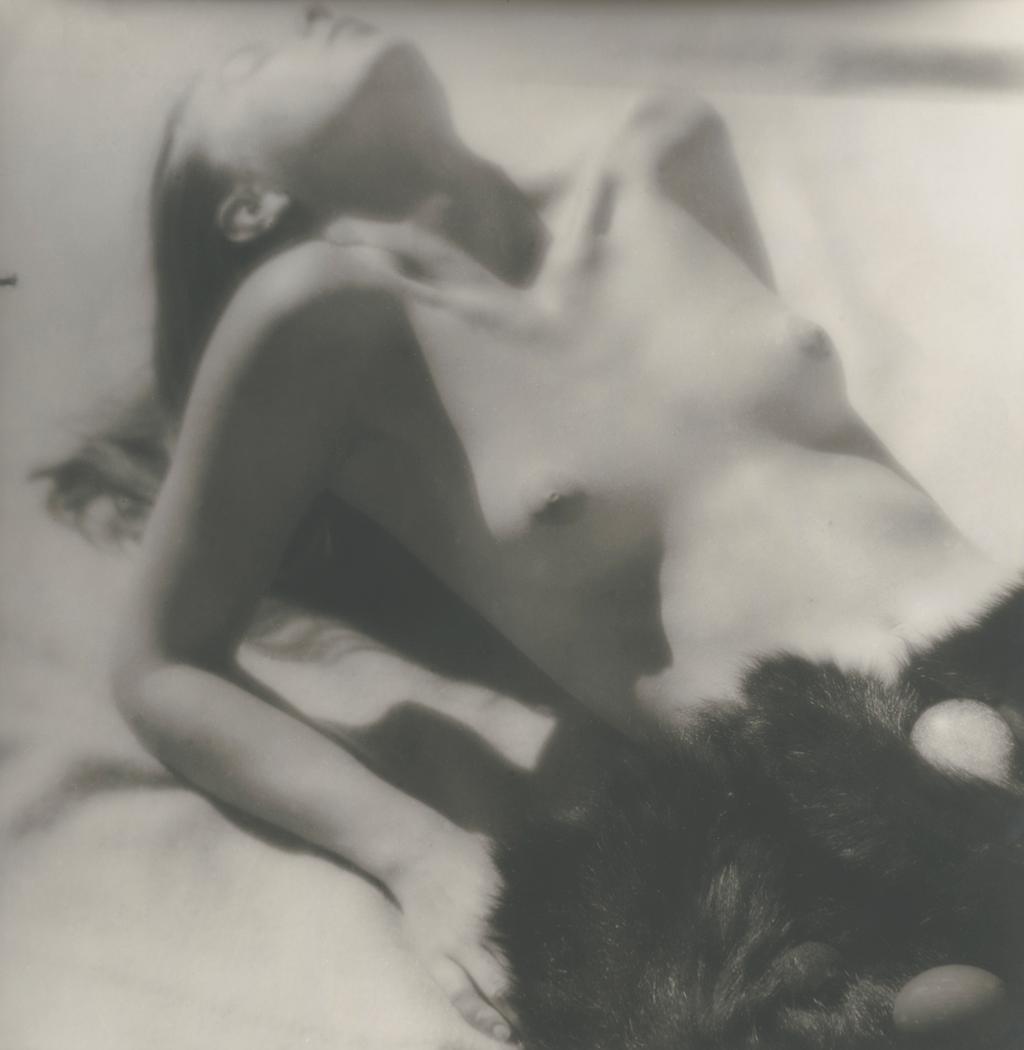
Josef Breitenbach-untitled , female nude with dark fur and ornaments, 1940s

Josef Breitenbach- Untitled , female nude with dark fur and ornaments, 1940s © The Josef Breitenbach Trust


Josef Breitenbach-untitled , female nude with dark fur and ornaments, 1940s

Josef Breitenbach- Untitled , female nude with dark fur and ornaments, 1940s  © The Josef Breitenbach Trust


Josef Breitenbach -untitled, 1940s

Josef Breitenbach -Untitled, 1940s © The Josef Breitenbach Trust


Josef Breitenbach-We New Yorkers, 1942 © The Josef Breitenbach Trust
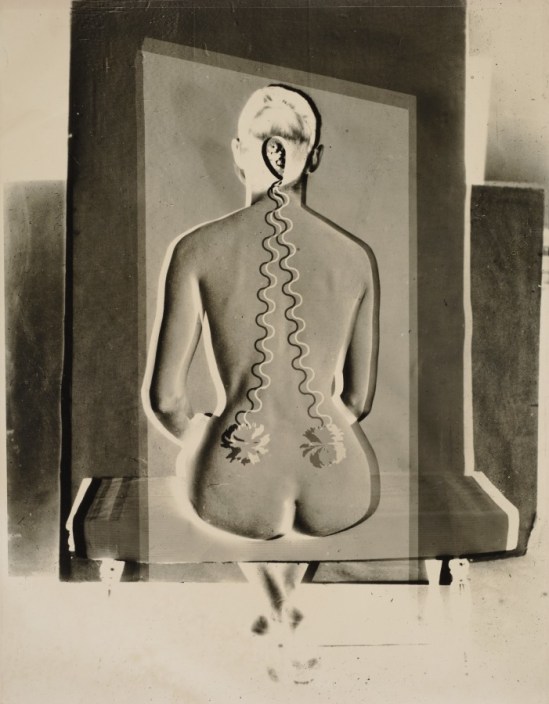

Josef Breitenbach- Electric Back, New York, 1949  toned gelatin silver print , montage © The Josef Breitenbach Trust

Josef Breitenbach- Electric Back, New York, 1949 toned gelatin silver print , montage © The Josef Breitenbach Trust


Josef Breitenbach- Medical Illustration, New York, 1949 Aus einer Serie für McCalls Magazine © The Josef Breitenbach Trust

Josef Breitenbach- Medical Illustration, New York, 1949 Aus einer Serie für McCalls Magazine © The Josef Breitenbach Trust


Josef Breitenbach- Emerging Torso, 1942-48, toned gelatin silver print © The Josef Breitenbach Trust

Josef Breitenbach- Emerging Torso, 1942-48, toned gelatin silver print © The Josef Breitenbach Trust


Josef Breitenbach-Adirondacks, , 1948,, Gelatin silver print© The Josef Breitenbach Trust.
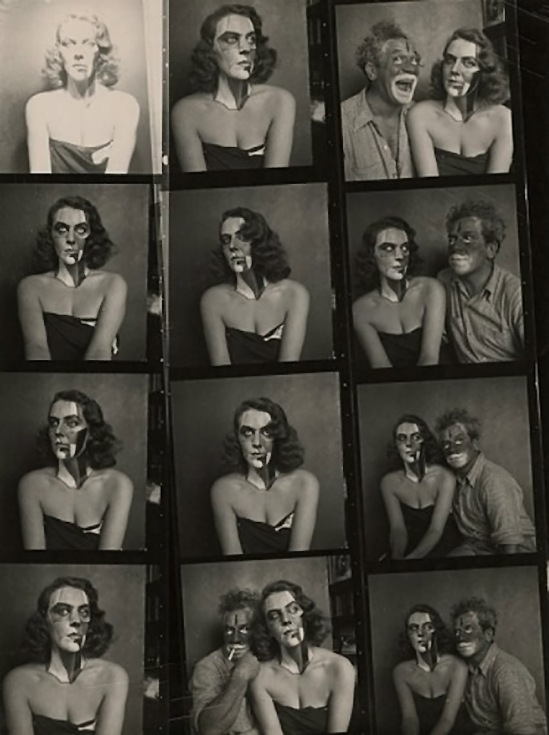
Josef Breitenbach-Adirondacks, , 1948,, Gelatin silver print© The Josef Breitenbach Trust.


Josef Breitenbach-  Portraits with Make Up,model Patricia & Josef Breitenbach,  New York, 1945, Vintage gelatin silver print© The Josef Breitenbach Trust

Josef Breitenbach- Portraits with Make Up,model Patricia & Josef Breitenbach, New York, 1945, Vintage gelatin silver print© The Josef Breitenbach Trust


Josef Breitenbach-  Woman Transformed, model Patricia, New York  1942

Josef Breitenbach- Woman Transformed, model Patricia, New York 1942 © The Josef Breitenbach Trust
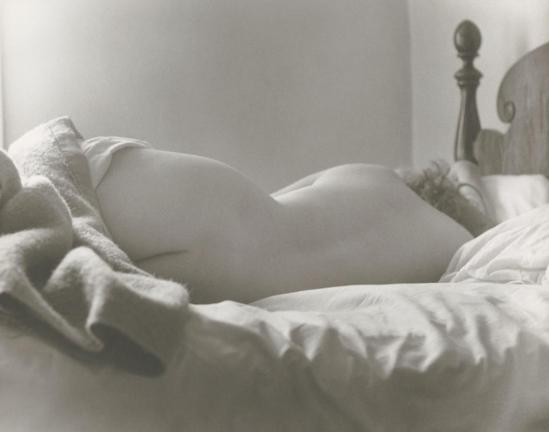

Josef Breitenbach -Morning, 1950

Josef Breitenbach -Morning, 1950 © The Josef Breitenbach Trust


Josef Breitenbach - Nu, 1950s

Josef Breitenbach – Untitled, 1950s  © The Josef Breitenbach Trust
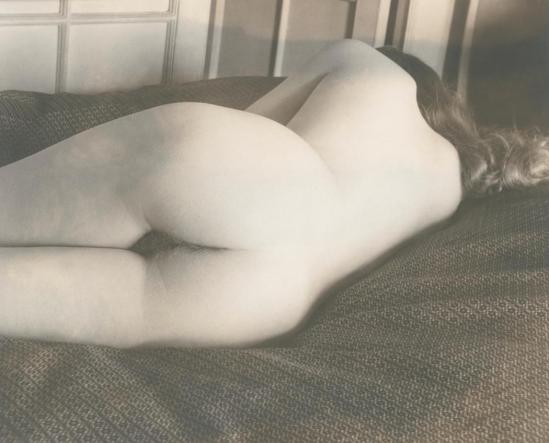

Josef Breitenbach-Untitled , 1950s

Josef Breitenbach- Untitled ,Nude, 1950s  © The Josef Breitenbach Trust
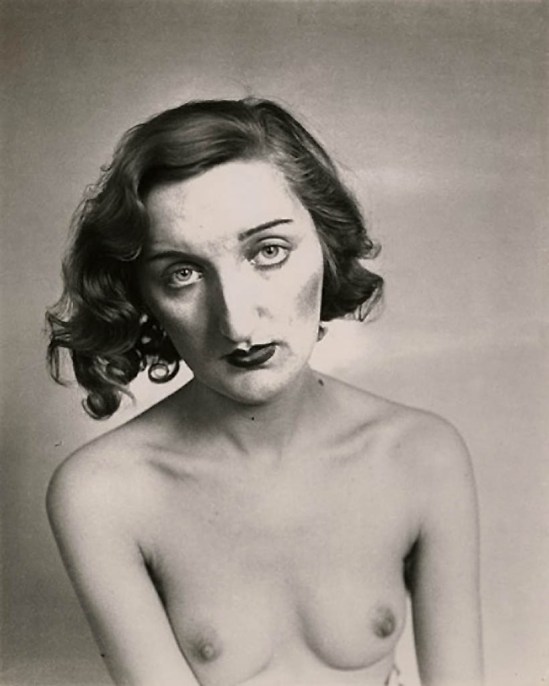

Josef Breitenbach- Portrait, Paris, 1933-39, Vintage gelatin silver print ©The Josef Breitenbach Trust.

Josef Breitenbach- Portrait, Paris, 1933-39, Vintage gelatin silver print ©The Josef Breitenbach Trust.


Josef Breitenbach- Untitled , 1935  © The Josef Breitenbach Trust
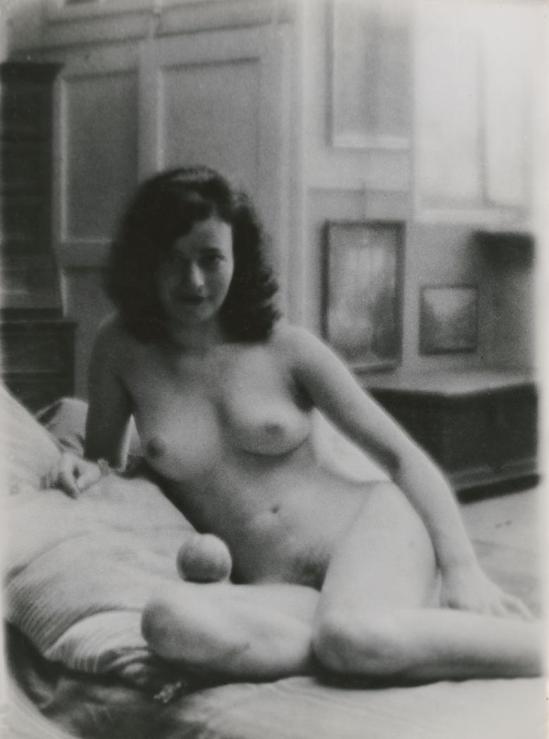

Josef Breitenbach-Untitled , Germany, Munich, 1932

Josef Breitenbach- Untitled , Germany, Munich, 1933  © The Josef Breitenbach Trust


Josef Breitenbach- Akt, München, 1933 © The Josef Breitenbach Trust

Josef Breitenbach- Nu, Germany, Munich, , 1933 © The Josef Breitenbach Trust


Josef Breitenbach-nude girl lying in gras, 1950s

Josef Breitenbach-nude girl lying in gras, 1950s  © The Josef Breitenbach Trust
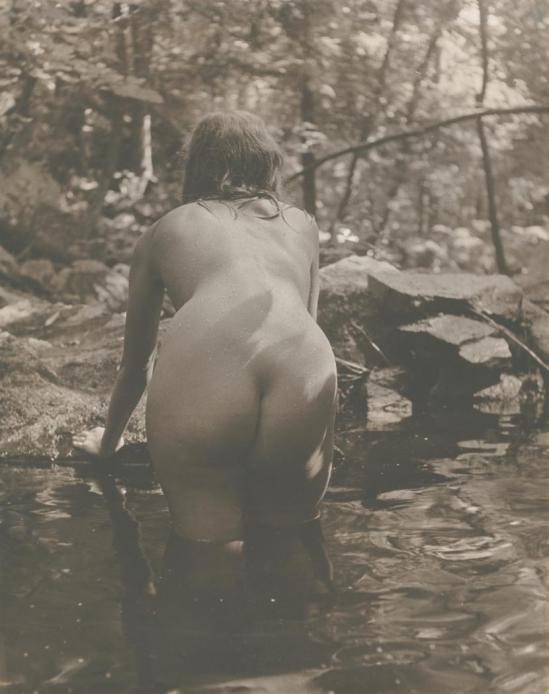

Josef Breitenbach- Nude woman in the river,New York, 1953, , Gelatin silver print © The Josef Breitenbach Trust.

Josef Breitenbach- Nude woman in the river,New York, 1953, , Gelatin silver print © The Josef Breitenbach Trust.


Josef Breitenbach-female nude with long dark hair lying on side on grass, 1961

Josef Breitenbach-female nude with long dark hair lying on side on grass, USA, 1961  © The Josef Breitenbach Trust
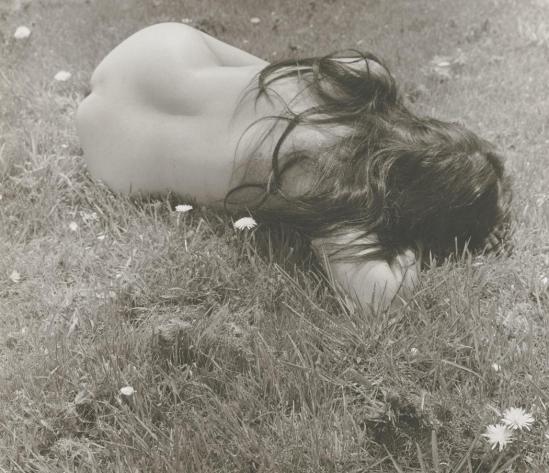

Josef Breitenbach-back view of female nude with long dark hair lying curled on grass, 1961

Josef Breitenbach-back view of female nude with long dark hair lying curled on grass, USA, 1961 © The Josef Breitenbach Trust


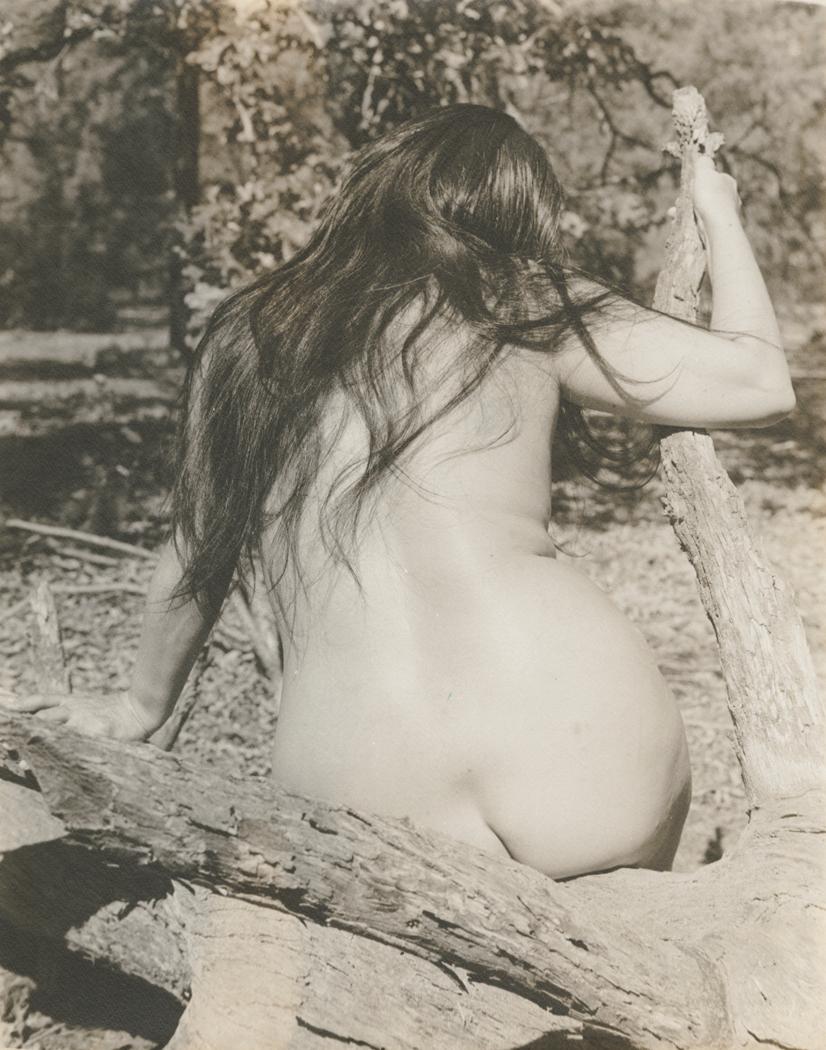
Josef Breitenbach-back of female nude with long dark hair, seated outdoors on branching log, Sept. 1961

Josef Breitenbach-back of female nude with long dark hair, seated outdoors on branching log, USA, Sept. 1961 © The Josef Breitenbach Trust
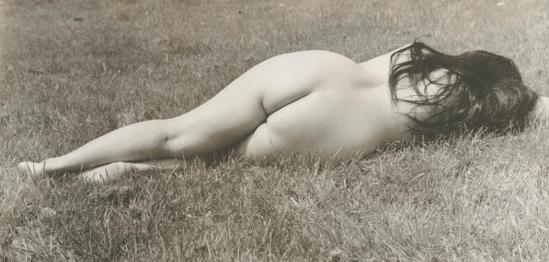

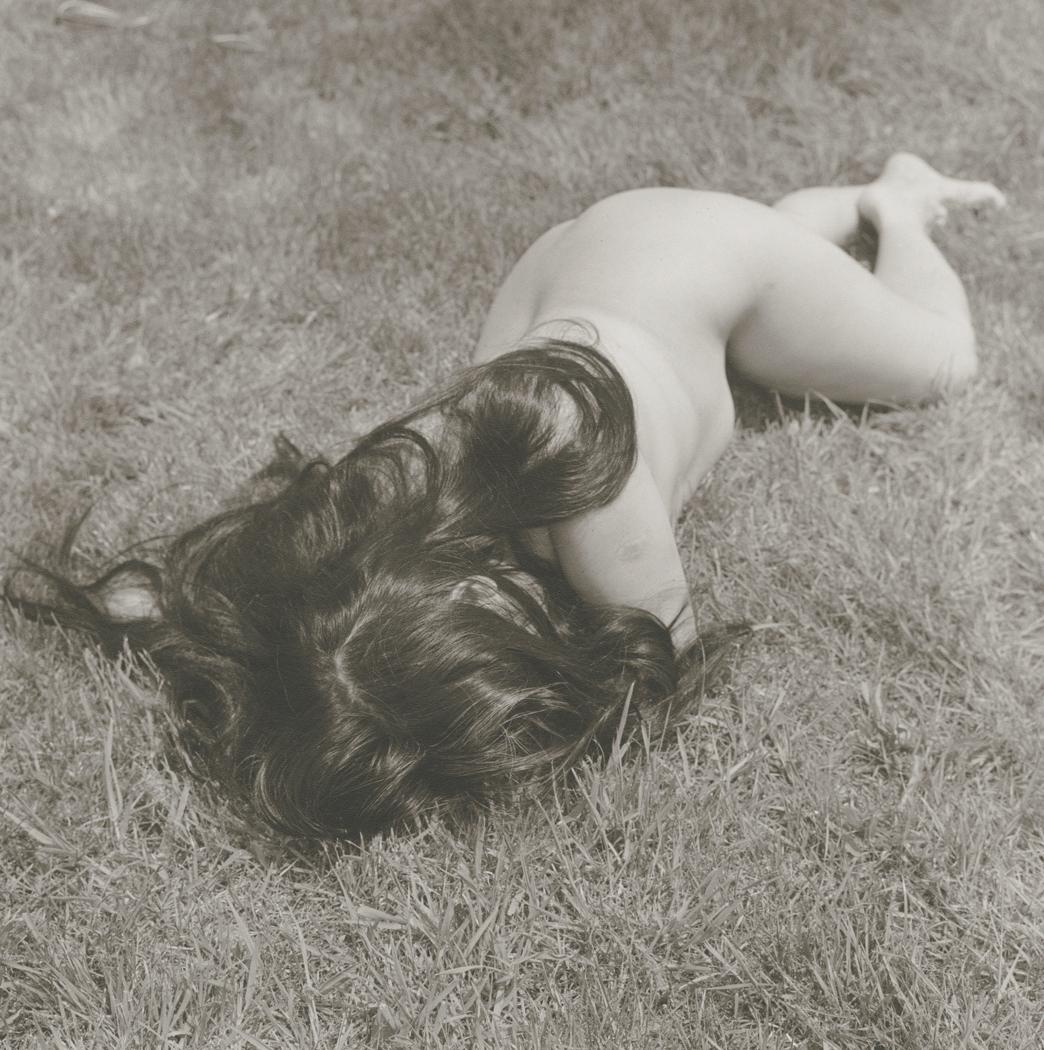
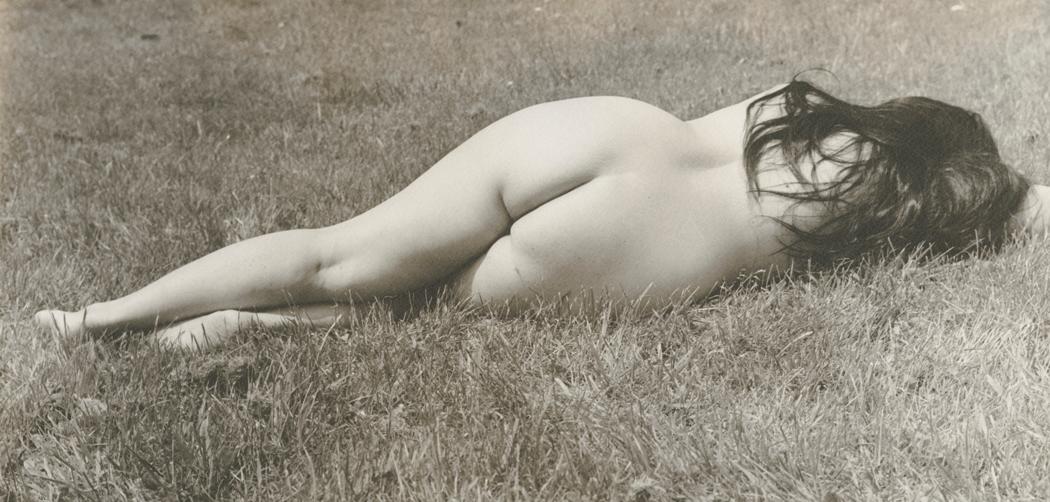
Josef Breitenbach-female nude with long dark hair, lying face-down on grass, full length with feet at left, 1961

Josef Breitenbach-Untitlrd (Female nude with long dark hair, lying face-down on grass, full length with feet at left), USA, 1961  © The Josef Breitenbach Trust


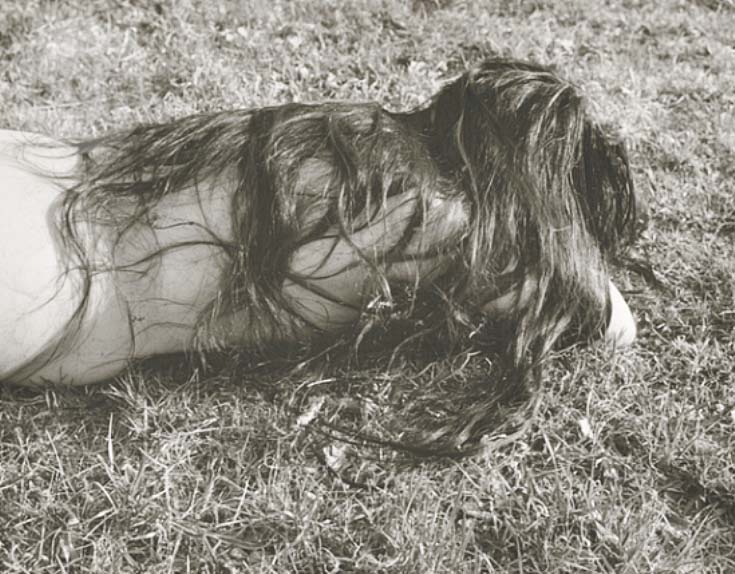
Josef Breitenbach- Untitled ,  (Female nude with long dark hair, lying face-down on grass,) USA , 1961 © The Josef Breitenbach Trust

Josef Breitenbach – Untitled , (Female nude with long dark hair, lying face-down on grass,) USA , 1961 © The Josef Breitenbach Trust


Josef Breitenbach -buttocks and back of female nude with long dark hair, kneeling outdoors, , 1961

Josef Breitenbach -Untitled (Buttocks and back of female nude with long dark hair,kneeling outdoors), USA, 1961. © The Josef Breitenbach Trust
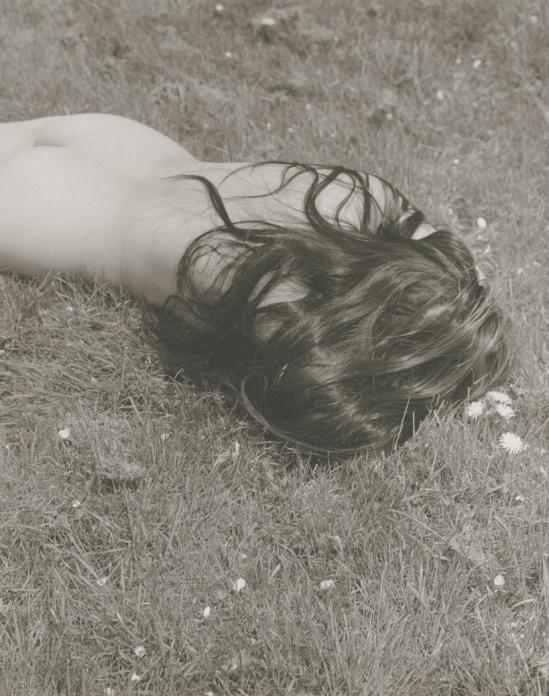

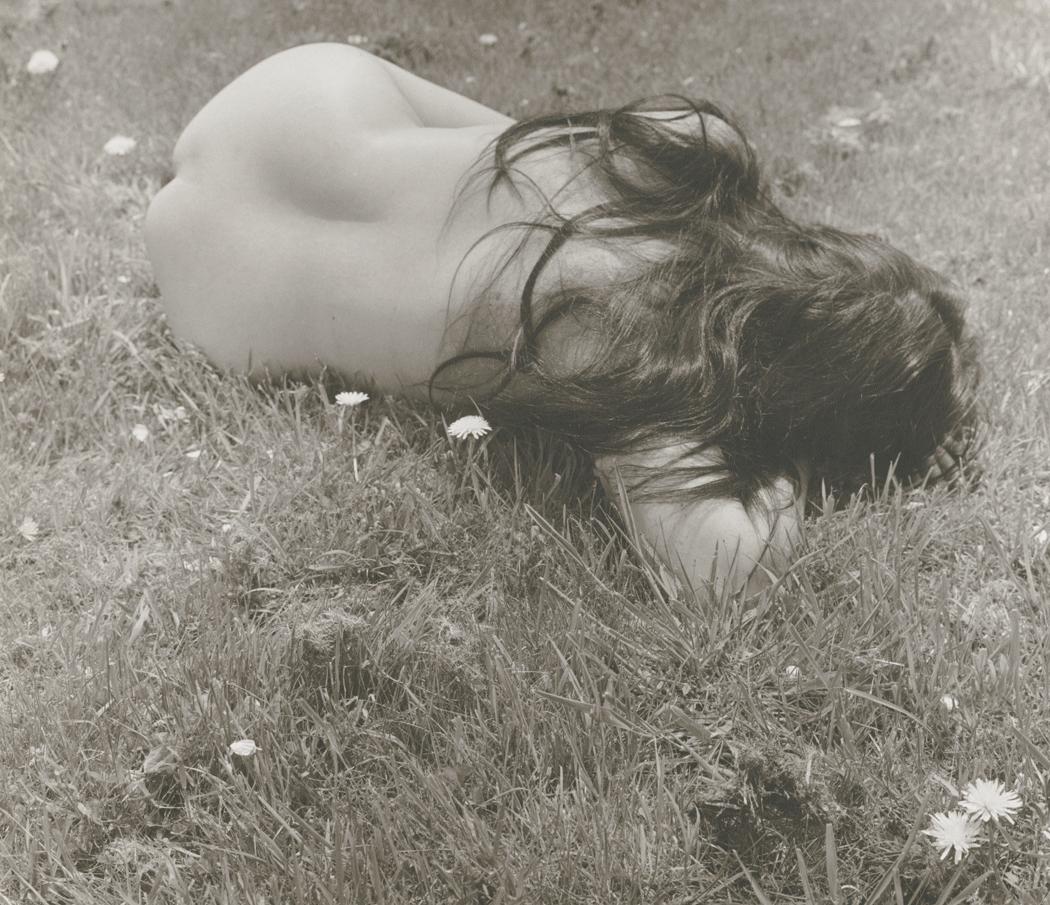
Josef Breitenbach-untitled ,female nude with long dark hair lying face-down on grass , USA  1961

Josef Breitenbach-Untitled (female nude with long dark hair lying face-down on grass) ,USA ,1961.           © The Josef Breitenbach Trust


Josef Breitenbach-untitled ,female nude with long dark hair lying face-down on grass , USA  1961

Josef Breitenbach-Untitled (emale nude with long dark hair lying face-down on grass), USA ,1961.            © The Josef Breitenbach Trust


Josef Breitenbach -back of female nude bending over in water, Sept. 1961 © The Josef Breitenbach Trust

Josef Breitenbach -Untitled (Back of female nude bending over in water), USA, Sept 1961. © The Josef Breitenbach Trust

Les années 1950 et 1960 ont été des années d’intense activité pour Breitenbach.  Il a fait reportage photographique en Asie pour les Nations Unies et d’autres entreprises variées, documentant le travail des secours.

Il exposera ses photographies largement dans les Etats-Unis à partir des années 1940 jusqu’au milieu des années 1960, notamment au Museum of Modern Art et le Metropolitan Museum of Art

Josef Breitenbach-untitled ,woman curled on side in dried grass,  1952 Korea or Japan

Josef Breitenbach-Untitled (woman curled on side in dried grass), Korea or Japan , 1952 © The Josef Breitenbach Trust


Josef Breitenbach- nude woman in black, Tokyo, 1953, Chromogenic print. © The Josef Breitenbach Trust.
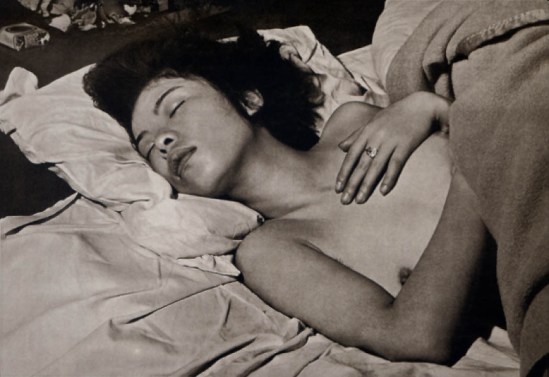
Josef Breitenbach- nude woman in black, Tokyo, 1953, Chromogenic print. © The Josef Breitenbach Trust.


Josef Breitenbach-Sleeping Japanese Girl, Japan, 1968.        © The Josef Breitenbach Trust

Josef Breitenbach-Sleeping Japanese Girl, Japan, 1968. © The Josef Breitenbach Trust


Josef Breitenbach- Dancing in the Streets (Bon Odori), Kyoto, 1956

Josef Breitenbach- Dancing in the Streets (Bon Odori), Kyoto, 1956 © The Josef Breitenbach Trust


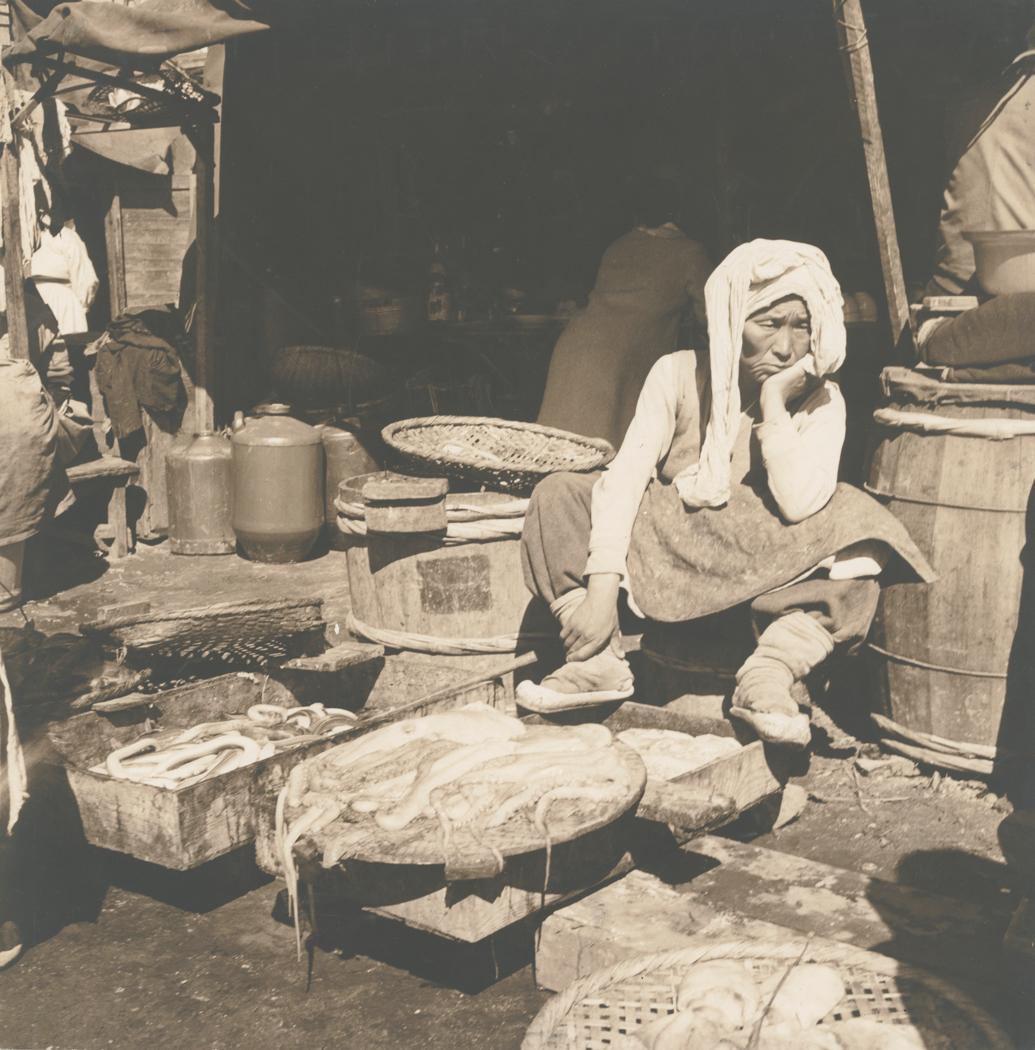
Josef Breitenbach-Eels and octopus. Pusan, Korea, 1953

Josef Breitenbach-Eels and octopus. Pusan, Korea, 1953 © The Josef Breitenbach Trust


Josef Breitenbach-India, Construction Worker, Bombay, 1960

Josef Breitenbach-India, Construction Worker, Bombay, 1960  © The Josef Breitenbach Trust


Josef Breitenbach-  Woman Transformed, New York  1942

Josef Breitenbach- Woman Transformed, New York 1942  © The Josef Breitenbach Trust


Josef Breitenbach-Mother with Sick Child, Patan, Nepal,Nepal, Patan, 1968, Gelatin silver print © The Josef Breitenbach Trust.

You can see more on Gitterman Gallery

Des portraits du photographe par des anonymes ici  sur wordpress sur le blog  A la loupe

  Voir les résultats des actions le concernant sur Mutualart

Conseil de lecture  :

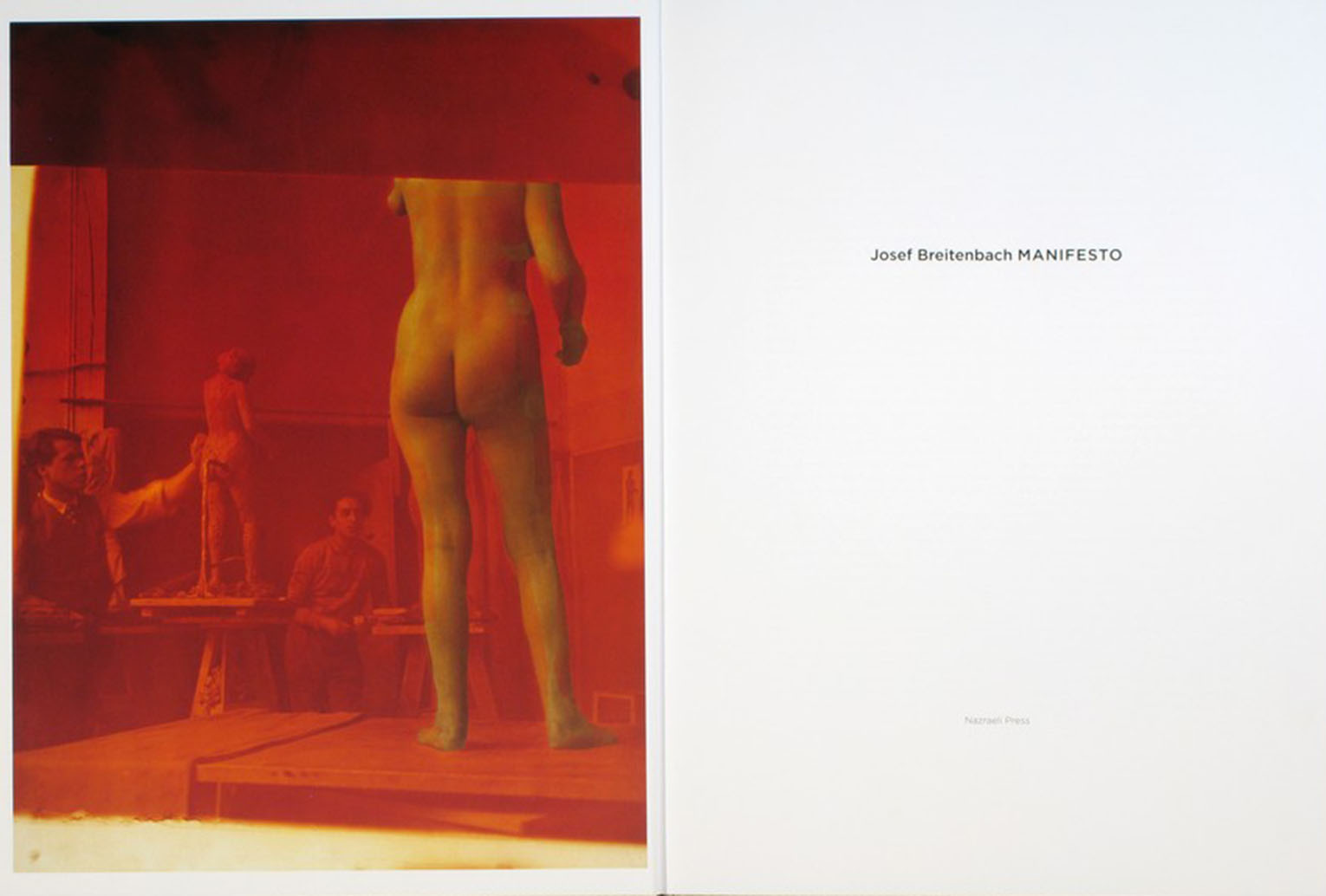
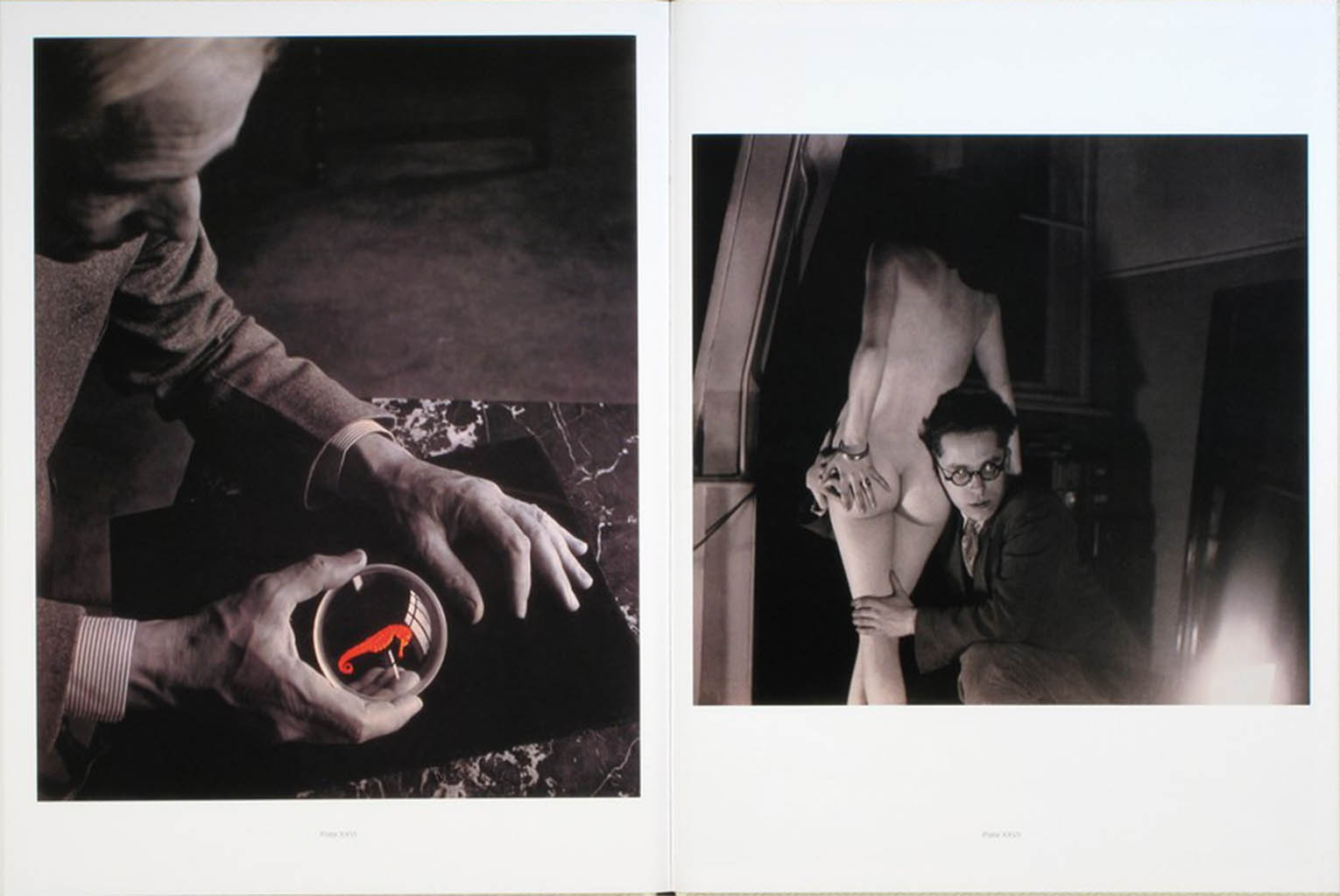
Manifesto By Josef Breitenbach , Ed° Nazraeli Press , 2008

Josef Breitenbach: by Josef Breitenbach Photographs and text (in German) by Josef Breitenbach. Essays (in German) by Peter C. Jones, and Others , Published on the occasion of the 1996-1997 exhibition Josef Breitenbach: Photographien at the Staatliche Galerie Moritzburg Halle and the Fotomuseum im Münchner Stadtmuseum, Ed° Schirmer-Mosel, 1996

Munich, Paris, New York Paperback – 2003 by Josef and Paul Berlanga, Exhibit Catalogue, edition Stephen Daiter Gallery, 2003

Josef Breitenbach » by Larisa Dryansky, Editions de l’Amateur, 2001

Cover of the Book "Josef Breitenbach" by Larisa Dryansky,  Editions de l'Amateur, 2001

Cover of the Book « Josef Breitenbach » by Larisa Dryansky, Editions de l’Amateur, 2001

 English Bio

Josef Breitenbach was born on the 3rd of April 1896. He attended Ludwig-Maximillian University in Munich (philosophy and art history, 1914 to 1917) and became active in the Youth Section and later the Pacifist wing of the Social Democratic Party. In 1918, he took part in the Soviet-inspired Bavarian coup d’état, which was the first spark of the revolutionary fire that swept over Germany in the wake of the armistice. For a few months, Breitenbach also occupied an official position in the new government. Although the revolution was short-lived, the ties he forged with the radical circles of Munich’s intelligentsia later helped him establish his reputation as a photographer.

In 1932, Breitenbach opened his first photographic studio. His clients were prominent members of Munich’s bohemia, including actors and actresses performing in the Munich theater. Munich was a stronghold of libertarians and refined people, whose spirit Breitenbach captured in theatrical portraits of his friend, the journalist Theo Riegler. This world vanished in 1933 with Hitler’s takeover.

More than his Jewish roots, the photographer’s political past made him a target for persecution. In August, 1933, with his passport , Breitenbach made his way to France , joining other German exiles seeking refuge in Paris.

The Surrealist “revolution” had by then become dominant in the Parisian art scene. Soon after his arrival, Breitenbach came into contact with André Breton and his circle. Preferring to retain his independence, he never became a member of the Surrealist group, but did show work in important exhibitions of Surrealist photography alongside Man Ray, Jacques-André Boiffard, Brassaï, Eli Lotar, Henri Cartier-Bresson, et Roger Parry.

Breitenbach only lived in Paris for six years, until the war broke out in 1939. During this period, he produced some of his most inventive work. He adopted several techniques favored by new photographers such as superimpression, montage, solarization, printing in negative, and the photogram. More importantly, he was one of the rare artists of the pre-War years to produce color photographs, which he did by using processes of bleaching, toning and pigmentation. Examples are the images “Montparnasse”, or Forever and Ever.

During his years in Paris, he was also an active member of the German exile community, which alerted the democratic world to the threat of fascism. He participated in the 1938 exhibition by the Union des Artistes Allemandes Libres, “Five Years of Hitler Dictatorship”. A high point for Breitenbach was his collaboration with Bertolt Brecht, summarized by portraits of the playwright. The war interrupted this second chapter of the photographer’s life. Interned by the French as a suspicious alien, then drafted into a civilian corps composed of foreigners, Breitenbach eventually escaped to New York from Marseille in 1941.He came to the attention of Walker Evans, who published his work in Fortune. In the summer of 1944, at the invitation of Josef Albers, Breitenbach taught photography at Black Mountain College. In 1946 he became a United States citizen and joined the faculty at Cooper Union and later The New School. Breitenbach continued to create distinctive and innovative work, including a striking group of camera-less photographs. These works hover in the liminal space between Surrealism and Abstract Expressionism. The 1950s and 1960s were years of intense activity for Breitenbach. He did photographic reportage in Asia for the United Nations and other varied businesses, documenting relief work. He exhibited his photographs extensively in the United States from the 1940s to the mid-1960s, including at the Museum of Modern Art and the Metropolitan Museum of Art.

I proposed today to browse some facets Josef Breitenbach left us behind. This was mainly the result of the encounter with the Surrealists and accompanied throughout his adventure. Through his portraits, montages , collage, photogram , naked, and some memories , moreover

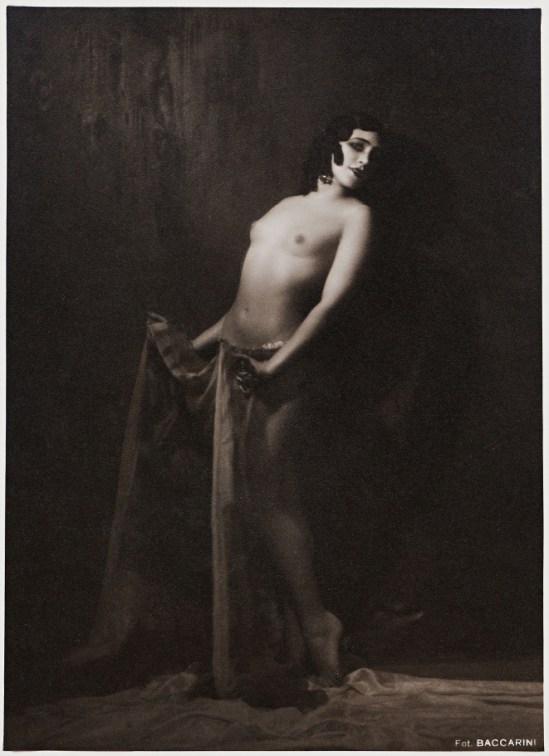
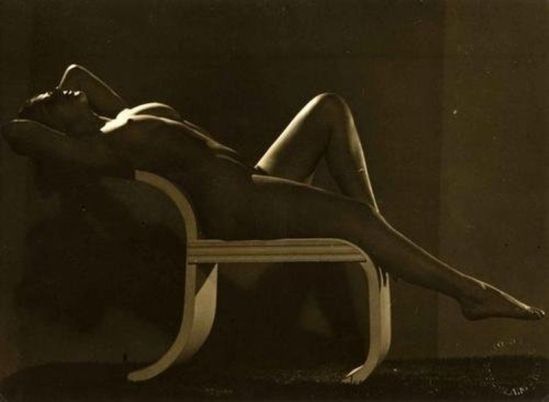
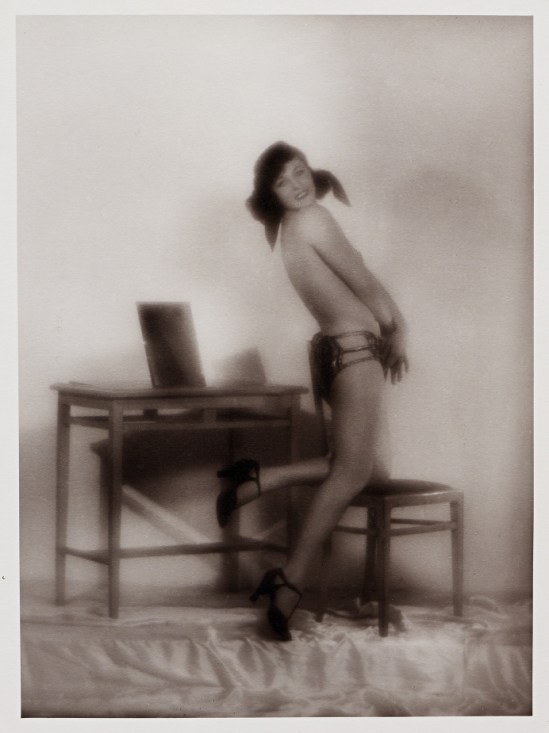
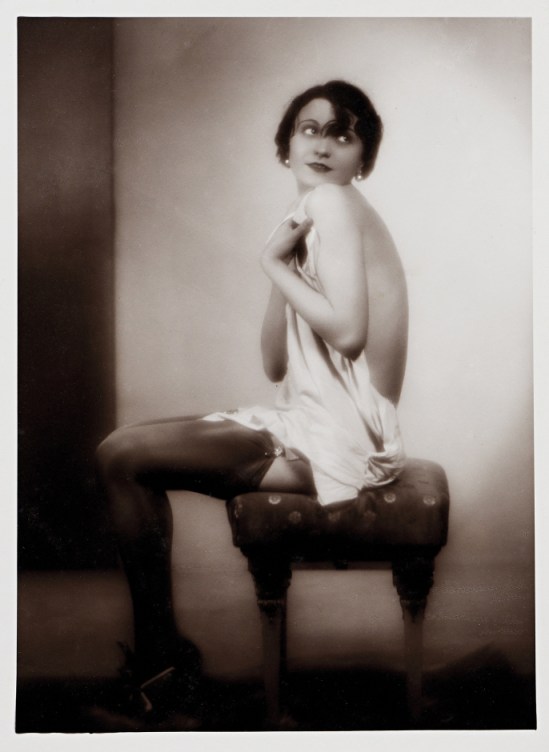
Roberto Baccarini Part II

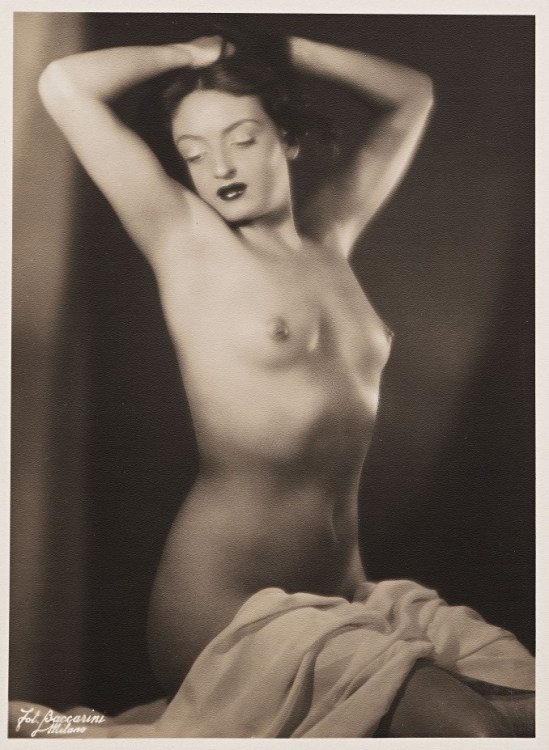
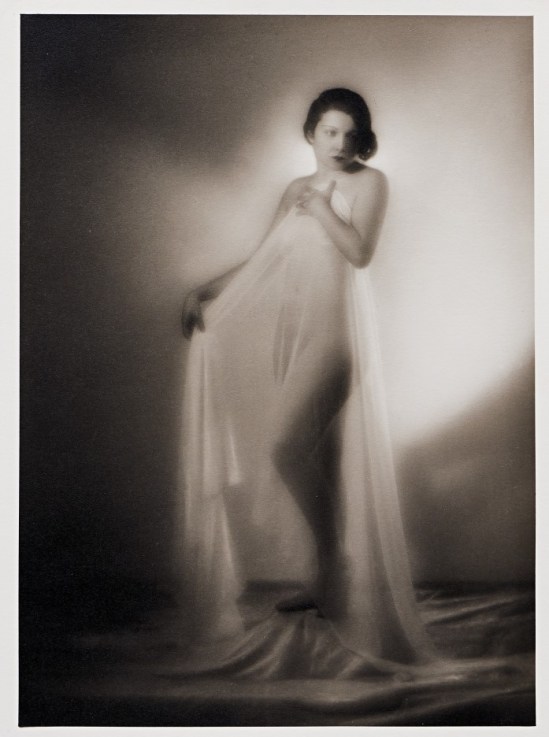
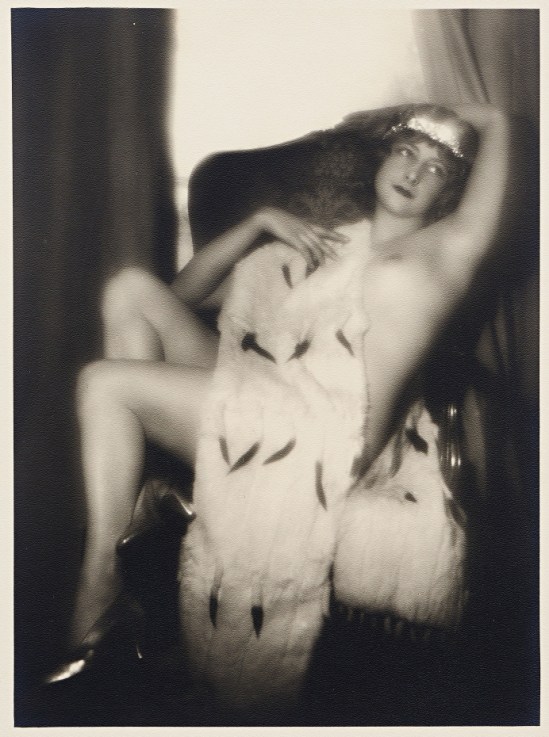
Roberto Baccarini Arimand-Banu gelatin silver print, 1930’s

Roberto Baccarini Elizaveta “Lila” Nikolska gelatin silver print, 1930’s

Roberto Baccarini. Nude , gelatin silver print 1930

Roberto Baccarini Mary Raoul sul set di ‘Fiori d’arancio’ ,gelatin silver print, 1930’s

Roberto Baccarini Rosetta Pedrani , 1930s, gelatin silver print.

Roberto Baccarini -Wanda Osiris ,1930’s gelatin silver print

Roberto Baccarini – Wanda Osiris ,1930’s gelatin silver print

Roberto Baccarini Nana de Herrera ,gelatin silver print, 1930’s

Roberto Baccarini – Wanda Osiris ,1930’s gelatin silver print

Roberto Baccarini Lina Gennari ,1930s gelatin silver print, 1930’s

Roberto Baccarini – Lidia Martora ,1930’s, gelatin silver print.

Roberto Baccarini Jo-Hai Tong Vintage gelatin silver print, 1930’s

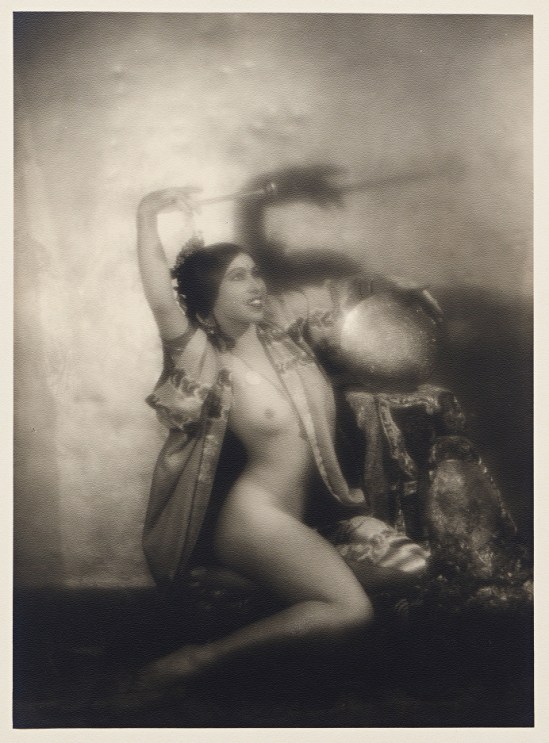
Roberto Baccarini Bea Egervary gelatin silver print, 1930’s

Roberto Baccarini Elizaveta “Lila” Nikolska gelatin silver print, 1930’s

Roberto Baccarini Claude Génia Vintage gelatin silver print.

Roberto Baccarini Donna Maria Mirka 1940

Grundworth Part II

All the articles about Grundworth 

Grundworth - Nude reclining, c1920s Gelatin silver medium

Grundworth – Nude reclining, c1920s Gelatin silver medium

Bien que plusieurs photographes célèbres ouvertement publiés œuvres érotiques, plus osée avaient tendance à être distribués sous des pseudonymes ou sous les noms de studios commerciaux. Parmi des noms comme PC Edition, A.Noyer Edition ( Julien Mandel et Walery) , Yva Richard, et « Studio Biederer », Grundworth ressort comme étant non seulement l’un des plus prolifiques, mais aussi l’un des plus « débauché ».

Le Studio Grundworth , est connu pour avoir été Le Producteur de cartes postales érotiques à Paris à partir des années 1890 jusqu’aux années 1930. Mais à la fin des années 1850 les cartes postales ont commencé à s’éloigner des modèles universitaires et à suivre une voie plus lucrative , en utilisant des poses plus provocatrices et ayant souvent des modèles partiellement habillés en bas et lingerie. Le gouvernement a commencé à sévir , et la France institue des lois interdisant la vente de photographies de nus en 1850 et promulgue des lois interdisant leur circulation dans le courrier en 1862. Pendant et immédiatement après la Première Guerre mondiale, la production de cartes postales érotiques a vraiment commencé à fleurir, atteignant son « âge d’or » au cours de la brève période de l’entre deux guerres où la société européenne a explosée avec une nouvelle vision de l’art et de la décadence.

Grundworth - nude. Ca. 1930

Grundworth – nude. Ca. 1930

Grundworth -Postcard Studio 1925

Grundworth -Postcard Studio 1925

Grundworth -Postcard Studio 1925

Grundworth -Postcard Studio 1925

Mais qui est Grundworth? Un gros bruit de couloir prétend que Grundworth aurait été un pseudonyme pour divers photographes associés au sein d’un studio mais qui s’inquiétait d’une éventuelle arrestation pour indécence ou tout autre chose approximative. Comme la plupart des studios engagés dans la production de photographies érotiques et cartes postales de l’époque , et en dépit de la large diffusion de ces cartes , leur production et de la distribution était illégale en France , et tous les éditeurs photographes se devaient de garder l’anonymat . Mais on peut supposer , compte tenu de la productivité et d’un certain nombre de styles différents que l’on retrouve dans certaines séries, que Le Nom Grundworth est peu probablement assigné à Un photographe individuel, mais plus logiquement Un Groupe de Photographes qui étaient , peut-être connus , mais qui voulaient cacher leurs véritables identités . L’écrivain Suisse et Photographe Serge Nazarieff est un de ces photographes connus pour avoir manipulé les plaques négatives sous le nom de Grundworth. Le nom a aussi été caractérisé comme l’anagramme d’Albert Wyndham, un photographe connu.

Grundworth - Reclining Nude, 1920s Gelatin silver medium postcard

Grundworth – Reclining Nude, 1920s Gelatin silver medium postcard

Grundworth - Nude pose lingerie , 1920s Gelatin silver medium postcard

Grundworth – Nude pose lingerie , 1920s Gelatin silver medium postcard

Grundworth - nude. Ca. 1930

Grundworth – nude. Ca. 1930

Grundworth - Nude pose lingerie , 1920s Gelatin silver medium postcard

Grundworth – Nude pose lingerie , 1920s Gelatin silver medium postcard

Grundworth - nude. Ca. 1930

Grundworth – nude. Ca. 1930

Grundworth - Nude pose lingerie , 1920s Gelatin silver medium postcard 22

Grundworth – Nude pose lingerie , 1920s Gelatin silver medium postcard 22

Grundworth - Nude pose lingerie , 1920s Gelatin silver medium postcard

Grundworth – Nude pose lingerie , 1920s Gelatin silver medium postcard

Grundworth - Nude pose lingerie , 1920s Gelatin silver medium postcard

Grundworth – Nude pose lingerie , 1920s Gelatin silver medium postcard

Grundworth - Nude pose lingerie , 1920s Gelatin silver medium postcard

Grundworth – Nude pose lingerie , 1920s Gelatin silver medium postcard

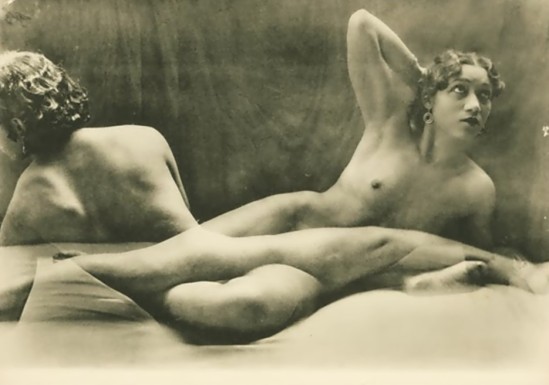
Grundworth - Two Nudes c1920s Gelatin silver medium postcard.

Grundworth – Two Nudes c1920s Gelatin silver medium postcard.

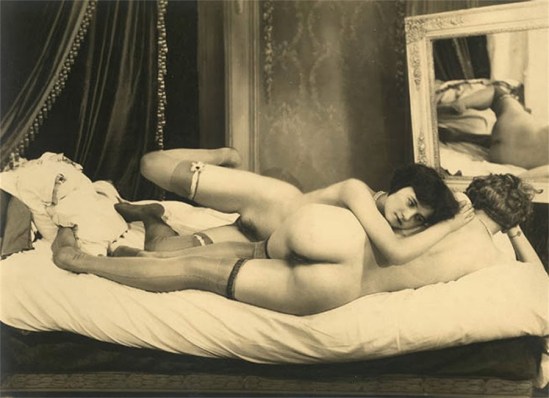
Grundworth - Deux femmes nues allongées se reflétant dans le mirroir, 1930s Gelatin silver medium postcard

Grundworth – Deux femmes nues allongées se reflétant dans le mirroir, 1930s Gelatin silver medium postcard

Grundworth - Two Nudes c1920s Gelatin silver medium postcard.

Grundworth – Two Nudes c1920s Gelatin silver medium postcard.

Grundworth - Two Nudes c1920s Gelatin silver medium postcard.

Grundworth – Two Nudes c1920s Gelatin silver medium postcard.

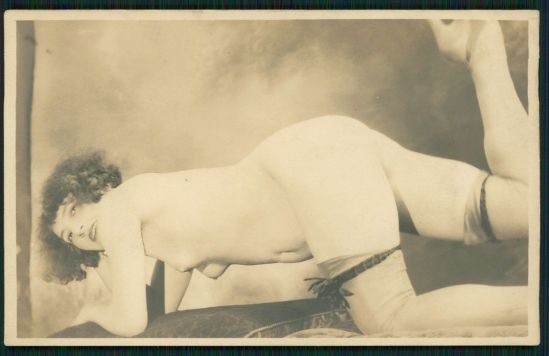
Grundworth - Femme nue, 1920s Gelatin silver medium postcard

Grundworth – Femme nue, 1920s Gelatin silver medium postcard

Grundworth - Accrobatic Nude pose , 1935 Gelatin silver medium postcard.

Grundworth – Accrobatic Nude pose , 1935 Gelatin silver medium postcard.

Grundworth - Accrobatic Nude pose , 1935 Gelatin silver medium postcard.

Grundworth – Accrobatic Nude pose , 1935 Gelatin silver medium postcard.

Grundworth - Nude pose lingerie , 1920s Gelatin silver medium postcard

Grundworth – Nude pose lingerie , 1920s Gelatin silver medium postcard

Grundworth Postcard Studio 1920s

Grundworth Postcard Studio 1920s

Josef Vetrovsky (1897 – 1944)

Josef Vetrovsky est l’un des acteurs de la photographie tchèque des années 20 et années 30. Sans bénéficier de la même reconnaissance que son compatriote et homologue Josef Sudek et de son professeur František Drtikol (1883-1961), il a lui aussi fait partie de la Société tchèque de photographie. Une exposition lui est consacrée, à Prague, en 1939. Josef Vetrovsky déclinera dans beaucoup de ses photographies les repères cubistes, et futuristes même parfois, du courant tchèque. L’étude de nu proposé ici n’y échappe pas.

Josef Vetrovsky – Naked woman on a couchcirca 1928

Josef Vetrovsky- Female Nude with Vase. 1929

Josef Vetrovsky- nude , Gelatin-silver print 1930s

Josef Vetrovsky – Female Nude 1931. Vintage gelatin silver print

Josef Vetrovsky- Nude, 1930s

Josef Vetrovsky – Female Nude Leaning, , 1928

Josef Vetrovsky -Untitled Around 1930 Gelatin silver print

Josef Vetrovsky – -Female Nude 1931. Vintage gelatin silver print_e Femme nue sur un canapé, circa 1928

Josef Vetrovsky- Akt study, around 1930, gelatin silver print

Josef Vetrovsky- nude , Gelatin-silver print 1930s

Josef Vetrovsky- nude , Gelatin-silver print 1930s

Josef Vetrovsky- Female-nude, 1929 (printed-1990s)

Josef Vetrovsky- Female Nude with Vase. 1929-30

Josef Vetrovsky- nude , Gelatin-silver print 1930s

Josef Vetrovsky – Nude Study , Prague 1930 ,Gelatin silver print

Josef Vetrovsky -Untitled Around 1936.Gelatin silver print

Josef Vetrovsky –Still life. Around 1925.Gelatin silver print

Frieda Gertrude Riess

Riess was born in Czarnikau in the Prussian Province of Posen where her Jewish parents were shopkeepers. At the end of the 1890s, the family moved to Berlin where she first studied sculpture under Hugo Lederer (c. 1907) and later photography at the Berlin « Photographischen Lehranstalt », receiving her diploma in the summer of 1915.
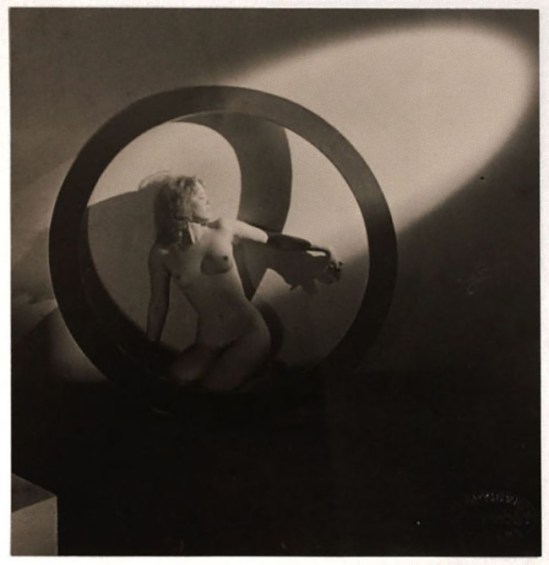
In 1918, she opened a business on the prestigious Kurfürstendamm; it became one of the most popular studios in the city. Partly as a result of her marriage to the journalist Rudolf Leonhard in the early 1920s, she extended her clientele to celebrities such as playwright Walter Hasenclever, novelist Gerhart Hauptmann and actors and actresses including Tilla Durieux, Asta Nielsen and Emil Jannings. While on a trip to Italy in 1929, she was invited to photograph Benito Mussolini. In addition, she contributed to the journals and magazines of the day including Die Dame, Berliner Illustrierte Zeitung, Der Weltspiegel, Querschnit and Koralle

Her success in Berlin was however short-lived. In 1932, after falling in love with the elderly French ambassador in Berlin, she moved to Paris with him, disappearing from the public eye. Even the date of her death cannot be clearly established and her place of burial remains unknown  (source wilkipedia)


Frieda Riess- Toni Freeden – Dancer, Germany  in a dancing pose – 1927 via getty images

Frieda Riess- The dancer Grit Helgesa Portrait in the role of a Harlekin Vintage,1920 via getty images

Frieda Riess- Ellen Petz Dancer, choreographer, Germany with a partner in the Petz Kainer Ballet ‘Scherzo’; costumes designed by Ludwig Kainer – 1920 via getty images

Frieda Riess- Portrait of Margo Lion, Cabaret Artist, Chansonniere, Actress, Germany, Portrait singing the couplet ‘Die Linie der Mode’ in the Wilde Bühne in Berlin 1924 via getty images

Frieda Riess- Hands Beautiful female hands , 1924 via getty images

Frieda Riess- Portrait of The dancer Grit Hegesa,1919 via getty images

Frieda Riess-Mria Schreker, Opera SingerWife of the composer Franz Schreker ,1922 via getty images

Frieda Riess- Lotte Pritzel Costume designer, doll artist,1925 via getty images

Frieda Riess- Lally Horstmann1920 via getty images

Frieda Riess- Lani Mohr-Solf,1931 via getty images

Frieda Riess- Portrait of the actress Leontine Kühnbergy 1925 via getty images

Frieda Riess- Dare Vare The daughter of the Italian Ambassador in China, wearing a white dress in the summer,1933 via getty images

Frieda Riess-Trude  Hesterberg – Actress, SingerPortrait in the cabaret Wilde Bühne, dressed in a long dress Vintage,1922 via getty images

Frieda Gertrud Riess The Sculptor Renée Sintenis (Die Bildhauerin Renée Sintenis) Gelatin silver print, 1925-35 Via moma

Frieda Gertrud Riess – Woman’s handS, 1924 via


Frieda Ries- Renee Sintenis, sculptor, Germany 1925 via

Frieda Riess-Baroness Nadine Uexküll dressed as Nefertiti,1928

Atelier Riess (Frieda Gertrud). Bara – Die Tänzerin Charlotte Bara. Ca. 1926-28.

Frieda Gertrud Riess Nude Model ,photogravure, 1925 via ebay

Frieda Gertrud Riess Nude Model ,photogravure, 1925 via ebay

Frieda Gertrud Riess Nude Model ,photogravure, 1920 via ebay

Frieda Gertrud Riess Nude Model ,photogravure 1920 via ebay

Albert Rudomine (1892 – 1975) le classicisme retrouvé

Albert Rudomine (1892 – 1975). Wiki.in Photo n°190, July 1983.

Albert Rudomine (1892 – 1975). Wiki.in Photo n°190, July 1983.

Albert Rudomine (1892 – 1975). Wiki.in Photo n°190, July 1983.

Albert Rudomine (1892 – 1975). Wiki.in Photo n°190, July 1983.

Albert Rudomine (1892 – 1975). Wiki.in Photo n°190, July 1983.

Albert Rudomine (1892 – 1975). Wiki.in Photo n°190, July 1983.


Josef Breitenbach (1896 – 1984) Part I

Il a assisté au cours de philosophie et d’histoire de l’art à l’Université Ludwig-Maximilian à Munich  de 1914-1917 . Il devient durant cette période active dans la section de la jeunesse  du Parti social-démocrate. En 1918, il  participe à la Bavaroise, un coup d’Etat d’inspiration soviétique, qui était la première étincelle du feu révolutionnaire qui a déferlé sur l’Allemagne à la suite de l’armistice. Pendant  quelques mois, Josef Breitenbach a  occupé un poste officiel dans le nouveau gouvernement. Bien que la révolution fut de courte durée, les liens qu’il a forgé avec les milieux radicaux de l’intelligentsia de Munich  l’ont aidé , plus tard, à établir sa réputation en tant que photographe.

En 1932, Breitenbach ouvre son premier studio de photographie. Ses clients étaient des membres éminents de la bohème de Munich, (y compris les acteurs et actrices de la scène dans le théâtre de Munich.)  qui était alors un bastion des défenseurs des libertés et des personnes raffinées. Mais ce  monde a disparu en 1933 avec la prise de pouvoir d’Hitler.Plus que ses racines juives, le passé politique du photographe fait de  lui une cible à persécuter.  En Août 1933, avec son passeport, Breitenbach arrive en France, rejoignant d’autres exilés Allemands qui cherchent refuge à Paris.

La «révolution» surréaliste allait alors devenir dominante dans la scène artistique parisienne. Peu après son arrivée, Breitenbach est entré en contact avec André Breton et son entourage. Préférant conserver son indépendance, il n’a jamais été un membre du groupe surréaliste, mais a participé à des expositions importantes de la photographie surréaliste aux côtés de Man Ray, Jacques-André Boiffard, Brassaï, Eli Lotar, Henri Cartier-Bresson, et Roger Parry.

Je vous propose aujourd’hui de parcourir quelques facettes que Josef Breitenbach nous a laissées derrière lui. principalement ce qui fût le fruit de la rencontre avec les surréalistes et qui l’accompagna tout au long de son aventure . En passant par ses portraits, ses montages, collages, photogrammes, nus.

Josef Breitenbach-Exposition Internationale, Paris, vue de l'intérieur du Pavillon de la Suisse 1937 © The Josef Breitenbach Trust

Josef Breitenbach-Exposition Internationale, Paris, vue de l’intérieur du Pavillon de la Suisse 1937 © The Josef Breitenbach Trust

Josef Breitenbach- Exposition Internationale du Surréalisme, Galerie Beaux-Arts, Paris, 1938,  gelatin silver print  © The Josef Breitenbach Trust

Josef Breitenbach- Exposition Internationale du Surréalisme, Galerie Beaux-Arts, Paris, 1938, gelatin silver print © The Josef Breitenbach Trust

Breitenbach n’a vécu à Paris  que six ans, jusqu’à ce que la guerre  éclate en 1939, et pourtant, pendant cette période , il a produit certains de ses travaux les plus inventifs.  (Il a adopté plusieurs techniques favorisées par de nouveaux photographes tels que la surimpression, le montage, la solarisation, l’impression en négatif, et le photogramme. Plus important encore, il était l’un des rares artistes des années d’avant-guerre à produire des photographies en couleurs, ce qu’il a fait en utilisant des procédés tels que le blanchiment, la tonification et la pigmentation.)

Mais pendant ses années à Paris, il était aussi un membre actif de la communauté  Allemande en exil , qui a alerté le monde démocratique de la menace du fascisme. Il a participé à l’exposition 1938 par l’Union des Artistes Libres Allemandes, «Cinq ans de dictature hitlérienne ». Un moment fort pour Breitenbach fût sa collaboration avec Bertolt Brecht, résumée par des portraits de l’auteur.


Josef Breitenbach- For Ever and Ever, 1937 © The Josef Breitenbach Trust

Josef Breitenbach- For Ever and Ever, 1937 © The Josef Breitenbach Trust

Josef Breitenbach- For Ever and Ever, 1937 © The Josef Breitenbach Trust

Josef Breitenbach- For Ever and Ever, 1937 © The Josef Breitenbach Trust

Josef Breitenbach- For Ever and Ever, 1938

Josef Breitenbach- For Ever and Ever, 1938

Josef Breitenbach- Montparnasse, Paris, 1937, Vintage toned gelatin silver print © The Josef Breitenbach Trust

Josef Breitenbach- Montparnasse, Paris, 1937, Vintage toned gelatin silver print © The Josef Breitenbach Trust

Josef Breitenbach- Sibylle Binder, Munichc. 1933, © The Josef Breitenbach TrustVintage bromoil transfer

Josef Breitenbach- Sibylle Binder, Munichc. 1933, © The Josef Breitenbach TrustVintage bromoil transfer

Josef Breitenbach- Denkmal vor der Enthüllung, Paris,  Veiled Statue, Paris,  1933-39, Early gelatin silver print, printed ca. 1942-48 © The Josef Breitenbach Trust.

Josef Breitenbach- Denkmal vor der Enthüllung, Paris, Veiled Statue, Paris, 1933-39, Early gelatin silver print, printed ca. 1942-48 © The Josef Breitenbach Trust.

Josef Breitenbach-Photograph of the Scent Given Off by a Rose Petal photogravure. 1939  © The Josef Breitenbach Trust.

Josef Breitenbach-Photograph of the Scent Given Off by a Rose Petal photogravure. 1939 © The Josef Breitenbach Trust.

Josef Breitenbach- A small piece of camphor on the surface of mercury, 1937,  Munich,, Gelatin silver print© The Josef Breitenbach Trust.

Josef Breitenbach- A small piece of camphor on the surface of mercury, 1937, Munich,, Gelatin silver print© The Josef Breitenbach Trust.

Josef Breitenbach -modern female bust with hat, Paris - facing toward left], 1935

Josef Breitenbach -modern female bust with hat, Paris – facing toward left], 1935

Josef Breitenbach, Bust Coloré, Paris, 1935

Josef Breitenbach, Bust Coloré, Paris, 1935

Josef Breitenbach, Sculpture Academy, Paris 1935  © The Josef Breitenbach Trust

Josef Breitenbach, Sculpture Academy, Paris 1935 © The Josef Breitenbach Trust

Josef Breitenbach- © The Josef Breitenbach Trust. from Manifesto By Josef Breitenbach , Ed° Nazraeli Press , 2008

Josef Breitenbach- © The Josef Breitenbach Trust. from Manifesto By Josef Breitenbach , Ed° Nazraeli Press , 2008

Josef Breitenbach- Max Ernst and Dr. Riegler & J. Greno, Munich 1933 © The Josef Breitenbach Trust. from Manifesto By Josef Breitenbach , Ed° Nazraeli Press , 2008

Josef Breitenbach- Max Ernst and Dr. Riegler & J. Greno, Munich 1933 © The Josef Breitenbach Trust. from Manifesto By Josef Breitenbach , Ed° Nazraeli Press , 2008

Josef Breitenbach. Max Ernst and the seahorse, New York, 1942.

Josef Breitenbach. Max Ernst and the seahorse, New York, 1942.

Josef Breitenbach-The Hands of Max Ernst, 1942,     Silver print. Courtesy of mfa © The Josef Breitenbach Trust

Josef Breitenbach-The Hands of Max Ernst, 1942, Silver print. Courtesy of mfa © The Josef Breitenbach Trust


Josef Breitenbach- Bird, Photogram, hand colored gelatin silver print, 1948 © The Josef Breitenbach Trust

Josef Breitenbach- Bird, Photogram, hand colored gelatin silver print, 1948 © The Josef Breitenbach Trust

Josef Breitenbach-Untitled , photogram , hand-colored , 1940s © The Josef Breitenbach Trust

Josef Breitenbach-Untitled , photogram , hand-colored , 1940s © The Josef Breitenbach Trust

Josef Breitenbach-Untitled , photogram , hand-colored , 1940s  © The Josef Breitenbach Trust

Josef Breitenbach-Untitled , photogram , hand-colored , 1940s © The Josef Breitenbach Trust

Josef Breitenbach-Untitled , photogram , hand-colored , 1940s    © The Josef Breitenbach Trust

Josef Breitenbach-Untitled , photogram , hand-colored , 1940s © The Josef Breitenbach Trust

Josef Breitenbach- Fragrance of a Pink Rose, 1945,New York , Gelatin silver print © The Josef Breitenbach Trust.

Josef Breitenbach- Fragrance of a Pink Rose, 1945,New York , Gelatin silver print © The Josef Breitenbach Trust.

Josef Breitenbach-Carnation and Fragrance, 1940s  ,gelatin silver print, 1948 © The Josef Breitenbach Trust.

Josef Breitenbach-Carnation and Fragrance, 1940s ,gelatin silver print, 1948 © The Josef Breitenbach Trust.

Josef Breitenbach- Red Rose and Odor, 1940 ,Unknown color process © The Josef Breitenbach Trust

Josef Breitenbach- Red Rose and Odor, 1940 ,Unknown color process © The Josef Breitenbach Trust

Josef Breitenbach- Untitled photogram, 1948 © The Josef Breitenbach Trust

Josef Breitenbach- Untitled photogram, 1948 © The Josef Breitenbach Trust

Josef Breitenbach- Fireworks, photogram, 1949 gelatin silver print © The Josef Breitenbach Trust

Josef Breitenbach- Fireworks, photogram, 1949 gelatin silver print © The Josef Breitenbach Trust

Josef Breitenbach-untitled ( objects on a patterned ground, feather, clips, washers), 1954 © The Josef Breitenbach Trust

Josef Breitenbach-untitled ( objects on a patterned ground, feather, clips, washers), 1954 © The Josef Breitenbach Trust

Josef Breitenbach- Huntsman's Luck, photogram , New York, 1946-49,  gelatin silver print  © The Josef Breitenbach Trust

Josef Breitenbach- Huntsman’s Luck, photogram , New York, 1946-49, gelatin silver print © The Josef Breitenbach Trust

Josef Breitenbach-Untitled , photogram, 1940s

Josef Breitenbach-Untitled , photogram, 1940s

Josef Breitenbach-Untitled , photogram, 1940s © The Josef Breitenbach Trust

Josef Breitenbach-Untitled , photogram, 1940s © The Josef Breitenbach Trust

Josef Breitenbach-Untitled , photogram, 1940s © The Josef Breitenbach Trust

Josef Breitenbach-Untitled , photogram, 1940s © The Josef Breitenbach Trust

Josef Breitenbach-Untitled , photogram - newspaper fragments with double-sided text, leaves,1940s © The Josef Breitenbach Trust

Josef Breitenbach-Untitled , photogram, 1940s  © The Josef Breitenbach Trust

Josef Breitenbach-Untitled , photogram, 1940s © The Josef Breitenbach Trust

Josef Breitenbach-untitled , human circulatory system diagram, dark beach scene with wrecked boat,  1942  © The Josef Breitenbach Trust

Josef Breitenbach-untitled , human circulatory system diagram, dark beach scene with wrecked boat, 1942 © The Josef Breitenbach Trust

Josef Breitenbach-Untitled , human circulatory system diagram, wet beach sand with high sea horizon,  1942 © The Josef Breitenbach Trust

Josef Breitenbach-Untitled , human circulatory system diagram, wet beach sand with high sea horizon, 1942 © The Josef Breitenbach Trust


Josef Breitenbach-Fabric Abstraction, New York, 1948, Gelatin silver print© The Josef Breitenbach Trust.

Josef Breitenbach-Fabric Abstraction, New York, 1948, Gelatin silver print© The Josef Breitenbach Trust.


La guerre interrompit ce deuxième chapitre de la vie du photographe. Interné par les Français comme un étranger suspect, puis rédigé dans un corps civil composé d’étrangers, Breitenbach finalement échappé à la France  de Marseille en 1941 pour New York . Il parvient à retenir l’attention de Walker Evans, qui  publie ses travaux  dans Fortune .

À l’été 1944,  à l’invitation de Josef Albers,  Breitenbach enseigne la photographie au Black Mountain College.  En 1946, il est devenu un citoyen des États-Unis et a rejoint la faculté de la Cooper Union .

Breitenbach a continué à créer que qui etait distinctif et innovateur,comme un un groupe de  photographes sans l’appareil. Ces œuvres planent dans l’espace liminal entre le surréalisme et l’expressionnisme abstrait.

Les années 1950 et 1960 ont été des années d’intense activité pour Breitenbach.  Il a fait reportage photographique en Asie pour les Nations Unies et d’autres entreprises variées, documentant le travail des secours.

Il exposera ses photographies largement dans les Etats-Unis à partir des années 1940 jusqu’au milieu des années 1960, notamment au Museum of Modern Art et le Metropolitan Museum of Art.

You can see more on Gitterman Gallery

Des portraits du photographe par des anonymes ici  sur wordpress sur le blog  A la loupe

  Voir les résultats des actions le concernant sur Mutualart

Conseil de lecture  :

Manifesto By Josef Breitenbach , Ed° Nazraeli Press , 2008

Josef Breitenbach: by Josef Breitenbach Photographs and text (in German) by Josef Breitenbach. Essays (in German) by Peter C. Jones, and Others , Published on the occasion of the 1996-1997 exhibition Josef Breitenbach: Photographien at the Staatliche Galerie Moritzburg Halle and the Fotomuseum im Münchner Stadtmuseum, Ed° Schirmer-Mosel, 1996

Munich, Paris, New York Paperback – 2003 by Josef and Paul Berlanga, Exhibit Catalogue, edition Stephen Daiter Gallery, 2003

Josef Breitenbach » by Larisa Dryansky, Editions de l’Amateur, 2001

Cover of the Book "Josef Breitenbach" by Larisa Dryansky,  Editions de l'Amateur, 2001

Cover of the Book « Josef Breitenbach » by Larisa Dryansky, Editions de l’Amateur, 2001

English bio

Josef Breitenbach was born on the 3rd of April 1896. He attended Ludwig-Maximillian University in Munich (philosophy and art history, 1914 to 1917) and became active in the Youth Section and later the Pacifist wing of the Social Democratic Party. In 1918, he took part in the Soviet-inspired Bavarian coup d’état, which was the first spark of the revolutionary fire that swept over Germany in the wake of the armistice. For a few months, Breitenbach also occupied an official position in the new government. Although the revolution was short-lived, the ties he forged with the radical circles of Munich’s intelligentsia later helped him establish his reputation as a photographer.

In 1932, Breitenbach opened his first photographic studio. His clients were prominent members of Munich’s bohemia, including actors and actresses performing in the Munich theater. Munich was a stronghold of libertarians and refined people, whose spirit Breitenbach captured in theatrical portraits of his friend, the journalist Theo Riegler. This world vanished in 1933 with Hitler’s takeover.

More than his Jewish roots, the photographer’s political past made him a target for persecution. In August, 1933, with his passport , Breitenbach made his way to France , joining other German exiles seeking refuge in Paris.

The Surrealist “revolution” had by then become dominant in the Parisian art scene. Soon after his arrival, Breitenbach came into contact with André Breton and his circle. Preferring to retain his independence, he never became a member of the Surrealist group, but did show work in important exhibitions of Surrealist photography alongside Man Ray, Jacques-André Boiffard, Brassaï, Eli Lotar, Henri Cartier-Bresson, et Roger Parry.

Breitenbach only lived in Paris for six years, until the war broke out in 1939. During this period, he produced some of his most inventive work. He adopted several techniques favored by new photographers such as superimpression, montage, solarization, printing in negative, and the photogram. More importantly, he was one of the rare artists of the pre-War years to produce color photographs, which he did by using processes of bleaching, toning and pigmentation. Examples are the images “Montparnasse”, or Forever and Ever.

During his years in Paris, he was also an active member of the German exile community, which alerted the democratic world to the threat of fascism. He participated in the 1938 exhibition by the Union des Artistes Allemandes Libres, “Five Years of Hitler Dictatorship”. A high point for Breitenbach was his collaboration with Bertolt Brecht, summarized by portraits of the playwright. The war interrupted this second chapter of the photographer’s life. Interned by the French as a suspicious alien, then drafted into a civilian corps composed of foreigners, Breitenbach eventually escaped to New York from Marseille in 1941.He came to the attention of Walker Evans, who published his work in Fortune. In the summer of 1944, at the invitation of Josef Albers, Breitenbach taught photography at Black Mountain College. In 1946 he became a United States citizen and joined the faculty at Cooper Union and later The New School. Breitenbach continued to create distinctive and innovative work, including a striking group of camera-less photographs. These works hover in the liminal space between Surrealism and Abstract Expressionism. The 1950s and 1960s were years of intense activity for Breitenbach. He did photographic reportage in Asia for the United Nations and other varied businesses, documenting relief work. He exhibited his photographs extensively in the United States from the 1940s to the mid-1960s, including at the Museum of Modern Art and the Metropolitan Museum of Art.

I proposed today to browse some facets Josef Breitenbach left us behind. This was mainly the result of the encounter with the Surrealists and accompanied throughout his adventure. Through his portraits, montages , collage, photogram , naked, and some memories , moreover