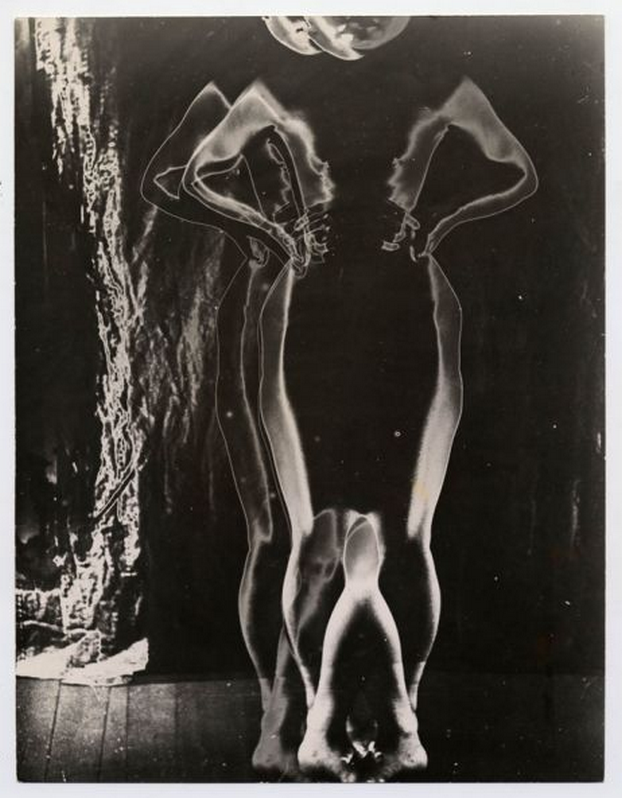
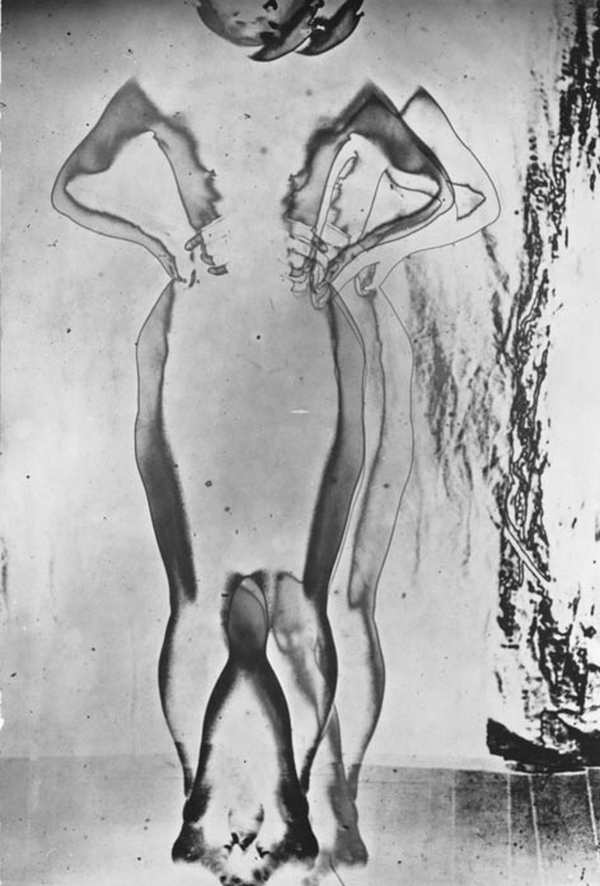
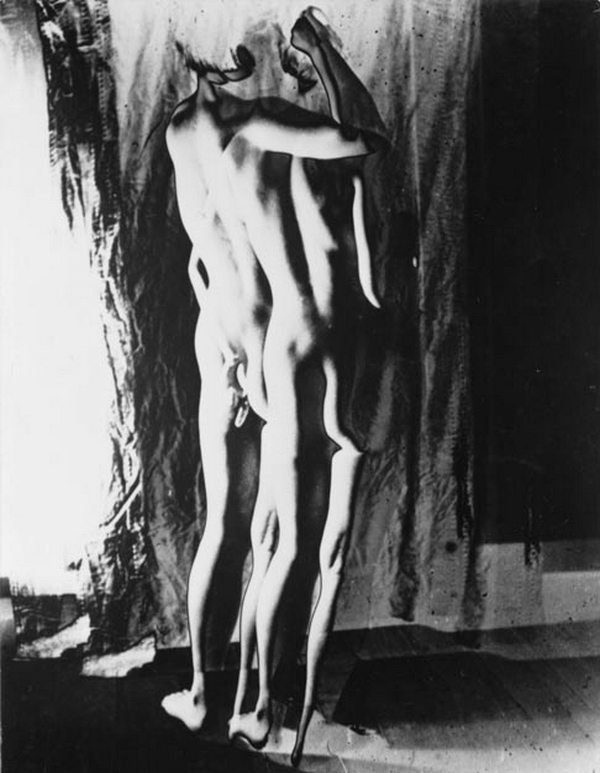
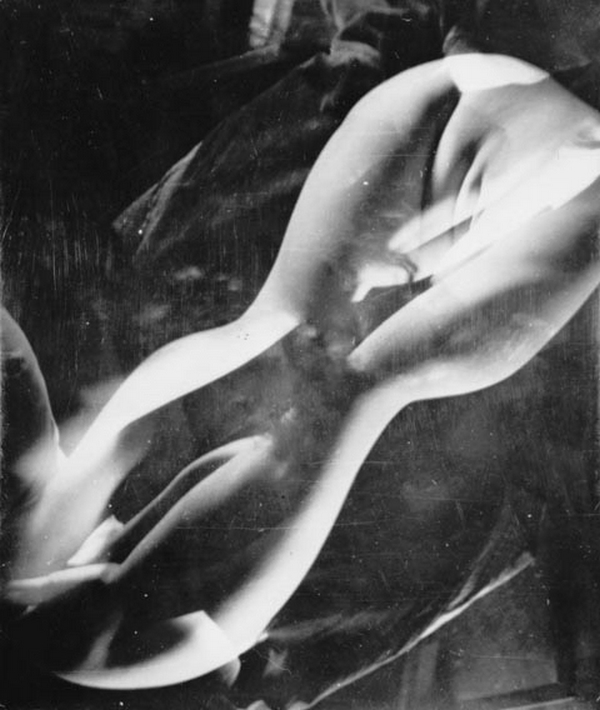
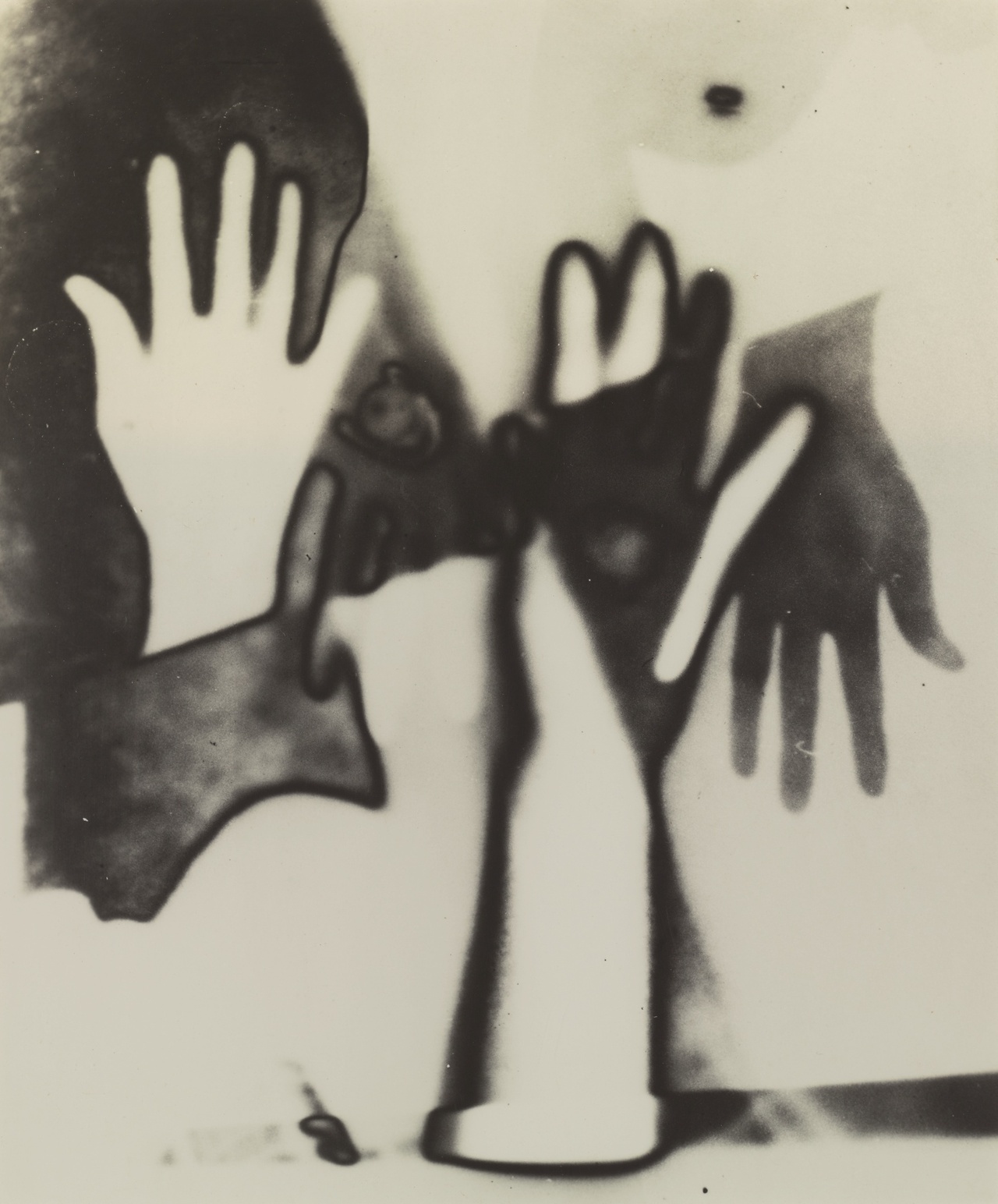
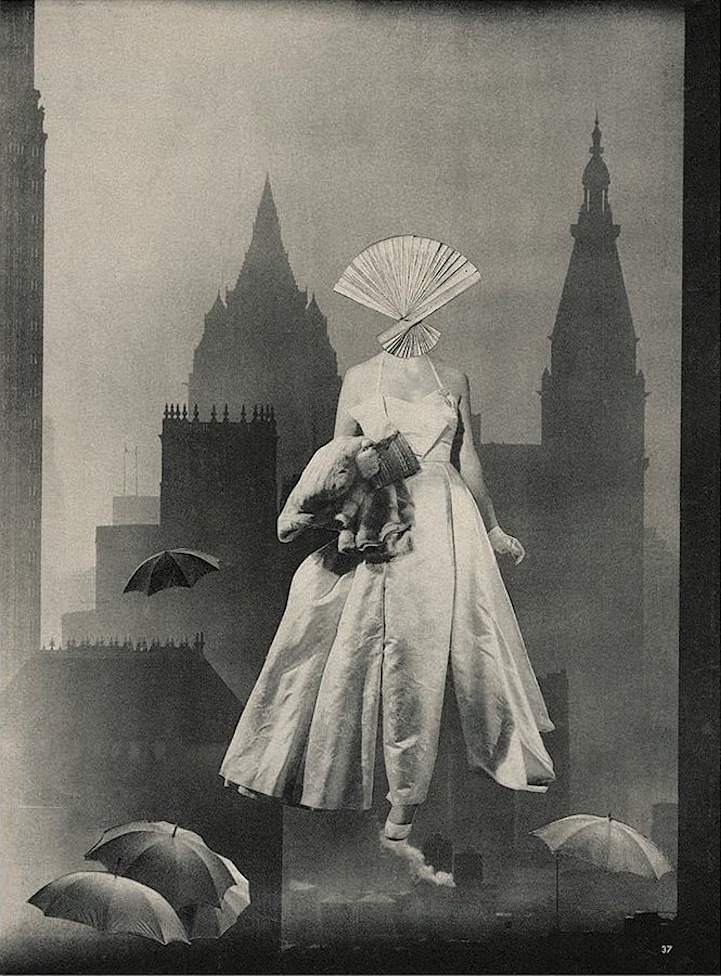
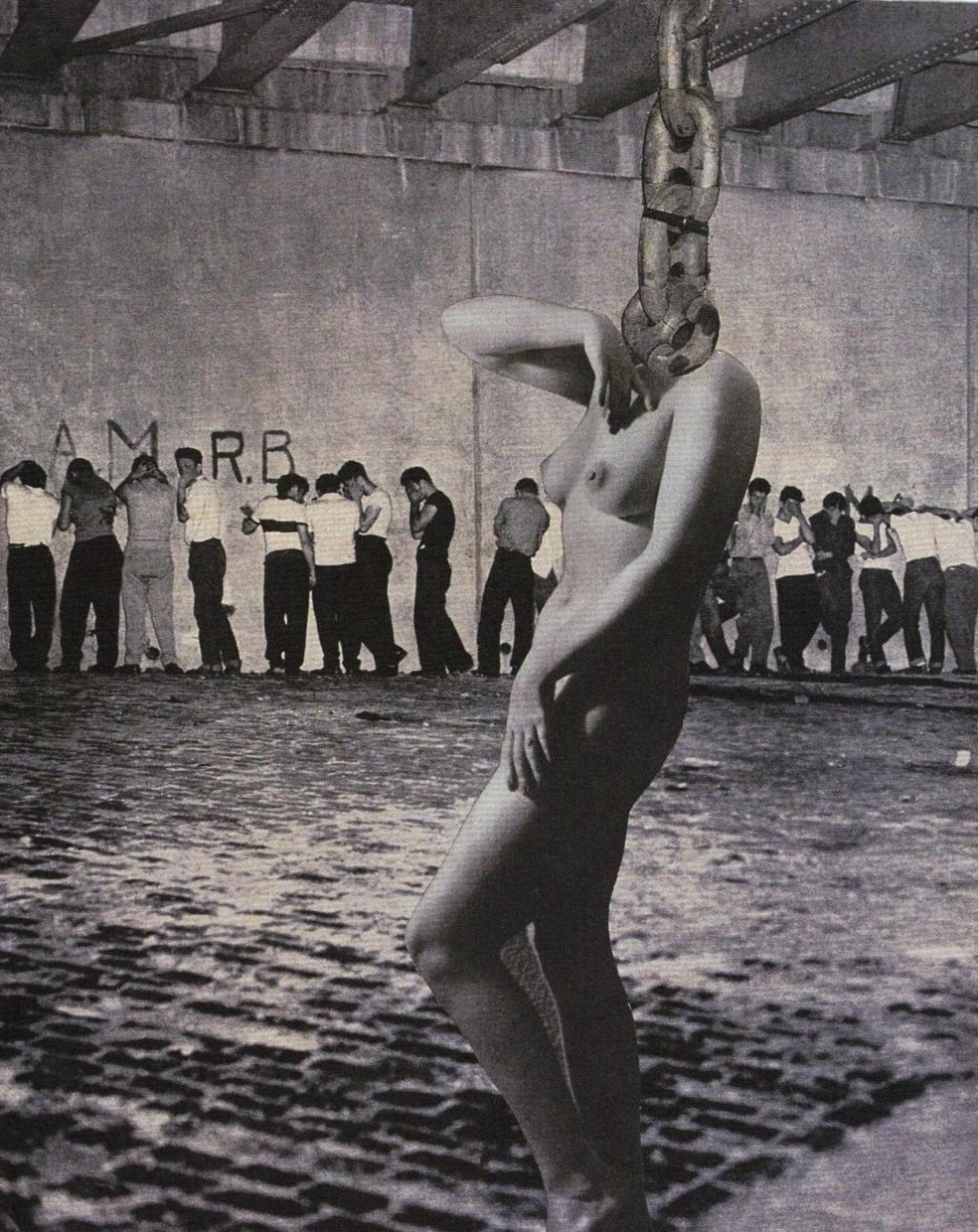
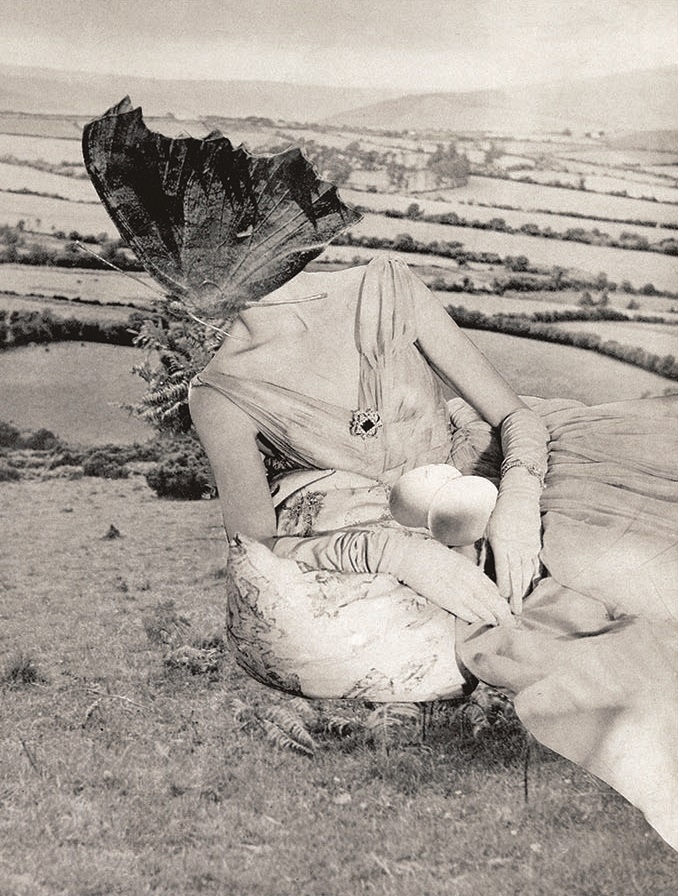
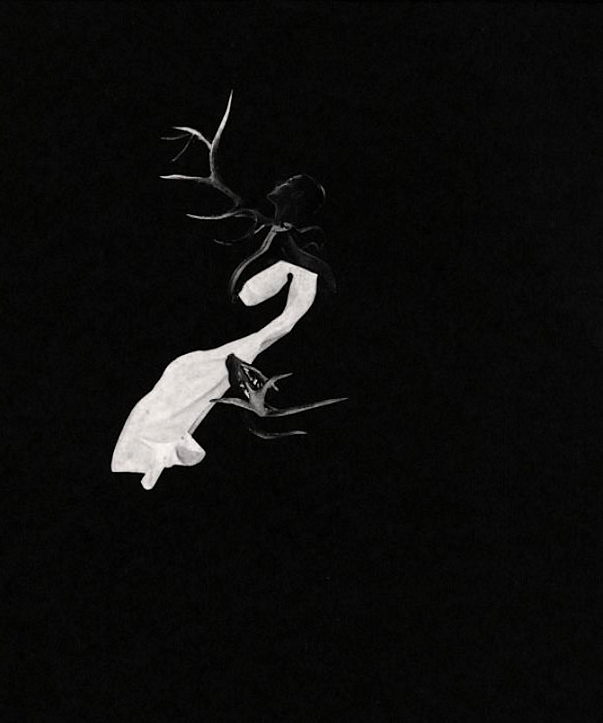
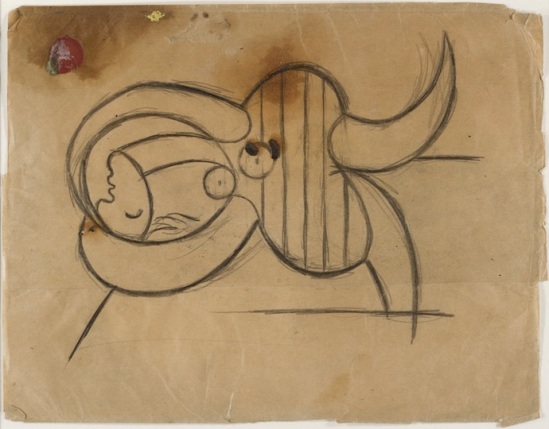
Brassaï (1899 -1984)

« Brassaï, pseudonyme de Gyula Halász, né le 9 septembre 1899 à Brașov (hongrois: Brassó – ville alors austro-hongroise et rattachée à la Roumanie depuis) et mort le 8 juillet 1984 à Nice (Alpes-Maritimes), était un photographe français d’origine hongroise, et aussi dessinateur, peintre, sculpteur et écrivain.

Gyula Halász a trois ans quand sa famille emménage à Paris où ils rejoignent le père qui enseigne la littérature à la Sorbonne. Jeune homme, Gyula Halász étudie la peinture et la sculpture à l’école des Beaux-Arts de Budapest avant de rejoindre la cavalerie austro-hongroise pour y servir durant la Première Guerre mondiale. En 1920 il se rend à Berlin où il y travaillera en tant que journaliste, tout en suivant les cours de l’académie des Beaux-Arts Berlin-Charlottenburg.

Halász déménage en 1924 pour Paris. Seul, il apprend le français en lisant les œuvres de Marcel Proust. Installé à Montparnasse, au cœur du Paris artistique des années 1920, il se lie à Henry Miller, Léon-Paul Fargue et Jacques Prévert.

Il reprend sa carrière de journaliste. Il écrivit plus tard que la photo l’avait aidé à saisir la nuit Parisienne, la beauté des rues et des jardins, qu’il pleuve ou qu’il vente. En utilisant son lieu de naissance, Gyula Halász se forge dès 1923 le pseudonyme de Brassaï qui signifie « de Brassó ». C’est sous ce nom qu’il s’impose comme celui qui a su capturer l’essence de la ville dans ses clichés, publiant un premier recueil en 1932 intitulé « Paris de nuit » qui reçoit un grand succès et le fera même surnommer « l’œil de Paris » par Miller dans l’un de ses essais.

En dehors de ses photos du Paris interlope et sombre, Brassaï s’est aussi intéressé à la haute société, aux intellectuels, à la danse et à l’opéra. Il photographia nombre d’entre ses contemporains, tels Salvador Dalí, Pablo Picasso, Henri Matisse, Alberto Giacometti et certains des écrivains majeurs de l’époque : Jean Genet, Henri Michaux. Une de ses photographies de la série des Graffiti sera utilisée en couverture du recueil de Jacques Prévert Paroles en 1946.

Ses photographies offrirent à Brassaï une célébrité internationale. En 1956, son film « Tant qu’il y aura des bêtes » gagne un prix à Cannes, puis en 1974, il est élevé au rang de Chevalier des Arts et des Lettres, avant de recevoir en 1976, la Légion d’honneur. Il gagne le premier « Grand Prix national de la photographie », deux ans plus tard, à Paris. Il est exposé aux Rencontres d’Arles, (France), lors des soirées de projection au Théâtre Antique, en 1970 pour “Brassaï” de Jean-Marie Drot,et en 1972 pour “Brassaï si, Vominino” de René Burri. Il est l’invité d’honneur des Rencontres en 1974. Une exposition et une soirée d’hommage lui y sont consacrées.

En plus de ses œuvres photographiques, Brassaï écrivit dix-sept livres et de nombreux articles, dont en particulier Histoire de Marie, publié avec une introduction de Henry Miller.

Brassaï est enterré au Cimetière du Montparnasse, à Paris « (Wilkipia)
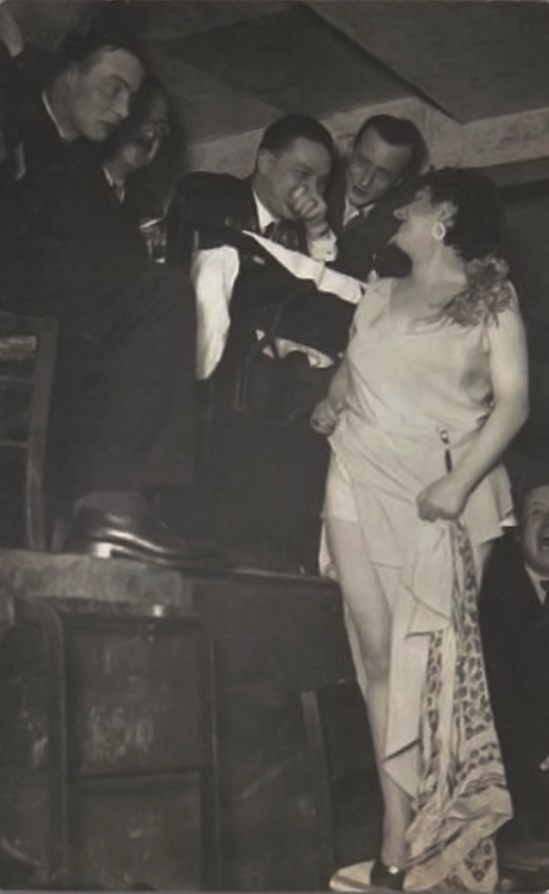
 

© Brassai- Kiki de Montparnasse au Cabaret des Fleurs, 1932

© Brassaï- Kiki et son accordéoniste, au Cabaret des Fleurs, 1932

© Brassaï- Kiki et son accordéoniste, au Cabaret des Fleurs, 1932

© Brassaï- au Cabaret des Fleurs, Montparnasse 1931
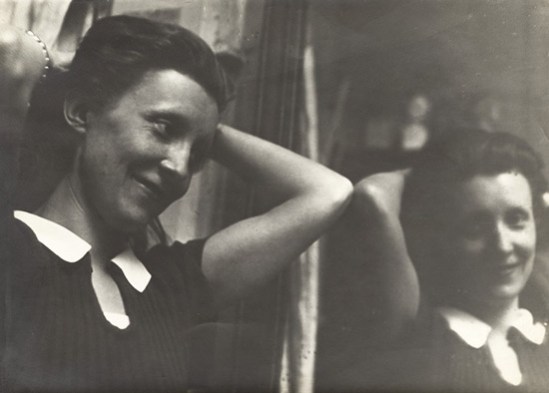
Louise Bourgeois photographed by Brassaï at the Académie de la Grande-Chaumière in Paris in 1937

© Brassaï- Dali et Gala dans son appartement de Paris 1932.

© Brassaï- Dali , Paris 1932

Brassaï (gyula halász) – felix labisse, 1948

Leonor Fini &  Marie Laure Noailles. Brassai. 1946

Brassaï- Picasso & Jean Marais posing as painter and model, 1944

© Brassaï- Picasso Tenant Une De Les Sculptures’, 1939, Holden Luntz Gallery

© Brassaï-Paul Éluard, 1944

Brassai (Gyula Halasz) – Paul and Nusch Eluard in Their Apartment from Brassaï workbook , 1944.

BRASSAI (Gyula Halasz, dit) 1899-1984 Nusch et Paul Eluard, ca. 1944.
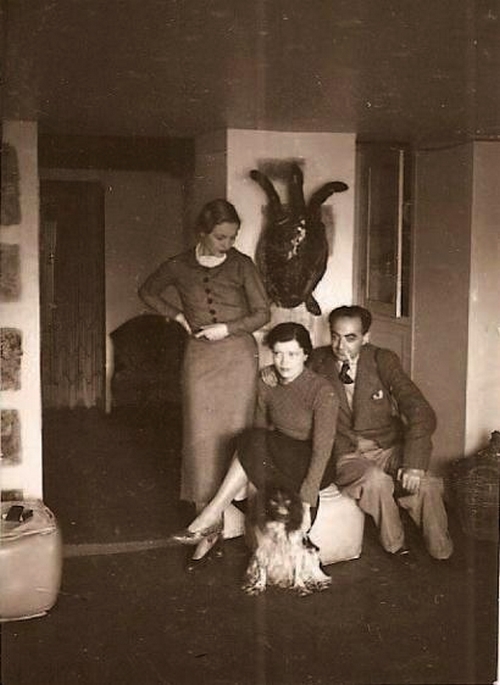
Brassaï- Brassaï, Elisabeth et Elise aux « Petits Docks » (maison de couture , Paris, 1932

Brassaï- Elisabeth à la tortue aux « Petits Docks », Paris, 1932 (maison de couture , Paris, 1932

Brassaï-Elisabeth avec le chat Lududu, ca. 1942
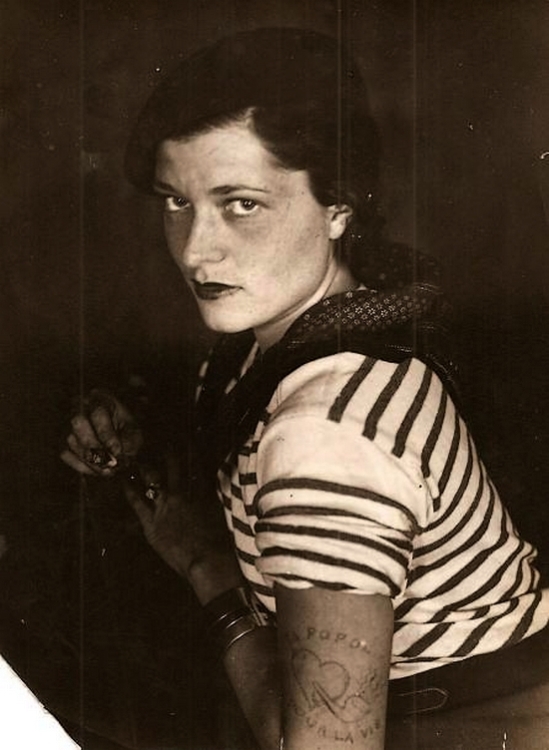
Brassaï-Elisabeth à la marinière et au tatouage, ca. 1928

© Brassaï-Anaïs Nin drapée dans un châle, 1932
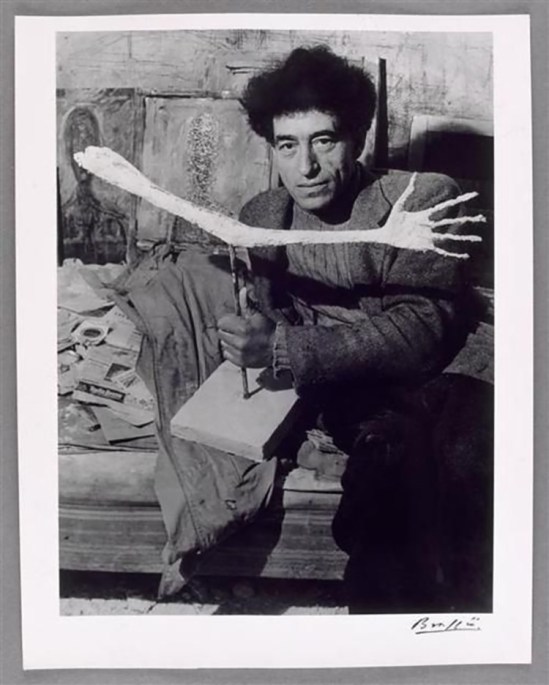
© Brassaï- -Giacometti, (la main)

© Brassaï- Henri Matisse dessinant un nu 1939

© Brassaï- Matisse , 1938
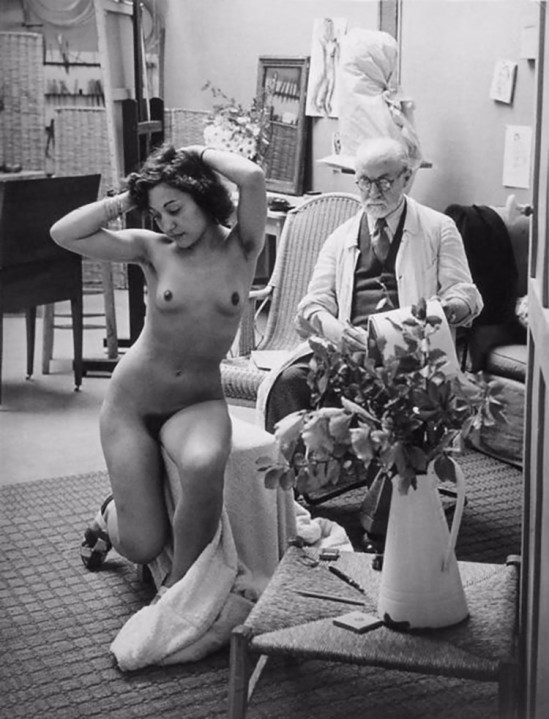
© Brassaï- Henri Matisse dessinant un nu 1939
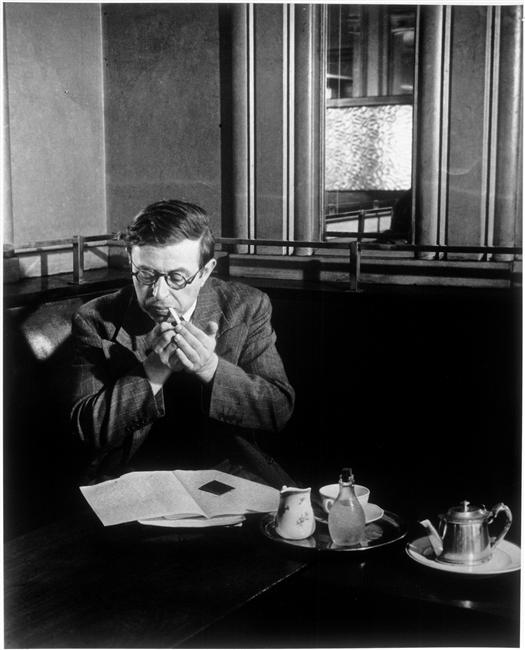
Brassaï-Sartre au café de Flore, allumant une cigarette,vers 1945

Brassaï- Simone de Beauvoir au café de Flore Paris, 1945

Henri Michaux assis à sa table de travail 1943-1945 photo Brassaï , épreuve gélatino-argentique , Estate Brassaï – RMN-Grand Palais 3

Roland d’URSEL BRASSAI chez lui, 1950
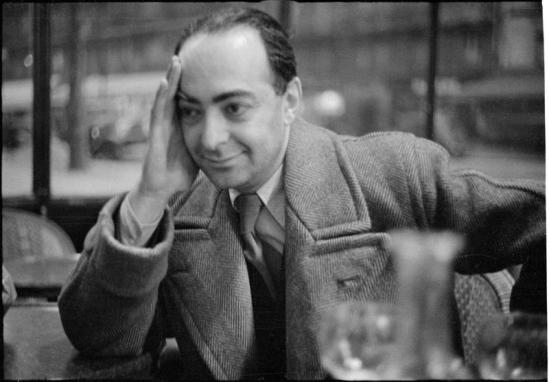
André Kertész – [Brassaï], Paris, 1935

Ansel Adams, Brassaï, 1973

Brassaï From Le tour de France de la lumière‎ Compagnie des Lampes Mazda, 1937 Ed°Ateliers ABC, Paris

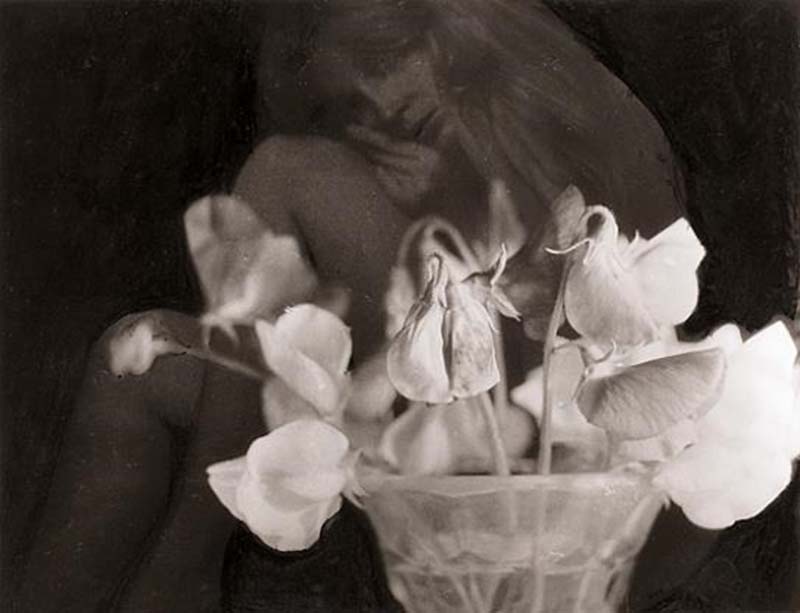
Alfred Stieglitz & Clarence H. White – Série 1907

Posted by kate

Alfred Stieglitz- {Standing Female Nude Partially Draped in Gauze} Clarence H. White , 1907

Alfred Stieglitz-{Portrait Study of a Young Woman: Head and Shoulders},Clarence H. White, 1907

Alfred Stieglitz-{Experiment 27},Clarence H. White, 1907

Alfred Stieglitz-{Experiment 28}, Clarence H. White, 1907

Alfred Stieglitz- Torso , Clarence H. White, 1907

“Torso is from a series of figure studies made collaboratively by Stieglitz and White in 1907 and one of four reproduced as photo-gravures in issue 27 of Camera Work in March 1909. “A little over two years ago,” the accompanying text reads, “Alfred Stieglitz and Clarence H. White, in consequence of various lively discussions with some painters about portrait painting and the impossibility of the camera to do certain things, began a series of experiments to demonstrate the pliability of straight photography as a medium for portraiture and figure work and so disprove the painters’ contentions.”
Five years after their collaboration, however, Stieglitz and White had such divergent notions of photography’s future that the two no longer spoke to each other. In May 1912 Stieglitz returned eighty-four negatives and seventy-four prints to White, writing, “One thing I do demand, and I put you on your honor, and this is that my name be not mentioned by you in connection with either the prints or the negatives. . . . My name will not be connected with them in any way. I shall see to that. Unfortunately I can not wipe out the past.” Despite his demand, Stieglitz retained twenty photographs from the collaboration, including this heavily retouched platinum print signed by both artists.” (http://www.metmuseum.org)

Alfred Stieglitz- {Standing Female Nude in Doorway Holding White Cloth}, Clarence H. White, 1907

Alfred Stieglitz-{Female Nude Standing in Doorway with Small Mirror in Hand}, Clarence H. White, 1907

Alfred Stieglitz-{Female Nude with Hands Clasped Behind Head}, Clarence H. White, 1907

http://www.metmuseum.org/toah/hd/stgl/hd_stgl.htm

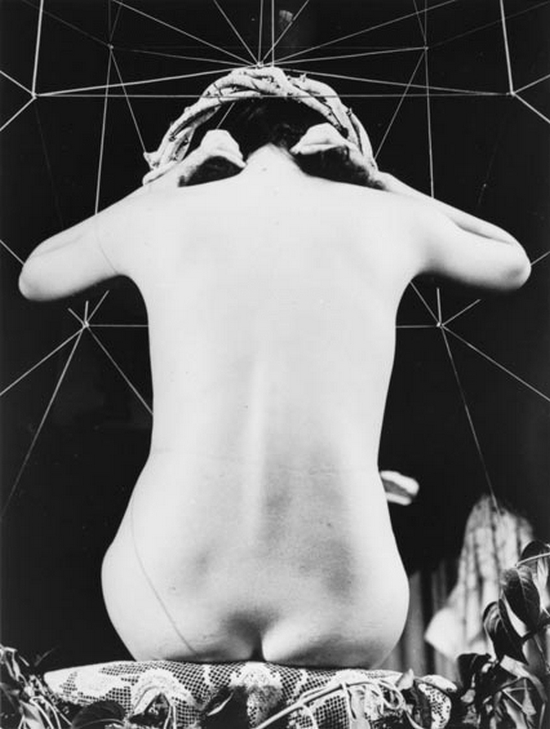
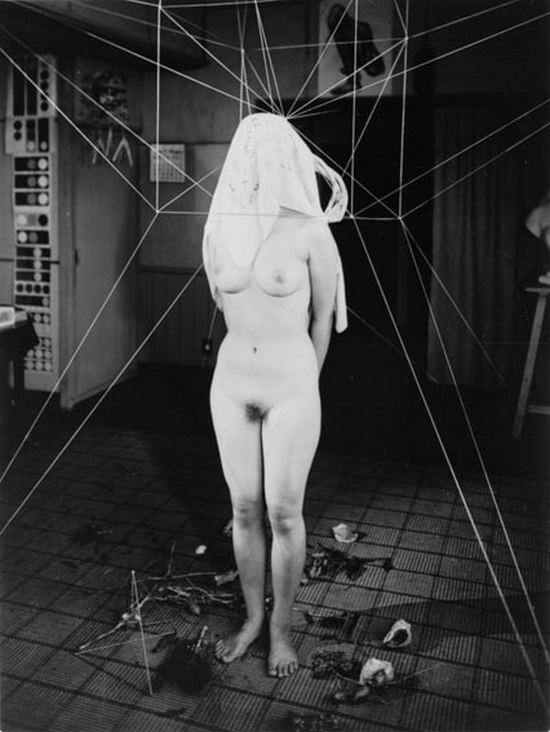
Kiyoji Ohtsuji

Kiyoji Ohtsuji - Object - in Nubuya Abe's Atelier from Kiyoji Ohtsuji Portfolio, 1950

Kiyoji Ohtsuji – Object ,  in Nubuya Abe’s Atelier from Kiyoji Ohtsuji Portfolio, 1950

Kiyoji Ohtsuji - Object - in Nubuya Abe's Atelier from Kiyoji Ohtsuji Portfolio, 1950

Kiyoji Ohtsuji – Object , in Nubuya Abe’s Atelier from Kiyoji Ohtsuji Portfolio, 1950

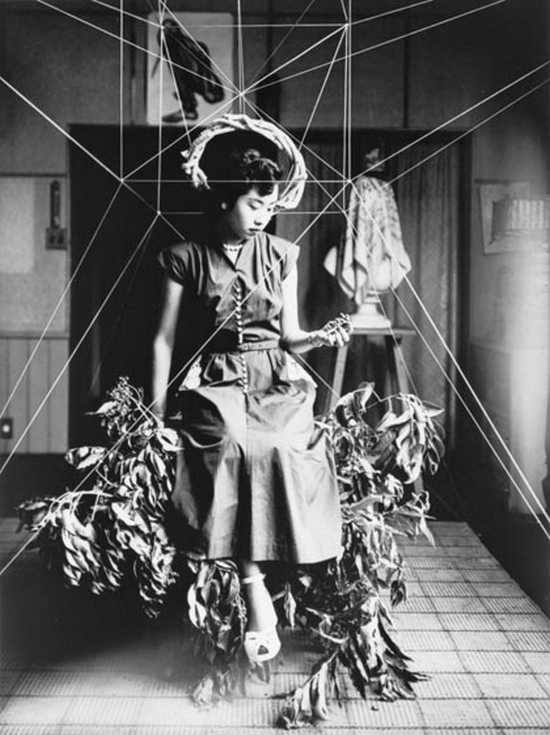
Kiyoji Ohtsuji - Portrait of the Artist, Hideko Fukushima  from Kiyoji Ohtsuji Portfolio, 1950

Kiyoji Ohtsuji – Portrait of the Artist, Hideko Fukushima from Kiyoji Ohtsuji Portfolio, 1950


Hans Robertson ( 1883-1978)

“When Lotte Jacobi’s photos were exhibited together for the first time four years ago, reviewers were dazzled by how many of Weimar Germany’s glittering jewels—from Käthe Kollowitz to Martin Buber to the famously vampy Lotte Lenya—had been captured by her lens. She seemed to have single-handedly taken on the task of portraying the immense artistic, psychological, and political fervor of those tumultuous years, which seemed fragile even at the time—an ambitious task for any one photographer, even one as hungry as Jacobi. But her atelier was, in fact, one of 400 in Berlin, and she was just one of the many—mainly Jewish—photographers feverishly recording the dancers, writers, and actors that made this doomed moment in German history so extraordinary. Another photographer who clicked away at an incredible rate and with singular results was Hans Robertson.

To say that an artist has been forgotten is to imply that he was well known in his time. Robertson’s name—like that of Jacobi and most other commercial photographers—was not familiar outside the circle of performers who were his subjects and magazine editors who used his services. But from the evidence of only a fraction of his prolific output, discovered almost by accident and now on display at the Berlinische Galerie in Berlin, his work deserves attention.

Robertson’s specialty was expressionist dance. And expressionist dance was huge in 1920s Germany: the avant-garde innovations that had taken place at the turn of the century in everything from painting to fiction became popularized, and dance was transformed from an aesthetic exercise into an attempt to translate the inner life into movement. The gestures of this modern dance were primitive, dramatic, almost ritualistic, with a fetishistic focus on the human body. Mary Wigman, one of its main innovators, slid across the floor on her knees, eyes closed, fists clenched, performing her Witch Dance. Her school in Dresden became a center of this Ausdruckstanz, producing world-renowned modern dancers like Harald Kreutzberg and Yvonne Georgi.

They all posed for Robertson. His studio on bustling Kurfürstendamm—a boulevard that was both the Fifth Avenue and the 42nd Street of Berlin—saw a steady stream of business in the late 1920s and early ’30s. But the commercial aspect of these photos, which were in demand by popular illustrated journals like the Berliner Illustrierte Zeitung, is less important than the artistic vision that guided their creation. Robertson was trying to use his camera in much the same way the dancers he photographed were using their bodies. From the creative way he manipulated light to his innovative use of multiple exposures, he wanted to capture more than just straightforward ornamental shots of the dancers. He was trying to convey their new art form on its own terms.

This is clear in the photographs. The series called “Leaps,” of Gret Palucca, a favorite muse of expressionist painters and the Bauhaus crowd, catches Palucca in mid-air, limbs splayed. Only part of her body is in focus—the ability to photograph sudden movement was itself a recent technological advancement. In one image her naked torso is twisted, in another her back arched. Then there are the soulful photos of Jo Mihaly, performing her one-woman piece, “Mütter.” She stands in front of a black screen wearing a black turtleneck, her pale, emotive face almost floating in the frame and illuminated from above by a single beam of light. On the more abstract end are Robertson’s photos of Harald Kreutzberg performing his “Lunatic Figures.” Robertson overlays three different exposures of the famously shaved headed dancer, capturing the various expressions of madness Kreutzberg is embodying. Even in Robertson’s more straightforward photo of Kreutzberg as a lunatic, holding a flower and posed loose as a marionette puppet, he captures the dancer as a depersonalized body, a trope of Expressionism that would later inspire, among other post-war dance forms, Japanese Butoh.

Of Robertson’s biography, says the curator of the Berlinische Gallerie show, Thomas Friedrich, “there are more questions then answers.” He was born in Hamburg in 1883. After studying engineering—a profession that inspired a few early photos of construction sites and workers—he changed course and headed to St. Mortiz where he apprenticed for the Swiss landscape photographer Albert Steiner. At 28, Robertson’s first photo spread—a pictorial tour through Holland—appeared in Photographische Rundschau. But his photo career would have to wait until 1918, when he arrived in Berlin. There he joined Lili Baruch—one of the disproportionately high number of Jewish women then making her living with a Leica—who set up the studio on Kurfürstendamm, specializing in dance photography, which Robertson took over in 1928.

To produce the thousands of photos he printed over the next five years, Robertson most likely worked long days and weekends. In addition to dance photography, he shot a wide range of portraits of many of the era’s personalities, from the famous—a nude profile of the boxer Max Schmelling—to the forgottn, such as a close up of the publisher Irmgard Klepenheuer, gazing intently at the camera, a cigarette between her fingers.

In 1933, following Hitler’s appointment as chancellor and the subsequent boycott of Jewish businesses, Robertson had an inkling of what was to come. He handed over the studio to his apprentice, Siegfried Enkelmann. One of the few documents Friedrich, the curator, has been able to uncover is a contract signed by Robertson that makes the transfer final, and describes Enkelmann as “reliable.” And he was. The protégé survived the war and continued photographing dancers (including Mary Wigman) until his death in 1978.

Robertson and his coquettishly beautiful wife, the actress and dancer Inger Vera Kyserlinden (born Levin), escaped to her native Denmark. While the avant-garde movement had been taking place in Berlin, Paris, and Prague, most photographers in Copenhagen were stuck in the pictorial style of the 1910s. As a result, in 1963 Robertson established the first modern photography school in Denmark. But eight years later, just before Hitler began deporting Danish Jews, the Robertsons were forced into exile again, this time fleeing to Stockholm. They returned in May of 1945 and Robertson died just five years later at the age of 67. Thousands of his photographs were turned over to the Royal Library of Denmark following his wife’s death in 1969.

Over time, Robertson was reduced to little more than a footnote. And not just proverbially: It was literally in a footnote in 1992 that Friedrich—a charming, slightly disheveled curator who thrives on the detective work involved in resurrecting dead photos and their makers— discovered his name. He was intrigued, but it took another 14 years (after encountering Hans Robertson’s name in another context) for Friedrich to finally take a trip to Copenhagen to peruse the archive at the Royal Library. What he found there astounded him. Not only did Robertson’s photos offer the most comprehensive catalogue of Weimar dance, but his work was also that of an artist with a unique style and vision. Friedrich still marvels that Robertson’s photos manage to look so distinct from one another, even though they were all taken in the same studio.

The building that housed that studio, on Kurfürstendamm, no longer exists. Like it did in much of Berlin, new construction in the 1950s erased what was before. Now two pharmacies, a clothing store, and a nondescript café look out from the ground floor. There is no trace of the glamour and wild experimentation that was once captured there in pictures. But Hans Robertson himself might yet have an afterlife: Friedrich, it seems, is planning a large retrospective for 2011.” BY Deborah Kolben and Gal Beckerman [ freelance writers living in Berlin.]

Hans Robertson – Le Bain, 1933

Hans Robertson – Alfred Jackson Girls in Wintergarten, Berlin, 1922

Hans Robertson- Expressionist dance dancer unknown, Berlin,1920, (From documented the Weimer era dance scene in the 20′s)

Hans Robertson -The dancer Harald Kreutzberg in Irre Gestalten, Berlin, 1928

Hans Robertson- Unknown Dancer, Berlin, 1920′s

Hans Robertson -Little Viola, 1920′s

Hans Robertson -Zwaniger Jahre Atelier“Lili Baruch”, Berlin,1927

Hans Robertson The famous Weimar dancer Elizabeth Bergner, 1930

Hans Robertson- Lydia Wieser, nd ( probably 1920′s)

Hans Robertson- Gret Palucca, Berlin, 1930

Hans Robertson - Dancer unknown- Berlin, 1930's

Hans Robertson – Dancer unknown- Berlin, 1930′s

Hans Robertson - Dancer unknown ( détail)- Berlin, 1930's

Hans Robertson – Dancer unknown ( détail)- Berlin, 1930′s

Hans Robertson- Gret Palucca, 1920s

Jindřich Štyrský – collages Part III

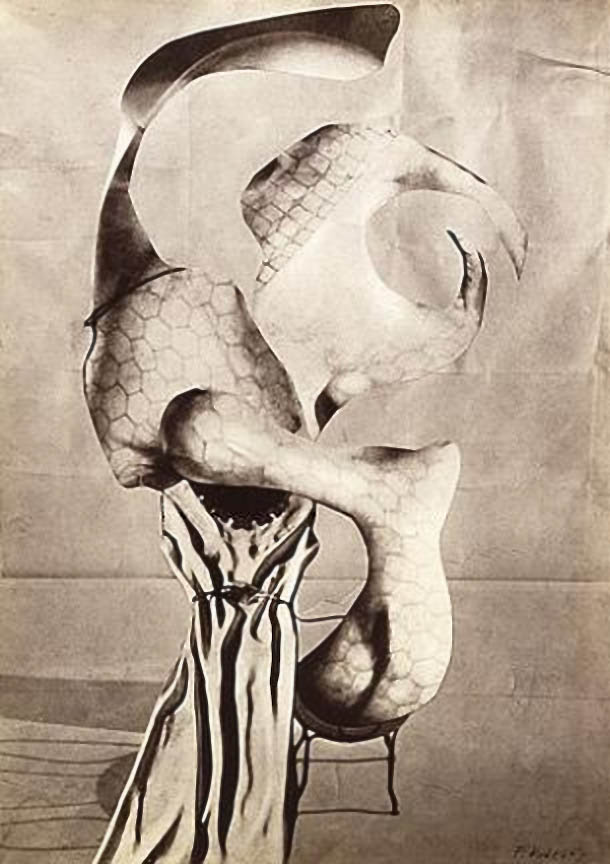
Jindřich Štyrský, Stěhovaci kabinet, 1934. Collage, 41 x 32 cm. Galerie Maldoror, Prague. (Source Argo.)

Jindřich Štyrský- Stěhovací kabinet, 1934

Jindřich Štyrský- Stěhovací kabinet, 1934

Jindřich Štyrský- Untitled, c. 1931. Collage, 15.5 x 11.5 cm. Ubu Gallery NY and Galerie Berinson, Berlin

Jindřich Štyrský- Untitled, c. 1931. Collage, 15.5 x 11.5 cm. Ubu Gallery NY and Galerie Berinson, Berlin

indřich Štyrský- Untitled, c. 1932. Collage, 15.5 x 11.5 cm. Ubu Gallery NY and Galerie Berinson, Berlin

indřich Štyrský- Untitled, c. 1932. Collage, 15.5 x 11.5 cm. Ubu Gallery NY and Galerie Berinson, Berlin

Jindřich Štyrský, Untitled, 1931. Collage, 23.5 x 15 cm. Ubu Gallery NY and Galerie Berinson, Berlin.

Jindřich Štyrský, Untitled, 1931. Collage, 23.5 x 15 cm. Ubu Gallery NY and Galerie Berinson, Berlin.

Jindřich Štyrský, Vilém Tell, 1931. Collage, paper, 28.5 x 39.5 cm. (Ubu Gallery NY and Galerie Berinson, Berlin)

Jindřich Štyrský, Vilém Tell, 1931. Collage, paper, 28.5 x 39.5 cm. (Ubu Gallery NY and Galerie Berinson, Berlin)

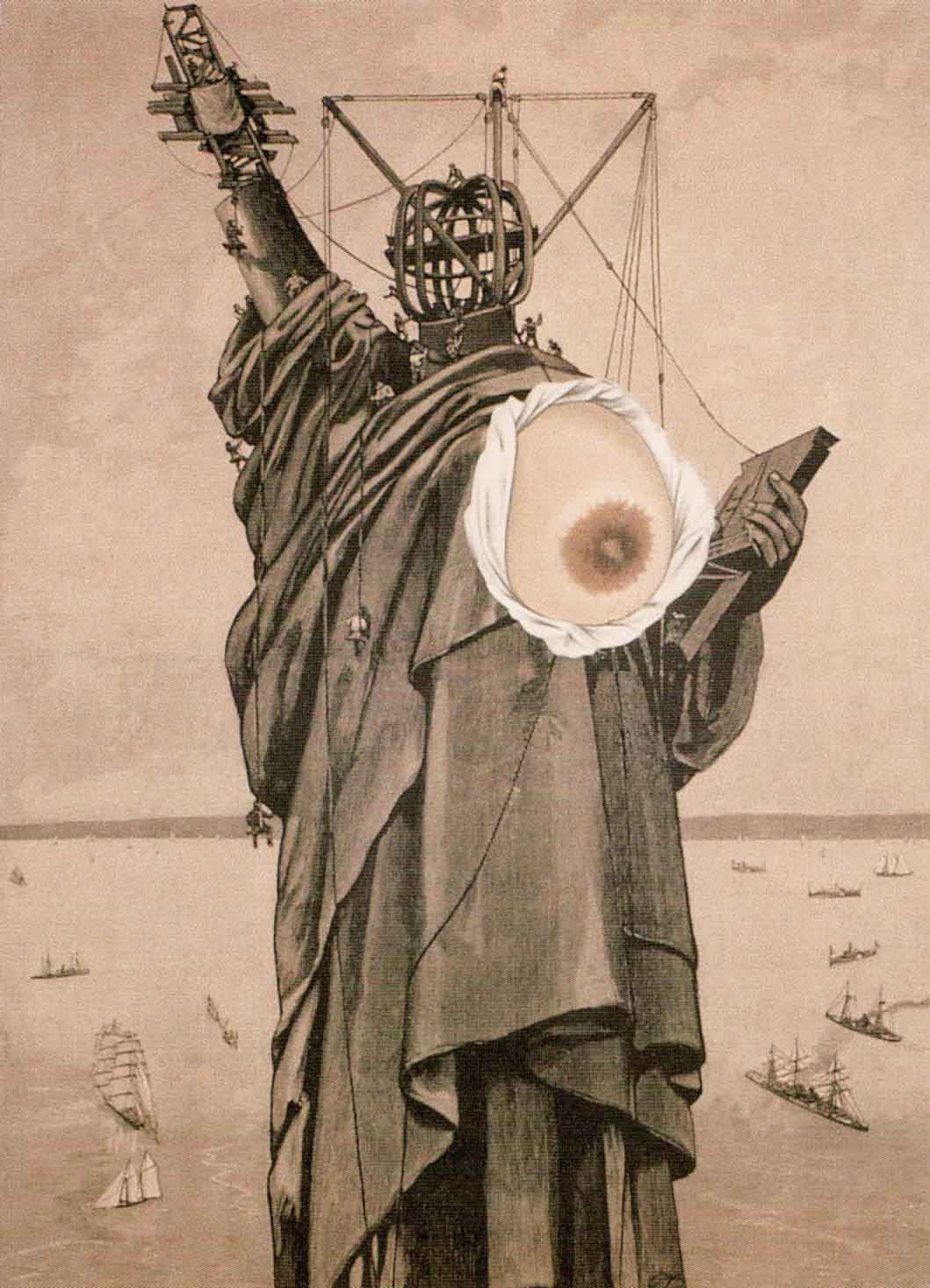
Jindřich Štyrský, Statue of Liberty, 1934 (collec Sny)

Jindřich Štyrský, Statue of Liberty, 1934 (collec Sny)


Sur les aiguilles de nos jours by Jindřich Štyrský, 1934-1935 From On the Needles of These Days series by Jindrich Štyrský and Jindrich Heisler

Sur les aiguilles de nos jours by Jindřich Štyrský, 1934-1935 From On the Needles of These Days series by Jindrich Štyrský and Jindrich Heisler (Presentation in this good PDF)


Jindřich Štyrský- Sur les aiguilles de nos jours, 1934-35( Plaque de verre argentique)

Sur les aiguilles de nos jours by Jindřich Štyrský, 1934-1935 From On the Needles of These Days series by Jindrich Štyrský and Jindrich Heisler (Presentation in this good PDF)

Jindřich Štyrský- Sur les aiguilles de nos jours, 1934-35( Plaque de verre argentique)

Jindřich Štyrský- Sur les aiguilles de nos jours, 1934-35( Plaque de verre argentique)

Jindřich Štyrský- Sur les aiguilles de nos jours, 1934-35( Plaque de verre argentique)

Jindřich Štyrský- Sur les aiguilles de nos jours, 1934-35( Plaque de verre argentique)

Jindřich Štyrský- Sur les aiguilles de nos jours, 1934-35( Plaque de verre argentique)

Jindřich Štyrský- Sur les aiguilles de nos jours, 1934-35( Plaque de verre argentique)

Jindřich Štyrský- Sur les aiguilles de nos jours, 1934-35( Plaque de verre argentique)

Jindřich Štyrský- Sur les aiguilles de nos jours, 1934-35( Plaque de verre argentique)

Jindřich Štyrský- Sur les aiguilles de nos jours, 1934-35( Plaque de verre argentique)

Jindřich Štyrský- Sur les aiguilles de nos jours, 1934-35( Plaque de verre argentique)

Jindřich Štyrský- Sur les aiguilles de nos jours, 1934-35( Plaque de verre argentique)

Jindřich Štyrský- Sur les aiguilles de nos jours, 1934-35( Plaque de verre argentique)

Jindřich Štyrský- Sur les aiguilles de nos jours, 1934-35( Plaque de verre argentique)

Jindřich Štyrský- Sur les aiguilles de nos jours, 1934-35( Plaque de verre argentique)

Jindřich Štyrský- Sur les aiguilles de nos jours, 1934-35( Plaque de verre argentique)

Jindřich Štyrský- Sur les aiguilles de nos jours, 1934-35( Plaque de verre argentique)

Jindřich Štyrský- Sur les aiguilles de nos jours, 1934-35( Plaque de verre argentique)

Jindřich Štyrský- Sur les aiguilles de nos jours, 1934-35( Plaque de verre argentique)

Jindřich Štyrský- Sur les aiguilles de nos jours, 1934-35( Plaque de verre argentique)

Jindřich Štyrský- Sur les aiguilles de nos jours, 1934-35( Plaque de verre argentique)

Jindřich Štyrský- Sur les aiguilles de nos jours, 1934-35( Plaque de verre argentique)

Jindřich Štyrský- Sur les aiguilles de nos jours, 1934-35( Plaque de verre argentique)


Karel Teige : Devětsil & ReD ( 1927-31)

Né à Prague en Décembre 1900, Karel Teige était un éditeur et graphiste ainsi que la figure majeure du mouvement d’avant-garde tchèque « Devětsil ». Fondée en 1920, la Devětsil  s’inspire du  surréalisme et  du cubisme,  populaires en Europe occidentale à l’époque, mais aussi du mouvement  Russe « Proletkult » (Пролеткульт – [modifier radicalement les formes artistiques existantes avec une nouvelle approche révolutionnaire esthétique de classe ouvrière ]. Teige et ses accolites avant gardistes  portent et déplacent les principes du poétisme et du constructivisme à travers les différentes disciplines artistiques. Dans ses compositions typographiques et collages se lisent les liens entre surréalisme et fonctionnalisme.
Teige est devenu le porte-parole de Devětsil en 1921, élaborant le principe que «Tout art nouveau,  est nécessairement une réaction contre le précédent ».

Cette nouvelle orientation a été renforcée par ses visites à Paris en 1922 et ses interactions avec les artistes là-bas, y compris Constantin Brancusi, Pierres Albert-Birot et Man Ray avec qui il gardera des liens étroits. Il a lu avec voracité et élargi ses voyages au début des années 1920 afin obtenir une connaissance de première main du cubisme , du surréalisme et des mouvements de constructivisme russe. il a visité toutes les grandes villes Russes et Européens dans le but de deployer et construire des relations personnelles et étroites avec les artistes  d’avant-garde.
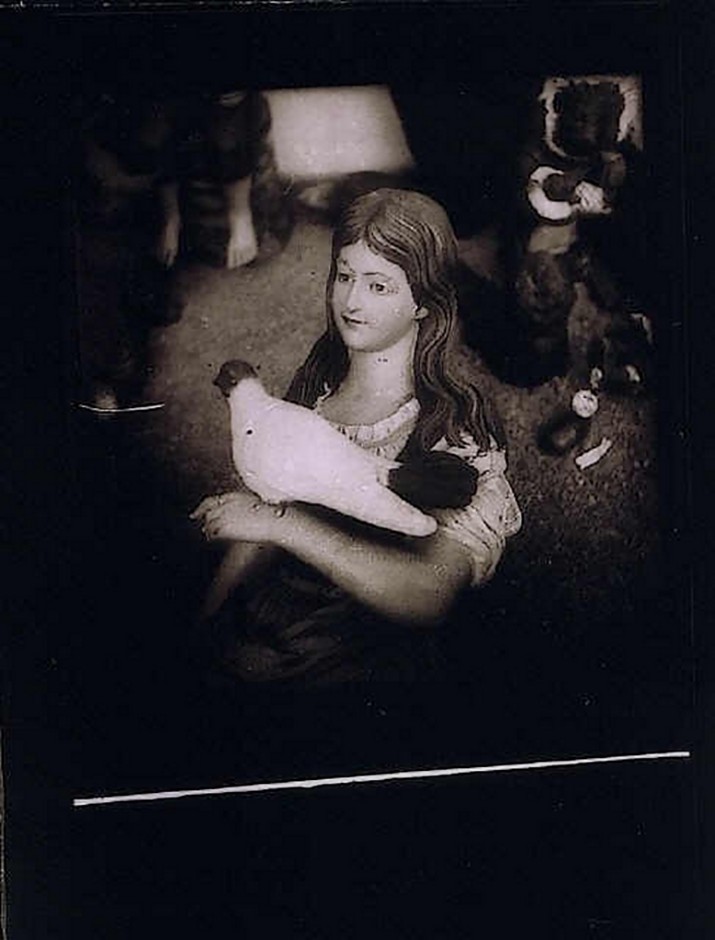
Teige a été publié dans la revue expressionniste allemande « Die Aktion » ,  a collaboré étroitement au sujet de l’architecture avec Le Corbusier et Walter Gropius et a donné des conférences au Bauhaus, tandis que son influence dans son propre pays a été considérable, Teige était vraiment un pilier du mouvement moderniste international.

En 1924, Teige ayant embrassé le constructivisme Russe , le  » tableau poème » ou « Poème Pictural », nait avec Jaroslav Seifert.  Teige et Seifert étaient convaincus que ce nouveau système de signe non verbal serait réveiller les sens, de sorte que dans la future société socialiste on pourrait profiter pleinement de tous les effets sensoriels. Leur vision  de la société idéale, était d’abolir la division du travail et de l’art, ainsi , l’art comprendrait toutes les activités humaines, même les sports, le jardinage ou la cuisine.On comprend donc que Teige est impliqué politiquement à travers ses actes créatifs. Il crée à la fois pour la Nation, le peuple et l’art , ces trois niveaux étant indissociables. et je vous conseille également ici sur wordpress toujours en anglais Excerpts from Karel Teige’s “Poetism Manifesto” (1928)
Translated by Gerald Turner. From Between Two Worlds: A Sourcebook of Central European Avant-Gardes, 1910-1930. (The MIT Press. Cambridge, MA: 2002) [Originally published as “Manifest poetismu,” in ReD Vol. 1, No. 9 (1928)]

Cette forme d’expression  est devenu rapidement  très populaire parmi les artistes du Devětsil et « poésie optique » devient une nouvelle « norme » lexicale. Des Poèmes d’image associant la disposition typographique et  des poèmes combinés avec le collage et le photomontage, et ont été  produits en masse à cette époque. Très vite, Karel Teige a affirmé la perte de « l’autonomie de la peinture », la  remplaçant par l’Affiche et le Poème Image. A cette époque  il a commencé à écrire des scénarios de films et utilisant la technique de dissolution comme un moyen de mise en forme poétique des objets dans d’autres objets.
 Au printemps 1927  Teige est désavoué par le presse Tchèque . Une vague critique assez virulente pointe en effet ce dernier et le mouvement Devětsil comme obsolète et épuisée. Pourtant en Octobre 1927 un Magazine mensuel voit le jour  » ReD » éditer sous la houlette de  Devětsil .  Publié entre 1927-1931, ( Bien que Devětsil déclinera jusqu’à cesser toute activité en 1930). Le contenu de la revue a été principalement déterminé par Teige, il a  en effet édité et conçu les trois volumes.
Il présente des thématiques très diversifiées, embrassant la poèsie,  l’architecture, la peinture, la photographie, la sculpture,  , la politique,le théâtre, la danse, et témoigne très largement du mouvement Surréaliste Français ( en autre et particulièrement quand même) , et International. Tous les avant- guardistes Russes et Européens de l’époque y sont publiés. ReD est un véritable miroir de la Culture Surréaliste. Teige ayant été forcé de se retirer de son engagement public,  continuera à maintenir son travail de  poème d’image et son travail d’éditeur- concepteur, avec la parution du magazine jusqu’en 1931

En 1951, il meurt d’une crise cardiaque. Il est dit qu’elle ne fût que la résultante d’une campagne de presse soviétique féroce contre lui. En definitive ,c‘est l’histoire d’un homme qui a essayé de changer le monde en renversant les valeurs morales et artistiques vers la cause de ce qu’il espérait être une société meilleure et qui a fini par être écrasé par ceux qui (à première vue  ) apparaissaient  également  travailler pour une société meilleure. Telle était la différence entre Teige et les communistes qui, à sa mort en 1951qui  ont confisqué tous les manuscrits et écrits qu’ils pouvaient trouver dans l’appartement de Teige.

Je vous présente aujourd’hui simplement quelques planches de ce magazine, témoignant, du champ culturel que Red balayait.

La majeure parie des ReD Ici ansi que les autres travaux d’éditeur et de typographe de Karel Teige  ( très complet)

Article très complet en Anglais sur Karel Teige  Ici  ( lien en traduction française, c’est approximatif mais on le comprend très bien. Vous pouvez le désactiver si vous le souhaitez)

et sur son travail de typographe editeur  Ici

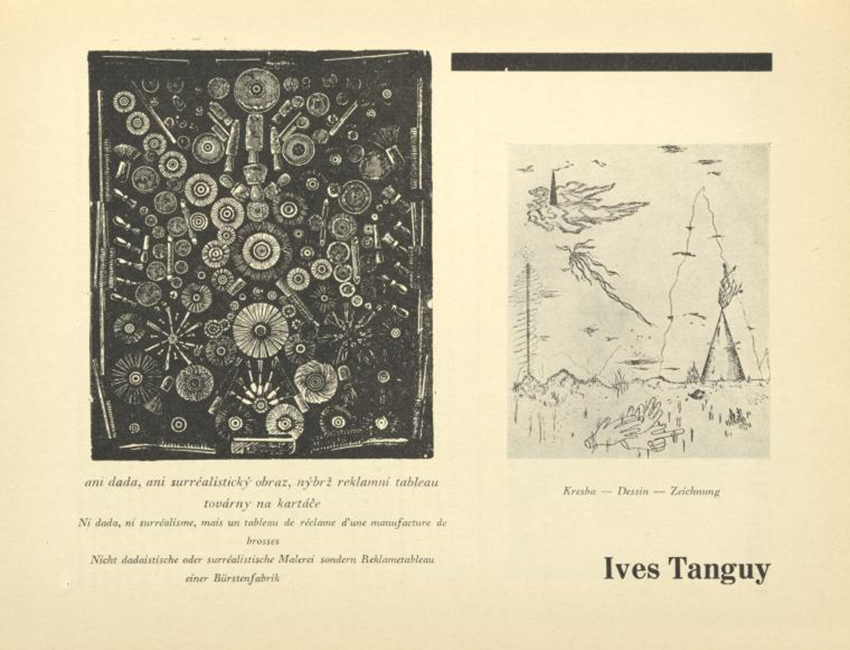
Yves Tangy - From ReD published by Karel Teige), 197-28

Yves Tangy – From ReD ( Directed ans published by Karel Teige), 197-28

Salvator dali et Louis Bunel , Le chien andalou From ReD published by Karel Teige ReD 3, 1929-31

Salvator Dali et Louis Bunel , Le chien andalou From ReD ( Directed ans published by Karel Teige) ReD 3, 1929-31

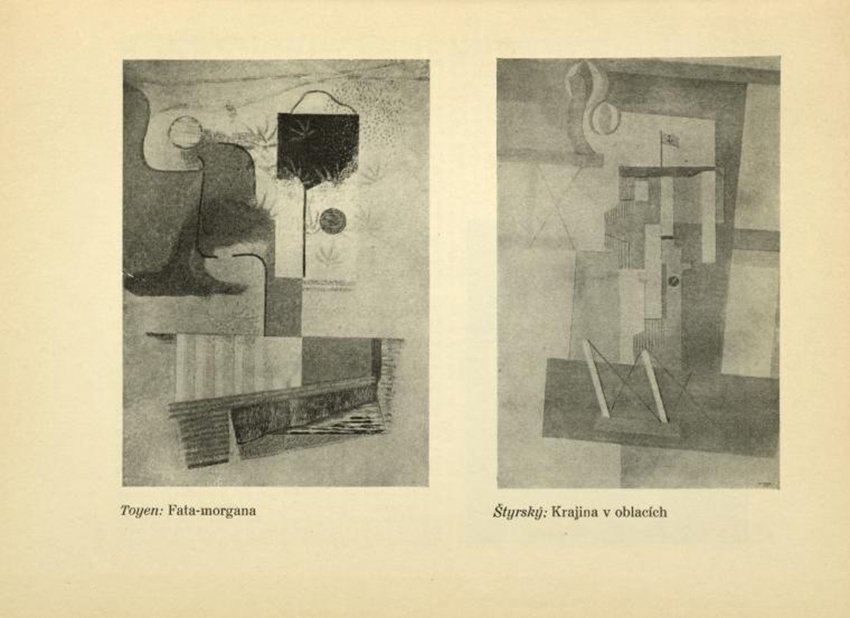
Toyen- Fata-moragana & Štyrský Krajina v oblacích. (1927-1931) From ReD published by Karel Teige), 1927-28

Toyen- Fata-moragana & Štyrský Krajina v oblacích. (1927-1931) From ReD ( Directed ans published by Karel Teige), 1927-28

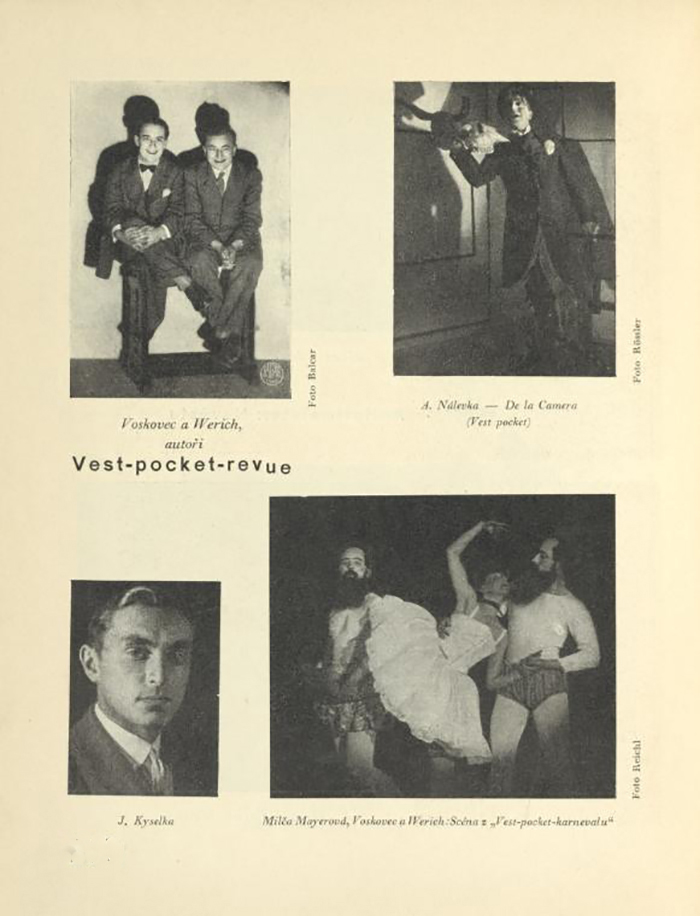
the Dancer Milca Mayerová- uncredited, published In ReD( Dirrected ans published by Karel Teige), issue # 1, 1927-28

the Dancer Milca Mayerová- uncredited, published In ReD( Directed ans published by Karel Teige), issue # 1, 1927-28

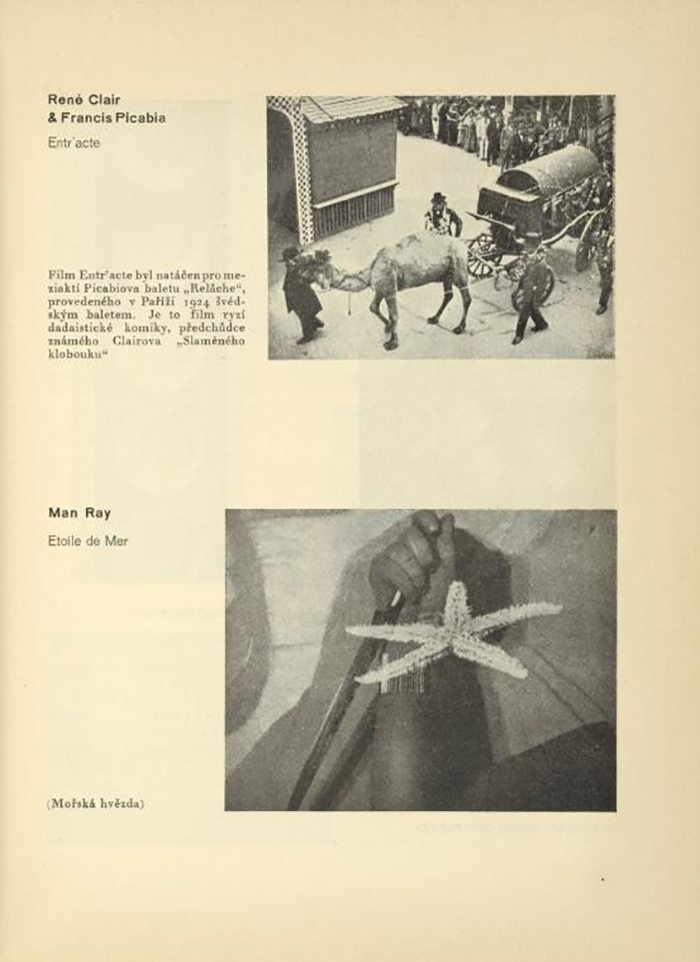
René Clair & Francis Picabia Entr'acte; Man Ray Etoile de Mer. From ReD published by Karel Teige), 1927-28 From ReD published by Karel Teige), 1927-28

René Clair & Francis Picabia Entr’acte; Man Ray Etoile de Mer. From ReD ( Directed ans published by Karel Teige), 1927-28 From ReD published by Karel Teige), 1927-28 ( articles sur Man Ray)

Vítězslav Nezval & Karel Teige (1924)6 Tabeau Poème, L'Embarquement pour Cythère published In ReD( Dirrected ans published by Karel Teige), issue # 2, 1928-29

Vítězslav Nezval & Karel Teige (1924)6 Tabeau Poème, L’Embarquement pour Cythère published In ReD( Directed ans published by Karel Teige), issue # 2, 1928-29

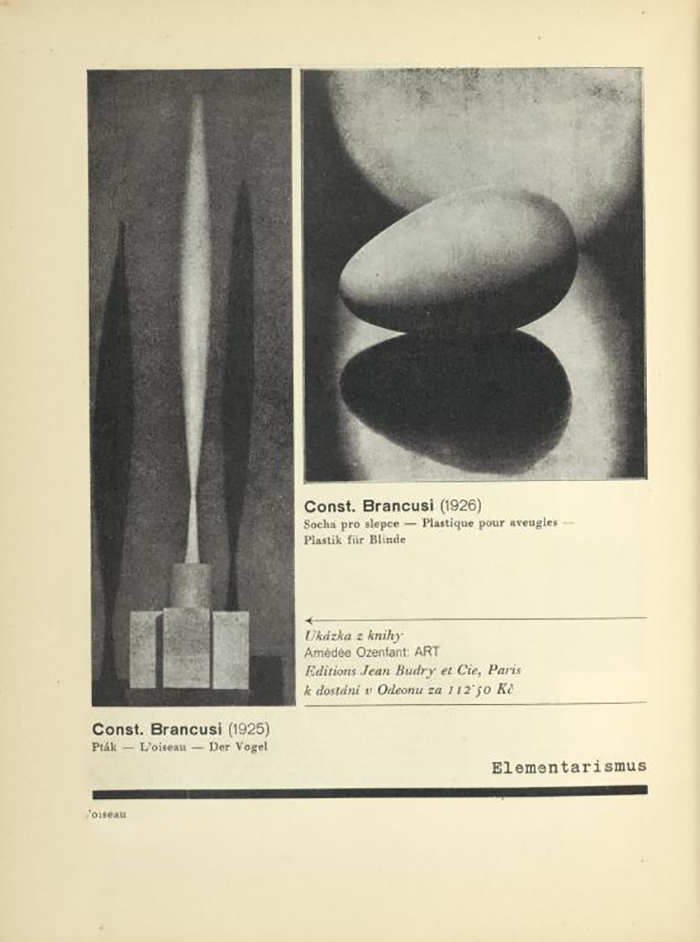
Constantin Brancusi (1925) Pták = L'oiseau From ReD published by Karel Teige),Red 2 , 1928-1929

Constantin Brancusi (1925) Pták = L’oiseau From ReD ( Directed ans published by Karel Teige),Red 2 , 1928-1929

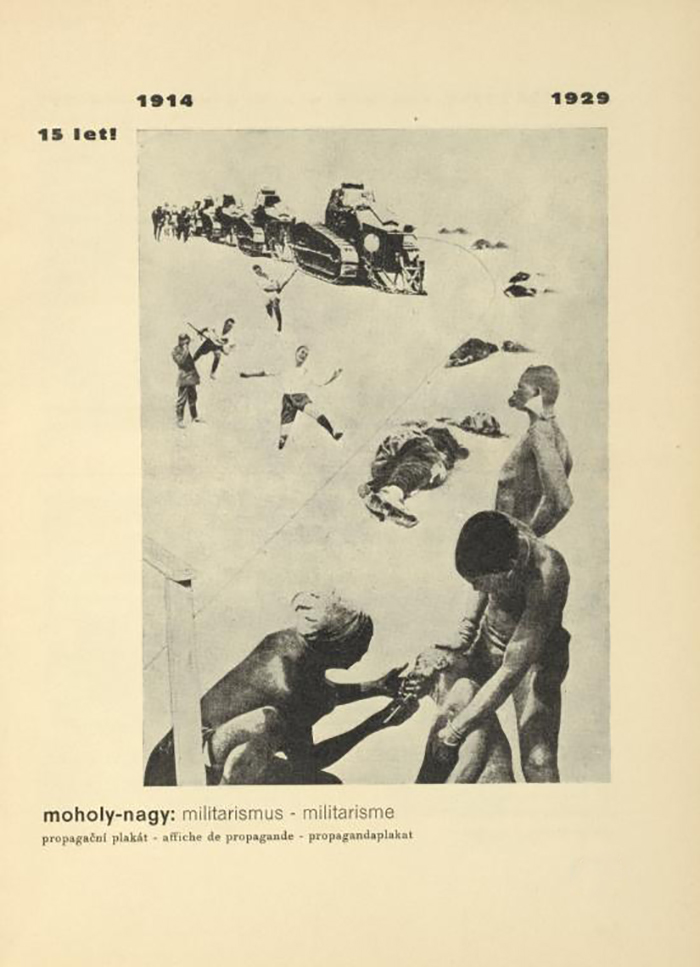
Moholy-Nagy- Plakát (L'Affiche Reklameplakat ,Photoplastik) & Olly Dolly sister, From ReD published by Karel Teige) Octobre 1927

László Moholy-Nagy- Plakát (L’Affiche Reklameplakat ,Photoplastik) & Olly Dolly sister, From ReD ( Directed ans published by Karel Teige)Octobre 1927 (voir les articles sur László Moholy-Nagy)

Man Rayn - Kiki & l'étoile de mer From ReD published by Karel Teige), 1928

Man Ray- Kiki & l’étoile de mer From ReD ( Directed ans published by Karel Teige), 1928 ( articles sur Man Ray)

Guillaume Apollinaire & eige & Mrkvička From ReD published by Karel Teige), 1927-28

Guillaume Apollinaire , Teige & Mrkvička From ( Directed ans published by Karel Teige), 1927-28 voir ici la version originale

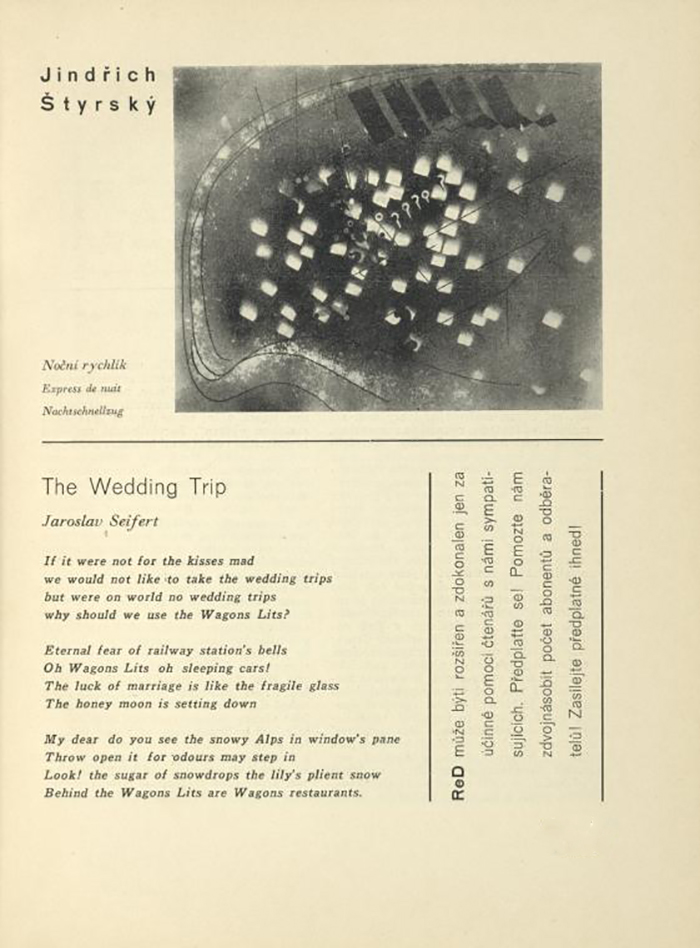
Jindřich Štyrský ( Noční rychlík Express de nuit, The wedding Trip, & Jaroslav Seifert. published In ReD( Dirrected ans published by Karel Teige), issue # 2, 1928-29

Jindřich Štyrský ( Noční rychlík Express de nuit, The wedding Trip, & Jaroslav Seifert. published In ReD( Directed ans published by Karel Teige), issue # 2, 1928-29

Jarmila Horáková, 20.1.1928 from ReD published by Karel Teige), issue6 , 1929

Jarmila Horáková, 20.1.1928 from ReD ( Directed ans published by Karel Teige), issue6 , 1929

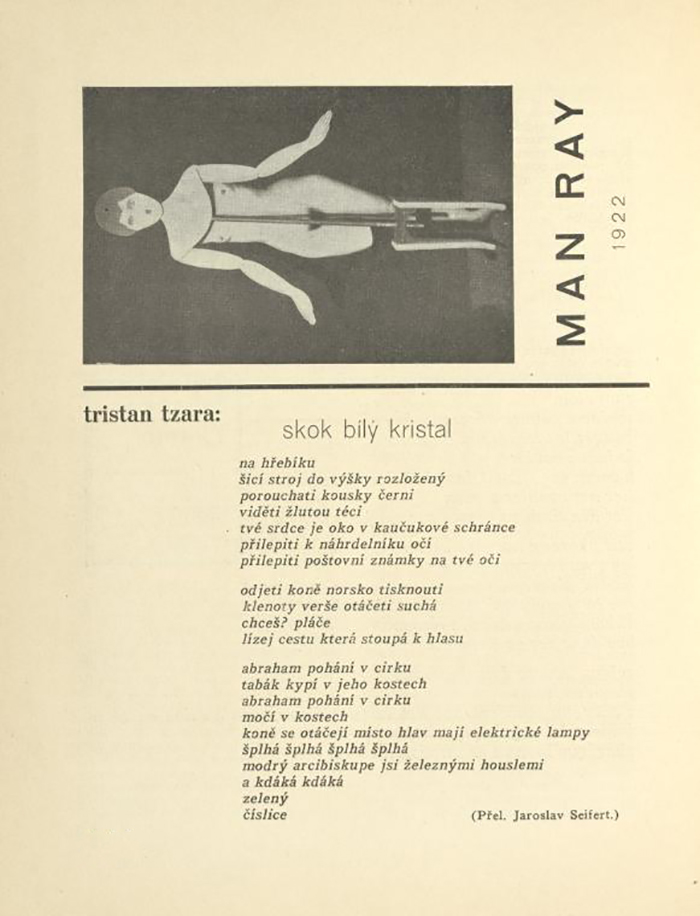
Man Ray &Tristan Tzara - From ReD published by Karel Teige), 1927-28

Man Ray &Tristan Tzara – From ReD ( Directed ans published by Karel Teige), 1927-28 ( articles sur Man Ray)

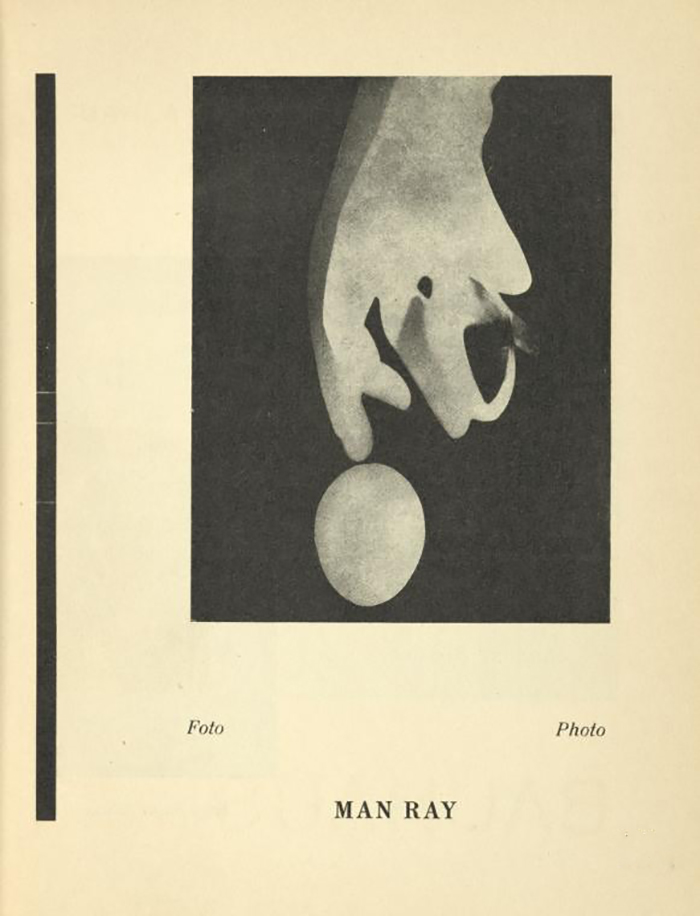
Man Ray From ReD published by Karel Teige), 1928-29

Man Ray From ReD ( Directed ans published by Karel Teige), 1928-29 ( articles sur Man Ray)

Marc Chagall From ReD published by Karel Teige), 1927-28

Marc Chagall From ReD ( Directed ans published by Karel Teige), 1927-28

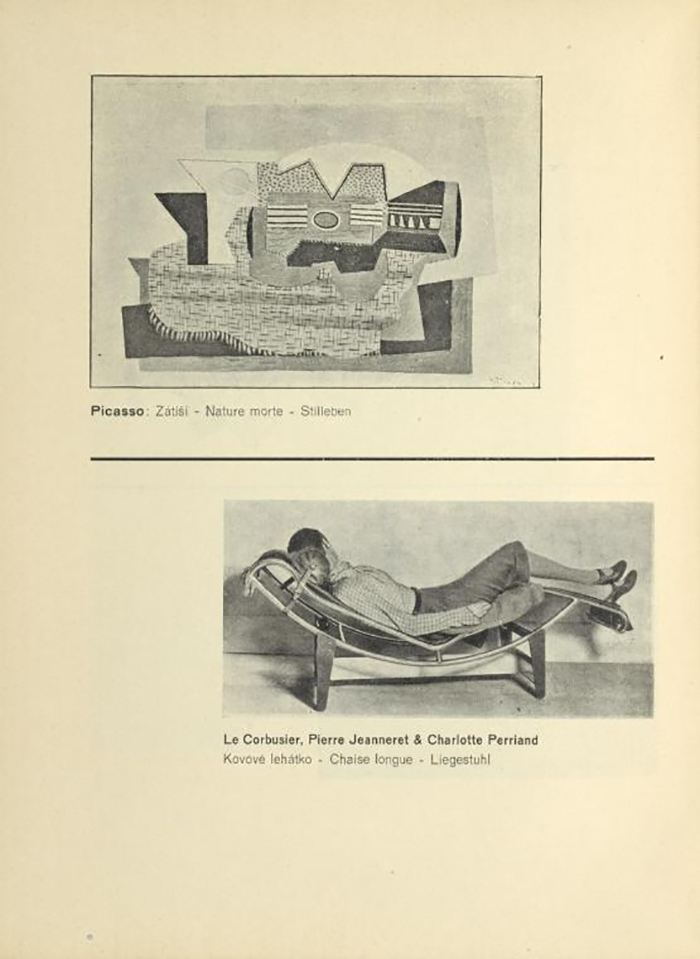
Picasso- Zátiší ( Nature morte ) & Le Corbusier, Pierre Jeanneret & Charlotte Perriand , Kovové lehátko (Chaise longue ) From ReD published by Karel Teige), Octobre 1927

Picasso- Zátiší ( Nature morte ) & Le Corbusier, Pierre Jeanneret & Charlotte Perriand , Kovové lehátko (Chaise longue ) From ReD ( Directed ans published by Karel Teige), Octobre 1927

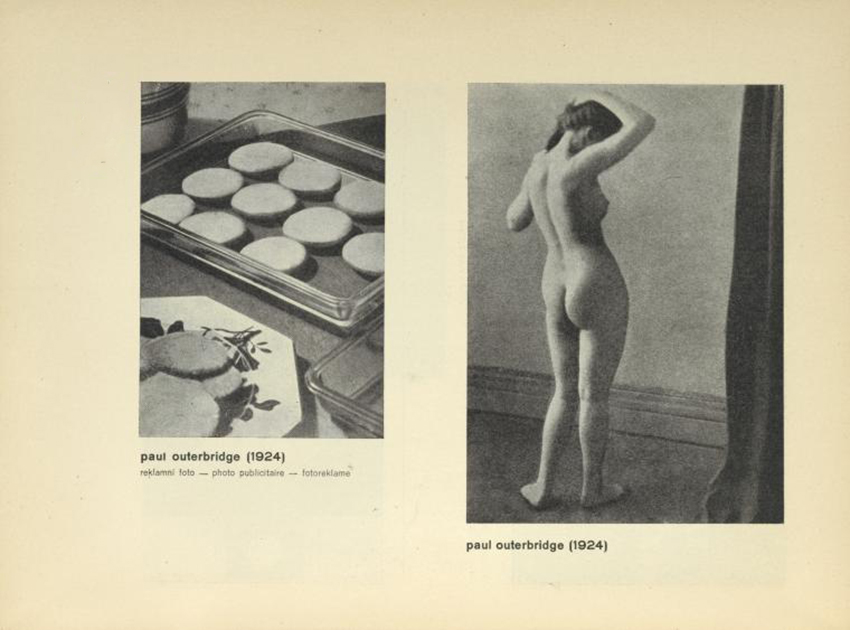
Paul Outerbridge 1924 From ReD published by Karel Teige), ReD 2, 1928-29

László Moholy-Nagy From ReD ( Directed ans published by Karel Teige), ReD 2, 1928-29 (voir les articles sur László Moholy-Nagy)

Paul Outerbridge 1924 From ReD published by Karel Teige), ReD 2, 1928-29

Paul Outerbridge 1924 From ReD ( Directed ans published by Karel Teige), ReD 2, 1928-29

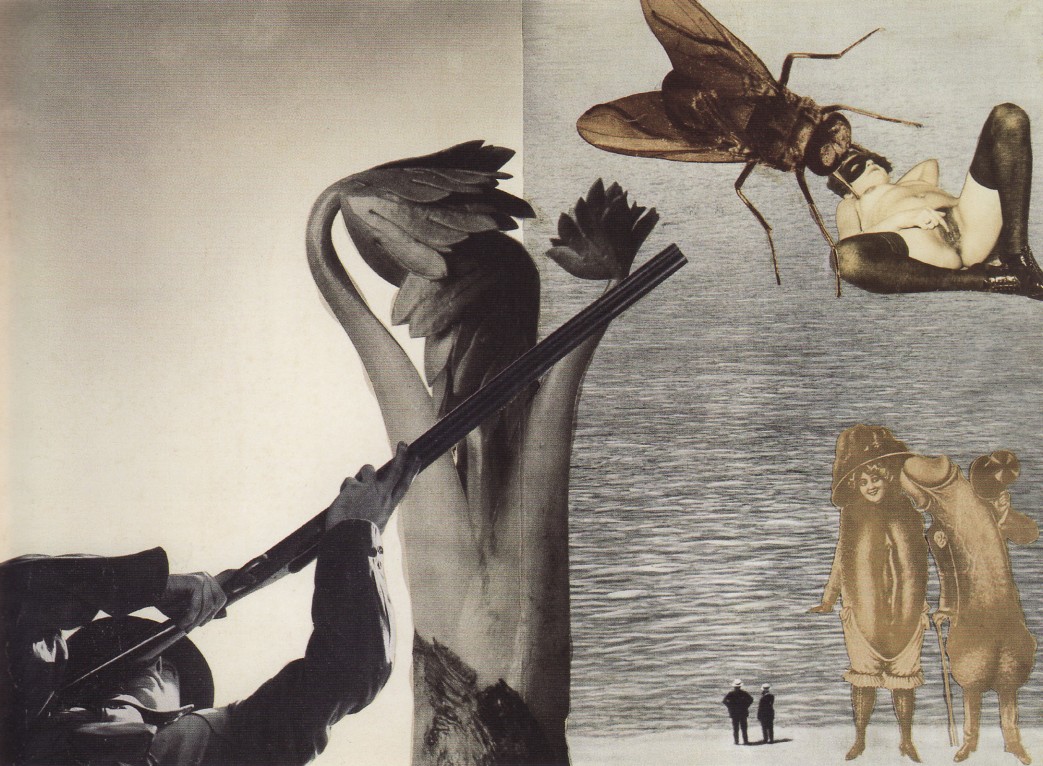
Max Ernst- Puška ( Le fusil Gewehr Les malheurs des immortels) & Max Ernst- Přírodopis ( L'histoire naturelle Naturgeschichte.) From ReD published by Karel Teige), 1927-1928

Max Ernst- Puška ( Le fusil Gewehr Les malheurs des immortels) & Max Ernst- Přírodopis ( L’histoire naturelle Naturgeschichte.) From ReD ( Directed ans published by Karel Teige), 1927-1928 voir article sur  Max Ernst )

Marc Chagall From ReD published by Karel Teige), 1927-28

Marc Chagall From ReD( Directed ans published by Karel Teige) 1927-28

From ReD published by Karel Teige), 1927-28

From ReD ( Directed ans published by Karel Teige)), 1927-28

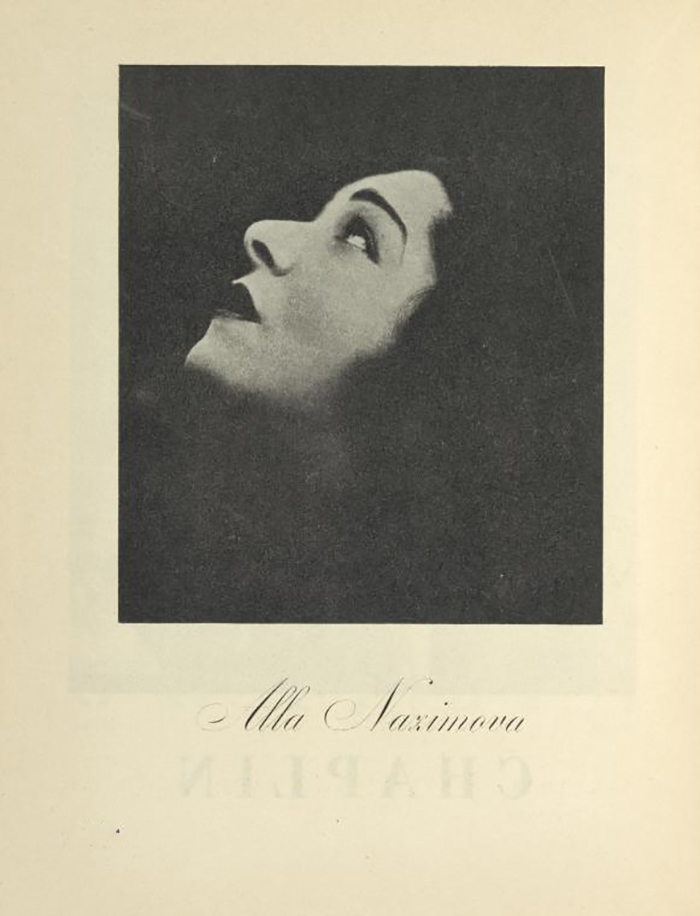
E. O Hoppé- Alla Nazimova published In ReD( Dirrected ans published by Karel Teige), issue # 1, 1927-28

E. O Hoppé- Alla Nazimova( Actrice Russe), published In ReD( Directed ans published by Karel Teige), issue # 1, 1927-28 ( voir Ici ce portrait et plus sur Alla Nazimova)

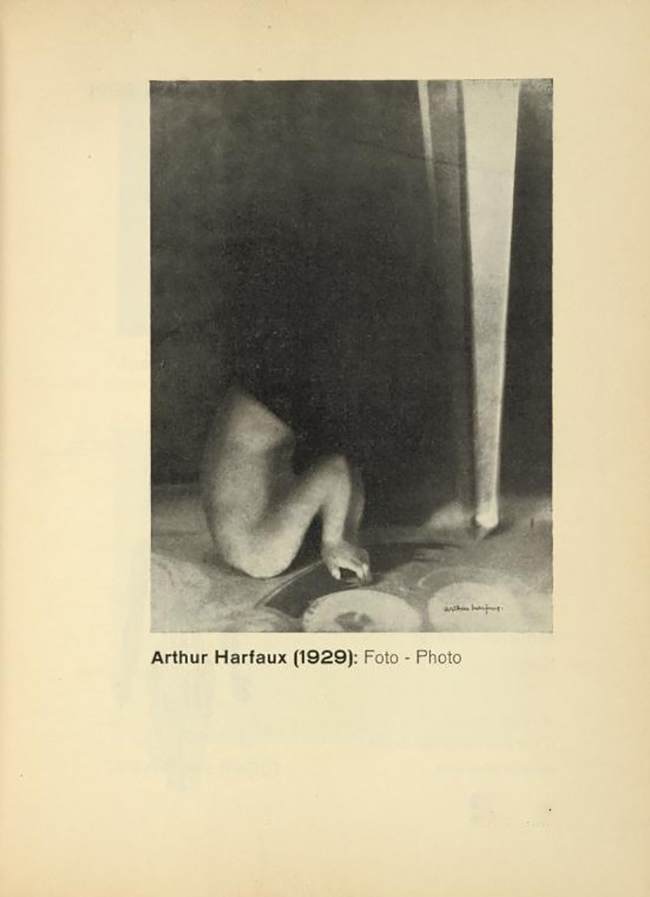
Arthur Harfaux (1929) From ReD published by Karel Teige), issue # 3, 1929-31

Arthur Harfaux (1929) From ReD ,( Directed ans published by Karel Teige) issue # 3, 1929-31

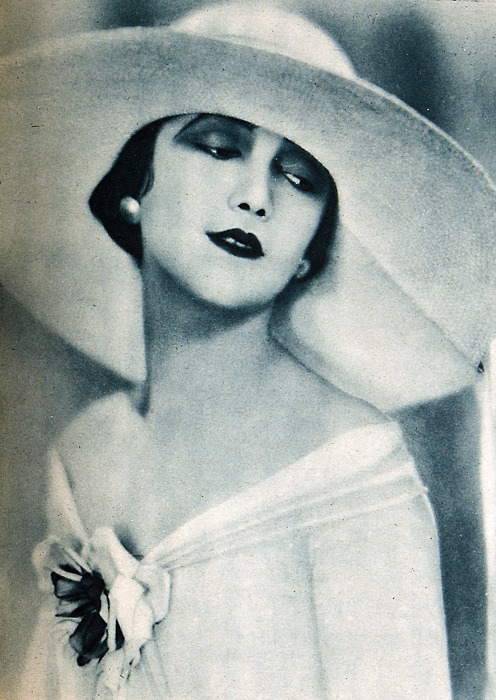
Edwin Bower Hesser-Portrait of the actress Jetta Bgoudal, 1925

Edwin Bower Hesser-Portrait of the actress Jetta Bgoudal, 1925


František Vobecký (1902 – 1991)

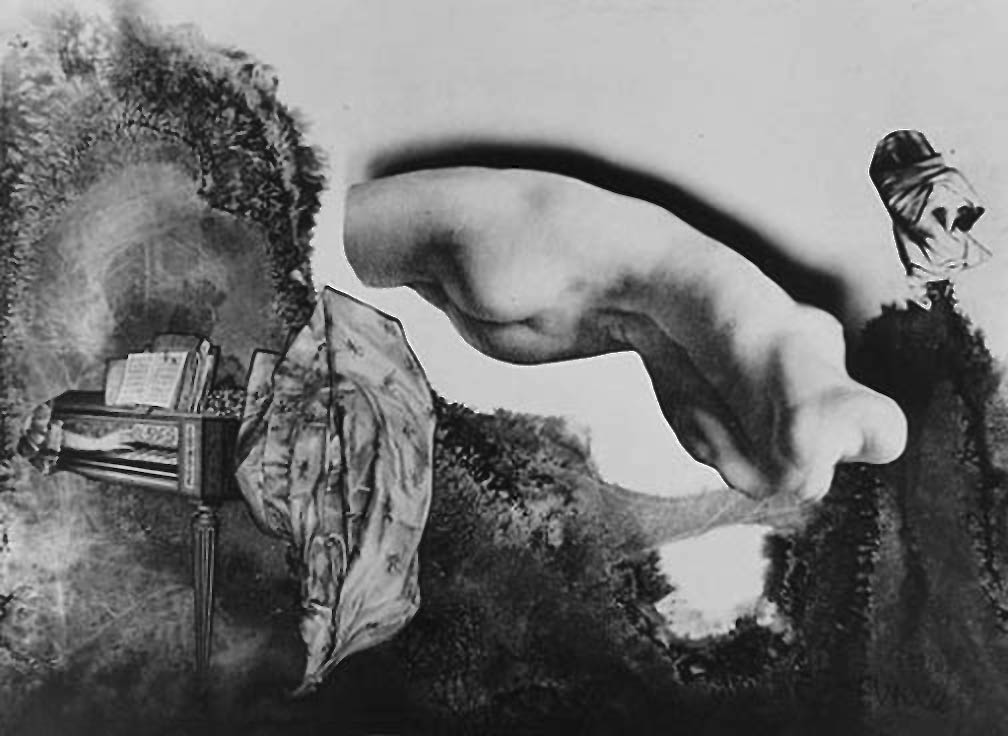
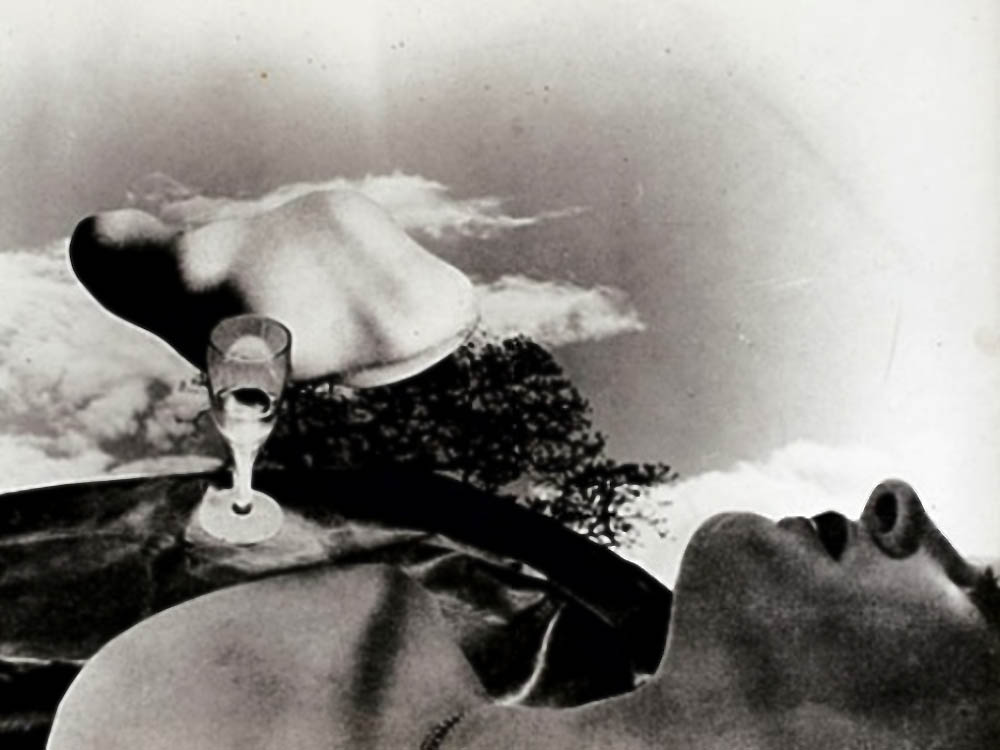
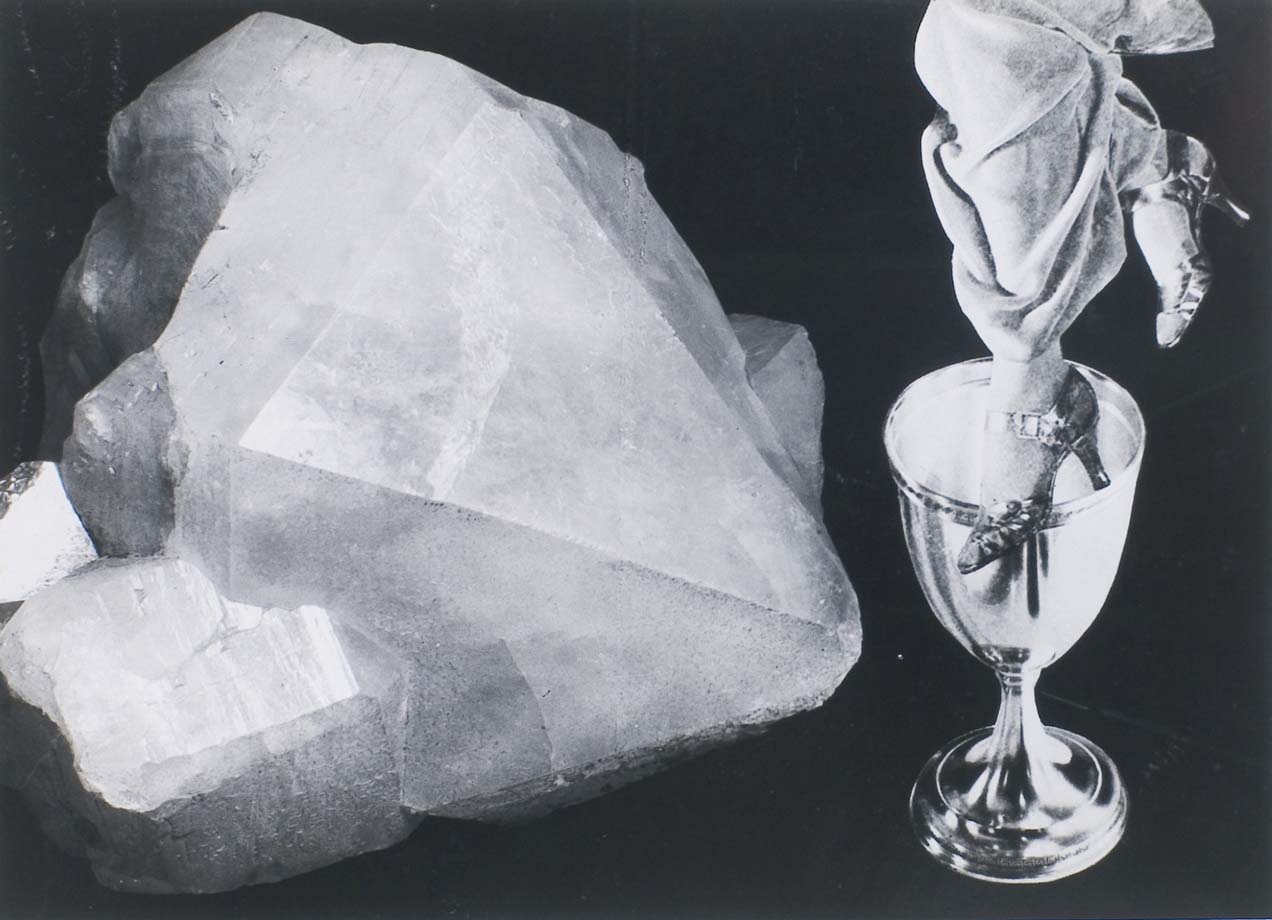
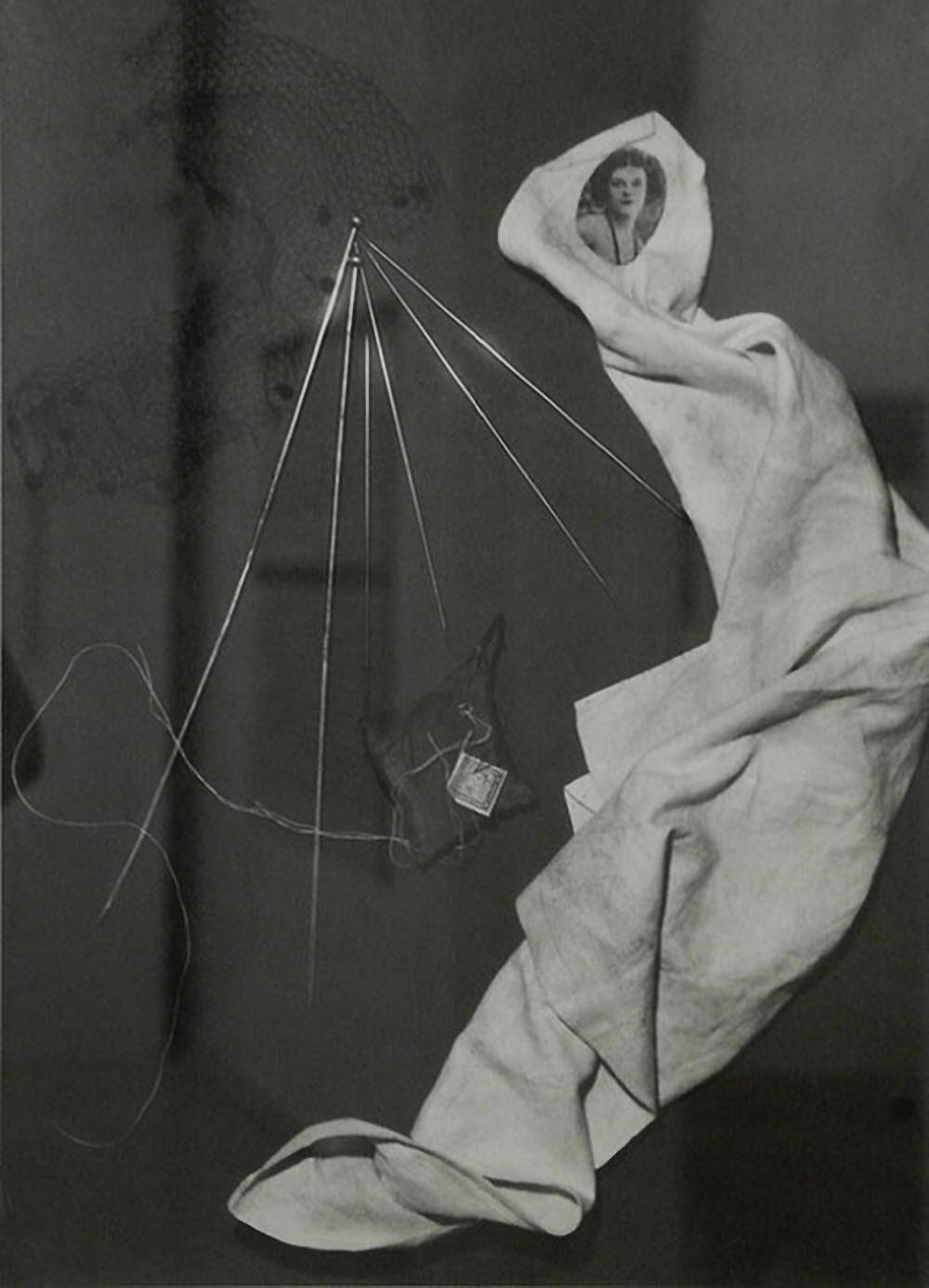
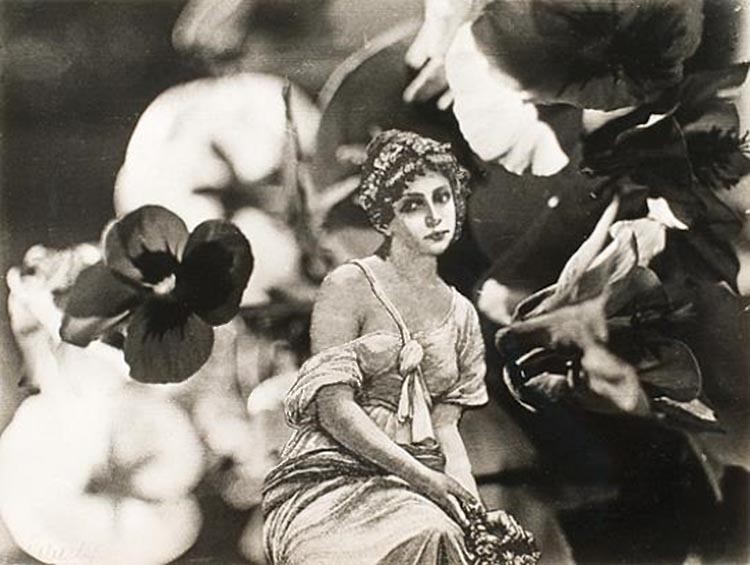
« A strong wave of Surrealism hit Czechoslovakia in the 1930’s, and Frantisek Vobecky (1902-1991), a painter who used photography to document his images, got caught up in it. He began to explore photomontage in 1935. His early assemblages were of items with logical connections, like the pins, cloth and string in  »Composition » (1935). But logic was soon supplanted by fantasy. Light, shadows (particularly those cast by items outside of the picture) and disparate objects were juxtaposed in dreamy arrangements that often had an erotic component.

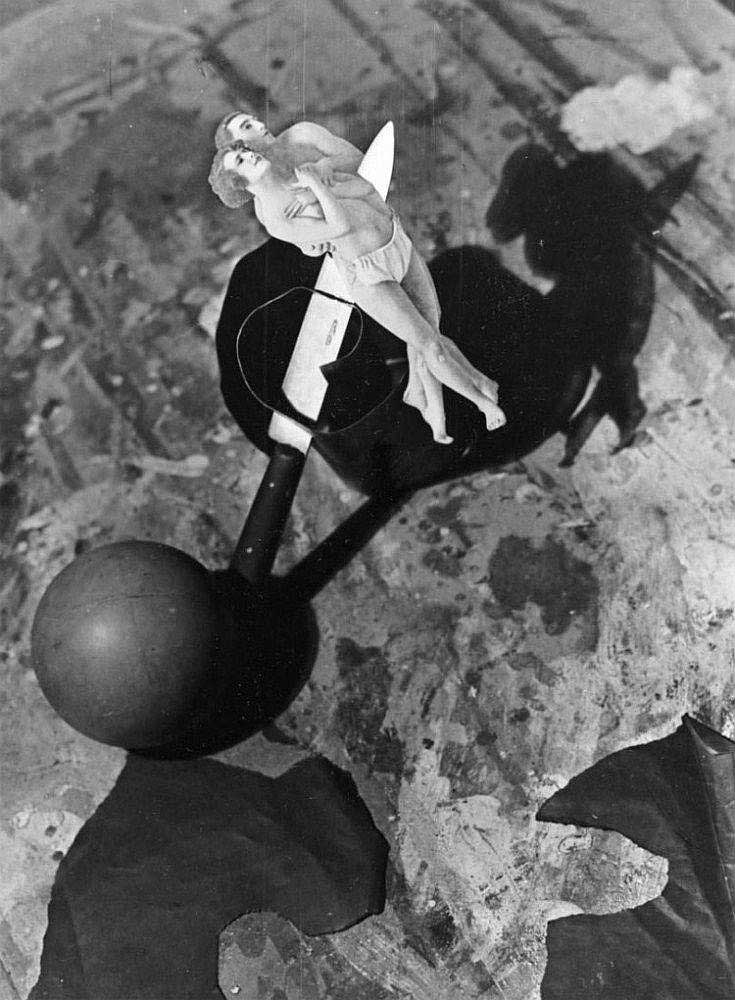
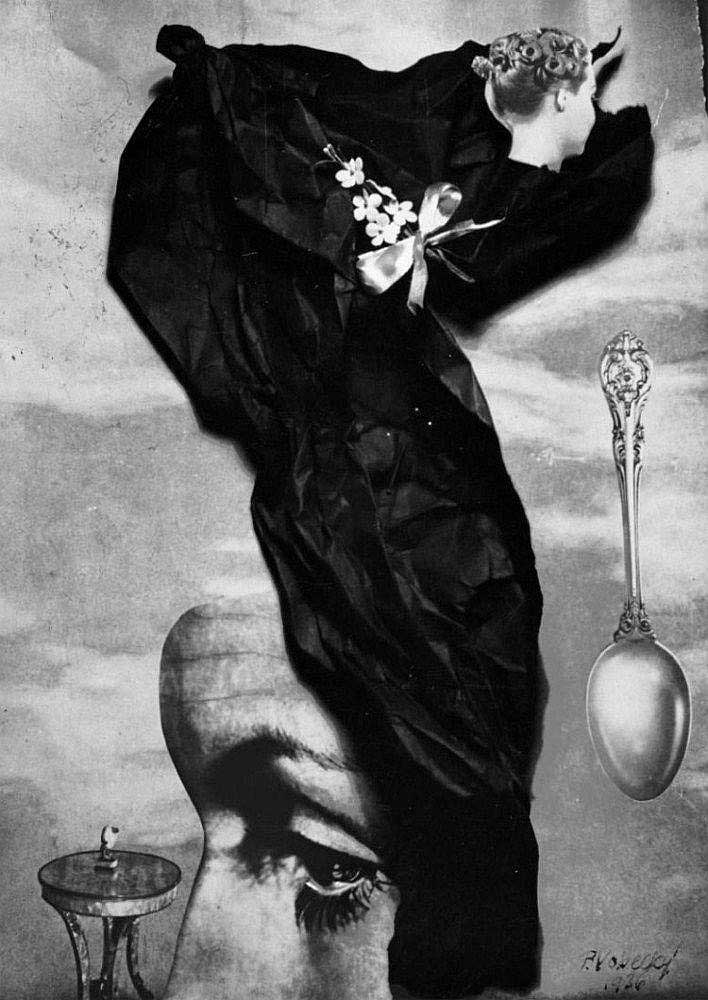
A striking one is  »A Melancholic Day » (1936), in which a morose looking part of a face (the brow, eye and nose) shares a cloudy ground with a silver spoon, a large floating drape of black cloth, the carefully coiffed back of a woman’s head, a small nosegay and a tiny round table. A perhaps more celebratory arrangement is  »The Errant Equestrian » (1936), in which a cutout image of a ballet dancer, tutu flaring, is poised on the back of a horse, against a background of grassy rocks. A nearby candlestick sprouts a phallic flower.

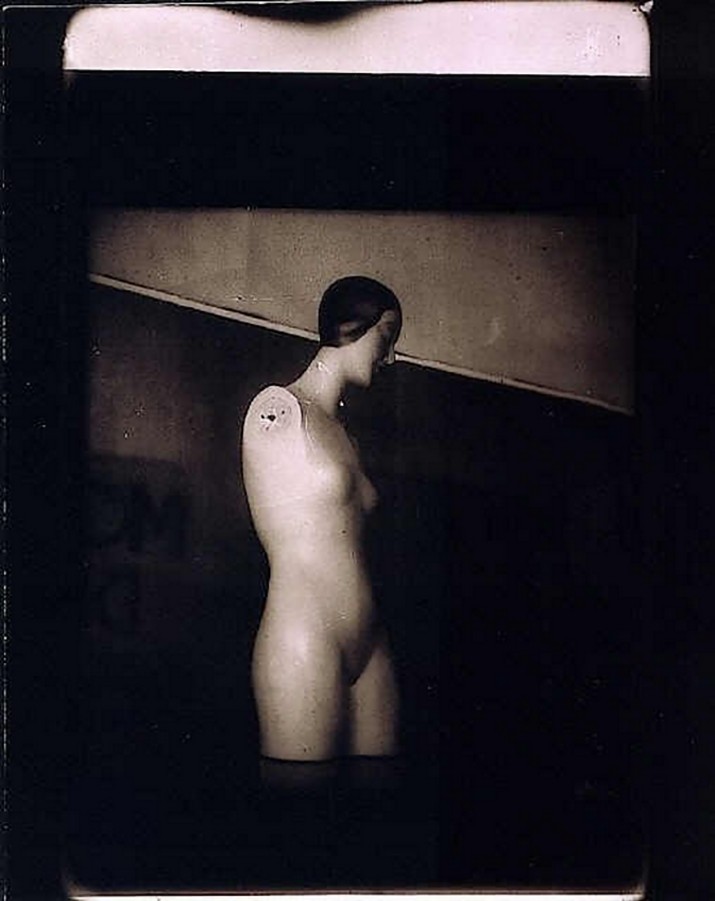
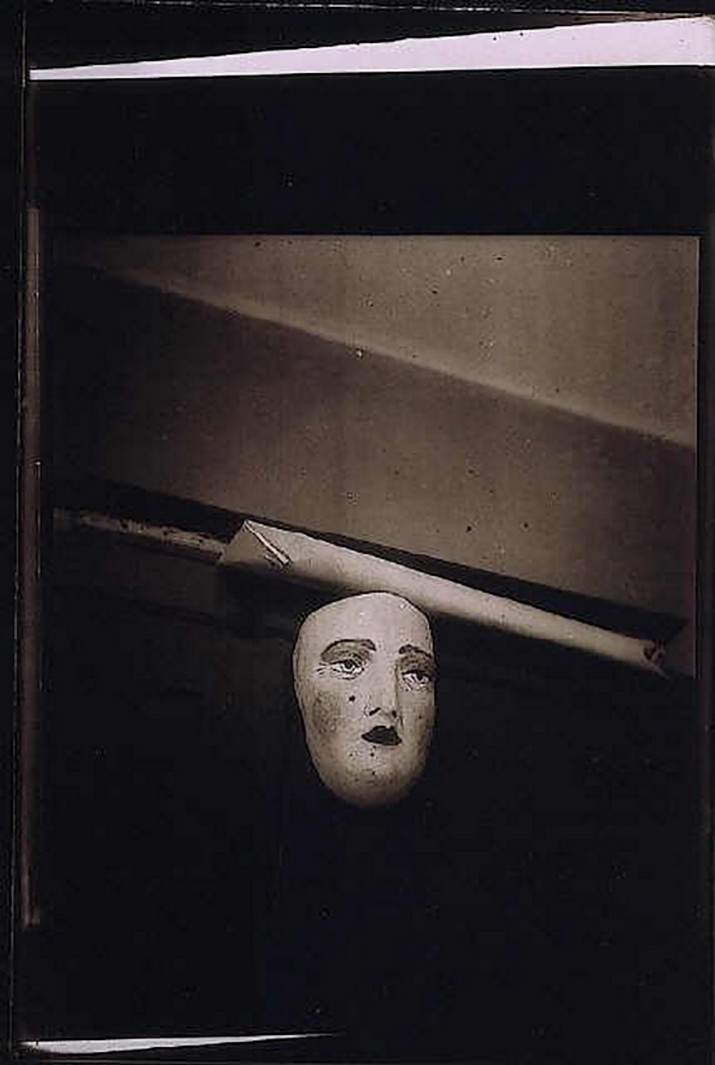
Of more interest though are works by Vobecky’s Surrealist contemporaries Jindrich Styrsky (1899-1942) and Jindrich Heisler (1914-1953), which appear in a companion show,  »Czech Avant-Garde. » Unlike Vobecky’s, Styrsky’s images were taken directly from life, but he managed to find the offbeat and quixotic at every turn. A dead-white Japanese mask hanging near a ceiling and a beatific-looking nude mannequin without arms are two that stand out.

Heisler, who hid from the Nazis in Prague for five years, somehow managed — with little in the way of photographic materials — to turn out searing  »photographiques. » On light-sensitive glass plates, he poured rubber cement, then manipulated it into shapes. The plates were exposed to light to make  »camera-less » images. One, from a 1944 cycle titled  »De la Meme Farine » (roughly,  »cut from the same cloth »), shows three groping humanoid figures in a devastated landscape. It is an affecting image.  » by  Grace Glueck the New-York Time


František Vobecký (1902 - 1991) Flood, 1936

František Vobecký Flood, 1936

František Vobecký- Tanec, (Dance) 1932

František Vobecký- Tanec, (Dance) 1932

František Vobecký- Untitled,

František Vobecký- Untitled,

František Vobecký- melancholický den (Melancholy Day) 1936

František Vobecký- melancholický den (Melancholy Day) 1936

František Vobecký - untitled, 1936.

František Vobecký- Untitled, 1936

František Vobecký -  Künstliches Paradies, 1936

František Vobecký – Künstliches Paradies, 1936

František Vobecký - Composition, 1936

František Vobecký – Composition, 1936

František Vobecký -  The Moment of Miracles (OKAMžIK ZÁZRAKŮ) 1936.

František Vobecký – The Moment of Miracles (OKAMžIK ZÁZRAKŮ) 1936.

František Vobecký - Notions collage, 1935-36

František Vobecký– Notions collage, 1935/36

František Vobecký - The Ernest Equestrienne , 1936-1937

František Vobecký – The Errant Equestrienne , 1936

František Vobecký- Girl in Flowers , 1936

František Vobecký- Girl in Flowers , 1936

František Vobecký -  A Melancholic Day, 1936 photomontage

František Vobecký – A Melancholic Day, 1936 photomontage

František Vobecký -  After the Low Tide, 1936 photomontage

František Vobecký-After the Low Tide, 1936 ( via Ubu Gallery)

František Vobecký - untitled,

František Vobecký – untitled,

František Vobecký-Flower with nude, 1970

František Vobecký-Flower with nude, 1970


Edwin Bower Hesser- Theda Bara , 1910s

Edwin Bower Hesser- Theda Bara , 1910s


Marcel Dzama

Marcel Dzama- Lits et ratures, 2008

Marcel Dzama- Lits et ratures, 2008

Marcel Dzama- Precence is unsustainable or The circle of traitors, 2008


Aenne Biermann (German, 1898 – 1933)

Aenne Biermann est née Anna Sibilla Sternfeld en 1898 dans la province du Rhin de l’Allemagne. Après son mariage et la naissance de ses deux enfants, Biermann a commencé à s’impliquer dans le mouvement de la « Nouvelle Objectivité » des années 1920. Ce mouvement rejetait les principes expressionnistes et favorisait le travail avec des formes simples et un contenu social. Le mouvement a pris fin avec la chute de la République de Weimar et la montée de Hitler.
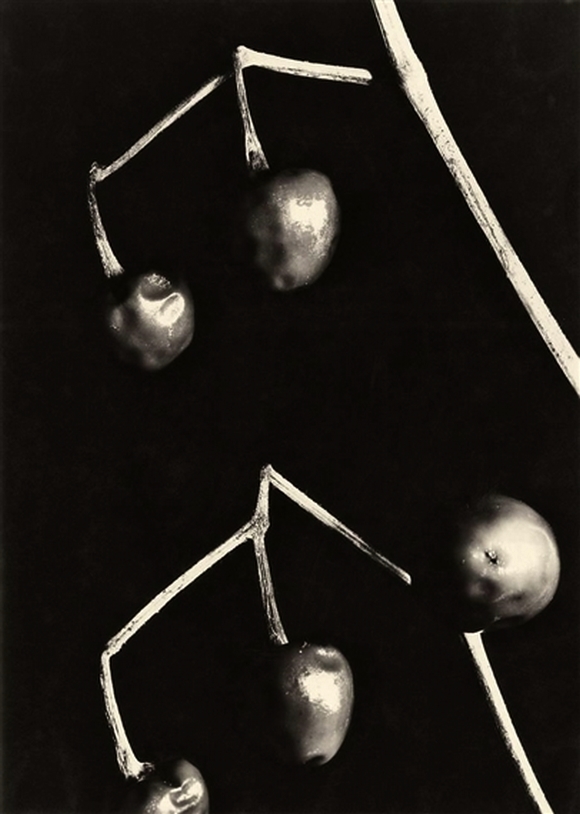
Son travail a été affiché à chaque exposition de photographies majeur en Allemagne dans les années 1920.
Le travail de Biermann propose des cadres serrés, et met l’accent sur les surfaces tactiles. Elle a expérimenté l’imagerie métaphorique des objets du quotidien, des minéraux et des plantes.

Aenne Biermann - Acentauria Mochata 1931

Aenne Biermann – Acentauria Mochata 1931

Aenne Biermann- Porträt der Schauspielerin M(aria) F(ein) , 1929

Aenne Biermann- Porträt der Schauspielerin M(aria) F(ein) , 1929

Aenne Biermann -Untitled ( Portrait of Anneliese Schiesser) , 1929

Aenne Biermann -Untitled ( Portrait of Anneliese Schiesser) , 1929

Aenne Biermann -Untitled (nude study of Anneliese Schiesser) ,1931

Aenne Biermann -Untitled (nude study of Anneliese Schiesser) ,1931

Aenne Biermann- Untitled (photomontage with portrait of Anneliese Schiesser and view of Paris), 1929

Aenne Biermann- Untitled (photomontage with portrait of Anneliese Schiesser and view of Paris), 1929

Aenne Biermann – Untitled montage , 1931

Aenne Biermann - "Frauenbildnis", photogravure, 1931

Aenne Biermann – « Frauenbildnis », photogravure, 1931
Aenne Biermann -Akt (Nude), 1930

Aenne Biermann -Akt (Nude), 1930

Aenne Biermann- Untitled, akt, 1930s

Aenne Biermann- Untitled, (Akt), 1930s

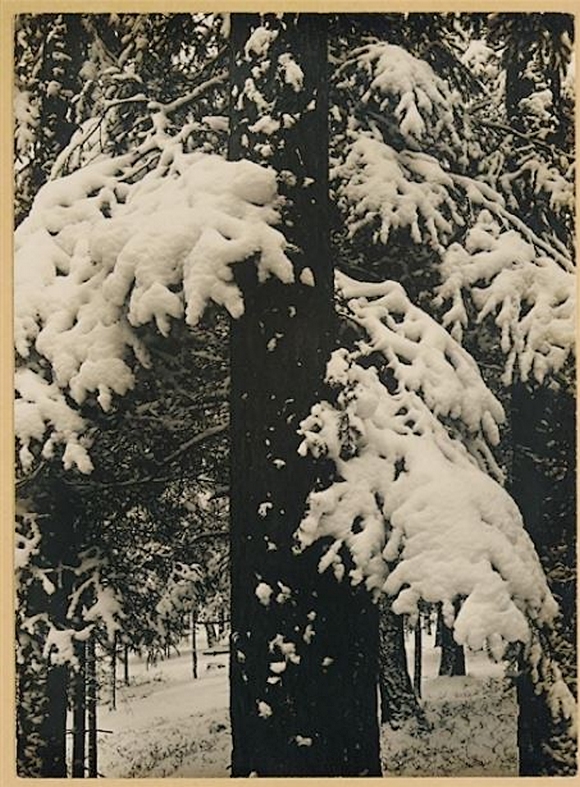
Aenne Biermann- winter, 1931

Aenne Biermann- winter, 1931

Aenne Biermann - Acentauria Mochata 1931

Aenne Biermann – Acentauria Mochata 1931

Aenne Biermann - Round peppers, 1928.

Aenne Biermann – Round peppers, 1928.

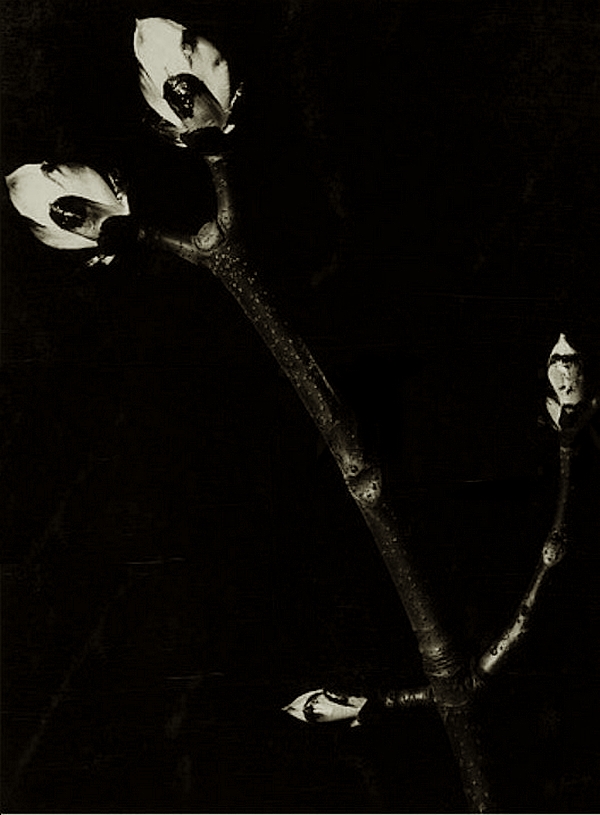
Aenne Biermann - Kastanienknospen. 1929

Aenne Biermann – Kastanienknospen. 1929

Aenne Biermann-Rubber Tree , 1927

Aenne Biermann-Rubber Tree , 1927

Aenne Biermann- Funkie. 1926

Aenne Biermann- Funkie. 1926

Aenne Biermann -Wurfel.  photogravure. c1930

Aenne Biermann -Wurfel. photogravure. c1930

Aenne Biermann- Finale, 1927-28

Aenne Biermann- Finale, 1927-28

Aenne Biermann- Komposition. 1929

Aenne Biermann- Komposition. 1929

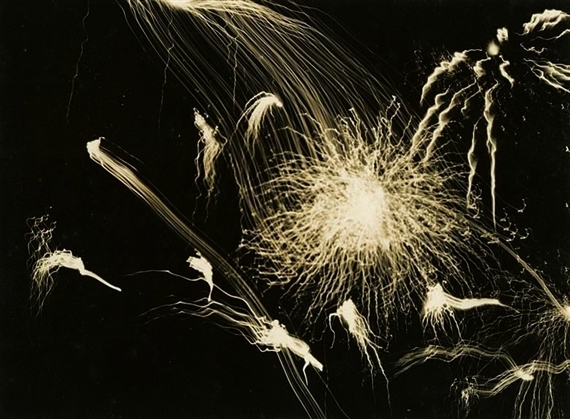
Aenne Biermann - Fireworks, 1931

Aenne Biermann – Fireworks, 1931

Aenne Biermann-  Contemplation, d' Helga ( Betrachtung, Tochter Helga) , 1930

Aenne Biermann- Contemplation, d’ Helga ( Betrachtung, Tochter Helga) , ( self- portrait) 1930

Osamu Shiihara Japanese (1905-1974

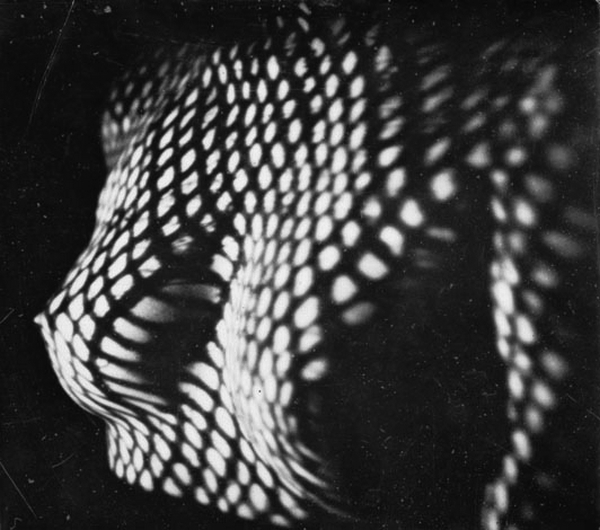
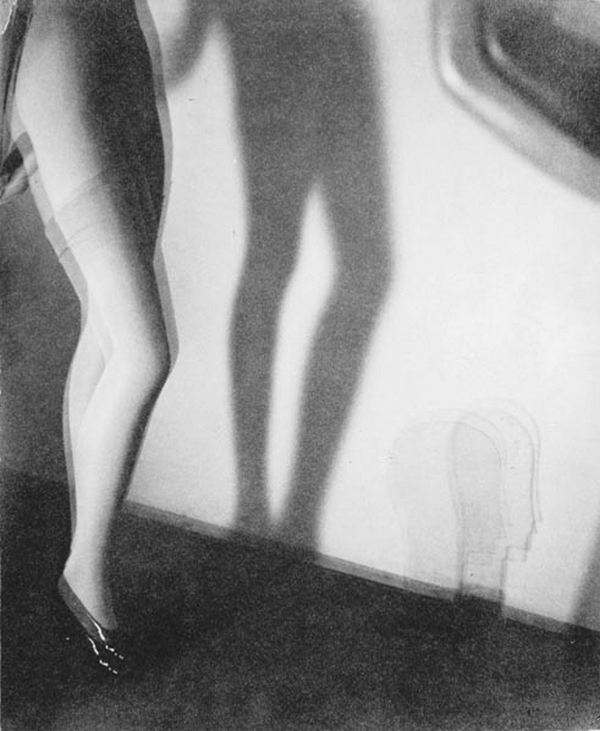
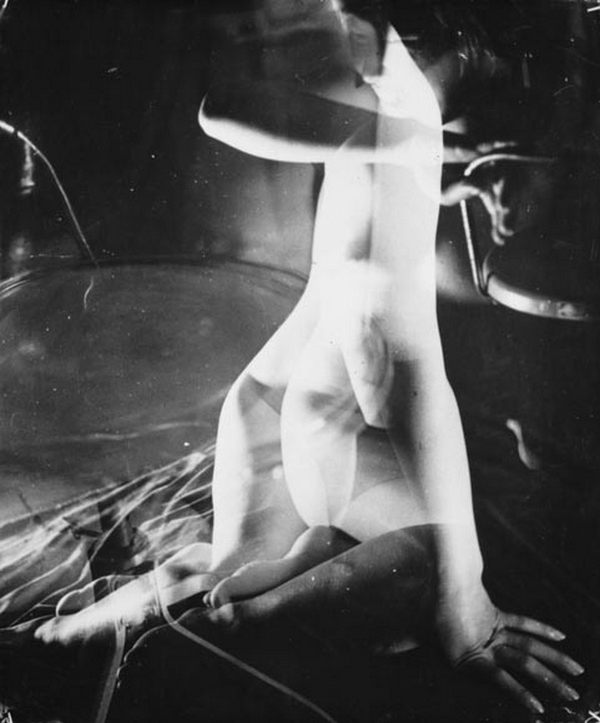
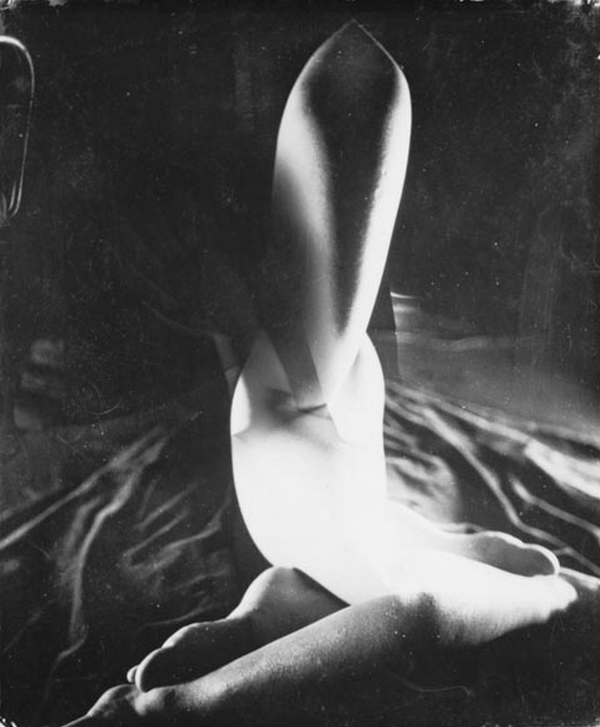
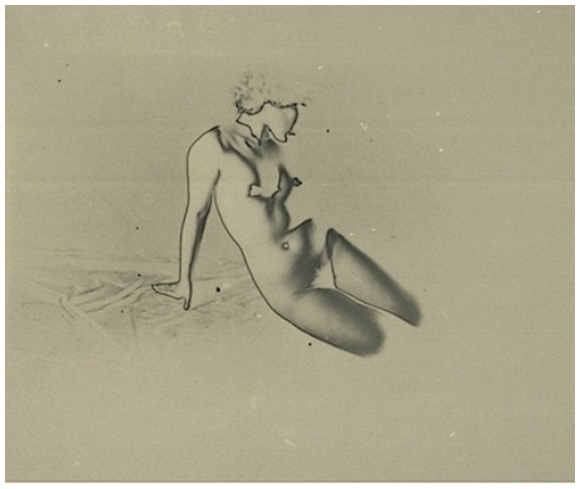
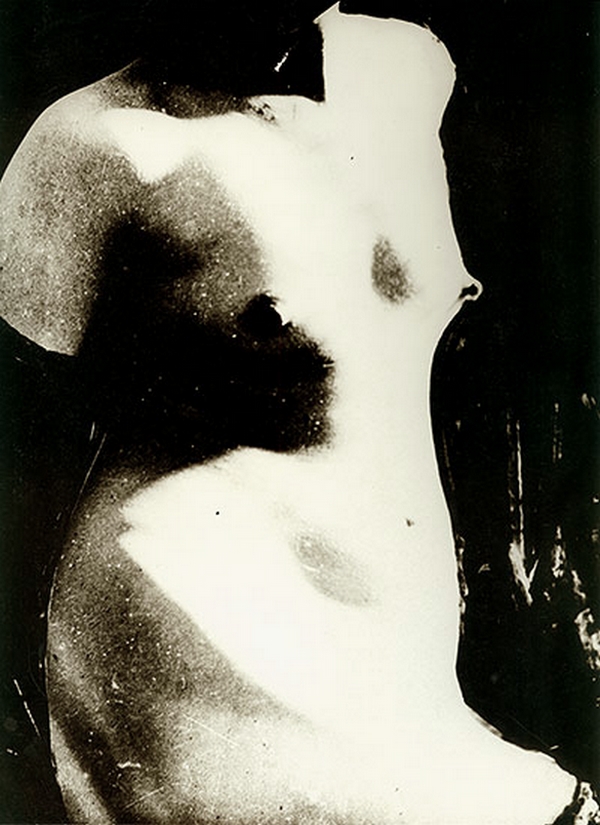
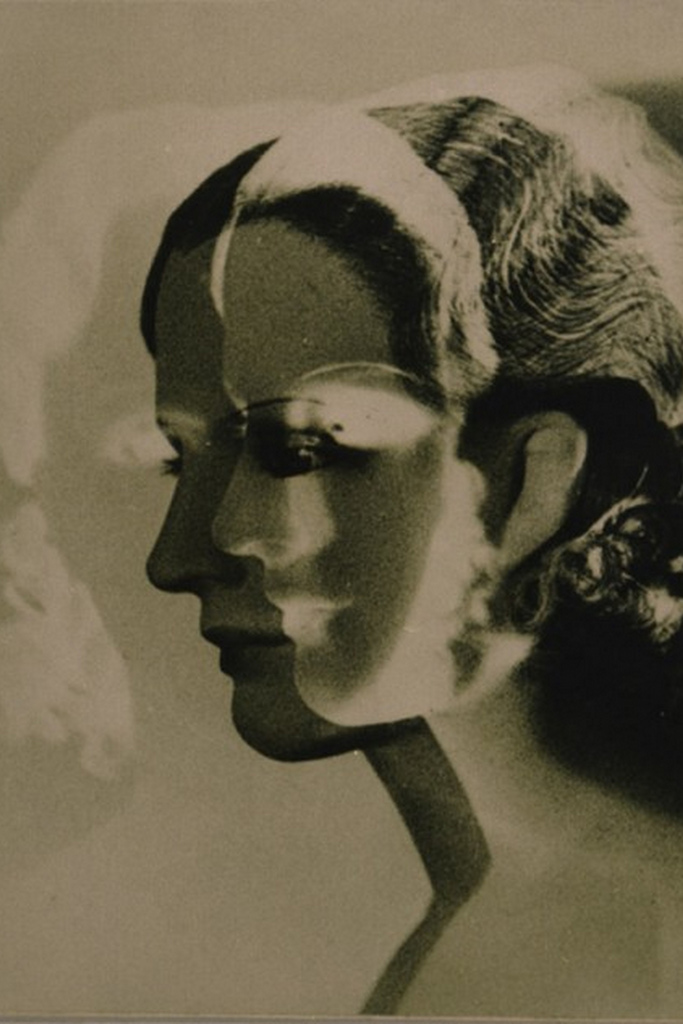
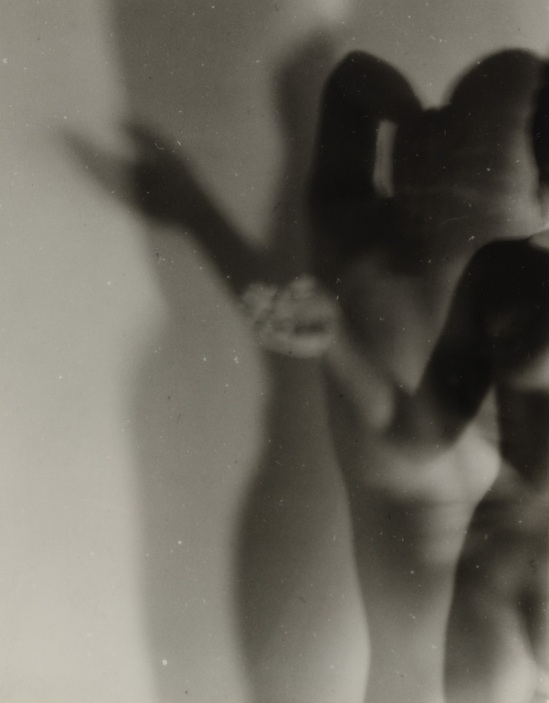
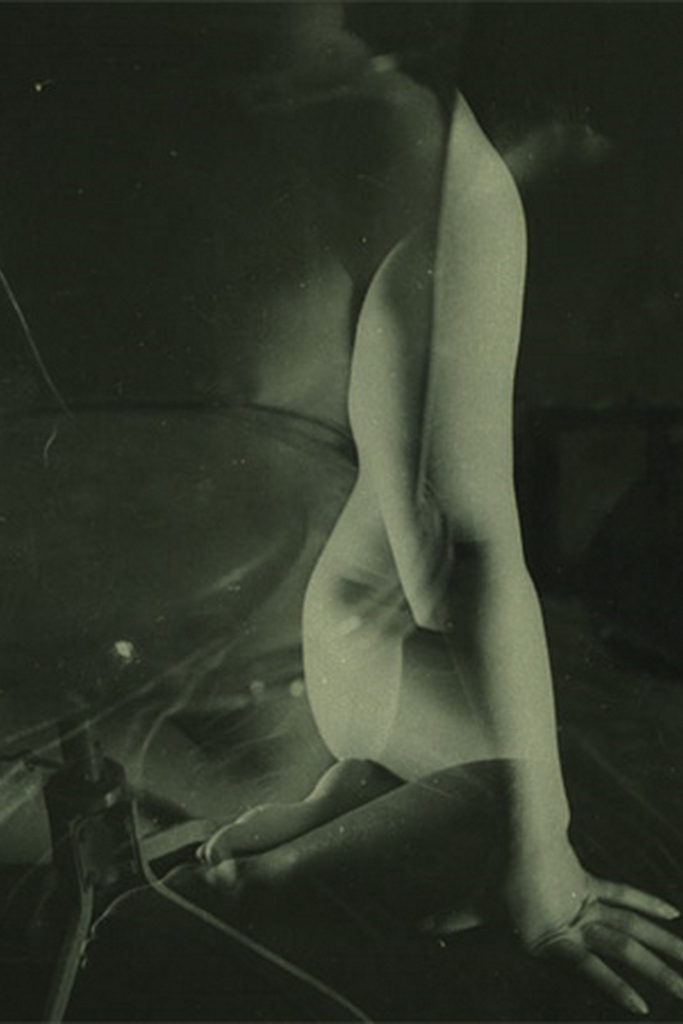
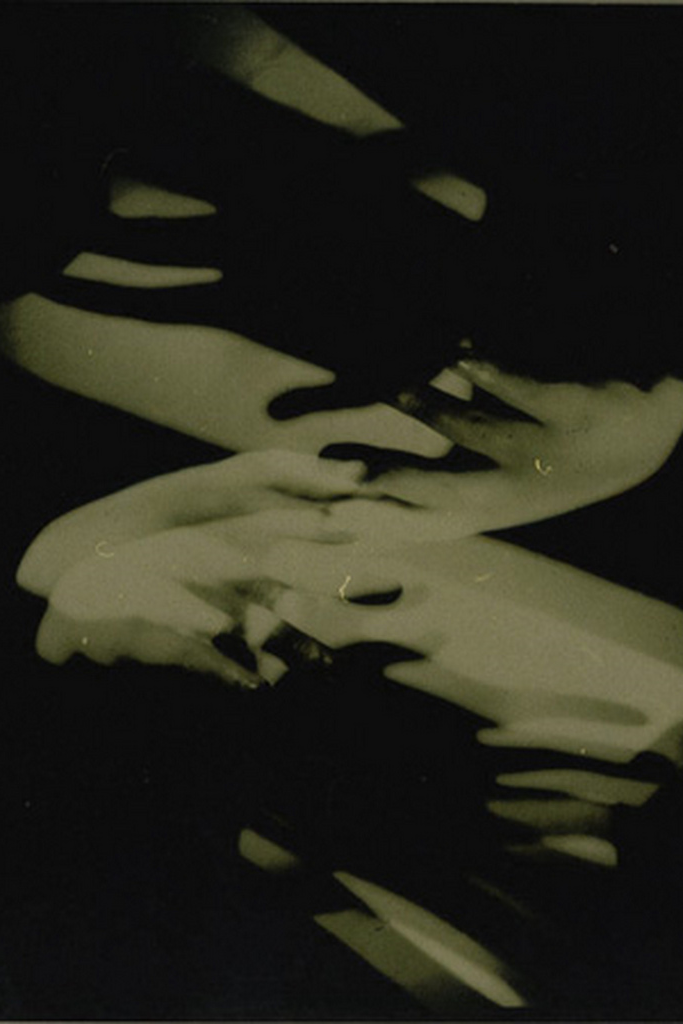
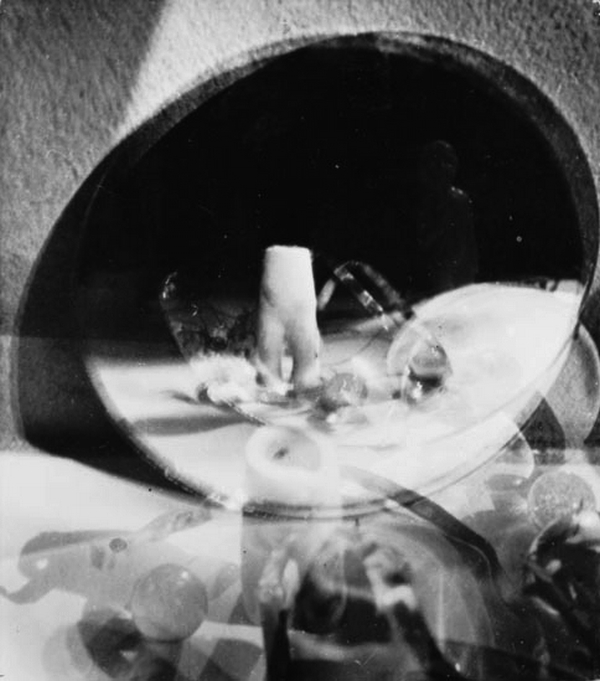
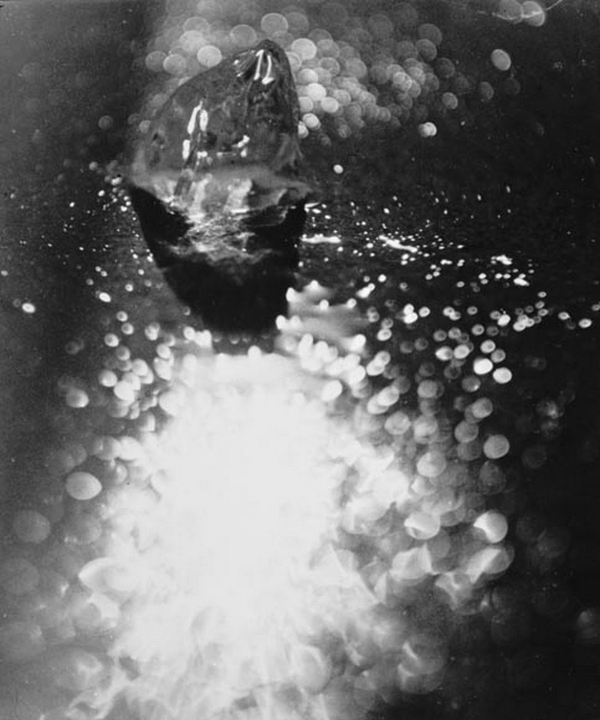
Osamu Shiihara est né à Osaka en 1905, et est diplômé de la Tokyo School of Fine Arts (connue comme « Geidai ») en 1932 au département peinture. Alors qu’il tentait d’établir lui-même comme un peintre dans la préfecture de Hyogo, il s’initieà  la photographie et est devenu un des principaux membres du « Tampei Club » de photographie avec Nakaji Yasui et d’autres. Ce groupe est connu pour sa production avant-gardiste,  travaillant par l’entremise d’une variété de techniques. Shiihara  lui-même utilisera la solarisation , les expositions multiples, le photogramme comme techniques, ainsi que la combinaison unique de la photographie et la peinture.

Cet artiste reste peu connu en occident malgrè sont avant gardisme notoire. Sa vison du féminin est d’une grande délicatesse, laissant place à l’imagination. On ne décèle plus ce qui relève du rêve où de la réalité, mélant les images, brouillant les contours, effaçant les formes, ou les surexposant tout au contraire, jusqu’à faire disparaitre les traits les plus fin des sujets. Il en est tout autant pour la vie de tous les jours où il laisse place à l’imaginaire sur le regard porté sur les objets du quotidien

Osamu Shiihara - Nude  vers 1930

Osamu Shiihara – Nude vers 1930 The National Museum of Modern Art, Tokyo

Osamu Shiihara - ConstructionB, sans date

Osamu Shiihara – ConstructionB, sans date ( 1930-1940) The National Museum of Modern Art, Tokyo

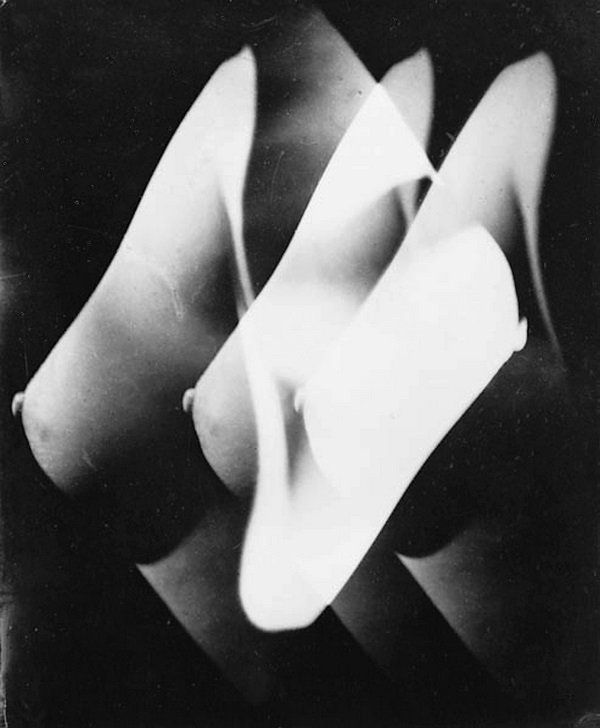
Osamu Shiihara- Breast, 1935-39

Osamu Shiihara- Breast, 1935-39 The National Museum of Modern Art, Tokyo

Osamu Shiihara- Movement   n.d.

Osamu Shiihara- Movement n.d. The National Museum of Modern Art, Tokyo

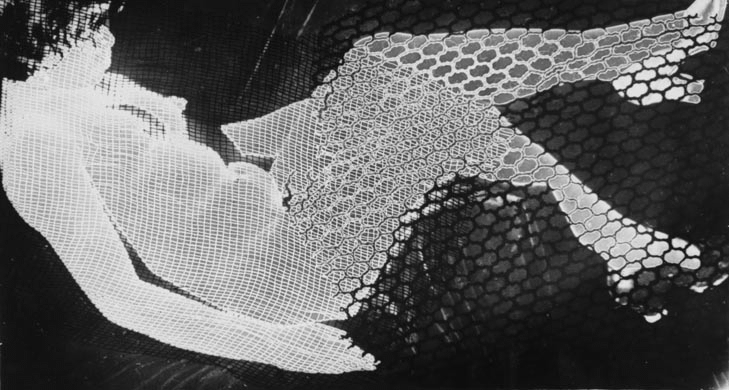
Osamu Shiihara-Title Unknown [Mannequins ]]   n.d.

Osamu Shiihara-Title Unknown [Mannequins ]] n.d.

Osamu Shiihara- Sans titre,, 1930s. 2

Osamu Shiihara- Sans titre,, 1930s The National Museum of Modern Art, Tokyo

Osamu Shiihara- Sans titre,, 1930s.

Osamu Shiihara- Sans titre,, 1930s. The National Museum of Modern Art, Tokyo

Osamu Shiihara- Sans titre,, 1930s.

Osamu Shiihara- Sans titre,, 1930s. The National Museum of Modern Art, Tokyo

Osamu Shiihara- Woman and Horse(Photo-peinture), c.1938

Osamu Shiihara- Woman and Horse(Photo-peinture), c.1938 The National Museum of Modern Art, Tokyo

Osamu Shiihara- Title Unknown ,1930s

Osamu Shiihara- Title Unknown ,1930sThe National Museum of Modern Art, Tokyo

Osamu Shiihara, nu multile exposition ca. 1930sThe National Museum of Modern Art, Tokyo

Osamu Shiihara, sans titre, 1930sThe National Museum of Modern Art, Tokyo

Osamu Shiihara- Sans titre,, 1930s.  4

Osamu Shiihara- Sans titre, 1930s.  The National Museum of Modern Art, Tokyo

Osamu Shiihara- Arabesque ,1937

Osamu Shiihara- Arabesque ,1937 The National Museum of Modern Art, Tokyo

Osamu Shiihara- Title Unknown (Nude) , 1937

Osamu Shiihara- Title Unknown (Nude) , 1937

Osamu Shiihara- Construction 5   n.d.

Osamu Shiihara- Construction 5, n.d. The National Museum of Modern Art, Tokyo

Osamu Shiihara - nude ( solarisation), vers 1930

Osamu Shiihara – nude ( solarisation), 1930s © Estate of Osamu Shiihara, care of Tomatsu Shiihara, Japan

Osamu Shiihara-  Nude Circa 1930-1940 ariant of this print is in the collections of The Art Institute of Chicago The Museum of Modern Art, New-York The Tokyo Museum of Modern Art

Osamu Shiihara- Nude Circa 1930-1940 ariant of this print is in the collections of The Art Institute of Chicago The Museum of Modern Art, New-York The Tokyo Museum of Modern Art

amu Shiihara- Le shampoing, 1930s.

amu Shiihara- Le shampoing, 1930s.

Osamu Shiihara - Three Dimentions, 1938

Osamu Shiihara – Three Dimentions, 1938

Osamu Shiihara – sans titre ( Nu) , 1930s © Estate of Osamu Shiihara, care of Tomatsu Shiihara, Japan

Osamu Shiihara - Nude Study, 1930s

Osamu Shiihara -Etude de nu, 1930s © Estate of Osamu Shiihara, care of Tomatsu Shiihara, Japan

Osamu Shiihara - Sans titre, 1939

Osamu Shiihara – Sans titre, 1939 The National Museum of Modern Art, Tokyo

Osamu Shiihara- Sans titre,, 1930s.

Osamu Shiihara- Sans titre,1930s. The National Museum of Modern Art, Tokyo

Osamu Shiihara,- Sans titre , 1930sThe National Museum of Modern Art, Tokyo

Osamu Shiihara,- Sans titre , 1930sThe National Museum of Modern Art, Tokyo

Osamu Shiihara- Ecstasy (1), fin 1930

Osamu Shiihara- Ecstasy (1), fin 1930

Osamu Shiihara-Light   1938

Osamu Shiihara- Light, 1938 The National Museum of Modern Art, Tokyo

Osamu Shiihara-[Variant of 'Ecstasy'],1 fin 1930

Osamu Shiihara-[Variant of ‘Ecstasy’],1 fin 1930 The National Museum of Modern Art, Tokyo

Osamu Shiihara-[Variant of 'Ecstasy'], fin 1930

Osamu Shiihara-[Variant of ‘Ecstasy’], fin 1930 The National Museum of Modern Art, Tokyo

Title Unknown [variant of 'The Hand'] , 1938

Title Unknown [variant of ‘The Hand’] , 1938 The National Museum of Modern Art, Tokyo

Osamu Shiihara- Composition, 1938

Osamu Shiihara- Osamu Shiihara- Composition, 1938 The National Museum of Modern Art, Tokyo

Osamu Shiihara- untitled, 1930s.

Osamu Shiihara- untitled, 1930s.

Osamu Shiihara-Title Unknown [Mannequins by the Roadside]]   n.d.

Osamu Shiihara-Title Unknown [Mannequins by the Roadside]] n.d. The National Museum of Modern Art, Tokyo

Osamu Shiihara- Esperance (hope), 1938

Osamu Shiihara- Esperance (hope), 1938 The National Museum of Modern Art, Tokyo

Osamu Shiihara- self- portrait, nd

Osamu Shiihara- self- portrait, nd The National Museum of Modern Art, Tokyo

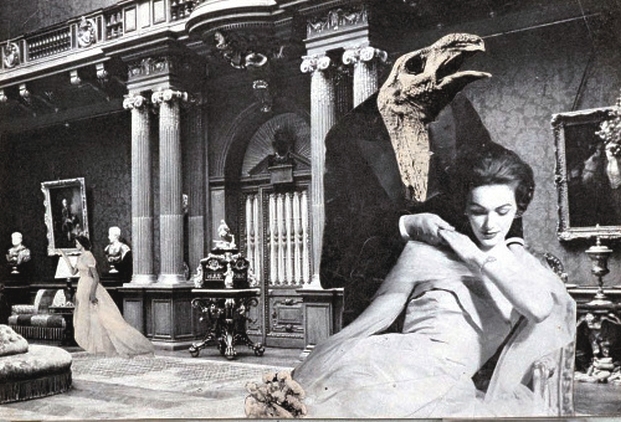
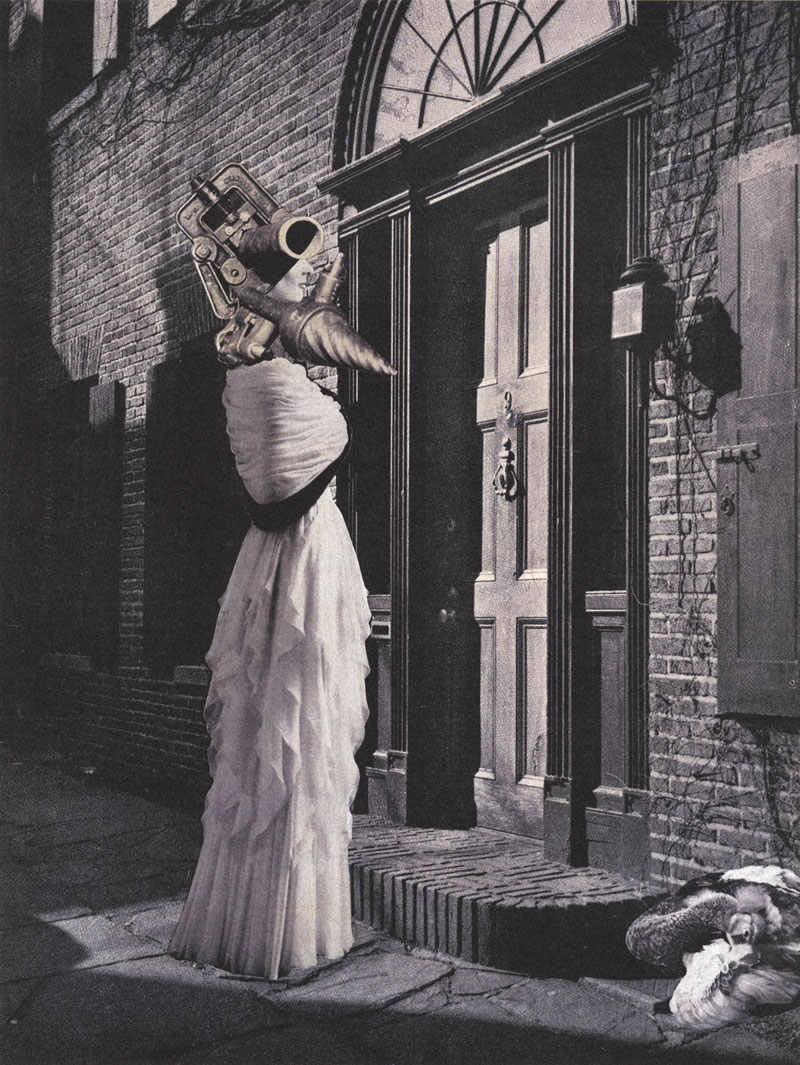
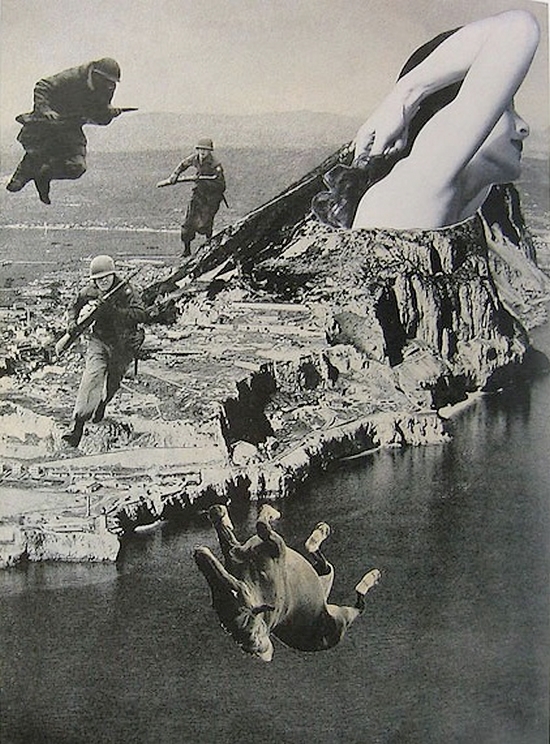
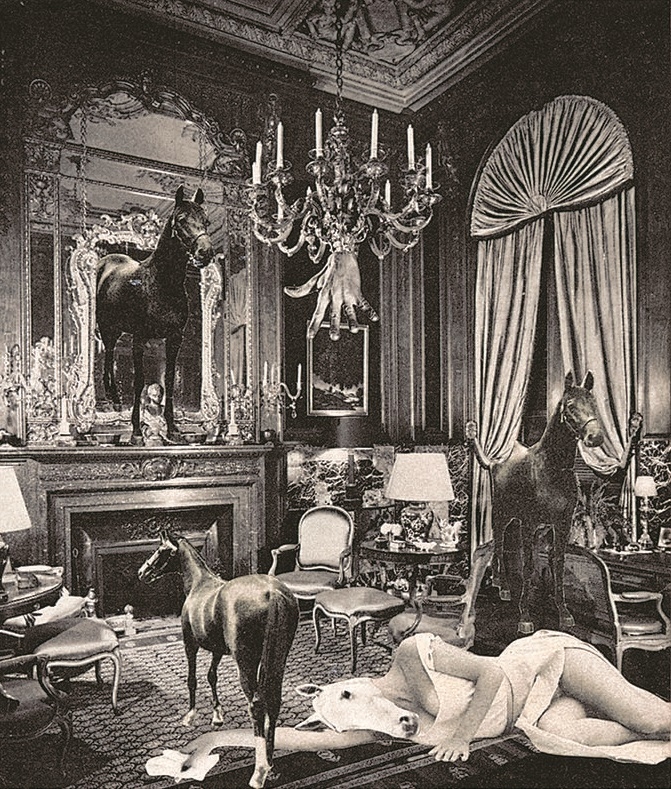
Toshiko Okanoue ou Le surréalisme Japonais

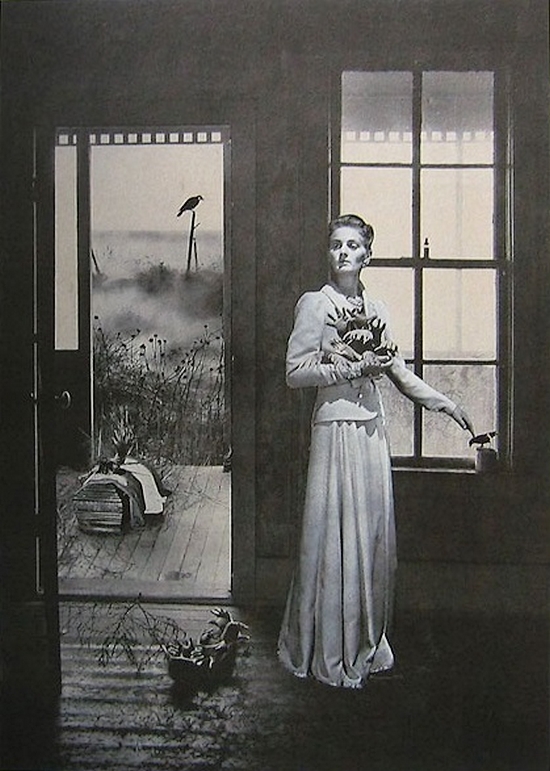
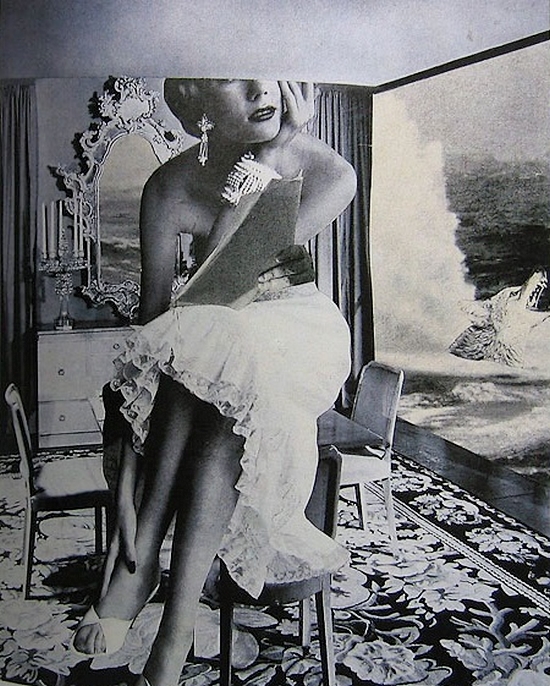
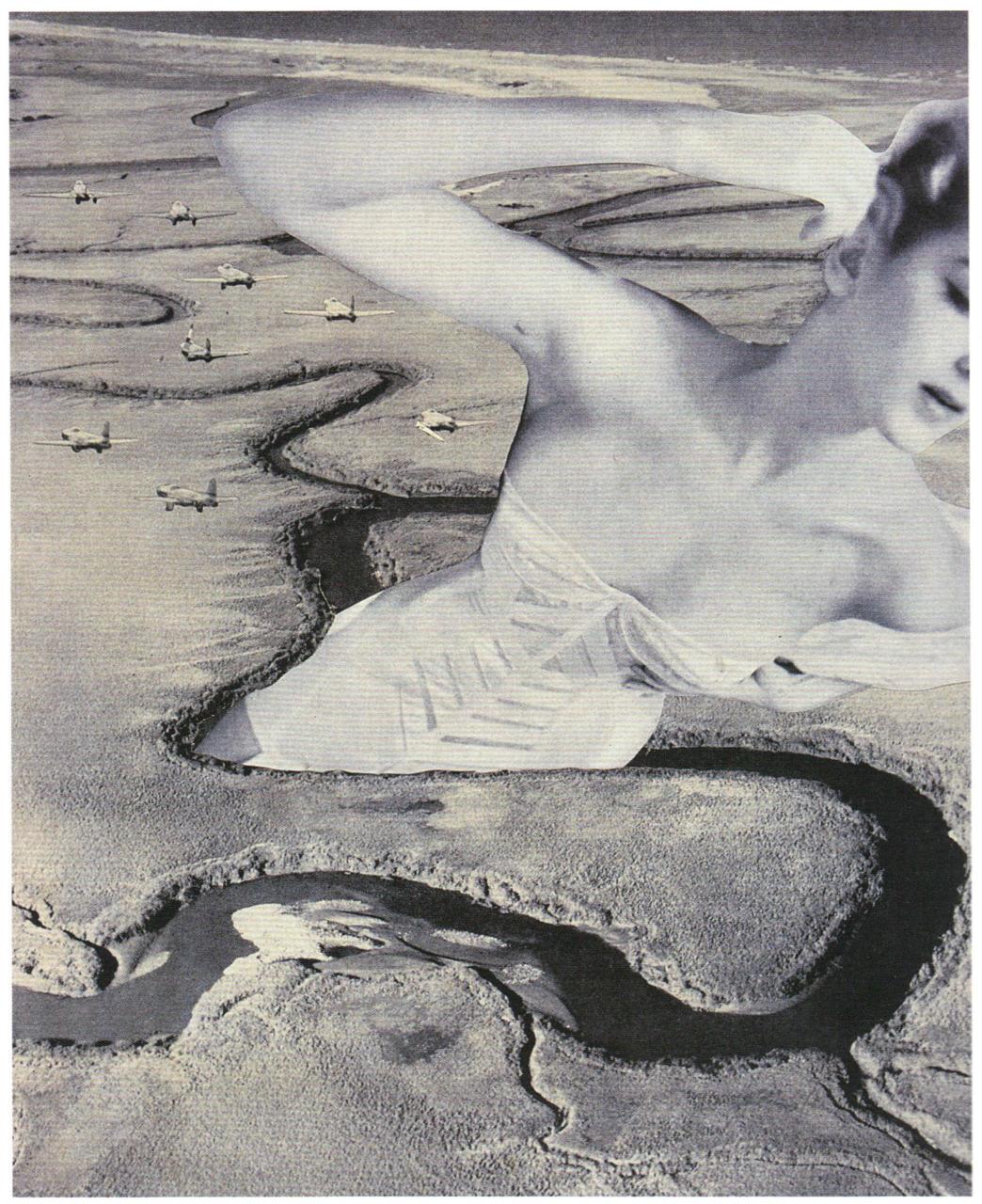
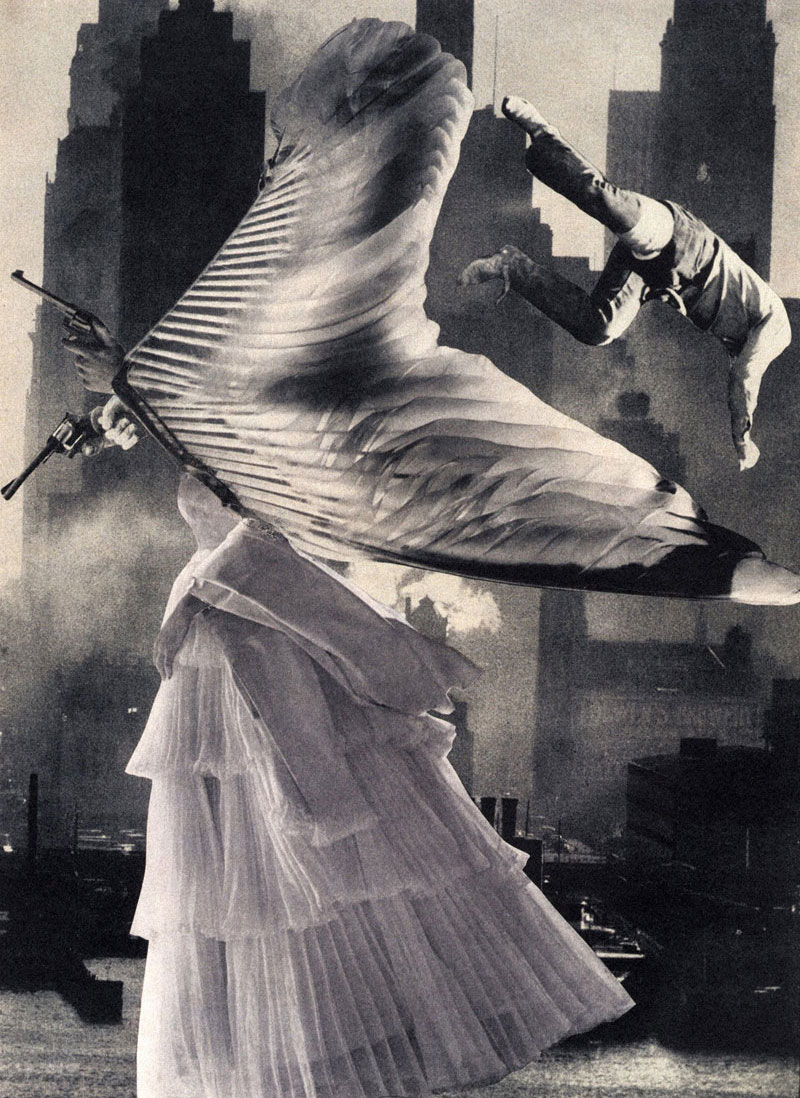
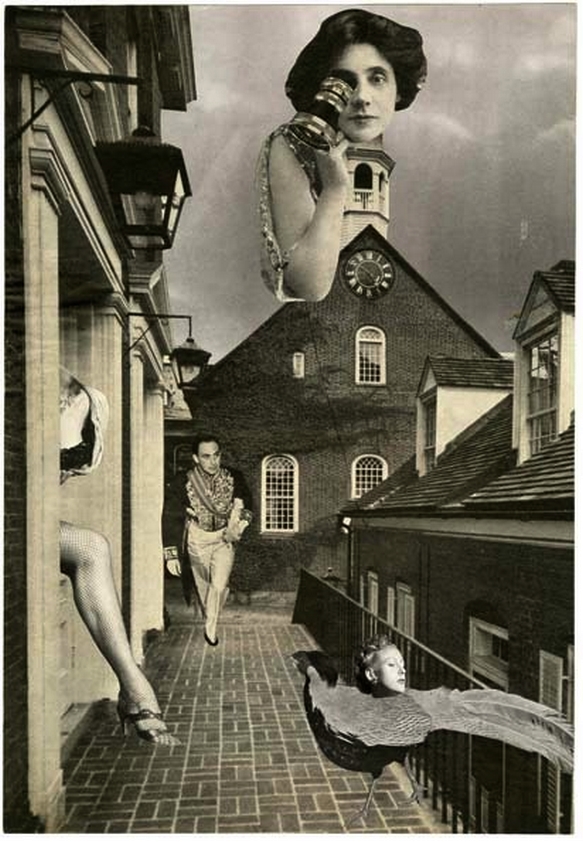
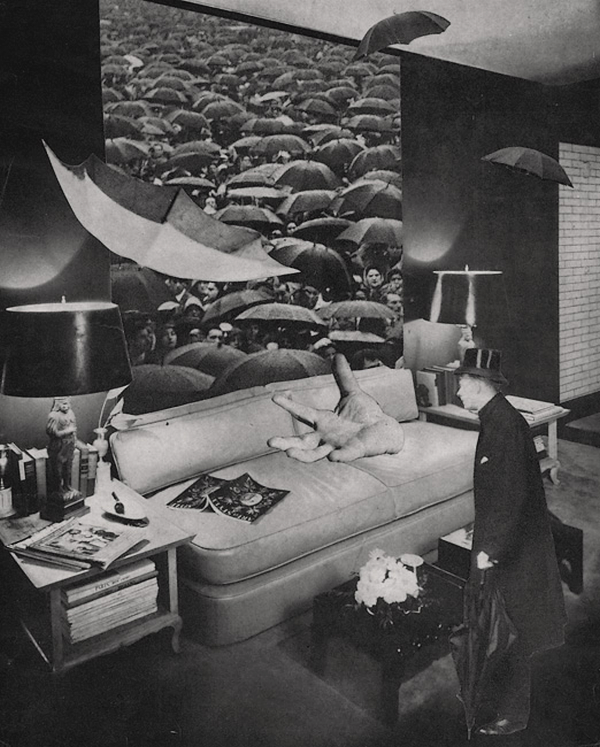
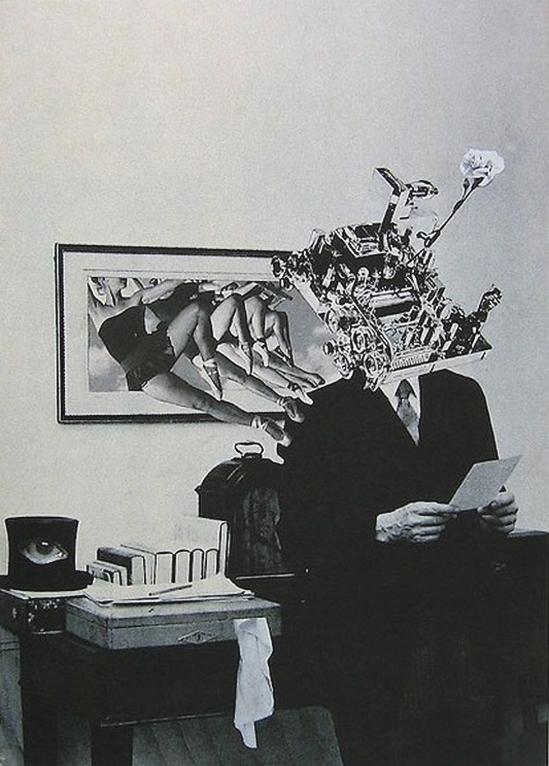
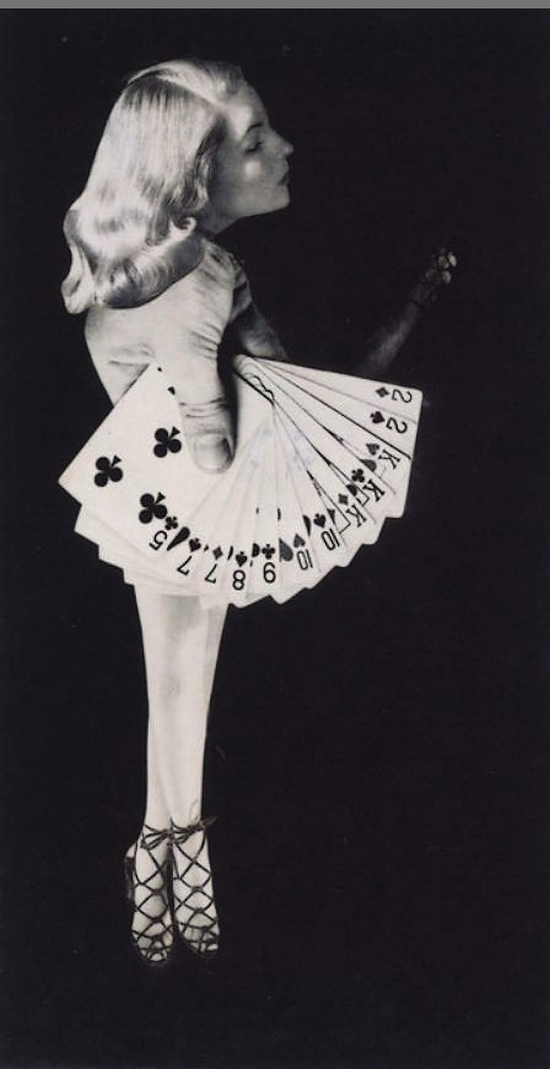
Toshiko Okanoue ,岡上淑子  ( Kochi, en 1928) , est une Japonaise qui  a commencé à faire des photo-collages, alors qu’elle  était étudiante à l’ecole de mode Ogawa mode Insititute en 1949  où elle obtient un diplôme.  Elle intrègre en suite ledépartement de design de Bunka Gakuin College dont elle sera diplômé en 1952
Elle a commencé dès 1949 à explorer le monde de l’image à travers la photographie pour concevoir et mettre en œuvre ses propres idées. La mode la mène inévitablement  aux Magazines, elle y  puise son inspiration et sa matière pour ses découpages collages (Vogue et Life…)

En 1953 ,  après sa rencontre avec le critique d’art Shuzo Takiguchi, elle fût  invitée à exposer ses collages pour la première fois  à Takemiya Gallery à Tokyo ( puis en 1956) . Certaines de ses œuvres ont également été sélectionnés pour une exposition au Musée National d’Art Moderne de Tokyo en 1953. Puis il lui faudra attendre 2000 pour à nouveau être exposée et ce de manière collective à Tokyo.

Son travail est   présentée à l’époque par Shuzo Takiguchi comme une version contemporaine d’Alice au pays des merveilles. En effet il n’est pas peu dire ô combien ses collages représentent un rêve nébuleux,  surréaliste par excellence.

Ses œuvres sont aujourd’hui exposées  au National Museum of Modern Art,à  Tokyo; au Tokyo Metropolitan Museum of Photography;  au Tochigi Prefectural Museum of Fine Arts; au Museum of Art, Kochi,  au Museum of Fine Arts, Houston; au  Museum of Modern Arts, New York

Deux livres sont sortis chez édition Nazraeli « Drop of Dreams », en 2002, et « The Miracle of Silence » (12 images sélectionnées, représentent le meilleur de la production de Okanoue entre les années 1951 et 1956), suite au grand succès d’une exposition qui eu lieu suite à cette première publication au Musée des Beaux-Arts de Houston  On retrouve quelques planches identiques dans les deux livres.

Nazraeli Edition

Galerie

Foam Magazine

Toshiko Okanoue - The Miracle of the silence, 1952 From Drop of dreams (Works 1950-1956), Nazraeli Press 2002 (2)

Toshiko Okanoue – The Miracle of the silence, 1952 From Drop of dreams (Works 1950-1956), Nazraeli Press

Toshiko Okanoue -Dreams visite at the night, 1951 from Drop of dreams

Toshiko Okanoue -Dreams visite at the night, 1951 from Drop of dreams

Toshiko Okanoue- Falling Toshiko, 1956 Drop of Dreams Nazraeli Press 2002

Toshiko Okanoue- Falling Toshiko, 1956 Drop of Dreams Nazraeli Press 2002

Okanoue Toshiko -Supraspinatus Yoshiko & Twilight , 1956, Drop of Dreams Nazraeli Press 2002

Okanoue Toshiko -Supraspinatus Yoshiko & Twilight , 1956, Drop of Dreams Nazraeli Press 2002

Toshiko Okanoue- Eve et Maria, 1955

Toshiko Okanoue- Eve et Maria, 1955

Okanoue Toshiko - Arrested People, 1954, Drop of Dreams Nazraeli Press 2002

Okanoue Toshiko – Arrested People, 1954, Drop of Dreams Nazraeli Press 2002

Toshiko Okanoue- Harbor Flowers, 1952

Toshiko Okanoue- Harbor Flowers, 1952

Toshiko Okanoue- Incubation,1955

Toshiko Okanoue- Incubation,1955

Okanoue Toshiko - , 1954, Drop of Dreams Nazraeli Press 2002

Okanoue Toshiko – , 1954, Drop of Dreams Nazraeli Press 2002

Okanoue Toshiko - Drop of Dreams , 1954, Nazraeli Press 2002

Okanoue Toshiko – Drop of Dreams , 1954, Nazraeli Press 2002

Okanoue Toshiko-, Drop of Dreams , 1956? ,Nazraeli Press 2002 (5)

Okanoue Toshiko-, Drop of Dreams , 1956, ,Nazraeli Press 2002 (5)

Okanoue Toshiko - Respite, 1952. Drop of Dreams Nazraeli Press 2002

Okanoue Toshiko – Respite, 1952. Drop of Dreams Nazraeli Press 2002

Okanoue Toshioko-A Trait Angel , 1954, from Drop of Dreams (2)

Okanoue Toshioko-A Trait Angel , 1954, from Drop of Dreams

Toshiko Okanoue - From Drop of dreams (Works 1950-1956), Nazraeli Press 2002

Toshiko Okanoue – From Drop of dreams (Works 1950-1956), Nazraeli Press 2002


Okanoue Toshioko- 1954

Okanoue Toshioko- 1954

Toshiko Okanoue - Noblewoman, 1954, from The Miracle of Silence, Nazraeli Press, 2007

Toshiko Okanoue – Noblewoman, 1954, from The Miracle of Silence, Nazraeli Press, 2007

Okanoue Toshiko- 1952 , Drop of Dreams Nazraeli Press 2002 (4) - Copie

Okanoue Toshiko- 1952 , Drop of Dreams Nazraeli Press 2002

Toshiko Okanoue - Fantasy, 1953, from Drop of Dreams

Toshiko Okanoue – Fantasy, 1953, from Drop of Dreams

Toshiko Okanoue -Noon Song, 1954 from Drop of Dreams Works 1950-1956), Nazraeli Press 2002

Toshiko Okanoue -Noon Song, 1954 from Drop of Dreams Works 1950-1956), Nazraeli Press 2002

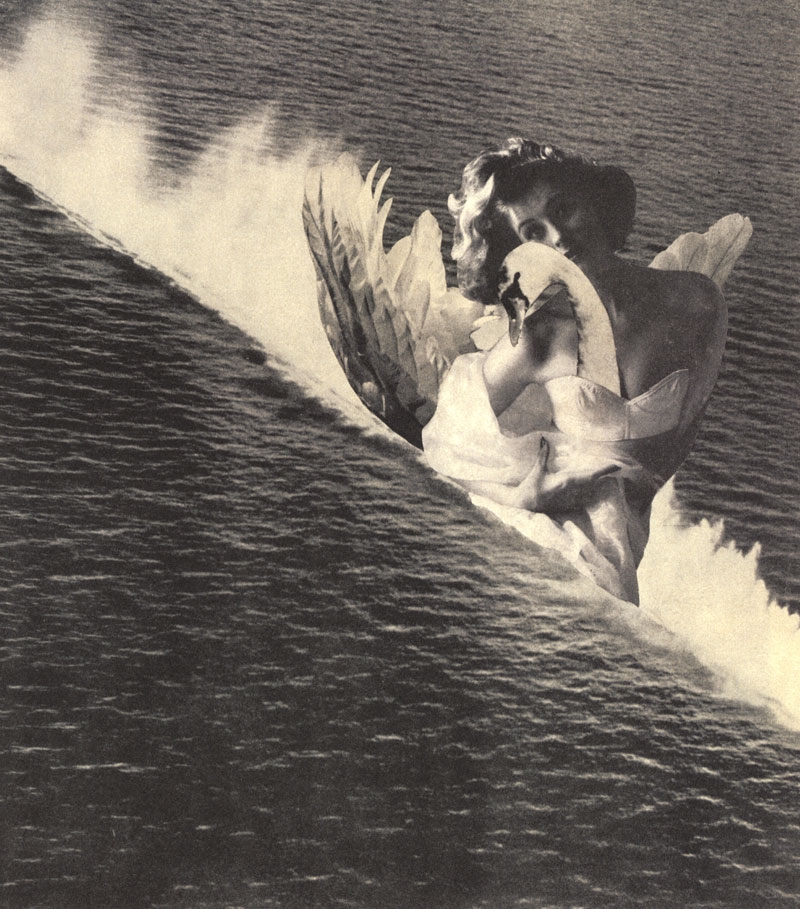
Toshiko Okanoue -Leda in the Sea, 1952 from The Miracle of Silence, Nazraeli Press, 2007

Toshiko Okanoue -Leda in the Sea, 1952 from The Miracle of Silence, Nazraeli Press, 2007

Toshiko Okanoue - Ophelie, 1955,from The Miracle of Silence, Nazraeli Press, 2007

Toshiko Okanoue – Ophelie, 1955,from The Miracle of Silence, Nazraeli Press, 2007

Toshiko Okanoue- Drifting, 1950

Toshiko Okanoue- Drifting, 1950

Toshiko Okanoue-Premonition, 1954, from The Miracle of Silence, Nazraeli Press, 2007

Toshiko Okanoue-Premonition, 1954, from The Miracle of Silence, Nazraeli Press, 2007

Okanoue Toshiko- 2 planches , Drop of Dreams Nazraeli Press 2002 (4)

Okanoue Toshiko- 2 planches , Drop of Dreams Nazraeli Press 2002

Toshiko Okanoue -Nature, 1952 from The Miracle of Silence, Nazraeli Press, 2007

Toshiko Okanoue -Nature, 1952 from The Miracle of Silence, Nazraeli Press, 2007

Toshiko Okanoue - un lointain voyage, Far Journey' 1953

Toshiko Okanoue – un lointain voyage, (Far Journey) 1953 from The Miracle of Silence,  Nazraeli Press, 2007

Toshiko Okanoue - The Night of The Dance Party, 1954, from The Miracle of Silence, Nazraeli Press, 2007

Toshiko Okanoue – The Night of The Dance Party, 1954, from The Miracle of Silence, Nazraeli Press, 2007

Toshiko Okanoue - The Nest of Angels, 1952

Toshiko Okanoue – The Nest of Angels, 1952

Toshiko Okanoue -Kill, 1955, from Drop of Dreams

Toshiko Okanoue -Kill, 1955, from Drop of Dreams

Toshiko Okanoue -Autumn, 1954, from Drop of Dreams

Toshiko Okanoue The Birth 1956

Toshiko Okanoue The Birth 1956

Toshiko Okanoue - Wind-Pollinated Flower, 1955 drop of dream

Toshiko Okanoue – Wind-Pollinated Flower, 1955 drop of dream

Toshiko Okanoue - Love,1953 from drop of dream

Toshiko Okanoue – Love,1953 from drop of dream

Toshiko Okanoue- Streetlamp, 1951 from Drop of Dreams

Toshiko Okanoue- Streetlamp, 1951 from Drop of Dreams

Toshiko Okanoue -Rainy Day, 1951, from Drop of Dreams

Toshiko Okanoue -Rainy Day, 1951, from Drop of Dreams

Okanoue Toshiko- planche , Drop of Dreams Nazraeli Press 2002 (3) - Copie

Okanoue Toshiko- 1951, Drop of Dreams Nazraeli Press 2002

Okanoue Toshiko- Star, 1951 Works 1950-1956),from Drop of Dreams Nazraeli Press 2002

Okanoue Toshiko- Star, 1951 Works 1950-1956),from Drop of Dreams Nazraeli Press 2002

Toshiko Okanoue -Mask, 1952, from Drop of Dreams Works 1950-1956), Nazraeli Press 2002

Toshiko Okanoue -Mask, 1952, from Drop of Dreams Works 1950-1956), Nazraeli Press 2002

Toshiko Okanoue -Dance, 1951, from Drop of Dreams

Toshiko Okanoue -Dance, 1951, from Drop of Dreams

Toshiko Okanoue -Float, 1951, from Drop of Dreams

Toshiko Okanoue -Float, 1951, from Drop of Dreams

Toshiko Okanoue -Float, 1951, from Drop of Dreams

Pablo Picasso- Femme en costume de bain, 1931-1932

Pablo Picasso- Femme en costume de bain, 1931-1932

Pablo Picasso- Femme en costume de bain, 1931-1932