Francesca Woodman

Biography in english at the and of the article

Francesca Stern Woodman, photographe américaine née à Denver en 1958, elle plongea par la fenêtre de son appartement, à Manhattan, le 19 janvier 1981.

Elle suit, à Providence, les cours de Rhode Island School of Design, une école des Beaux Arts.Elle lit les auteurs intéressés par la condition de la femme (Virginia Wolf, Colette…) ainsi que les écrits d’André Breton sur le surréalisme. Elle décroche une bourse d’un an à Rome (77-78).Elle connait l’Italie pour y avoir été en voyage avec ses parents (George Woodman, céramiste et photographe, Betty Woodman, céramiste).

Elle termine ses études et s’installe à New York, en 1979, où Francesca Woodman s’installe à East Village, dans un atelier sur la 12e rue. Et se lance dans une série en pleine nature, où,elle s’essaie, encore, à contraindre son corps à devenir transparent, ou autre, pourquoi pas un arbre.

Son style,l’autoportrait y domine, le format carré du 6×6 donne une précision d’image qui lui permet d’exploiter l’esthétique des flous optiques et bougés, dans lesquels planent l’influence du surréalisme.

Disparue prématurément à l’âge de 23 ans, Son travail s’est échelonné sur une courte période de huit ans, et pourtant elle laisse derrière elle un peu plus de huit cents clichés.

Si l’ensemble de son travail tourne autour de l’autoportrait, elle dénie très souvent l’appareil, cachant son visage sous ses cheveux, des objets, des parties de son corps.

Une lecture psychologique de son travail est comme une prémonition de son suicide.

La complexité des intentions qui lui ont été attribuées s’adapte mal à une personne aussi jeune.
“Mes photographies sont tributaires d’un état affectif.”

Francesca ne cherche pas la complaisance mais travaille la représentation du corps féminin, en bousculant l’ordre et les conventions, pour y opposer des images qui font appel aux sensations et à l’imaginaire.

Elle flirte aussi avec le surréalisme pour aménager ses petits mélodrames narcissiques. Elle est d’une intense beauté, mystérieuse, légèrement vénéneuse.

Les cadrages fractionnent un corps-objet torturé, tourmenté.

Autre point à mettre en avant : le contraste permanent entre un arrière-plan fixe et un modèle humain toujours en mouvement, caché, comme insaisissable…Elle est dérangeante et fascinante, elle passe telle une apparition spectrale fragile.
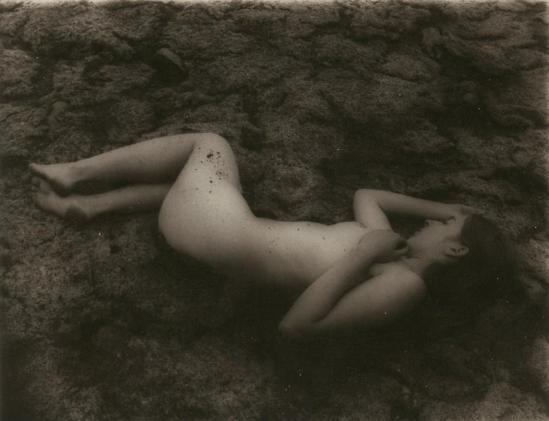
Francesca Woodman- Untitled ,Boulder, Colorado, 1972-1975

Aux questions pourquoi se déshabiller pour poser, pourquoi être son propre modèle ?Elle répondait : “C’est par commodité. Ainsi je suis toujours à portée de main.”

C’est si réussi qu’effectivement on la cherche dans l’image, comme ce portrait dans une baignoire où on n’aperçoit que sa chevelure.

Il y a peu de photographies en extérieur, Woodman préférant affronter les fantômes dans leurs cachettes, entre les murs, sous les portes.

Son univers étrange comme la série de photos où elle disparaît dans les murs dissimulée dans des feuilles de papier peint.
Sur une image elle s’est entourée les jambes d’un ruban de plastique transparent qui fait ressortir la chair là où le ruban ne passe pas, elle a aussi posé un gant sur son sexe, surréaliste…

Nous avons à faire à une jeune fille d’une maturité surprenante pour son âge, qui se met à nu au sens propre du terme.
Elle compose ses images en réalisant au préalable des petits croquis.

Elle se met presque toujours en scène dans ses photos.
On a le sentiment que Francesca Woodman, s’est engagée dans une démarche narcissique de découverte de son corps, qu’elle visite à chaque prise de vue. Ce travail sur soi, ce besoin de se mettre en scène tourne à l’obsession. Ses photos sont intemporelles car le décor ne donne pas d’indice sur l’époque de la prise de vue. Dans les années 70, les codes de la photographies imposaient un certain cadrage, une netteté irréprochable, les photographes faisaient du paysage, du reportage social, de la mode ou du nu, le regard de Francesca Woodman ne rentre dans aucune catégorie.

Peu inconnue à la fin des années 70, elle est considérée comme une artiste majeure de l’art américain des trente dernières années.

Sa notoriété n’est arrivée que post mortem et à son insu.

Francesca Woodman- From Space, 1975-1976

Francesca Woodman- From Space, 1975-1976


Francesca Woodman- Space 2, Providence, Rhode Island, 1975-1978
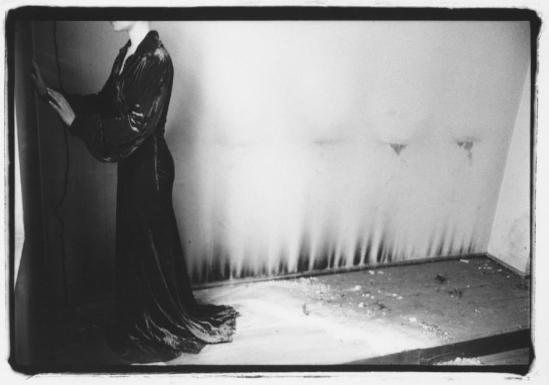
Francesca Woodman- Space 2, Providence, Rhode Island, 1975-1978

Francesca Woodman Untitled, New York (NF418)), 1979-1980 courtesy of Marian Goodman Gallery
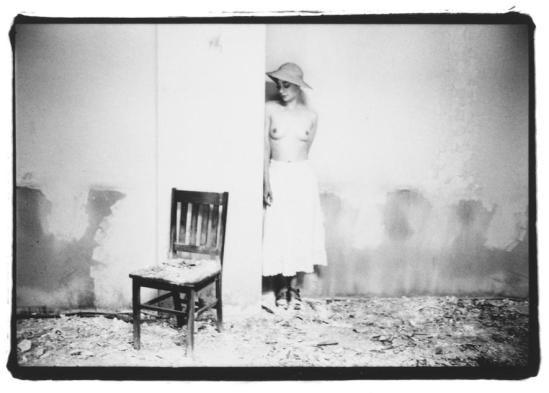
Francesca Woodman Untitled, New York (NF415), 1979-1980 courtesy of Marian Goodman Gallery
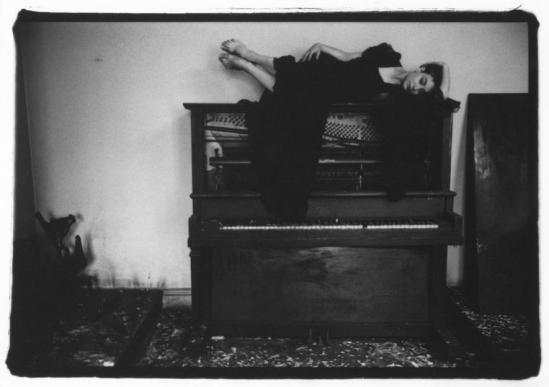
Francesca Woodman Untitled, New York (NF.1161.1), 1979-1980 courtesy of Marian Goodman Gallery
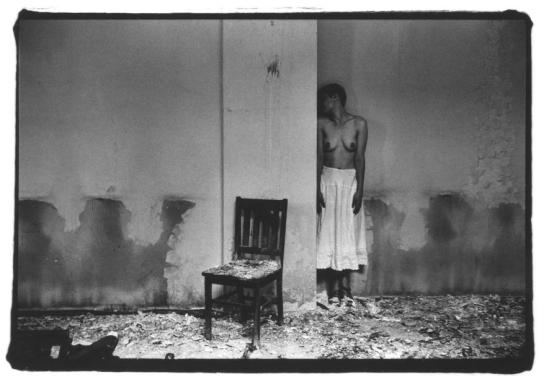
Francesca Woodman Untitled, New York (NF.416), 1979-1980 courtesy of Marian Goodman Gallery
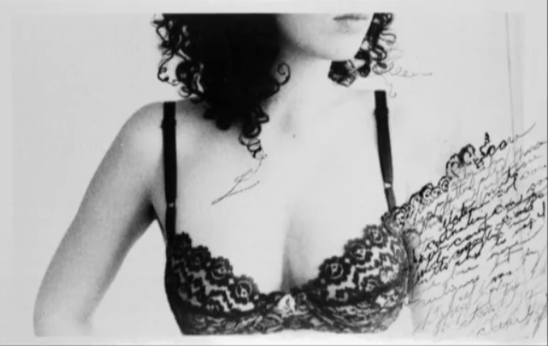
Francesca Woodman – detail A fashion picture Cyanotype Year of Work,1980( art net)
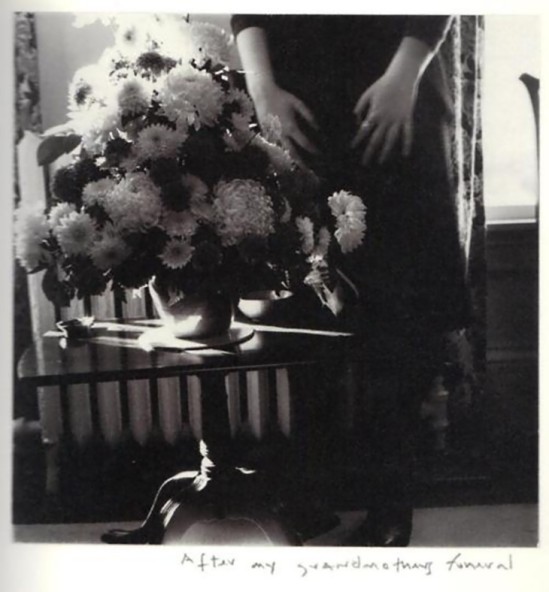
Francesca Woodman – After my grandmother_s funeral, Concord, New Hampshire, 1977
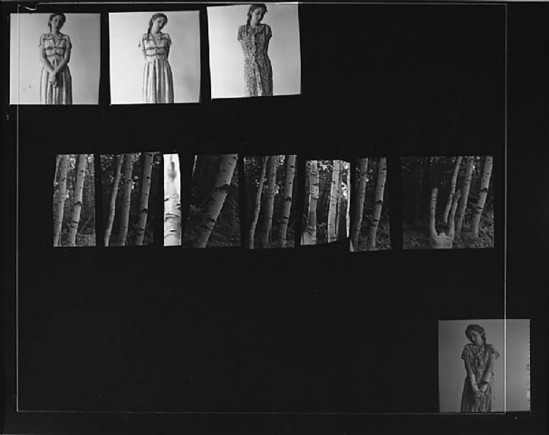
Francesca-Woodman- Untitled, ,1980(GalerieSamsøn)

Francesca Woodman, Untitled, 1979, Courtesy George and Betty Woodman © George and Betty Woodman
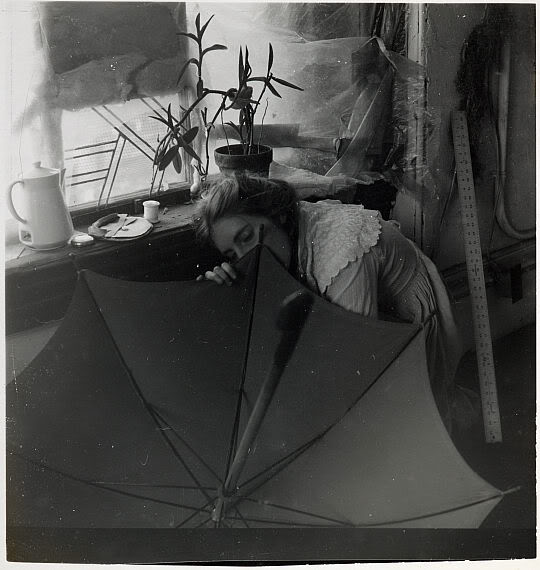
Untitled Francesca Woodman Crouching Behind Umbrella

Francesca Woodman -From ‘A Woman, A Mirror – A Woman is a Mirror for a Man’, 1975-1978
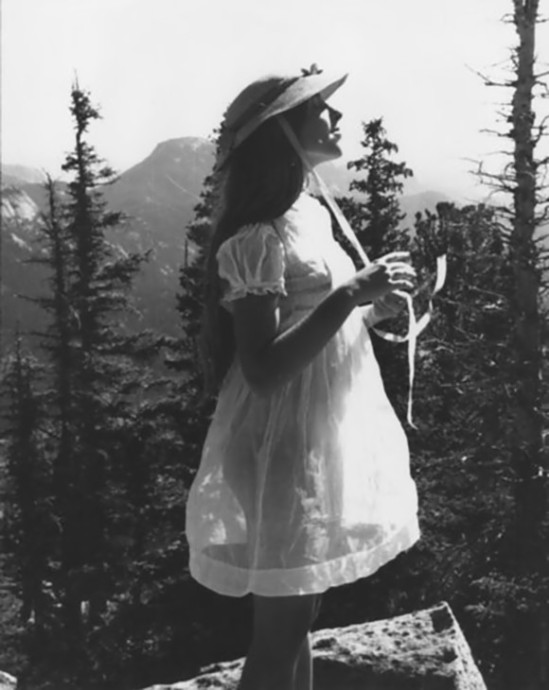
Francesca Woodman -Untitled (Francesca in High School, with Bonnet), 1972-1975 ( Galerie Robert Klein )
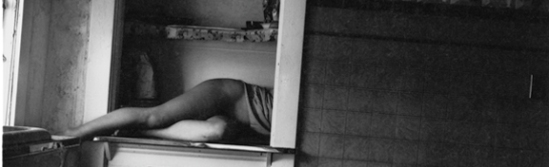
Francesca Woodman
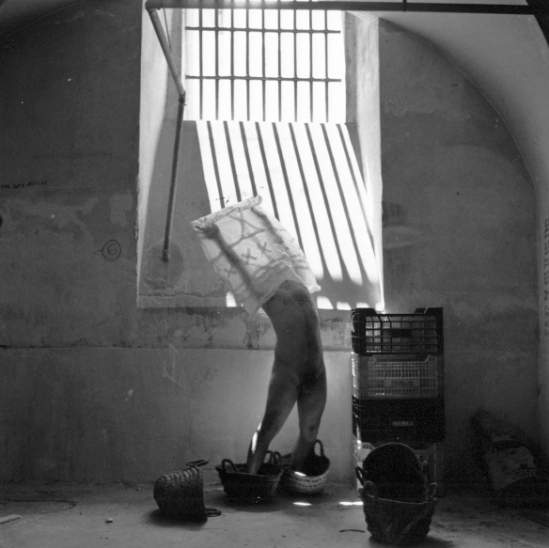
Francesca Woodman
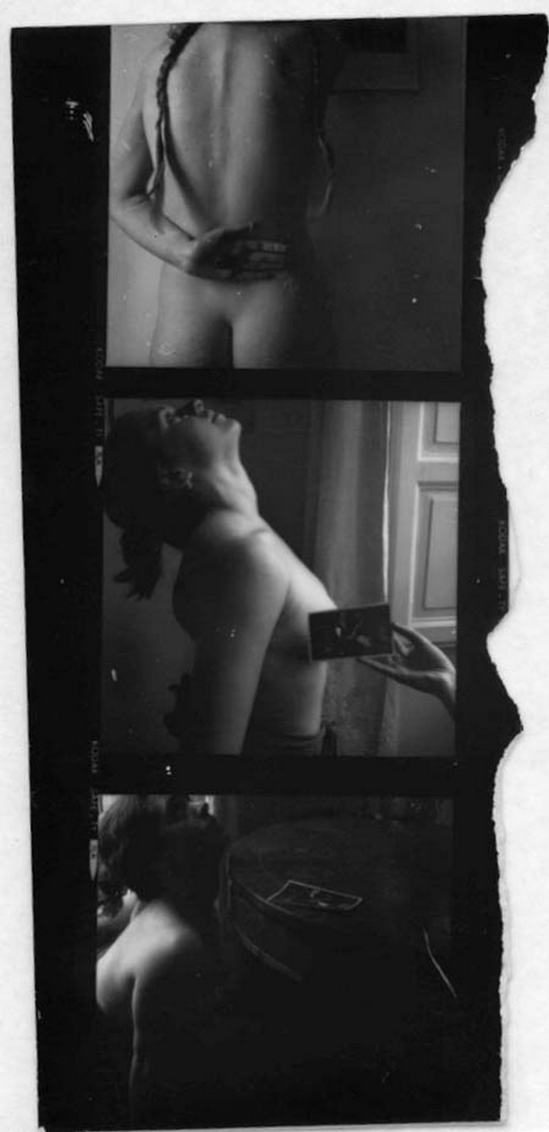
Francesca Woodman.-Donna con cartolina. Rome, 1977-78
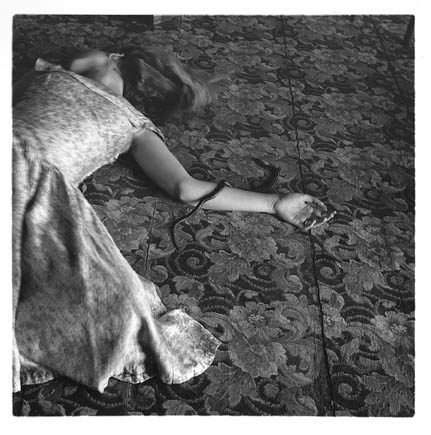
Francesca Woodman, Untitled, Providence, Rhode Island, 1975–78; Courtesy George and Betty Woodman
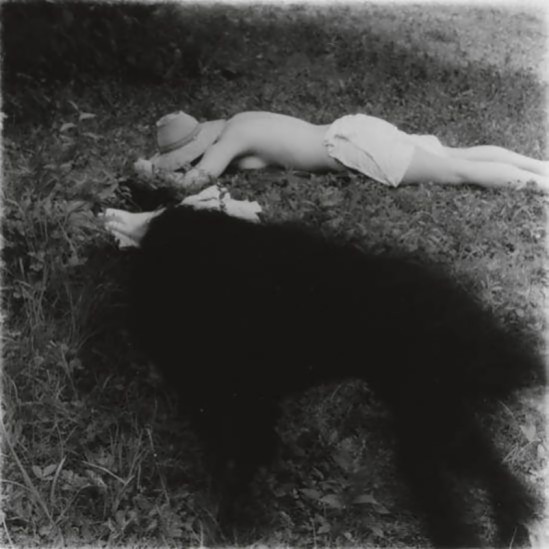
Francesca Woodman – Untitled (square) 1980

Francesca Woodman- Untitled, selfportrait RHode Island, 1975-76
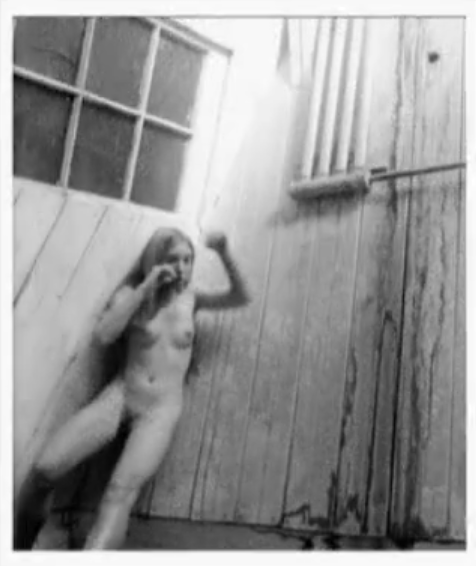
Francesca Woodman
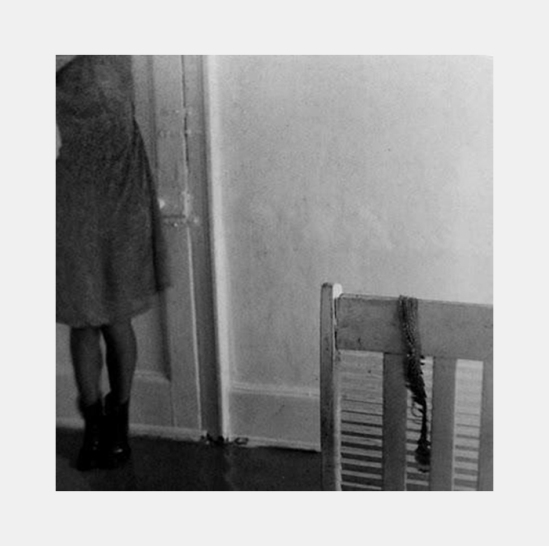
Francesca Woodman
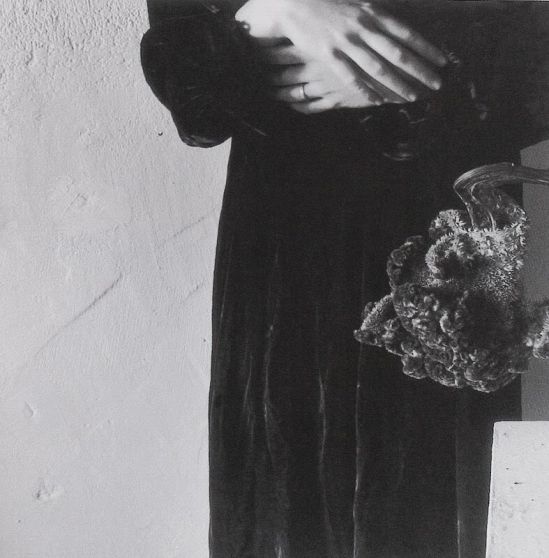
Francesca Woodman
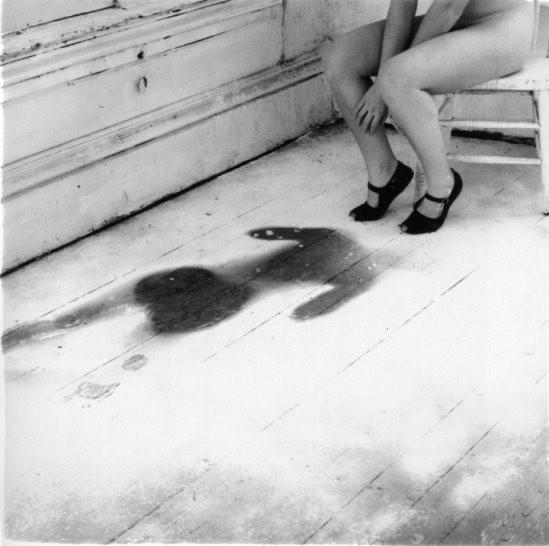
Francesca Woodman
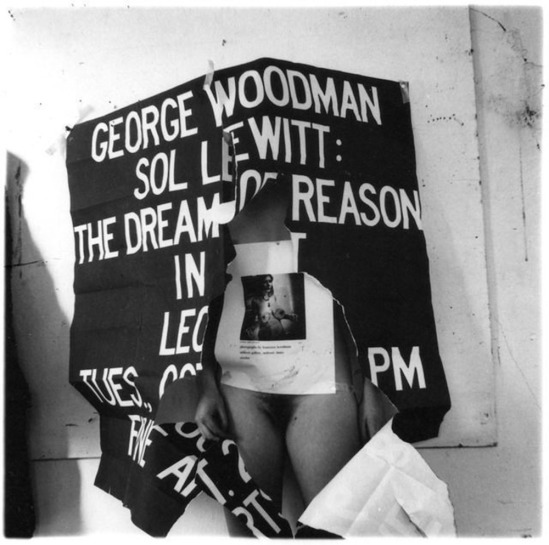
Francesca Woodman – Untitled (George Woodman, Sol Lewitt, Francesca Woodman), ca. 1976
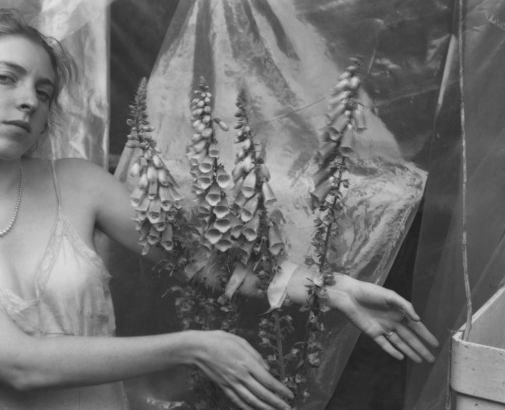
Francesca Woodman
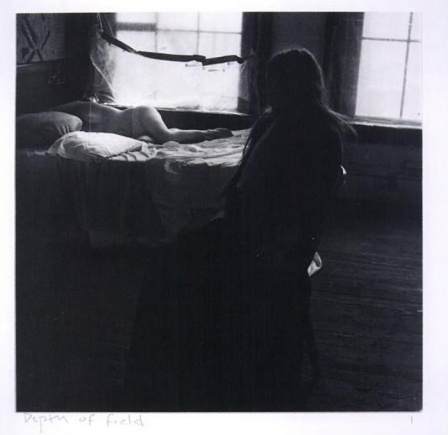
Francesca Woodman
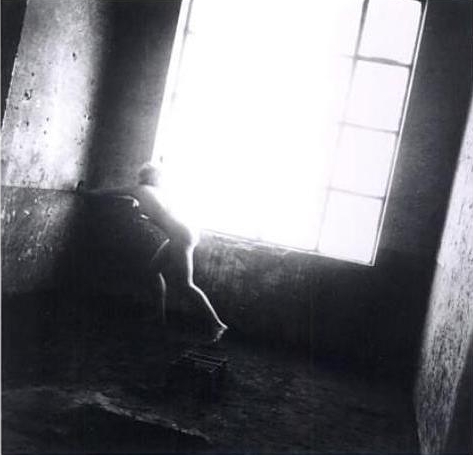
Francesca Woodman
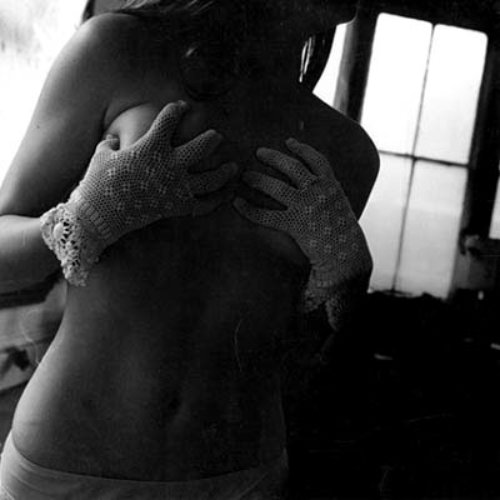
Francesca Woodman
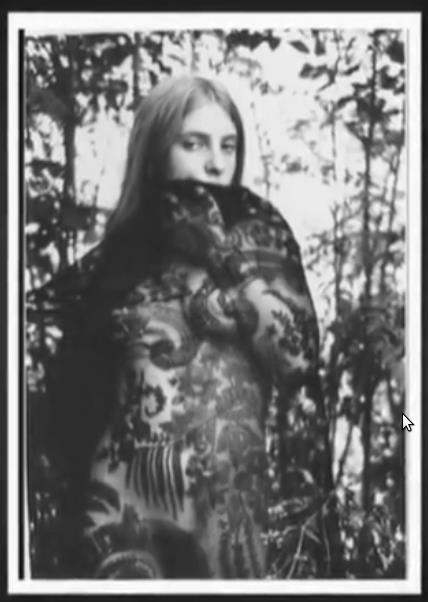
Francesca Woodman
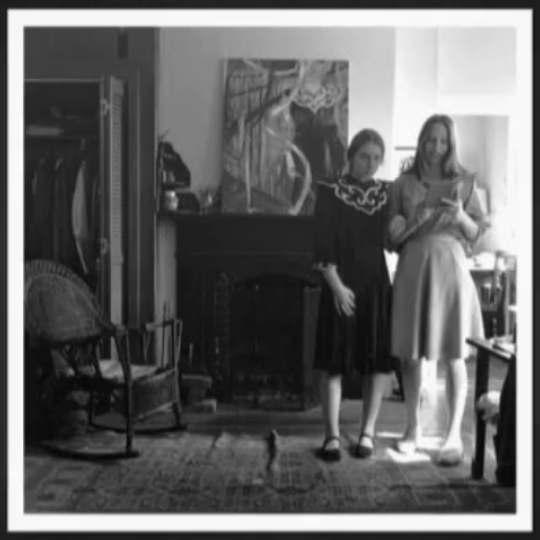
Francesca Woodman
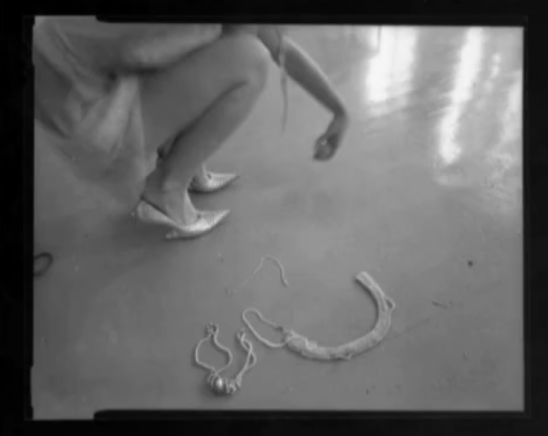
Francesca Woodman
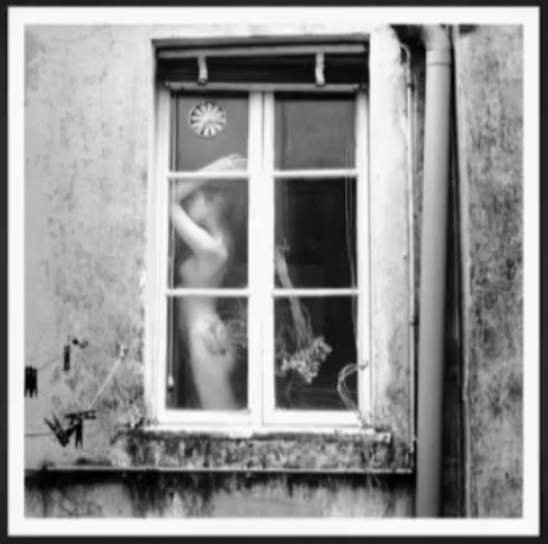
Francesca Woodman
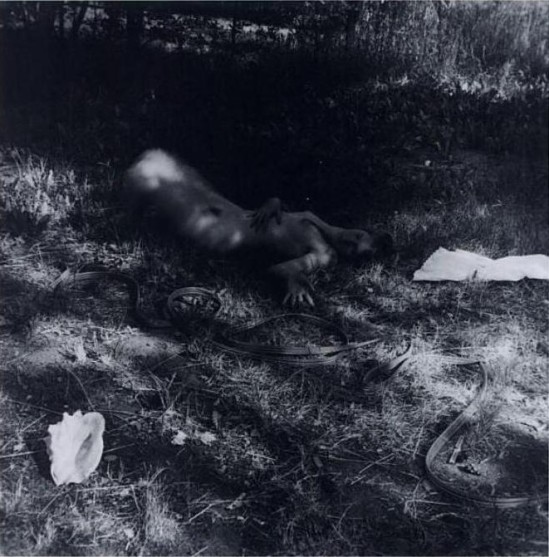
Francesca Woodman
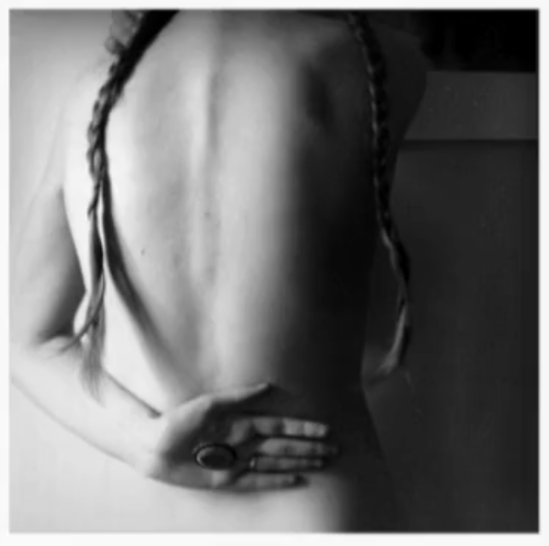
Francesca Woodman
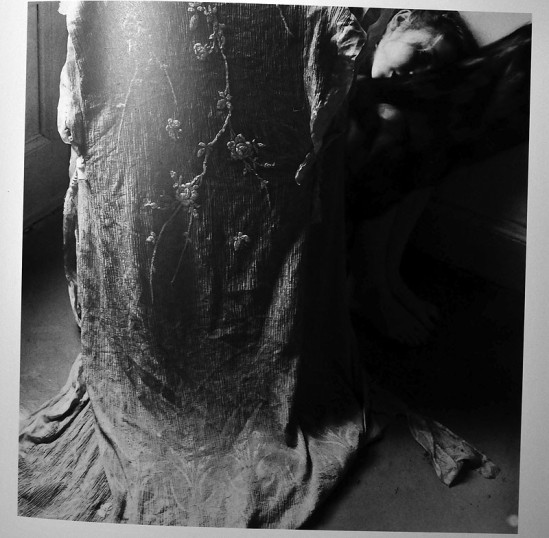
Francesca Woodman
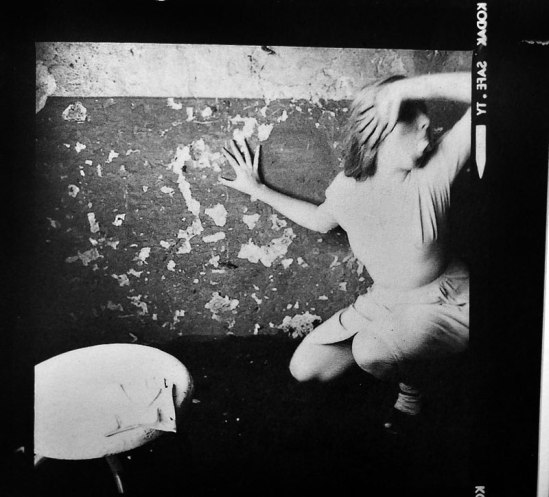
Francesca Woodman
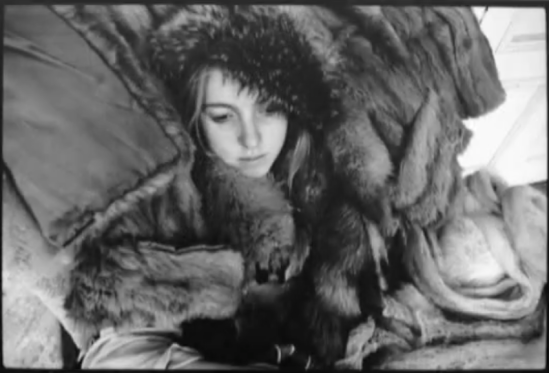
Francesca Woodman
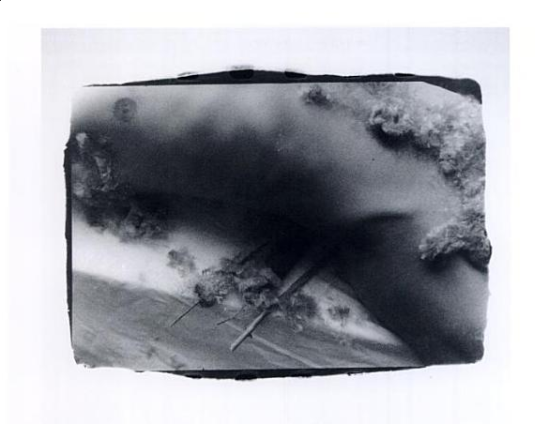
Francesca Woodman
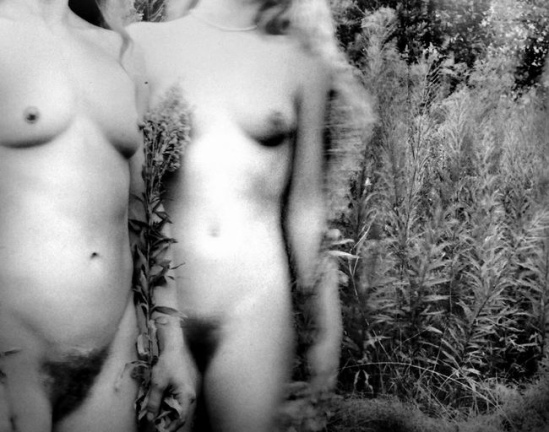
Francesca Woodman
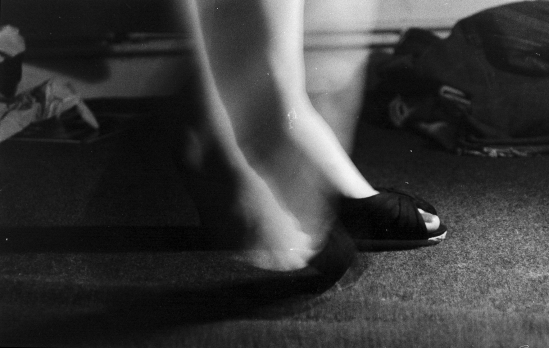
Francesca Woodman
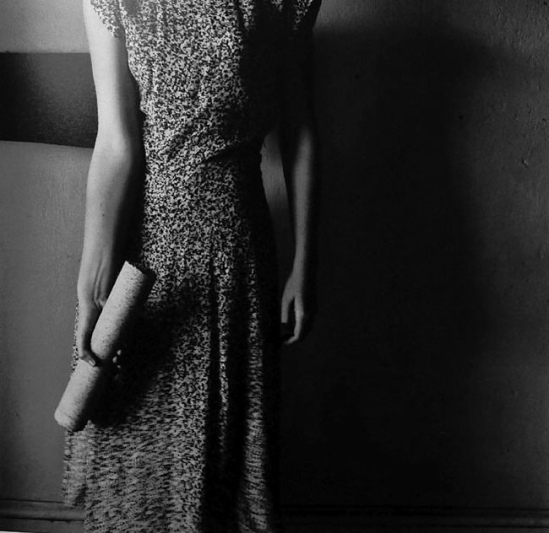
Francesca Woodman
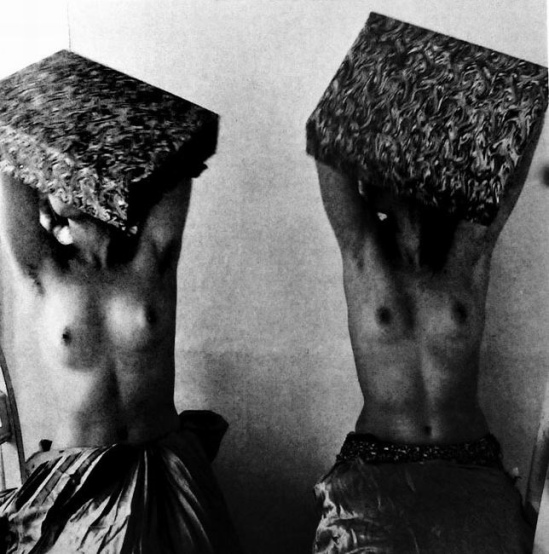
Francesca Woodman
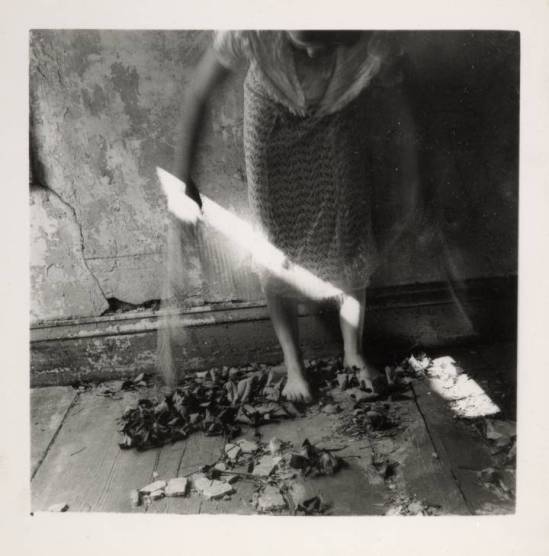
Francesca Woodman
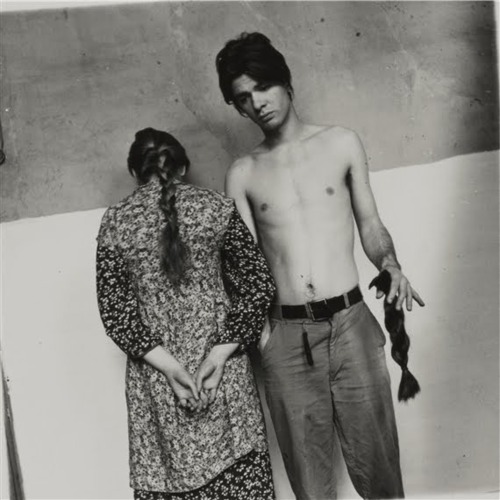
Francesca Woodman
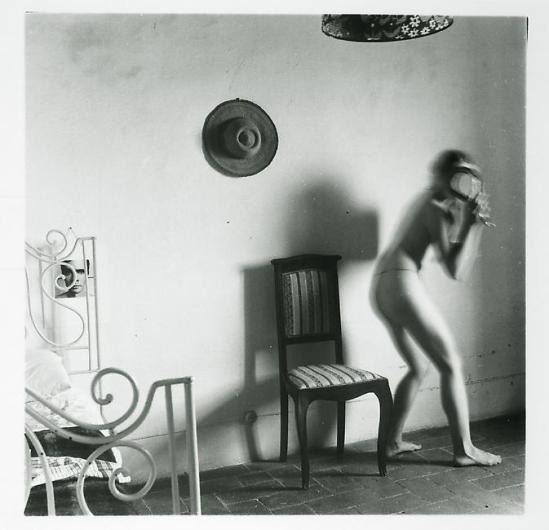
Francesca Woodman- Antella, Italy, 1977-1978

Francesca Woodman- Antella, Italy, 1977-1978


Francesca Woodman was an American photographer best known for her black and white pictures featuring herself and female models. Many of her photographs show young women who are nude, who are blurred (due to movement and long exposure times), who are merging with their surroundings, or whose faces are obscured. Her work continues to be the subject of much attention, years after she committed suicide at the age of 22.

Francesca Woodman was born April 3, 1958, in Denver, Colorado, to well-known artists George Woodman and Betty Woodman. Her older brother Charles later became an associate professor of electronic art. Her mother was Jewish and her father was from a Protestant background.

Woodman attended public school in Boulder, Colorado, between 1963 and 1971 except for second grade in Italy. She began high school in 1972 at the private Massachusetts boarding school Abbot Academy, where she began to develop her photographic skills. Abbot Academy merged with Phillips Academy in 1973; Woodman graduated from the public Boulder High School in 1975. Through 1975, she spent summers with her family in Italy. She spent her time in Italy in the Florentine countryside, where she lived in an old farm with her parents.

Beginning in 1975, Woodman attended the Rhode Island School of Design (RISD) in Providence, Rhode Island. She studied in Rome between 1977 and 1978 in a RISD honors program. As she spoke fluent Italian, she was able to befriend Italian intellectuals and artists. She went back to Rhode Island in late 1978 to graduate from RISD.

Woodman moved to New York City in 1979. After spending the summer of 1979 in Stanwood, Washington, she returned to New York “to make a career in photography.” She sent portfolios of her work to fashion photographers, but “her solicitations did not lead anywhere.” In the summer of 1980 she was an artist-in-residence at the MacDowell Colony in Peterborough, New Hampshire.

In late 1980 Woodman became depressed due to her work and to a broken relationship. She survived a suicide attempt, after which she lived with her parents in Manhattan. On January 19, 1981, she committed suicide by jumping out a loft window in New York. An acquaintance wrote, “things had been bad, there had been therapy, things had gotten better, guard had been let down.” Her father has suggested that Woodman’s suicide was related to an unsuccessful application for funding from the National Endowment for the Arts.

Although Woodman used different cameras and film formats during her career, most of her photographs were taken with medium format cameras producing 2-1/4 by 2-1/4 inch (5.7 by 5.7 cm) square negatives. Woodman created at least 10,000 negatives, which her parents now keep. Woodman’s estate, which is managed by Woodman’s parents and represented by the Marian Goodman Gallery in New York, consists of over 800 prints, of which only around 120 images had been published or exhibited as of 2006. Most of Woodman’s prints are 8 by 10 inches (20 by 25 cm) or smaller, which “works to produce an intimate experience between viewer and photograph”.

Many of Woodman’s images are untitled and are known only by a location and date. The table below contains information on some of Woodman’s most famous photographs. For each photograph, the location, the date, the title and a brief description are given (since multiple images may share the same location, date, and title, and a single image may be assigned multiple locations, dates and titles). The columns on the right contain links to up to four reproductions of the photograph found on the Web, and page numbers of reproductions in five major books.

At RISD, Woodman borrowed a video camera and VTR and created videotapes related to her photographs in which she “methodically whitewashes her own naked body, for instance, or compares her torso to images of classical statuary.” Some of these videos were displayed at the Helsinki City Art Museum in Finland and the Marian Goodman Gallery in New York in 2004 the Cisneros Fontanals Art Foundation in Miami in 2005; the Tate Modern in London in 2007-2008; and the San Francisco Museum of Modern Art in 2011 (in an exhibition which will travel to the Solomon R. Guggenheim Museum in 2012). In the 2011-2012 exhibitions, the selected video works, each 23 seconds to 3 minutes 15 seconds in length, were entitled “‘Francesca’ x 2,” “Sculpture,” “Corner,” “Trace,” and “Mask.”

Woodman created a number of artist’s books, such as Portrait of a Reputation, Quaderno dei Dettati e dei Temi (Notebook of Dictations and Compositions), and Angels, Calendar Notebook; however, the only artist’s book containing Woodman’s photographs that was published during her lifetime was Some Disordered Interior Geometries. Released in January 1981 shortly before Woodman’s death, it is 24 pages in length and is based upon selected pages from an Italian geometry exercise book. On the pages, Woodman had attached 16 photographs and had added handwriting and white correction fluid. A study of the book notes that Woodman occasionally re-drew a form “for emphasis or delight.” A reproduction of the book’s original spreads shows purple-pink covers, pages which vary slightly in color, and traces of pink on several pages. Although the published version of the book has purple-pink covers, the interior pages are printed using only black, white, and shades of gray.

In 1999, a critic was of the opinion that Some Disordered Interior Geometries was “a distinctively bizarre book… a seemingly deranged miasma of mathematical formulae, photographs of herself and scrawled, snaking, handwritten notes.” An acquaintance of Woodman wrote in 2000 that it “was a very peculiar little book indeed,” with “a strangely ironic distance between the soft intimacy of the bodies in the photographs and the angularity of the geometric rules that covered the pages.”A 2006 essay described the book as “a three-way game that plays the text and illustrations for an introduction to Euclid against Woodman’s own text and diagrams, as well as the ‘geometry’ of her formal compositions,” while a 2008 article found the book “poetic and humorous, analytical and reflexive.” A 2010 article on Woodman called the book “original and enigmatic,” and a 2010 review stated of the book that “we are the richer for it.”
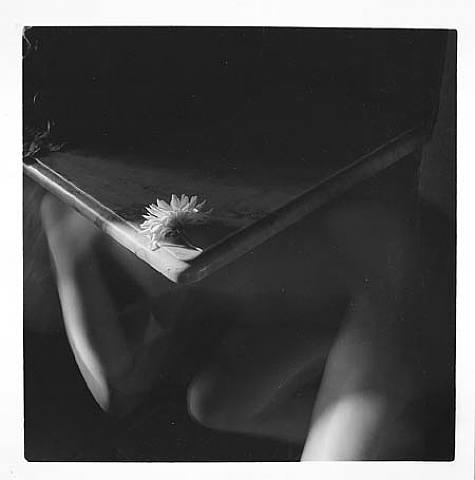
Francesca Woodman

Francesca Woodman
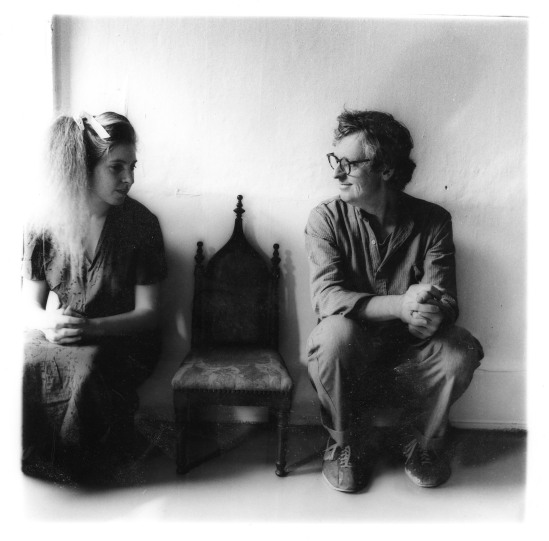
Francesca Woodman and her Father

Francesca Woodman and her Father
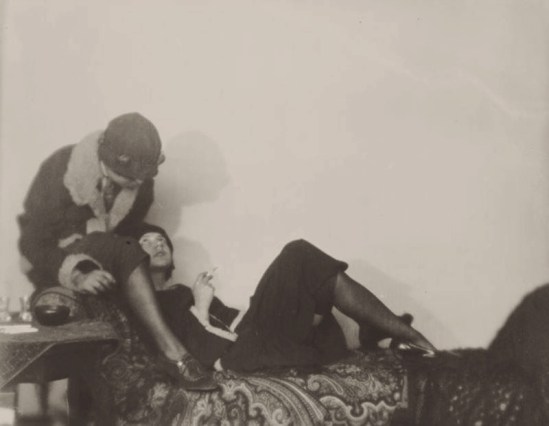
Horst P. Horst -Léonor Fini

Horst P. Horst- Leonor Fini

Tadeusz Langier – Maria Zarotyńska, ca. 1937

Tadeusz Langier - Maria Zarotyńska, ca. 1937

Tadeusz Langier – Maria Zarotyńska, ca. 1937


Edward S Curtis, nude

Edward S. Curtis – Sunset Trail, 1920s

Arnold Genthe- Ruth St. Denis , 1919

Arnold Genthe- Ruth St. Denis , 1919


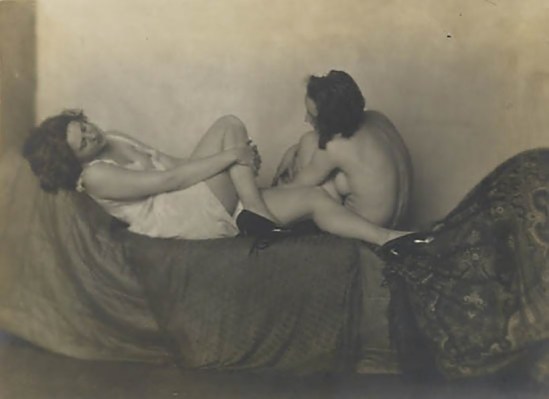
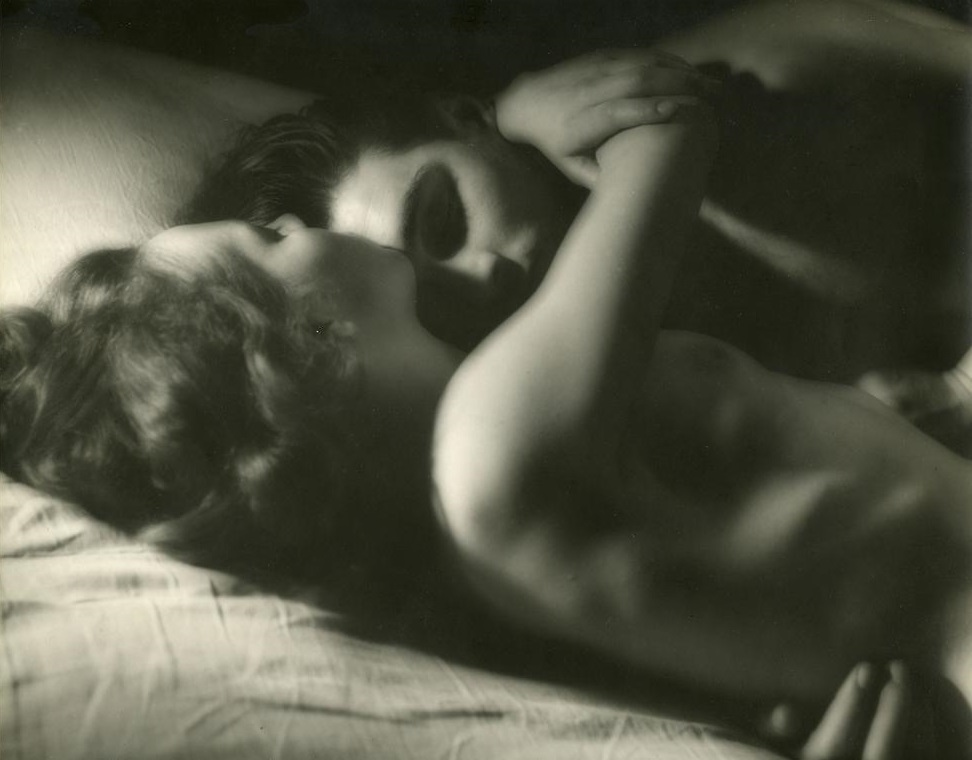
Germaine Krull, From Séries les Amies , 1924

Germaine Krull – Les Amies, 1924


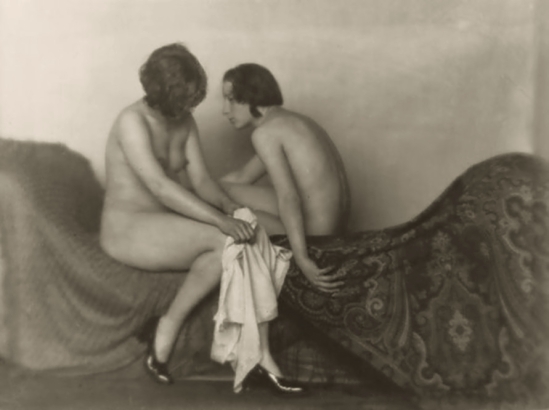
Germaine Krull – Les Amies, 1924

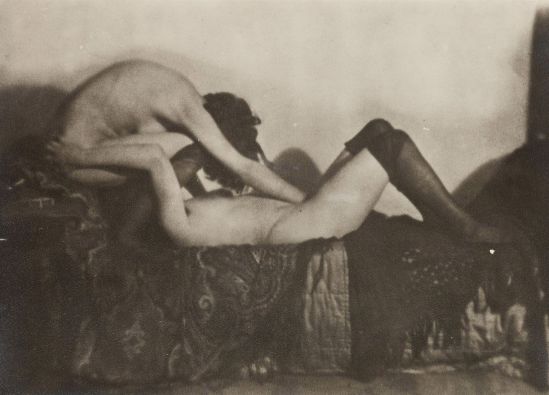
Germaine Krull – Les Amies, 1924


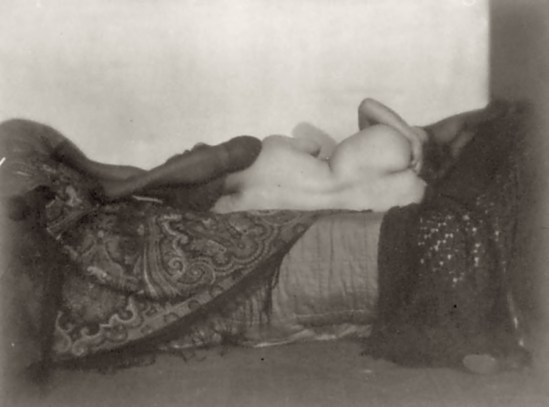
Germaine Krull -Les Amies1924,Tirage argentique

Germaine Krull – Les Amies, 1924

Germaine Krull – Les Amies, 1924


Copyright Estate Germaine Krull, Fotografische Sammlung, Museum Folkwang, Essen

In the remaining eight photographs in Les Amies, the models are naked except for their dark stockings and sometimes their shoes. The overt sexuality of the models is emphasized by the stockings, unlike the bare legs of the models in Akte. The depiction of stockings had long been considered a sign distancing a figure from the conventions of the ideal, asexual nude based on classical models. The choice of the dark stockings also emphasizes the contemporaneity of the models. In contrast, photographs of nude


figures specifically described as models for artists, and therefore intended as ideal citations of classical models, are absent any clothing that would imply a contemporary existence.

In contrast to the conversational poses of the models in Akte, most of the poses for Les Amies are tangles of intricately interlocking limbs in which sexual acts are posed but not entirely convincing. Some positions appear more sculptural than sexual . One image suggests cunnilingus, yet the head is placed slightly too far away.

Another image enacts a “69” pose of double cunnilingus, yet again the heads are ever so slightly out of position and the composition becomes a protosurrealist study of a nude torso from behind, with dark stockings at right and left . One more image presents a clear view of one woman’s crotch, as one leg flails above her. The pose would seem to prevent sexual satisfaction, although it provides the viewer with a brief glimpse of vaginal lips.

Throughout Les Amies, Krull repeatedly obscures the models’ anatomy, oscillating between inviting the spectator’s desiring gaze and frustrating the clarity such a gaze requires. As Abigail Solomon-Godeau observed

 about the « lesbian » scenes staged for nineteenth-century daguerreotypes, « [W]omen together . . . are typically posed in ways that provide the viewer with maximum visual access to their bodies. » These conventions continue into the twentieth century, yet Krull’s models fold their arms across their faces, tilt their heads so their pageboy hairstyles hide their eyes and press their bodies so close together that their breasts are partly hidden. Even more surprising, in not a single image does a model directly gaze out at the camera. The standard acknowledgment of the viewer of erotic material, the address to the third party outside the image, never takes place. These models remain hermetically sealed in the studio, failing to address the frustrated desiring gaze, to symbolically invite the third party to join the sexual adventures taking place. Despite the direct view of the crotch in one image and the depictions of cunnilingus, the eroticism is contained between the two women, with no imaginary space for a third, presumably male, viewer to enter.

Psychoanalytic theories of the gaze have defined spectator positions in gendered terms, with the male position or gaze described as active and Page  142aligned with the desire to possess the female object, in contrast to the female, passive position that would allow only the desire to become the object. As research into queer viewing positions has argued, these viewing positions are not exclusively aligned with the sex of the viewer: a man can take on the desire to become the object when viewing a homoerotic scene.

The compositional structure of Krull’s Les Amies invites a desiring gaze that is narcissistic, a gaze that desires to be one of the women while rejecting the possibility of possessing them both. This argument extends Sichel’s observation that Krull dismissed “the male gaze of Weimar culture in favor of a female gaze” and her emphasis on the gazes within the images as the female models view each other. In Les Amies, there is no space for a third party: the only possibility is to become one of the women. Moreover the specific acts depicted suggest a woman’s knowledge of how women have sex with women rather than a man’s imagined projection. The repeated emphasis on how the hands are placed in each image and sexual position stresses the crucial importance of the hands as instruments in female-female sex. In contrast, the absence of a dildo suggests that there is no need for a penis or indeed for the symbolic phallus. In comparison, Christian Schad’s satirical drawing of two woman engaged in oral sex, Sisters, circa 1929, includes an enormous dildo, which has been discarded in the corner, simultaneously emphasizing the desire for the phallus while comically bemoaning its dismissal.

By photographing erotic scenes, Krull not only constructed the desiring gaze but also placed herself in the position of that gaze, taking on privileges previously permitted only to male photographers. The trope of the male artist desiring his female model, of the creative act as intimately connected to the sexual act, goes back as far as the classical tale of Pygmalion and echoes throughout Western art since the Renaissance. Similarly, for photographers, Solomon-Godeau notes that “photographic activity was itself intuitively perceived as sexually charged.” Although there is evidence of women’s involvement in manufacturing and distributing pornographic photographs before and during the First World War, these women remained on the margins of commercial photography. For an ambitious, professionally trained woman photographer such as Krull to create erotic and even pornographic material required her to transgress the definitions of middle-class respectability.

Krull’s motivation for creating Akte and Les Amies remains unclear: her later account of wanting to make “galant” photographs remains the most explanation. Yet that decision was made within the context of her unorthodox—and temporarily bisexual—personal life and the artistic possibilities in Berlin in the 1920s.

In her later biography, Krull mentioned various male lovers across the years, as well as one female lover, Elsa, with whom she had an affair during her time in Berlin and into 1925 after she left Berlin for Amsterdam and then Paris: “At that time, I also had a friend, Elsa, who came to help me when I had too much to do. Elsa was the only woman in my life for whom I had feelings that were more than friendly; she was married and had a lover, and for that reason didn’t have much time for me.During an account of a visit to Paris with Elsa, most likely in 1925, Krull elaborated further.

I never loved a woman, but with Elsa the joy of feeling together was great; she too never left my side. We would have laughed if someone had described us as lesbians; Elsa was so profoundly mine that the physical issue did not count, it had very little importance. She had never experienced an orgasm, not with her husband nor with her lover, and thus it had to be me to give her pleasure. Everything was very simple and we were happy to share a secret

Krull’s dismissal of the term lesbian reflects the fluidity of female sexual identity in the 1920s, especially for adventurous New Women. According to an interview conducted by Ilse Kokula, one woman reported that it was “chic” to pretend to be lesbian in the 1920s. There is no evidence that Krull had more than one same-sex affair.At the same time as her affair with Elsa, she was having an affair with Joris Ivens, whom she later married. Similarly, as Krull relates, Elsa also had not only a husband but also a male lover in addition to her relationship with Krull.


Germaine Krull – Les Amies, 1924


Germaine Krull – Les Amies, 1924

Germaine Krull – Les Amies, 1924

Germaine Krull – Les Amies, 1924

Germaine Krull – Les Amies, 1924

Germaine Krull – Les Amies, 1924

Germaine Krull. Les Amies. 1924.

Germaine Krull – Les Amies, 1924

Germaine Krull – Les Amies, 1924

Germaine Krull – Les Amies, 1924

Germaine Krull – Les Amies, 1924

Man Rray- Untitled Meret Oppenheim nude, 1933

Man Ray- Untitled (Meret OppenheimNude), 1933.

Also

Pierre Jahan – Étude 120 pour Plain Chant/ Jean Cocteau ,1947

Pierre Jahan(  1909 – 2003 ) a debuté très tôt  la photographie au sein de sa famille. En 1933, il s’installe à Paris et dès lors sa carrière débutera vraiment. est grâce à sa rencontre avec le publicitaire Raymond Gid qui lui confiera  sa première commande.

En 1936, il devient membre du groupe de photographes, « Rectangle » ( Créé entre autre par Emmanuel Sougez). Sous l’occupation Allemande il travaille pour le magazine Images de France, réalise des portraits et se consacre à des séries d’images (la Mort ,  les statue) s, qui feront l’objet d’une publication en 1946 avec un texte de Jean Cocteau. Ils publient également ensemble, en 1947, une édition dans laquelle le poème Plain Chant de Cocteau est illustré de photographies de nus.( voir photographie ci dessous).  En 1949, il rejoint le Groupe des XV, dont nous  que nous évoquons regulièrement  ici.

Très intéressé par le surréalisme, Pierre Jahan réalisera aussi  de nombreux collages et photomontages ( à retrouver sur son site Ici )

Biographie complète ici sur son site


Voir toute la serie sur son site Ici


Brassaï- Drawing

Brassaï- Drawing, nd


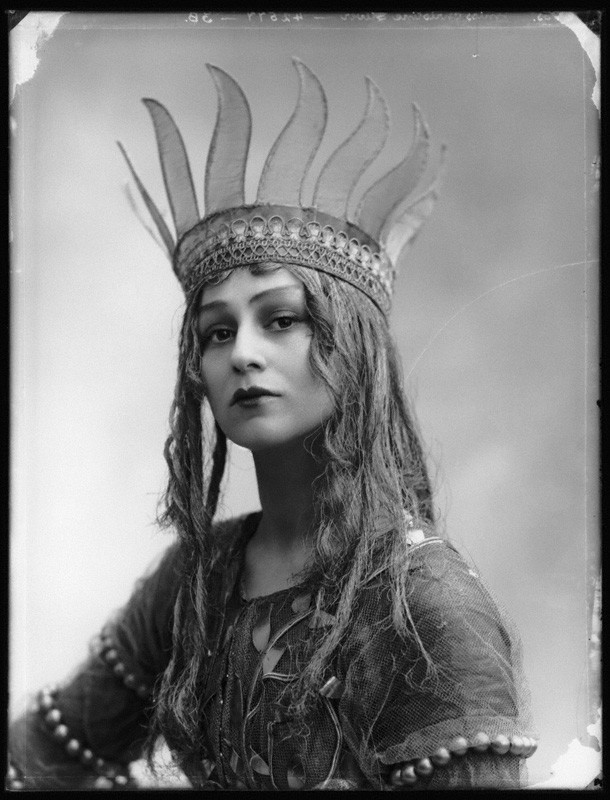
Alexander Bassano – Christine Silver as Titania in ‘A Midsummer Night’s Dream, 1913

Alexander Bassano – Christine Silver as Titania in ‘A Midsummer Night’s Dream, 1913


 Alexander Bassano - Christine Silver as Titania  in 'A Midsummer Night's Dream, 1913 1

Alexander Bassano – Christine Silver as Titania in ‘A Midsummer Night’s Dream, 1913

Nickolas Muray – Ruth St. Denis, 1923

 » Née Ruth Dennis, elle a débuté comme danseuse de vaudeville et membre de la compagnie de théâtre de David Belasco dans les années 1890.
En 1904, une publicité pour la marque de cigarettes Egyptian Deities lui aurait inspiré, selon la légende, un premier concert de danses d’inspiration orientale incluant Radha, The Incense et The Cobras. Ces danses « exotiques » ont récolté un tel succès qu’elle les a présenté en tournée aux États-Unis et en Europe.
En 1914, Saint-Denis a épousé l’un de ses élèves, Ted Shawn. Peu après, ils ont fondé Denishawn, à la fois compagnie et école, à Los Angeles. Au milieu des années 1920, Denishawn a tourné dans la région de l’Océan indien et du Pacifique. De grands innovateurs de la danse moderne comme Martha Graham, Doris Humphrey et Charles Weidman ont été membres de la compagnie Denishawn.
Shawn et Saint-Denis ne s’entendait pas sur l’orientation à donner à leur troupe. Alors que Shawn était sensible aux avantages monétaires qu’offrait le circuit du vaudeville, Saint-Denis se considérait plutôt comme une artiste de concert sérieuse. Elle souhaitait se consacrer à ses « visualisations musicales », dans lesquelles le mouvement traduisait le tempo, le rythme et le contenu émotif de la musique. En 1929, le couple s’est séparé et a démantelé sa compagnie, bien qu’il n’ait jamais officiellement divorcé.
Aux prises avec de graves difficultés financières dans les années 1930, Saint-Denis s’est néanmoins plongée dans sa quête d’un art de la danse à contenu spirituel. Elle a donné sa dernière prestation publique en 1966, à quatre-vingt-sept ans.
Ruth Saint Denis est née le 20 Janvier 1879 à Newark, New Jersey , États-Unis, et décédée le 21 Juillet, 1968 à Hollywood  » artsalive.ca

Nickolas Muray – Ruth St. Denis, 1923


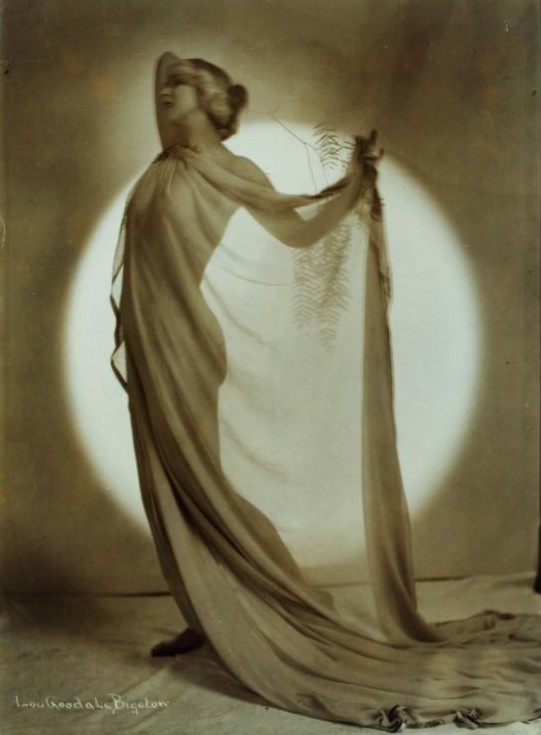
Lou Goodale Bigelow- Ruth St. Denis, “Greek Veil”, circa 1917-18

Lou Goodale Bigelow- Ruth St. Denis, “Greek Veil”, circa 1917-18


Benjamin Constant- lettre adressée le 29 novembre 1800 à Madame de Staël

” Je vous aime comme un insensé; comme ni mon âge, ni une longue habitude de la vie; ni mon cœur froissé depuis longtemps par la douleur et fermé depuis longtemps à toute émotion profonde, ne devraient me permettre encore d’aimer….
Vous avez saisi, enlacé, dévoré mon existence, vous êtes l’unique pensée , l’unique sensation, l’unique souffle qui m’anime encore….
Je ne vois je n’entends je ne respire que par vous… jamais je n’ai éprouvé ce que j’éprouve pour vous. Jamais ardeur si violente ne m’a consumé. Mon haleine est brûlante, mon sang bout dans mes veines, tous mes nerfs sont irrités. Vous m’aimez vous avez besoin de moi, vos lèvres se pressent avec volupté contre les miennes; amie à moi donnez-vous. Je ne puis répondre de ma raison ni de ma vie.”

Benjamin Constant- lettre adressée le 29 novembre 1800 à Madame de Staël

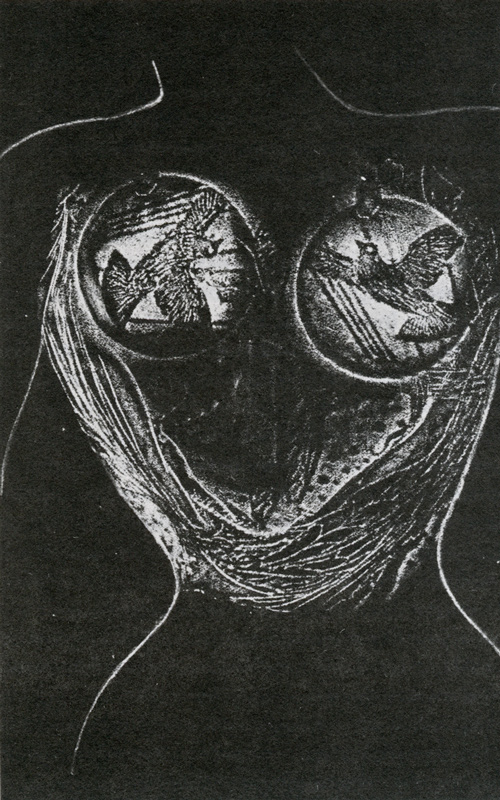
Max Ernst- Photogram for Rene Crevel’s Babylon , 1927

Max Ernst- Photogram for Rene Crevel’s Babylon , 1927