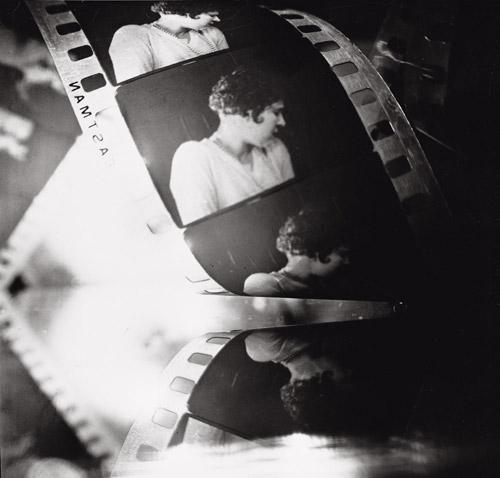
Miroslav Tichý (1926 – 2011)

Miroslav Tichý (1926 – 2011) was a photographer who from the 1960s to 1985 took thousands of surreptitious pictures of women in his hometown of Kyjov in the Czech Republic, using homemade cameras constructed of cardboard tubes, tin cans and other at-hand materials. Most of his subjects were unaware they are being photographed. A few struck beauty-pageant poses when they sighted him, perhaps not realizing that the parody of a camera he carried was real.His soft focus, fleeting glimpses of the women of Kyjov are skewed, spotted and badly printed — flawed by the limitations of his primitive equipment and a series of deliberate processing mistakes meant to add poetic imperfections.Of his technical methods, he has said, « First of all, you have to have a bad camera », and, « If you want to be famous, you must do something more badly than anybody in the entire world. »During the Communist regime in Czechoslovakia, Tichý was considered a dissident and badly treated. His photographs remained largely unknown until an exhibition was held for him in 2004. Tichý did not attend exhibitions, and lived a life of self-sufficiency and freedom from the standards of society. Tichý died on April 12, 2011 in Kyjov.

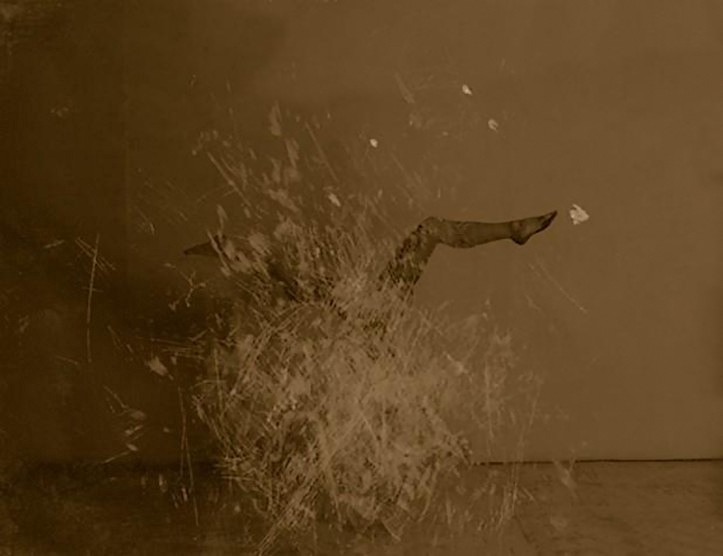
Miroslav Tichý- Bez názvu (sans titre), 1960-80

Miroslav Tichý- Bez názvu (sans titre), 1960-80

František Drtikol

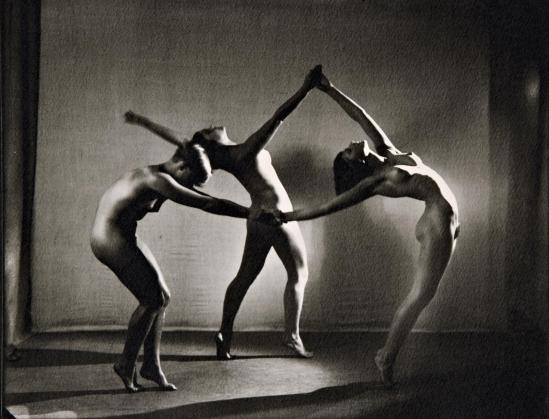
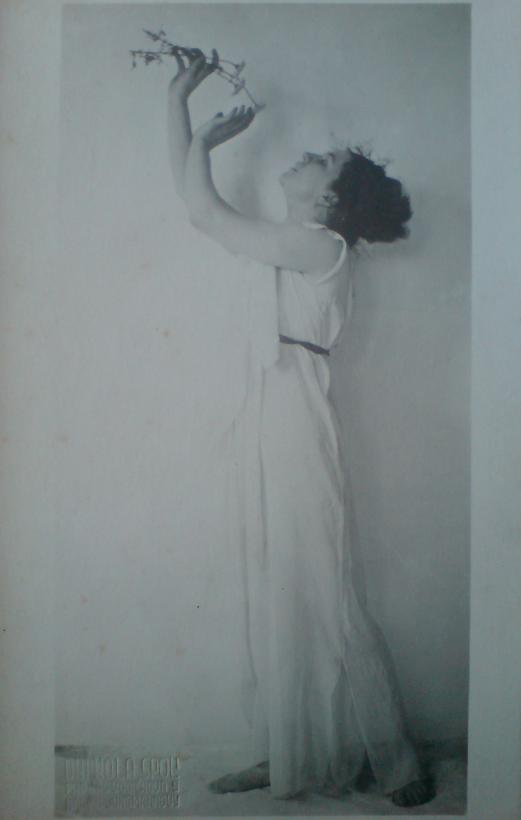
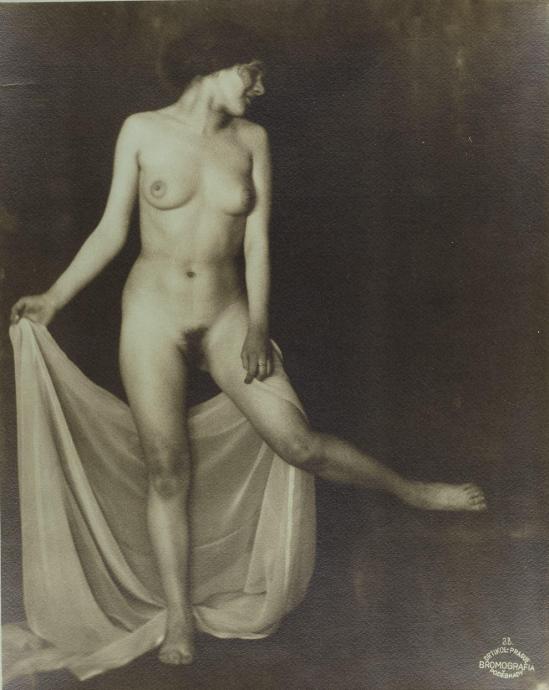
František Drtikol -Female dancer, 1920

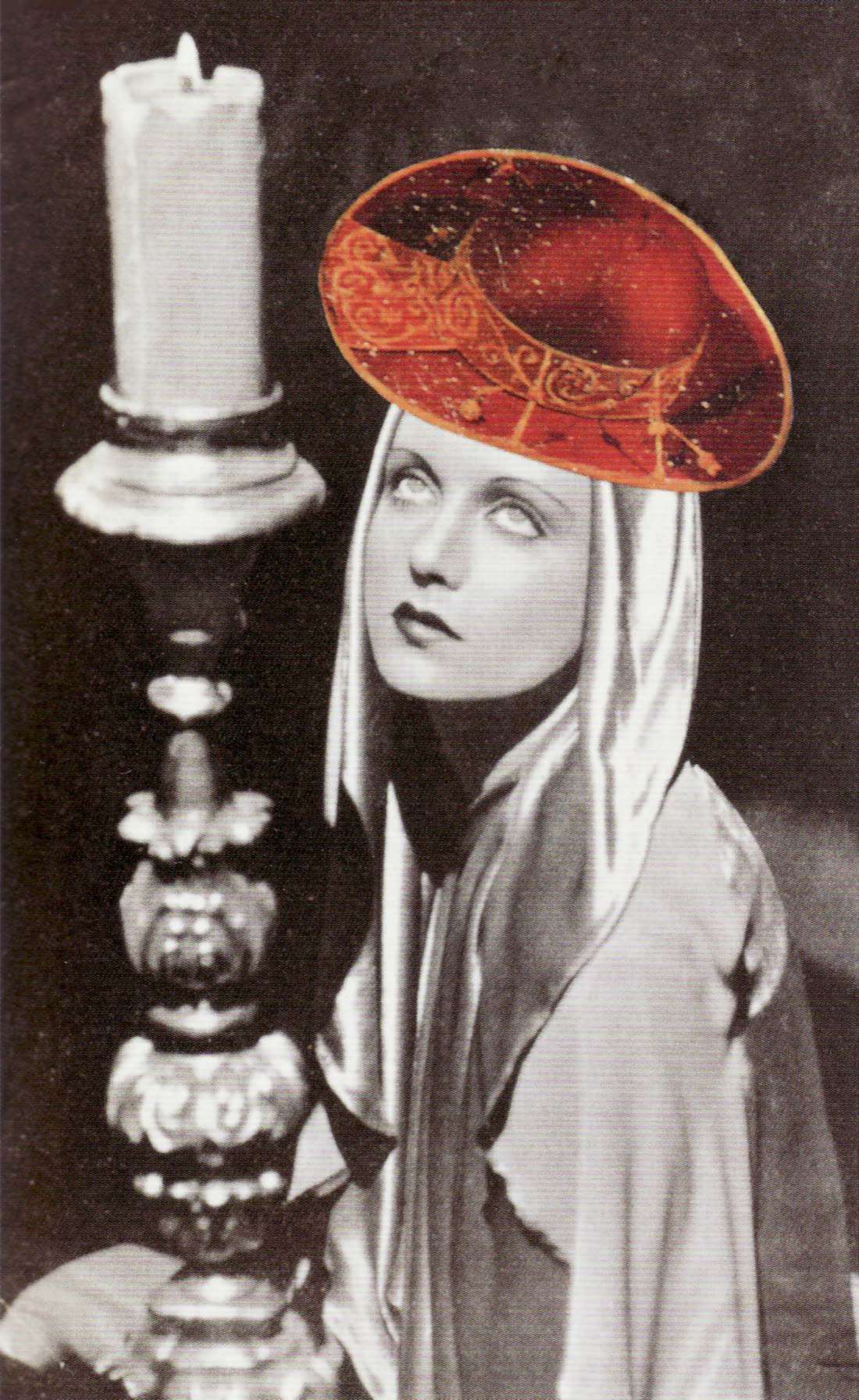
Jindřich Štyrský- French Cardinal, 1941

Jindřich Štyrský – French Cardinal, 1941

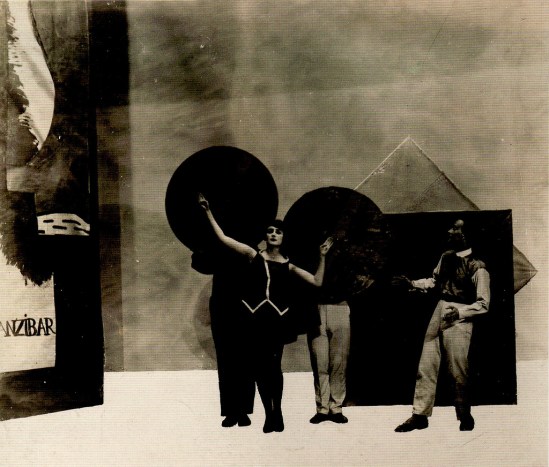
Jindřich Štyrský- Set for Osvobozene divadlo, 1929

Jindřich Štyrský- Set for Osvobozene divadlo, 1929

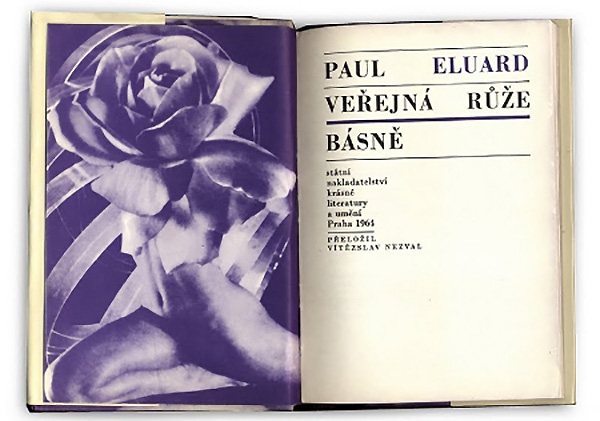
Paul Eluard ( Poésie) & Karel Teige ( Photomontage) – La Rose publique , 1964


Karel Teige - Paul Eluard - La Rose publique

Paul Eluard ( Poésie)   & Karel Teige ( Photomontage)  – La Rose publique , 1964 (traduit en tchèque par Veřejná růže)

Karel Teige - Paul Eluard - La Rose publique

Paul Eluard ( Poésie)   & Karel Teige ( Photomontage)  – La Rose publique , 1964 (traduit en tchèque par Veřejná růže)

Karel Teige - Paul Eluard - La Rose publique

Paul Eluard ( Poésie)   & Karel Teige ( Photomontage)  – La Rose publique , 1964 (traduit en tchèque par Veřejná růže)

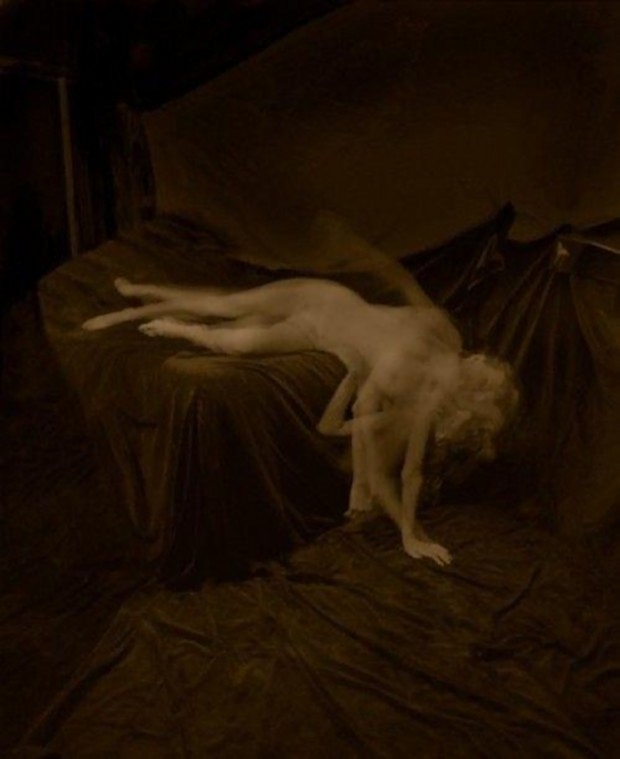
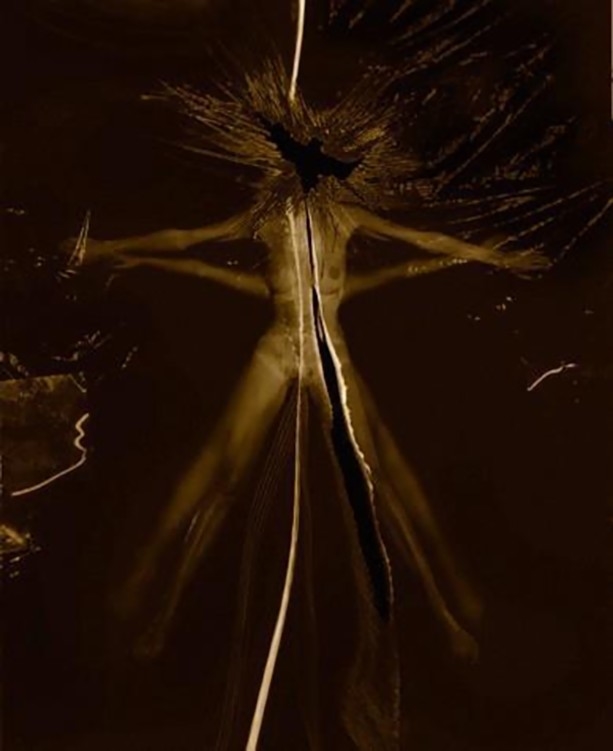
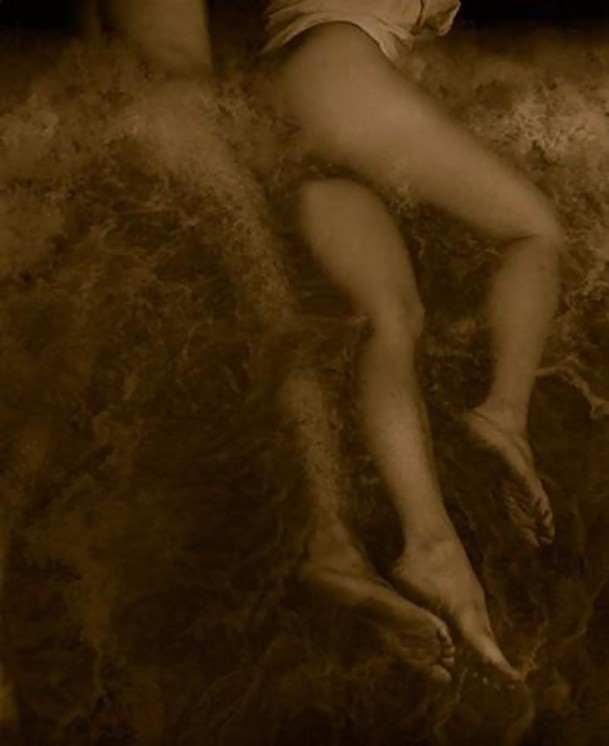
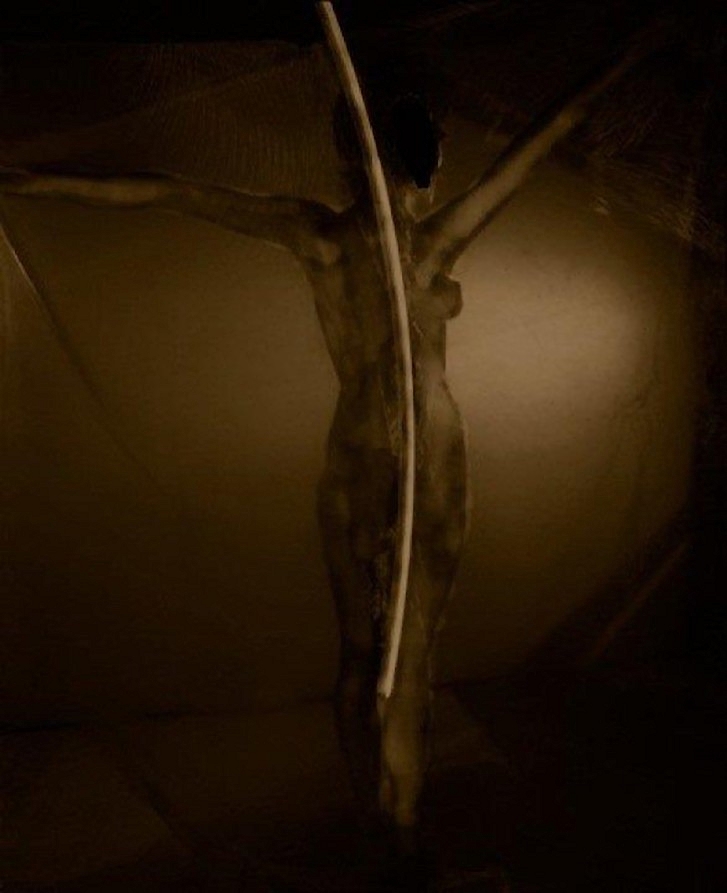
Vladimir Židlický

© Vladimir Židlický- Ohnetitel  Original , 1994

© Vladimir Židlický- Ohnetitel Original , 1994

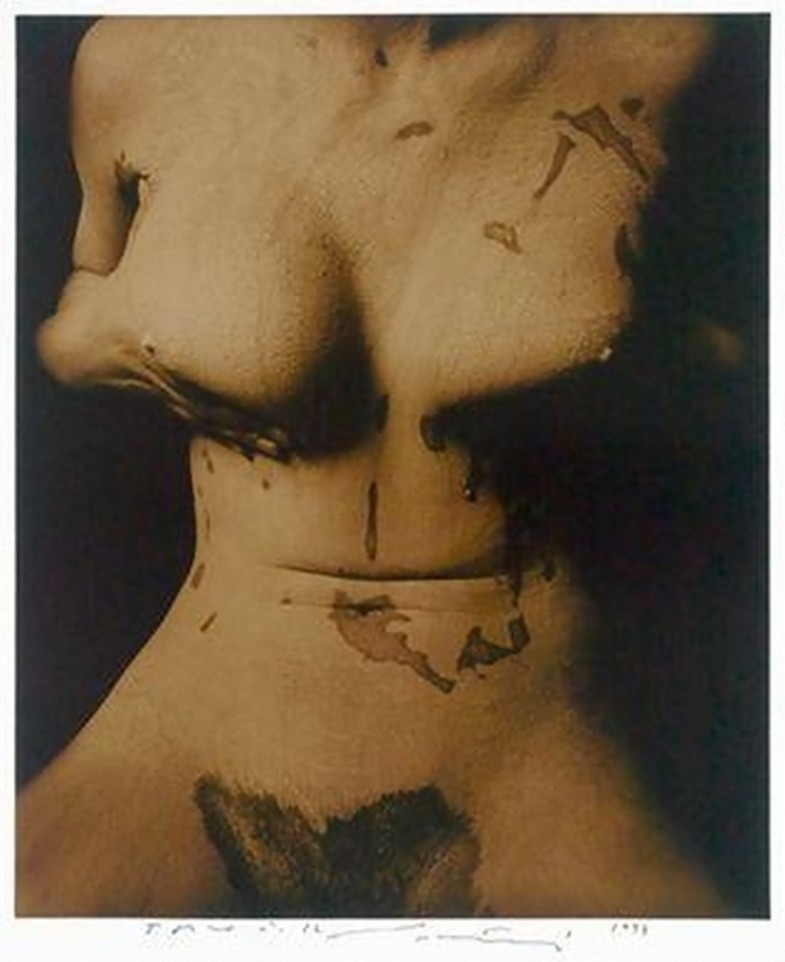
© Vladimir Židlický- Brown Torso N 11-1992

© Vladimir Židlický- Brown Torso N 11-1992

© Vladimir Židlický- Loss of Balance - 1987

© Vladimir Židlický- Loss of Balance – 1987

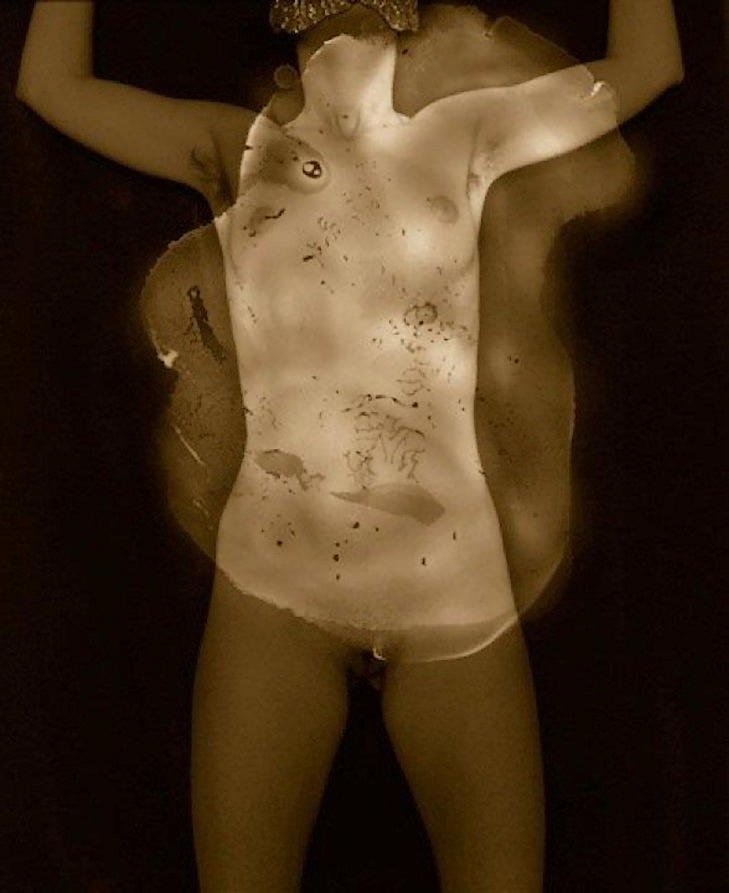
© Vladimir Židlický- Dramatic Figure n 21- 1986

© Vladimir Židlický- Dramatic Figure n 21- 1986

© Vladimir Židlickýr- You and Me II- 1982

© Vladimir Židlickýr- You and Me II- 1982

© Zidlicky Vladimi-Torso in brown 1987

© Zidlicky Vladimi-Torso in brown 1987

© Vladimir Židlický -Torso n 16- 1994

© Vladimir Židlický -Torso n 16- 1994

© Vladimir Židlický-Dramatic Figure N 46-1987

© Vladimir Židlický-Dramatic Figure N 46-1987

© Vladimir Židlický- study of movement n1- 1996

© Vladimir Židlický- study of movement n1- 1996


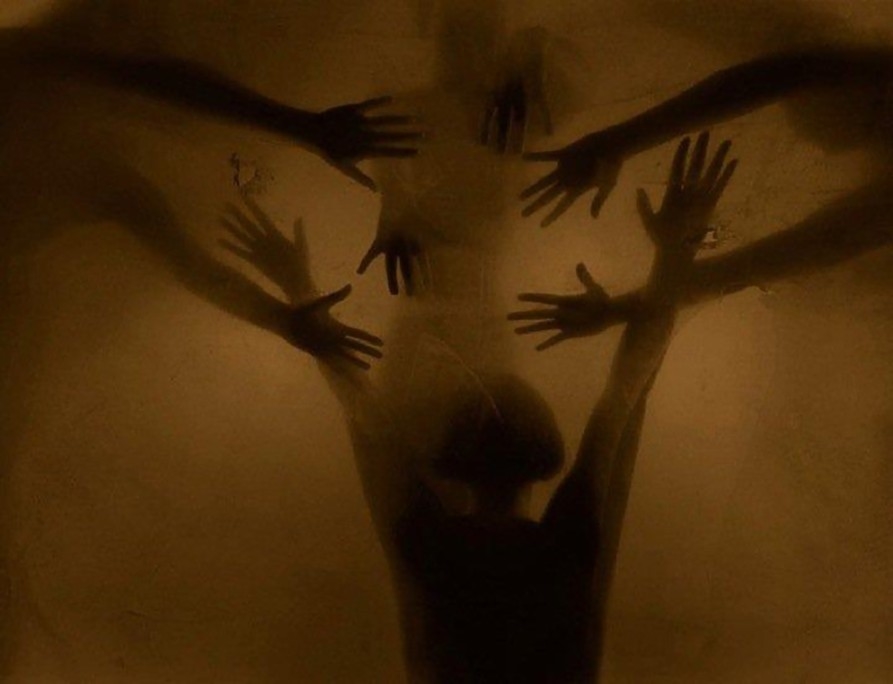
© Vladimir Židlický- Hands (Touches) N 3- 1987

© Vladimir Židlický- Hands (Touches) N 3- 1987

Son SITE


František Drtikol


frantisek-drtikol-gelatin-silver-print-from-port

Frantisek Drtikol- Untitled, 1930s


frantisek-drtikol-dancing-nudes

Frantisek Drtikol-  Dancing nudes, Nd


frantisek-drtikol-nude-1920

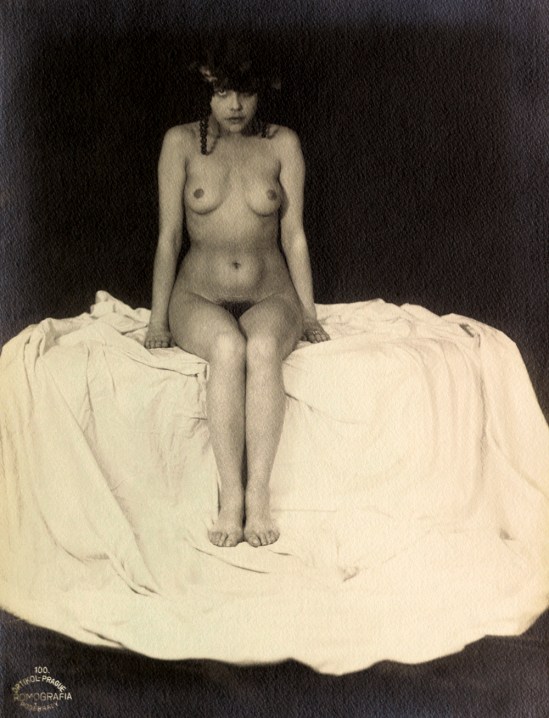
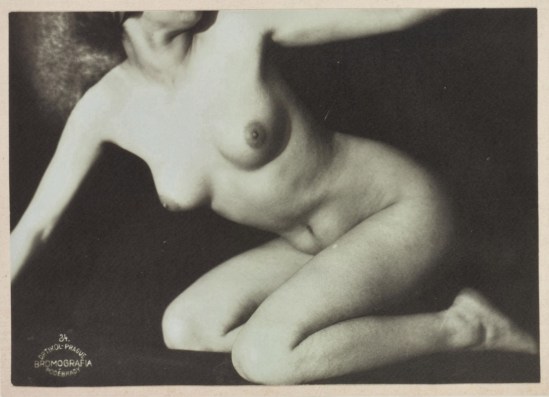
Frantisek Drtikol – Nude, 1920


frantisek-drtikol-sitting-nude-1930

Frantisek Drtikol- Sitting nude, 1930


frantisek-drtikoluntitled-nude-bust-1920s-gelatin-silver-print

Frantisek Drtikol- Untitled nude bust, 1920s

frantisek-drtikol-nude-no-86-green-tone-of-the-original-original-bromografie-20s_e

Frantisek Drtikol- Nude No-86? green tone of the origina,    bromografie, 1920s


frantisek-drtikol-gzovska-olga-vladimirovna-russian-actress-1912

Frantisek Drtikol- Gzovska Olga Vladimirovna ( RussianA ctress) , 1912


frantisek-drtikol-1883-1961-draped-nude-with-circle-1928-vintage-silver-print-bromografia-on-rose-toned-paper

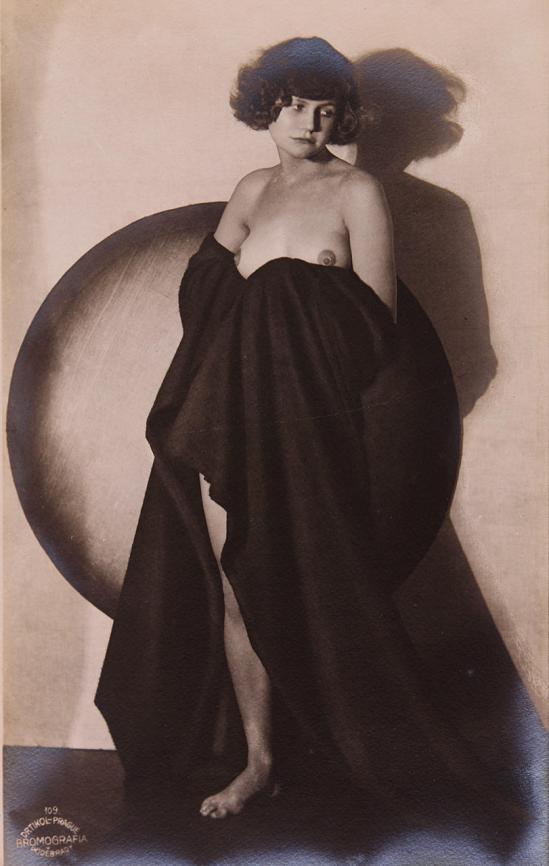
Frantisek Drtikol- Draped nude with circle, 1928


frantisek-drtikol-le-mouvement-1927

Frantisek Drtikol- Le mouvement, 1927

František Drtikol -The dancer Ervina Kupferova dressed as a princess adored by two servants, 1919, , pHraha, pigment print

František Drtikol -The dancer Ervina Kupferova , 1920, Gelatin silver print

frantisek-drtikol-the-dancer-ervina-kupferova-dressed-as-a-princess-adored-by-two-servants-1919-phraha-pigment-print

František Drtikol -The dancer Ervina Kupferova dressed as a princess adored by two servants, 1919, pigment print

frantisek-drtikol-1883-1961-nu-1925-carte-photo-tirage-argentique_e

Frantisek-Drtikol- Nu,1925, carte postale , Tirage argentique

frantisek-drtikol-nude-with-flowers-c-1925-gelatin-silver-prints

Frantisek Drtikol- Nude with flowers, c 1925, gelatin silver print


frantisek-drtikol-akt-c-18-la-femme-avec-le-crane-1920

Frantisek Drtikol-Akt (Nude) , 1918 -1920


frantisek-drtikol-drtikol-nude-1920_e

Frantisek Drtikol- Nude, 1920

frantisek-drtikoluntitled-nude-compositions-1930s-gelatin-silver-print

Frantisek Drtikol-  Untitled nude,  compositions, 1930s


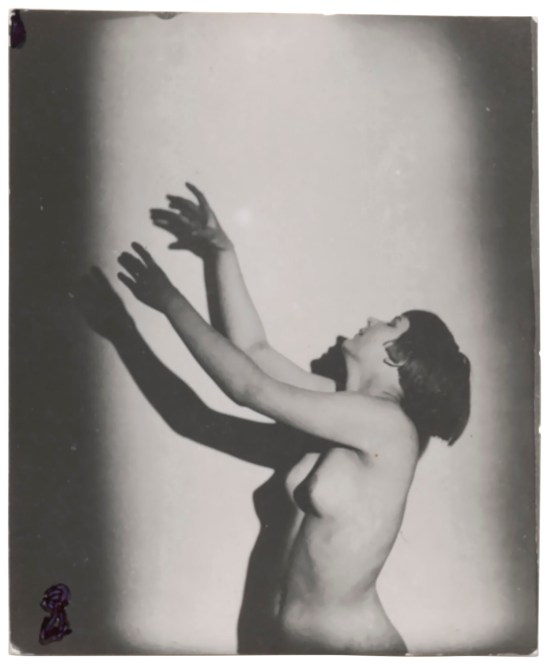
frantisek-drtikol-female-with-arms-raised-1920-gelatin-silver-print

Frantisek Drtikol- Female with arms raised, 1920


frantisek-drtikol-1883-1961-untitled-female-nude-leaning-upwards-1920s

Frantisek Drtikol- Untitled female nude leaning upwards, 1920s


frantisek-drtikol-1883-1961-untitled-nude-vers-1925-tirage-contact-depoque-monte-sur-carton-via-acturial_e

Frantisek Drtikol-1 Untitled-nude , around , 1925

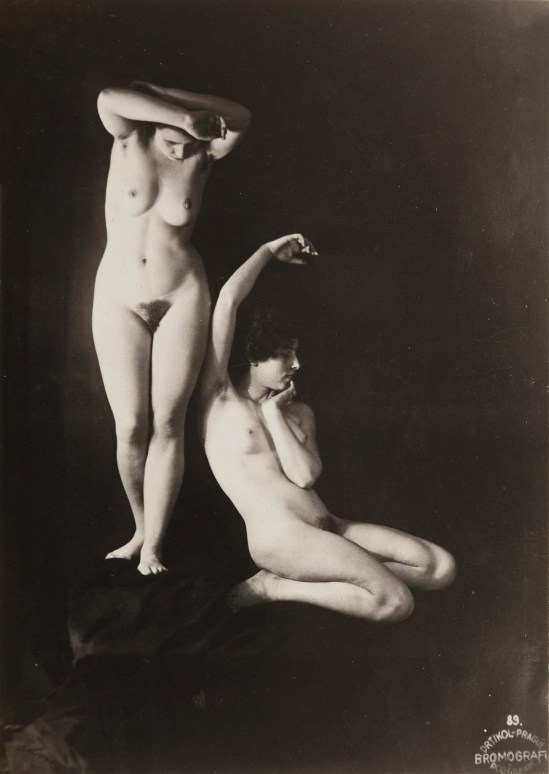
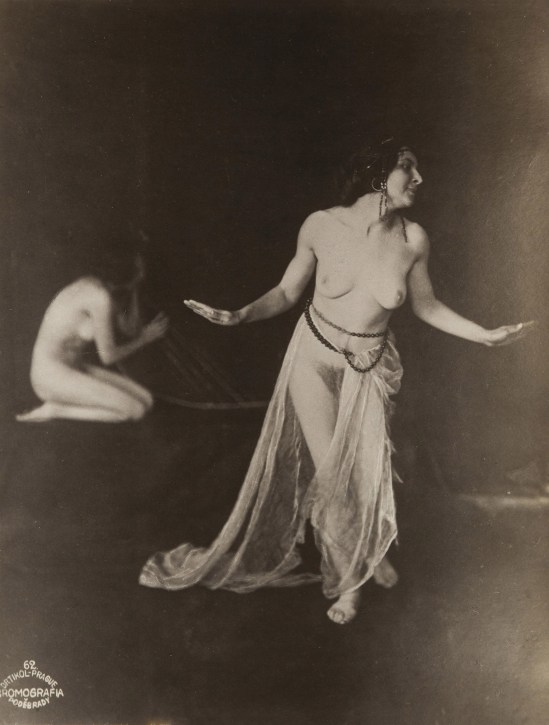
frantisek-drtikol-untitled-compositions-with-pairs-of-nudes-c-1912-1920s-gelatin-silver-prints

Frantisek Drtikol- Untitled compositions with pairs of nudes-, 1912-1920s

Frantisek Drtikol- Untitled compositions with pairs of nudes-, 1912-1920s

Frantisek Drtikol- Untitled compositions with pairs of nudes-, 1912-1920s


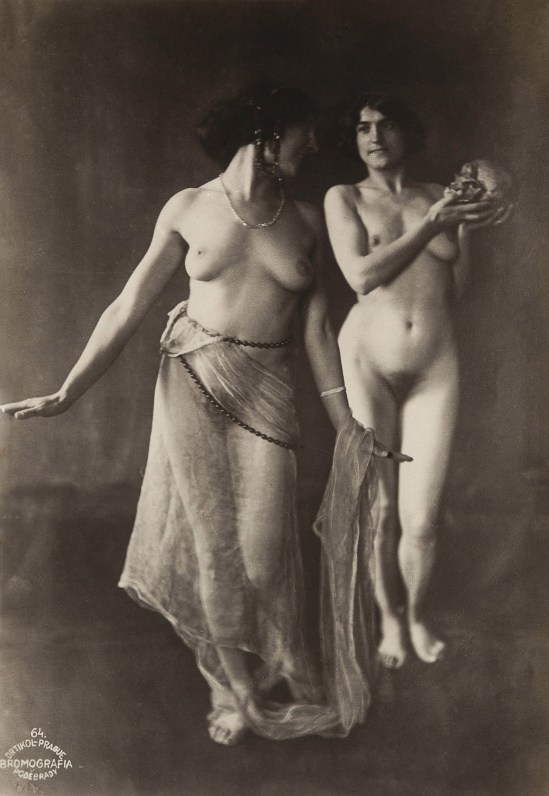
frantisek-drtikol-two-nudes-with-skull-c-1912-gelatin-silver-print

Frantisek Drtikol- Two nudes with skull, c 1912


frantisek-drtikol-two-nudes-with-skull-c-1912-gelatin-silver-print-1

Frantisek Drtikol- Untitled compositions with pairs of nudes-, 1912-1920s


frantisek-drtikol-1883-1961-standing-nude-with-veil-1923-vintage-silver-print-bromografia-on-blue-toned-paper-printed-in-the-1920s

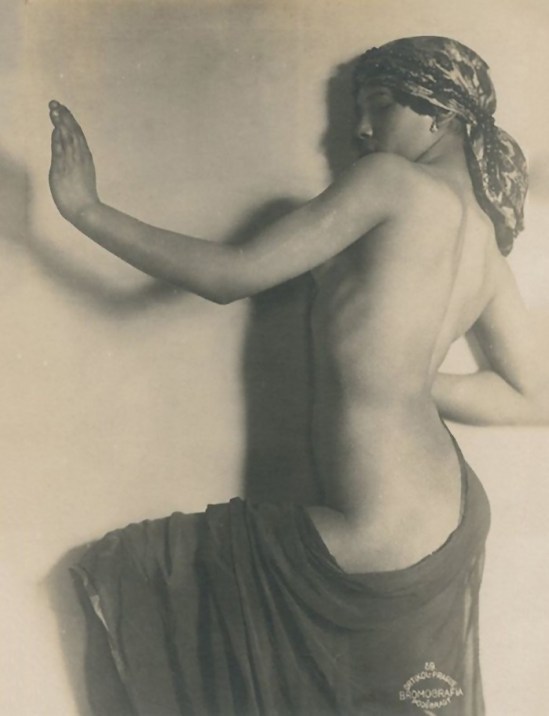
Frantisek Drtikol – Standing nude with veil, 1923


frantisek-drtikol-1883-1961-nude-with-veil-1923-vintage-silver-print-bromografia-on-green-toned-paper-printed-in-the-1920s

Frantisek Drtikol – Standing nude with veil, 1923


frantisek-drtikol-sans-titre-vers-1930-1-collections-du-musee-de-la-photographie-charleroi-_e

Frantisek Drtikol -Sans titre, vers 1930, Collections du musee de la photographie Charleroi


František-Drtikol- Dancer, 1914.


Jaroslav Rössler- scene from Les mamelles de Tiresias by Apollinaire, costumes and sets by Karel Teige, Otakar Mrkvička, František Zelenka, at Liberated Theater, Prague, 1926

Jaroslav Rössler– scene from Les mamelles de Tiresias by Apollinaire, costumes and sets by Karel Teige, Otakar Mrkvička, František Zelenka, at Liberated Theater, Prague, 1926

Stepán Bohumil (1913 – 1985)

« He was born in Křivoklát in Central Bohemia and studied at the Ukrainian Academy of Fine Arts and the private Rotter Advertising School in Prague before becoming a painter, graphic artist and illustrator.He published his first drawings in student magazine H2SO4. He exhibited figural composition in foyer of theatre D-38 in 1937. After the war he has worked on political posters and caricature.

In the early 1960s, like other Czechoslovakian graphic artists, he designed film posters that combine drawn and collage elements. Collage became his focus and his collage-drawings and cartoons appeared in publications such as the satirical magazine Trn (Thorn), Mladý svět (Young World) and Plamen (Flame), a literary magazine. His book projects based on this style include Praštěné pohádky (Wacky Fairy Tales, 1965) by Ludvík Aškenazy and Gulliverovy cesty (Gulliver’s Travels, 1968). In 1969, Štěpán emigrated to Munich, where he had a second career illustrating books and magazines; this also calls for research. Publications from his German period include a book of cartoons (1970) and Familienalbum (Family Album, 1971) composed in the surreal collage style of Galerie — it features a few of the same images. » By  Rick Poynor

Familienalbum (Family Album, 1971)

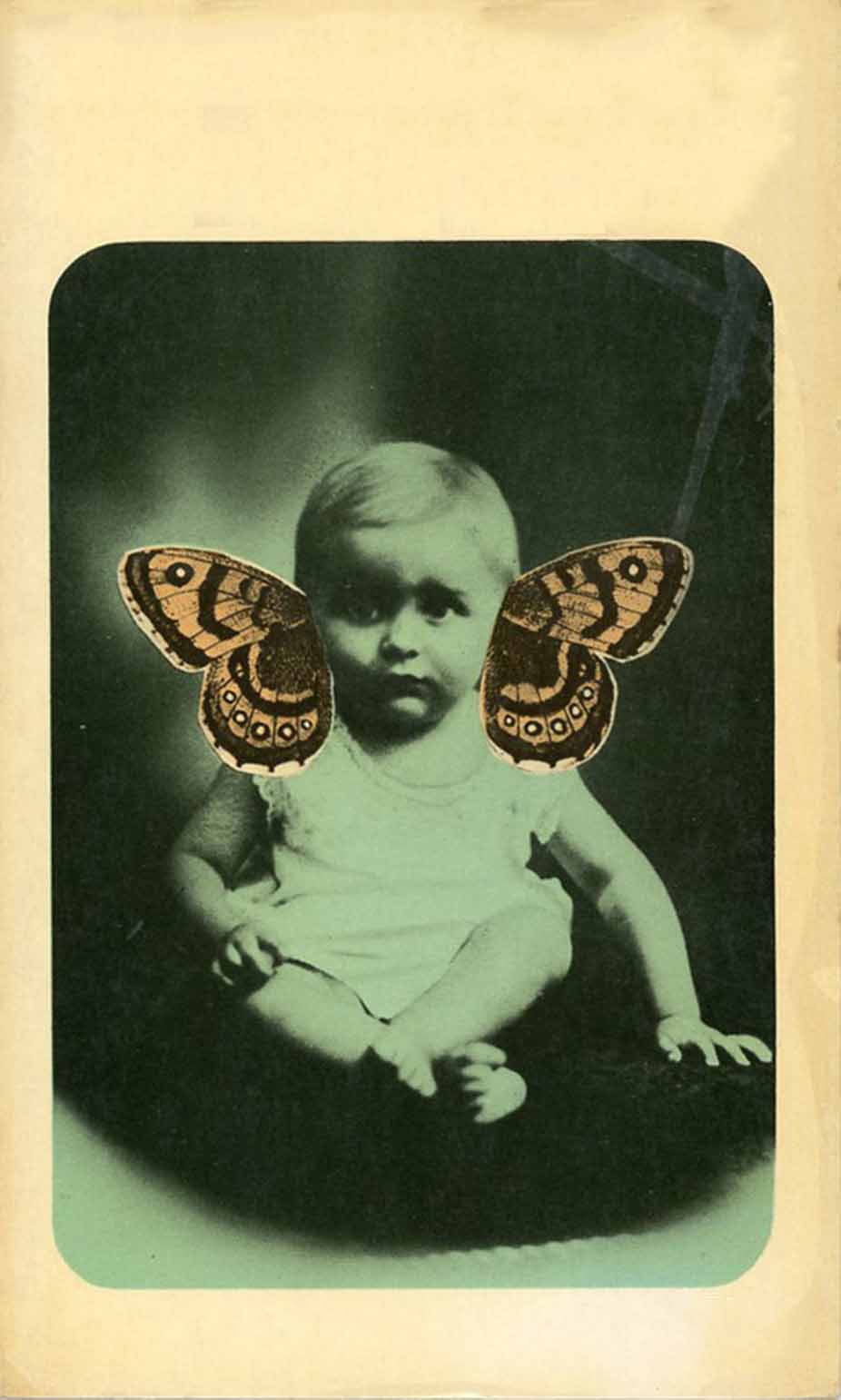
Stepán Bohumil-from Familienalbum by Bohumil Štěpán, published by Deutscher Taschenbuch Verlag, 1971 cover

Stepán Bohumil-from Familienalbum by Bohumil Štěpán, published by Deutscher Taschenbuch Verlag, 1971 cover

Stepán Bohumil-from Familienalbum by Bohumil Štěpán, published by Deutscher Taschenbuch Verlag, 1971  " Sister Amalie could not marry because she had a square head. But with a tablecloth she looked very respectable. A young man even shot himself because of her (when she removed the tablecloth).”

Stepán Bohumil-from Familienalbum by Bohumil Štěpán, published by Deutscher Taschenbuch Verlag, 1971
 » Sister Amalie could not marry because she had a square head. But with a tablecloth she looked very respectable. A young man even shot himself because of her (when she removed the tablecloth).”

Stepán Bohumil-from Familienalbum by Bohumil Štěpán, published by Deutscher Taschenbuch Verlag, 1971 “In our family, we usually reach an advanced age. Besides grandfather, great grandfather is still around. When he was 99 years old, we said he wouldn’t be around much longer. Today he is 199 and still with us.”

Stepán Bohumil-from Familienalbum by Bohumil Štěpán, published by Deutscher Taschenbuch Verlag, 1971
“In our family, we usually reach an advanced age. Besides grandfather, great grandfather is still around. When he was 99 years old, we said he wouldn’t be around much longer. Today he is 199 and still with us.”

Stepán Bohumil-from Familienalbum by Bohumil Štěpán, published by Deutscher Taschenbuch Verlag, 1971 “Relatives in Prague had a child prodigy. He aroused general attention, not however because of his artistry, but because of his appearance.”

Stepán Bohumil-from Familienalbum by Bohumil Štěpán, published by Deutscher Taschenbuch Verlag, 1971
“Relatives in Prague had a child prodigy. He aroused general attention, not however because of his artistry, but because of his appearance.”


Stepán Bohumil-from Familienalbum by Bohumil Štěpán, published by Deutscher Taschenbuch Verlag, 1971 “My Uncle Siegfried was a well-known personality. But although everyone knew him, no one knew him when he put his shoes on.”

Stepán Bohumil-from Familienalbum by Bohumil Štěpán, published by Deutscher Taschenbuch Verlag, 1971
“My Uncle Siegfried was a well-known personality. But although everyone knew him, no one knew him when he put his shoes on.”

Stepán Bohumil-from Familienalbum by Bohumil Štěpán, published by Deutscher Taschenbuch Verlag, 1971 “When Uncle Schwarzer flirted with Aunt, he always came home all sweaty, she made him so warm.”

Stepán Bohumil-from Familienalbum by Bohumil Štěpán, published by Deutscher Taschenbuch Verlag, 1971
“When Uncle Schwarzer flirted with Aunt, he always came home all sweaty, she made him so warm.”

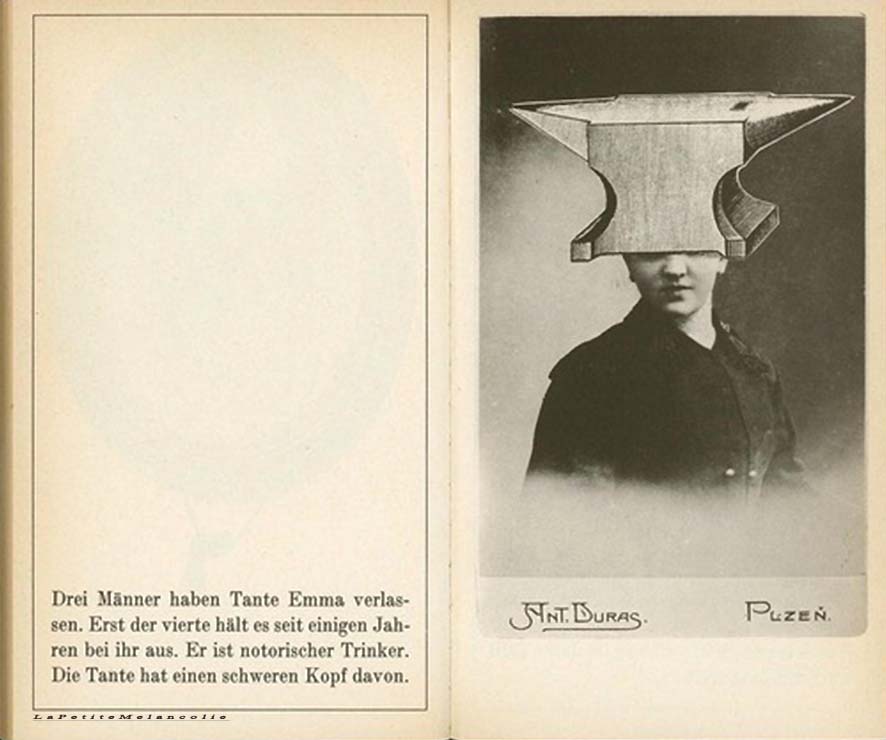
Stepán Bohumil-from Familienalbum by Bohumil Štěpán, published by Deutscher Taschenbuch Verlag, 1971 “Three men have left Aunt Emma. Only the fourth one could stand her for a few years. He is a notorious drinker. She has a heavy head because of it.”

Stepán Bohumil-from Familienalbum by Bohumil Štěpán, published by Deutscher Taschenbuch Verlag, 1971
“Three men have left Aunt Emma. Only the fourth one could stand her for a few years. He is a notorious drinker. She has a heavy head because of it.”

**********

Stepán Bohumil- Unfreiheitsgefühl ,for the satirical magazine PARDON in the 1960s

Stepán Bohumil– Unfreiheitsgefühl ,for the satirical magazine PARDON in the 1960s

gallery and here

Karel Teige -Collage # 286 , 1943

Karel Teige -Collage # 286 , 1943 from Teige Karel-Surrealisticke kolaze, 1935-1951


More Karel Teige


Jaroslav Rössler

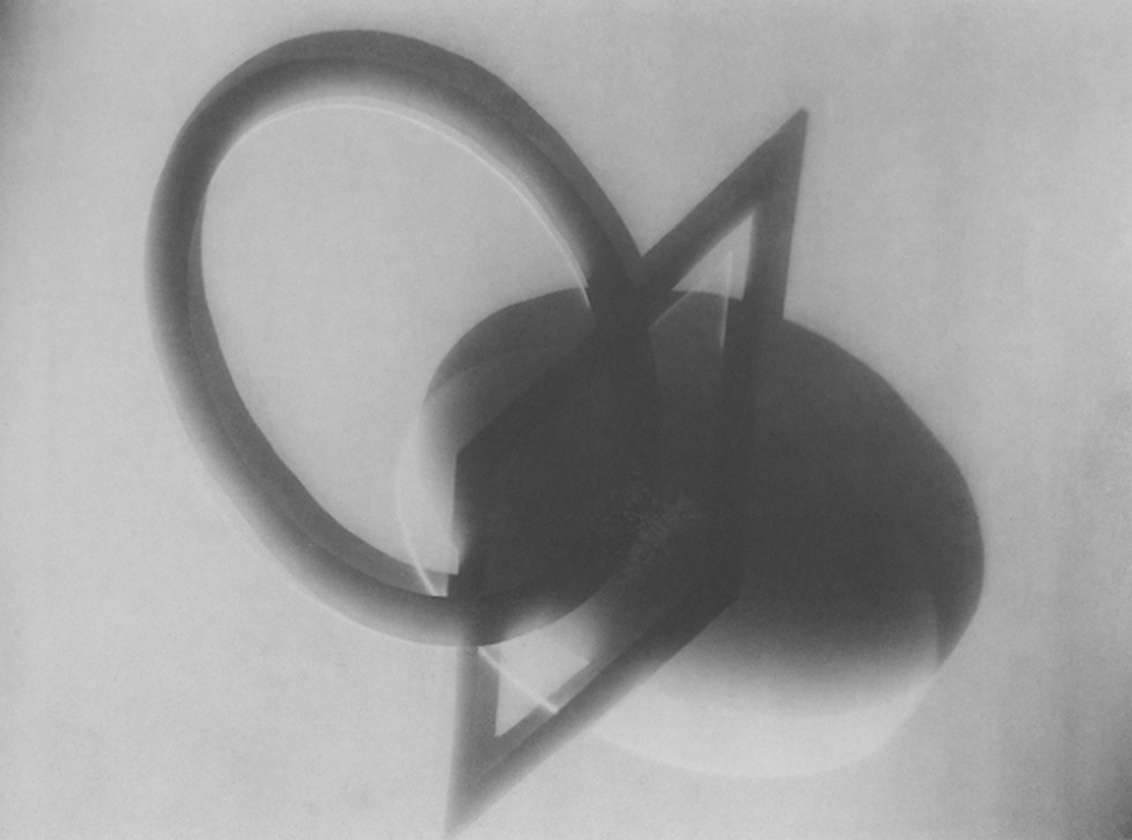
Jaroslav Rössler, Untitled (composition with film-strip), ca. 1926 Jaroslav Rössler - Portfolio 1991 - Prague House of Photography

Jaroslav Rössler- Untitled (composition with film-strip), ca. 1926  [ from Jaroslav Rössler – Portfolio 1991 – Prague House of Photography]

František Drtikol

František Drtikol – Nu, 1925’s

František Drtikol

‘Dans mon travail, je m’appuie sur l’affirmation du Livre de la Genèse que Dieu a créé l’homme à son image. Il est clair qu’il n’a pas créé l’habillement pour l’homme, il est né nu. C’est pourquoi je regarde la nudité comme l’œuvre de Dieu, en sa beauté comme la chose la plus évidente et morale. Je soutiens que l’humanité serait plus naturelle, sincère et belle si elle avait prêté attention au nu plus souvent. Avec la nudité, les distinctions sociales disparaissent et la beauté de l’homme demeure. Dans mon travail, je suis inspiré par trois choses: le mouvement , l’immobilité et l’expression des lignes individuelles . J’utilise ensuite le fond et les accessoires – des objets simples comme des cercles, des lignes ondulées et des colonnes .
Je laisse la beauté de la ligne elle-même avoir un impact, sans fioriture, en supprimant tout ce qui est secondaire. Ou j’illustre une notion et l’intensifie avec la lumière et parfois par suggestion par le biais un simple trait ondulé, cercle, à la surface ou juste avec une ombre portée sur une toile de fond. Ou bien j’utilise le corps comme un objet de décoration, en le positionnant dans divers milieux et sources de lumières. C’est ainsi que je crée toutes mes photos ‘.František Drtikol

František Drtikol (1883-1961)

František Drtikol n’était pas seulement un brillant photographe, dont les travaux ont influencé toute une génération, mais en même temps un personnage très controversé, dans lequel se mélangeait des contradictions difficiles à comprendre. Drtikol possède plusieurs visages. Il y a František Drtikol l’artisan dans son atelier de photographie dans lequel défilaient les personnages illustres de l’époque, comme les deux présidents Tomáš Garrigue Masaryk et Edvard Beneš. Ensuite, il y a Drtikol l’artiste, dont la facette la plus connue est celle du photographe de nus féminins. C’est d’ailleurs grâce à cette production qu’il a acquis une renommée internationale et qu’il a été récompensé à Paris. (Aux côtés d’autres artistes tchèques, Drtikol a participé à l’exposition Art Déco à Paris en 1925, où il a reçu le Grand Prix. Suite à ce succès, en 1929, on lui a publié un grand portfolio de nus dans une édition de collecteurs. Dans les années 1930, il a acquis une bonne réputation aux Etats-Unis, où il a eu plusieurs expositions indépendantes, une expérience tout à fait inédite pour un artiste tchèque) . La diversité de ses approches artistiques est impressionnante , une période Art nouveau avec des portraits, des nus féminins et des paysages, des cut-up, de la peinture, puis un style influencé par l’Avant-garde, le constructivisme( influencé parJaroslav Rössler qui était employé dans son atelier). Par exemple, pour l’anecdote et illustré le personnage complexe qu’il était, bien qu’il fût issu d’une famille catholique, il a cherché un nouveau chemin spirituel et il devient un pionnier du bouddhisme et du yoga en République Tchèque.

Il débute assez jeune par un apprentissage chez un photographe et peu après commence à se concentrer sur son propre travail photographique. Il approfondit ensuite ses compétences et son talent au cours de l’ecole de la photographie à Munich. Après des études à Munich et le service militaire, Drtikol a ouvert son premier studio de photographie à Prague, l’établissant comme l’un des studios les plus prospères en Europe pendant les années vingt.

La carrière de Frantiskek Drtikol dans la photographie a grandi pendant les années du Prague Symboliste et les deux mouvements qui influencent profondément ses premières photographies de nus en leur donnant une qualité picturale ‘Art Nouveau’. Toutefois, pendant les années 1920 et 1930, ses influences décalées et il a commencé à créer un nouveau genre de photographie de nu avec une approche avant-gardiste. Souvent il intégrer la danse expressive et style Art déco dans ses photographies de nus. Après son Prix à Paris son Studio est devenu incontournable et , un certain nombre d’artistes talentueux, comme Jan Zrzavý, Vlasta Burian, Josef Čapek ou Alfons Mucha son passé sous son objectif. On peut donc en conclure que, déjà dans les années 1930, Drtikol avait une renommée internationale. Il se consacrait aux nus et portraits principalement à cette époque, mais parallèlement à tout cela il continuait sa quête spirituelle et pratiquait intensivement le bouhdisme. Il traduit des livres, donne des conférences et forme même un groupe d’adeptes. En 1929, il aurait atteint le Nirvana. Dans une de ses lettres, a écrit à ce sujet: « et j’ai été tout et le tout,et en cela je n’étais que rien absolu. ». Cela prenait beaucoup de place dans sa vie, quant bien même il continuait à photographier et peindre. C’est sous l’influence de son développement spirituel que se transforme sa production artistique. En 1923, son style change. Ses photographies contiennent trois éléments – le corps nu de la femme, des formes géométriques simples, le plus souvent une ligne onduleuse, et la lumière. Ce style originel a par la suite évolué vers encore plus de simplicité. Mais dans le milieu des années 1930 Drtikol abandonne complètement la photographie. Il vend son studio, ses plaques de verre, négatifs, et la caméra pour se consacrer à la peinture.

Le paradoxe et les multiples facettes de Drtikol se dévoile aussi dans le fait qu’il fût plus tard un membre actif du Parti communiste , il l’était dès 1945 et ce jusqu’à sa mort en 1961, et même un camarade actif également en 1948, il aurait été témoin au processus dans les années 1950, et en 1968 niant la revolution….

František Drtikol , dessinateur, peintre mais surtout célèbre photographe de format international.fût beaucoup plus apprécié à l’étranger que chez lui., tout comme cela s’applique à d’autres classiques de la photographie tchèque, Jaromír Funke et Josef Sudek pour ne citer qu’eux…

aujourd’hui c’est le travail d’avant Guarde  et de influé par Jaroslav Rössler

František Drtikol Bez názvu, 1930 element d’architecture

František Drtikol -Untitled ,1934

František Drtikol -Untitled ,1934

František Drtikol -Untitled ,1934

František Drtikol -Untitled ,1934

Frantisek Drtikol - plate from Workbook of Photographs . Text Stanislav Dolezal and Anna Farova, czech and english Svet publishers

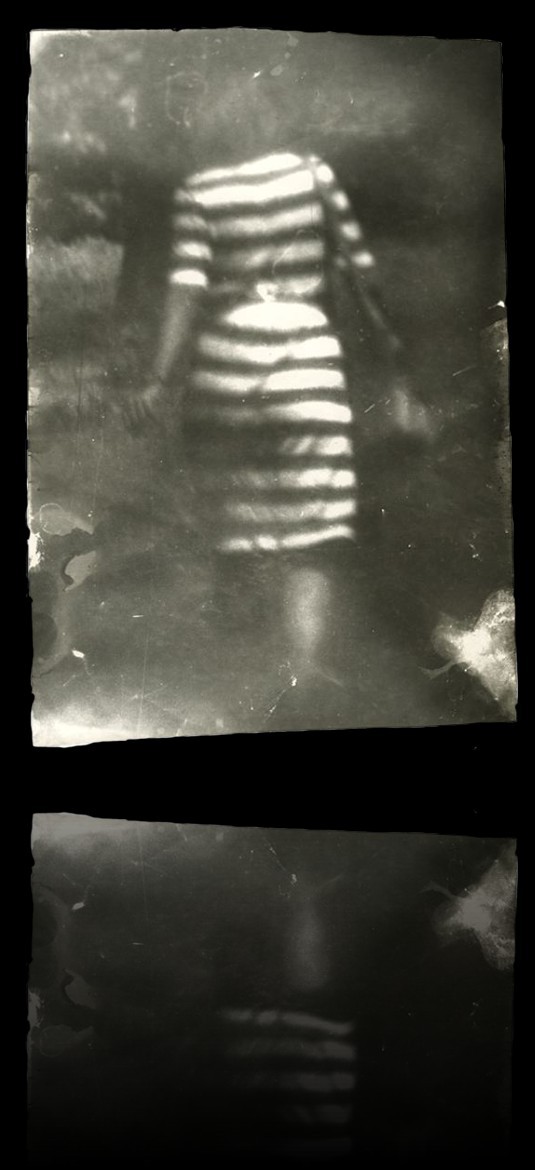
Frantisek Drtikol – plate from Workbook of Photographs . Text Stanislav Dolezal and Anna Farova, czech and english Svet publishers


František Drtikol

František Drtikol -Étude de la Crucifixion, 1914 (4)

František Drtikol -Étude de la Crucifixion, 1914

František Drtikol -Étude de la Crucifixion, 1914 (4)

František Drtikol -Étude de la Crucifixion, 1914

František Drtikol -Étude de la Crucifixion, 1914 (4)

František Drtikol -Étude de la Crucifixion, 1914