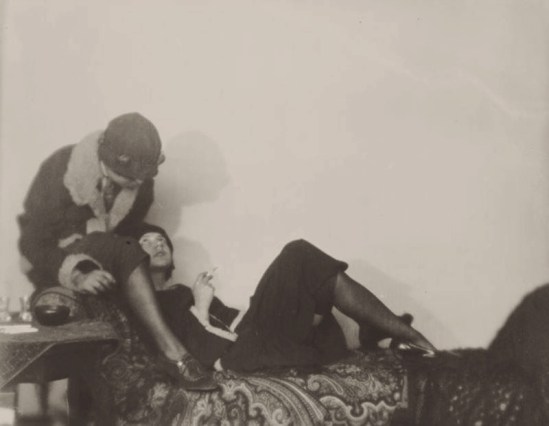
Germaine Krull – Les Amies, 1924

Germaine Krull – Les Amies, 1924

Germaine Krull – Les Amies, 1924
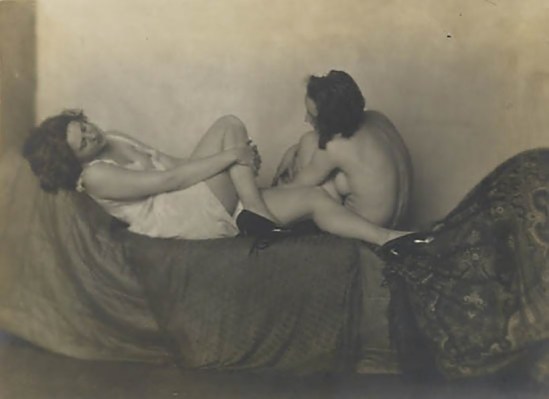
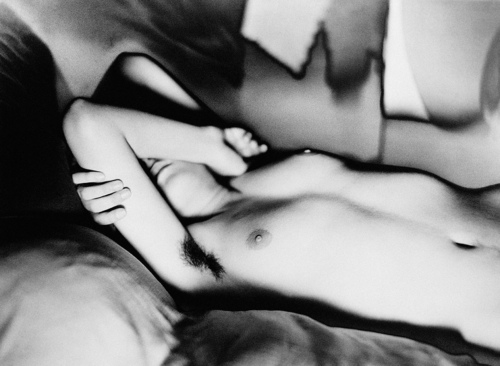
Germaine Krull -Les Amies1924,Tirage argentique
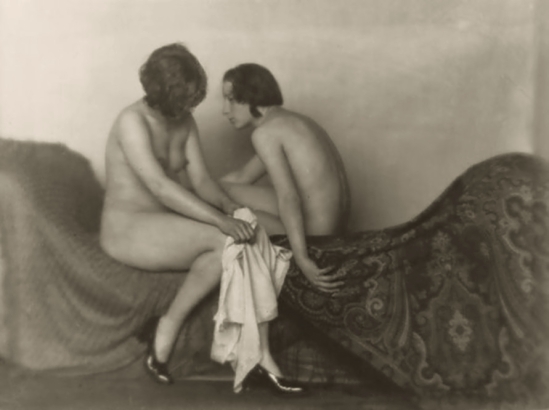
Germaine Krull – Les Amies, 1924

Germaine Krull – Les Amies, 1924
Copyright Estate Germaine Krull, Fotografische Sammlung, Museum Folkwang, Essen
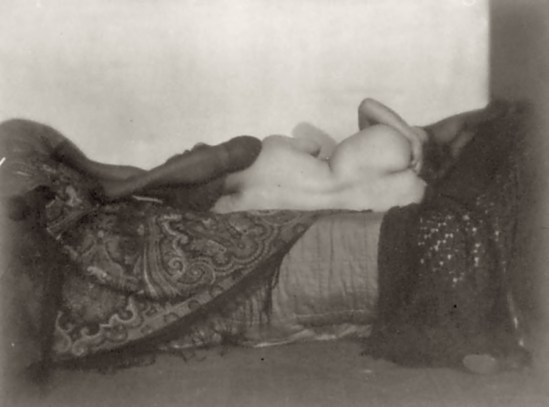
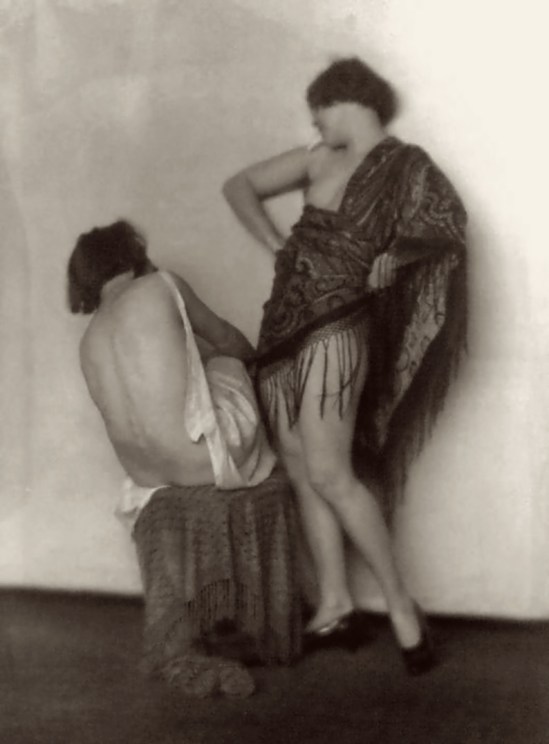
In the remaining eight photographs in Les Amies, the models are naked except for their dark stockings and sometimes their shoes. The overt sexuality of the models is emphasized by the stockings, unlike the bare legs of the models in Akte. The depiction of stockings had long been considered a sign distancing a figure from the conventions of the ideal, asexual nude based on classical models. The choice of the dark stockings also emphasizes the contemporaneity of the models. In contrast, photographs of nude
figures specifically described as models for artists, and therefore intended as ideal citations of classical models, are absent any clothing that would imply a contemporary existence.
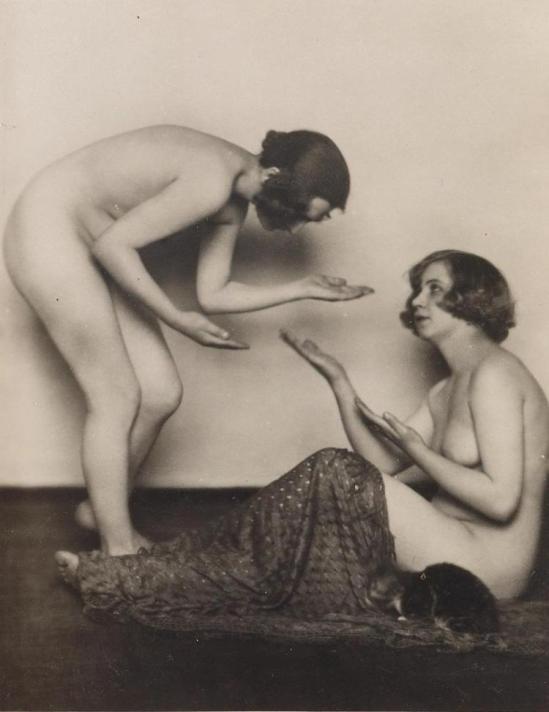
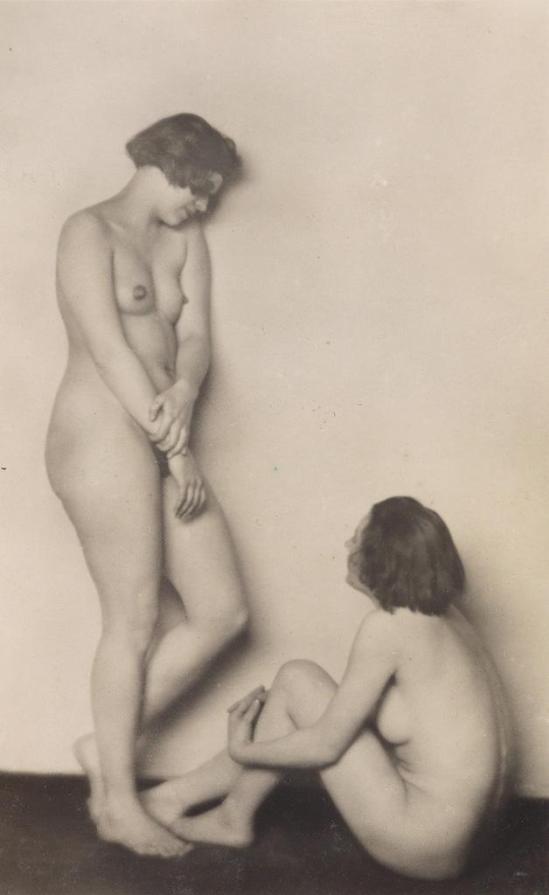
In contrast to the conversational poses of the models in Akte, most of the poses for Les Amies are tangles of intricately interlocking limbs in which sexual acts are posed but not entirely convincing. Some positions appear more sculptural than sexual . One image suggests cunnilingus, yet the head is placed slightly too far away.
Another image enacts a “69” pose of double cunnilingus, yet again the heads are ever so slightly out of position and the composition becomes a protosurrealist study of a nude torso from behind, with dark stockings at right and left . One more image presents a clear view of one woman’s crotch, as one leg flails above her. The pose would seem to prevent sexual satisfaction, although it provides the viewer with a brief glimpse of vaginal lips.
Throughout Les Amies, Krull repeatedly obscures the models’ anatomy, oscillating between inviting the spectator’s desiring gaze and frustrating the clarity such a gaze requires. As Abigail Solomon-Godeau observed
about the « lesbian » scenes staged for nineteenth-century daguerreotypes, « [W]omen together . . . are typically posed in ways that provide the viewer with maximum visual access to their bodies. » These conventions continue into the twentieth century, yet Krull’s models fold their arms across their faces, tilt their heads so their pageboy hairstyles hide their eyes and press their bodies so close together that their breasts are partly hidden. Even more surprising, in not a single image does a model directly gaze out at the camera. The standard acknowledgment of the viewer of erotic material, the address to the third party outside the image, never takes place. These models remain hermetically sealed in the studio, failing to address the frustrated desiring gaze, to symbolically invite the third party to join the sexual adventures taking place. Despite the direct view of the crotch in one image and the depictions of cunnilingus, the eroticism is contained between the two women, with no imaginary space for a third, presumably male, viewer to enter.
Psychoanalytic theories of the gaze have defined spectator positions in gendered terms, with the male position or gaze described as active and Page 142aligned with the desire to possess the female object, in contrast to the female, passive position that would allow only the desire to become the object. As research into queer viewing positions has argued, these viewing positions are not exclusively aligned with the sex of the viewer: a man can take on the desire to become the object when viewing a homoerotic scene.
The compositional structure of Krull’s Les Amies invites a desiring gaze that is narcissistic, a gaze that desires to be one of the women while rejecting the possibility of possessing them both. This argument extends Sichel’s observation that Krull dismissed “the male gaze of Weimar culture in favor of a female gaze” and her emphasis on the gazes within the images as the female models view each other. In Les Amies, there is no space for a third party: the only possibility is to become one of the women. Moreover the specific acts depicted suggest a woman’s knowledge of how women have sex with women rather than a man’s imagined projection. The repeated emphasis on how the hands are placed in each image and sexual position stresses the crucial importance of the hands as instruments in female-female sex. In contrast, the absence of a dildo suggests that there is no need for a penis or indeed for the symbolic phallus. In comparison, Christian Schad’s satirical drawing of two woman engaged in oral sex, Sisters, circa 1929, includes an enormous dildo, which has been discarded in the corner, simultaneously emphasizing the desire for the phallus while comically bemoaning its dismissal.
By photographing erotic scenes, Krull not only constructed the desiring gaze but also placed herself in the position of that gaze, taking on privileges previously permitted only to male photographers. The trope of the male artist desiring his female model, of the creative act as intimately connected to the sexual act, goes back as far as the classical tale of Pygmalion and echoes throughout Western art since the Renaissance. Similarly, for photographers, Solomon-Godeau notes that “photographic activity was itself intuitively perceived as sexually charged.” Although there is evidence of women’s involvement in manufacturing and distributing pornographic photographs before and during the First World War, these women remained on the margins of commercial photography. For an ambitious, professionally trained woman photographer such as Krull to create erotic and even pornographic material required her to transgress the definitions of middle-class respectability.
Krull’s motivation for creating Akte and Les Amies remains unclear: her later account of wanting to make “galant” photographs remains the most explanation. Yet that decision was made within the context of her unorthodox—and temporarily bisexual—personal life and the artistic possibilities in Berlin in the 1920s.
In her later biography, Krull mentioned various male lovers across the years, as well as one female lover, Elsa, with whom she had an affair during her time in Berlin and into 1925 after she left Berlin for Amsterdam and then Paris: “At that time, I also had a friend, Elsa, who came to help me when I had too much to do. Elsa was the only woman in my life for whom I had feelings that were more than friendly; she was married and had a lover, and for that reason didn’t have much time for me.During an account of a visit to Paris with Elsa, most likely in 1925, Krull elaborated further.
I never loved a woman, but with Elsa the joy of feeling together was great; she too never left my side. We would have laughed if someone had described us as lesbians; Elsa was so profoundly mine that the physical issue did not count, it had very little importance. She had never experienced an orgasm, not with her husband nor with her lover, and thus it had to be me to give her pleasure. Everything was very simple and we were happy to share a secret
Krull’s dismissal of the term lesbian reflects the fluidity of female sexual identity in the 1920s, especially for adventurous New Women. According to an interview conducted by Ilse Kokula, one woman reported that it was “chic” to pretend to be lesbian in the 1920s. There is no evidence that Krull had more than one same-sex affair.At the same time as her affair with Elsa, she was having an affair with Joris Ivens, whom she later married. Similarly, as Krull relates, Elsa also had not only a husband but also a male lover in addition to her relationship with Krull.

Germaine Krull – Les Amies, 1924

Germaine Krull – Les Amies, 1924
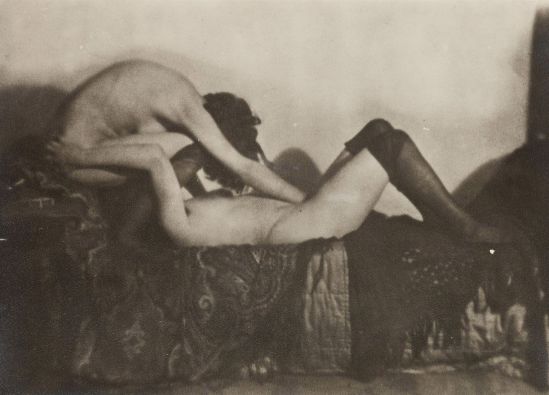
Germaine Krull – Les Amies, 1924

Germaine Krull – Les Amies, 1924

Germaine Krull – Les Amies, 1924
Germaine Krull – Les Amies, 1924

Germaine Krull. Les Amies. 1924.
Germaine Krull – Les Amies, 1924
Germaine Krull – Les Amies, 1924
Germaine Krull – Les Amies, 1924

Germaine Krull – Les Amies, 1924





 La Petite Mélancolie
Vous devez être connecté pour poster un commentaire.