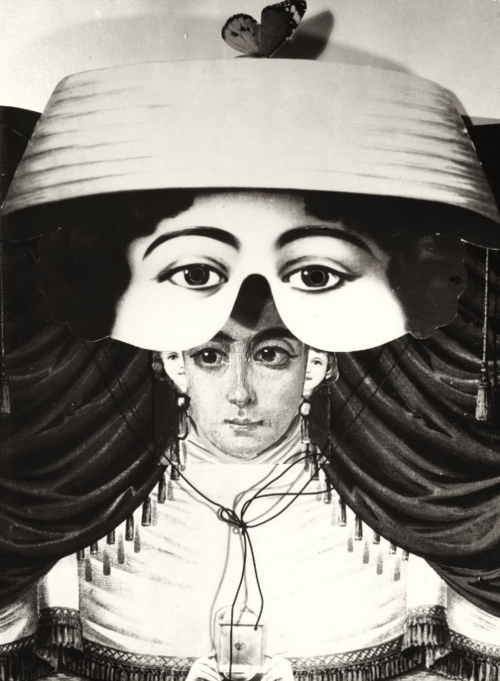
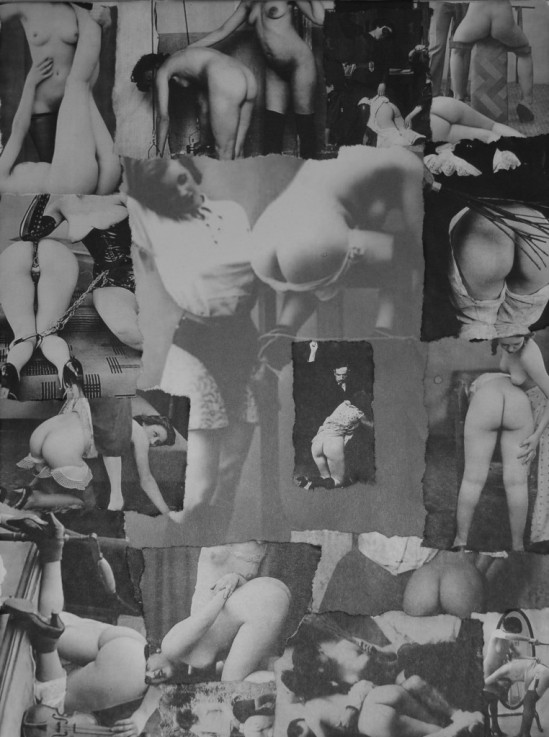
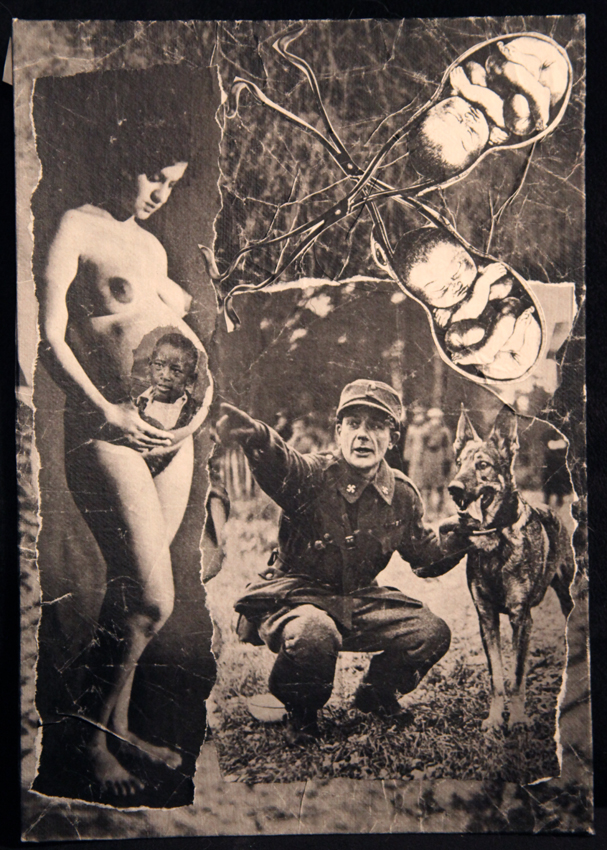
Werner Rohde – Harlequin, photomontage, collage 1975

Werner Rohde – Harlequin, photomontage, collage 1975


Hope Kroll

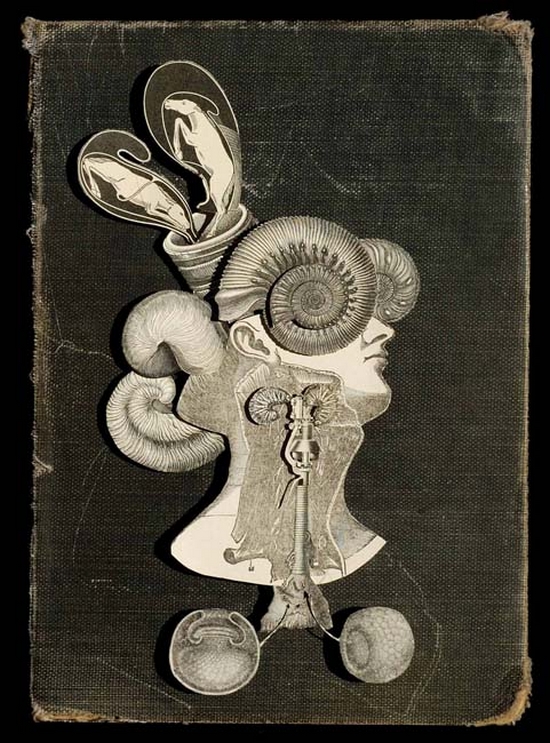
Hope Kroll– Beyond this place, 2007

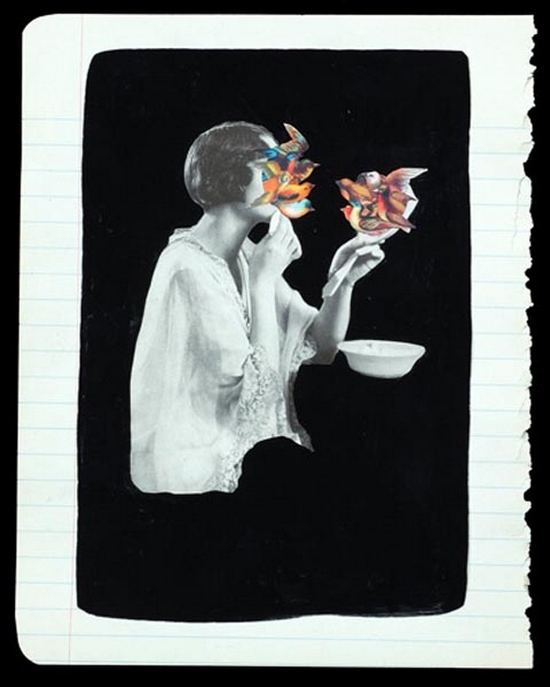
Hope Kroll-Mirror , 2006

Hope Kroll-Mirror , 2006

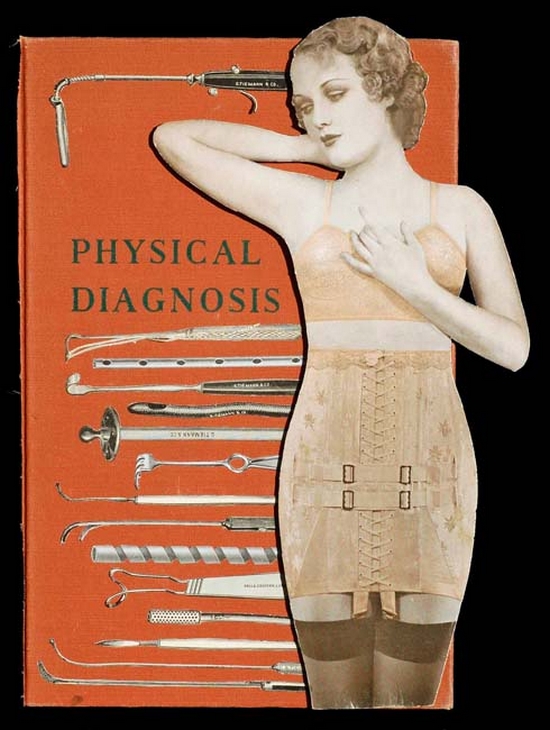
Hope Kroll-Physical Diagnosis,  2007

Hope Kroll-Physical Diagnosis, 2007

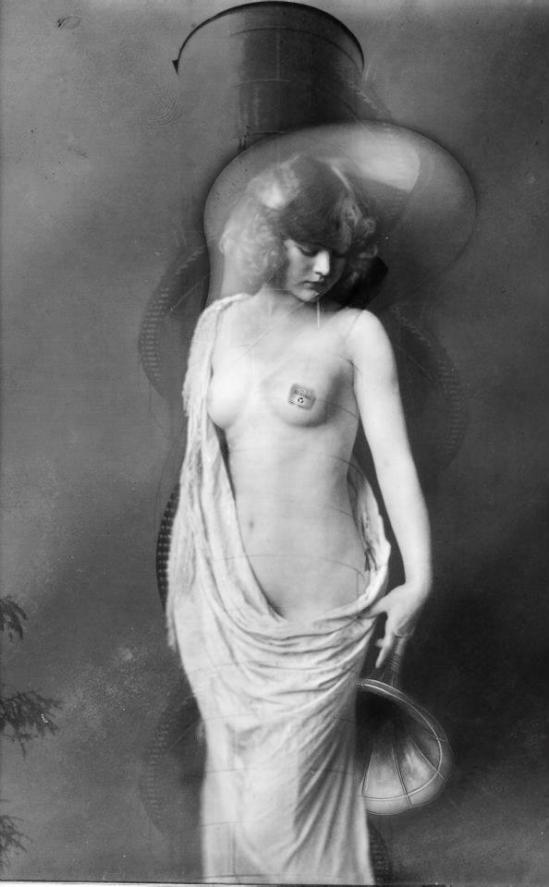
Unkwonw- photomontage [based on photography of alfred cheney johnston, 1920’s]

Unkwonw- photomontage [based on photography of alfred cheney johnston, 1920’s]

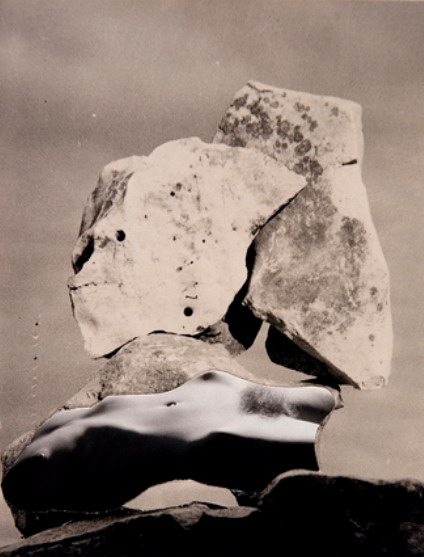
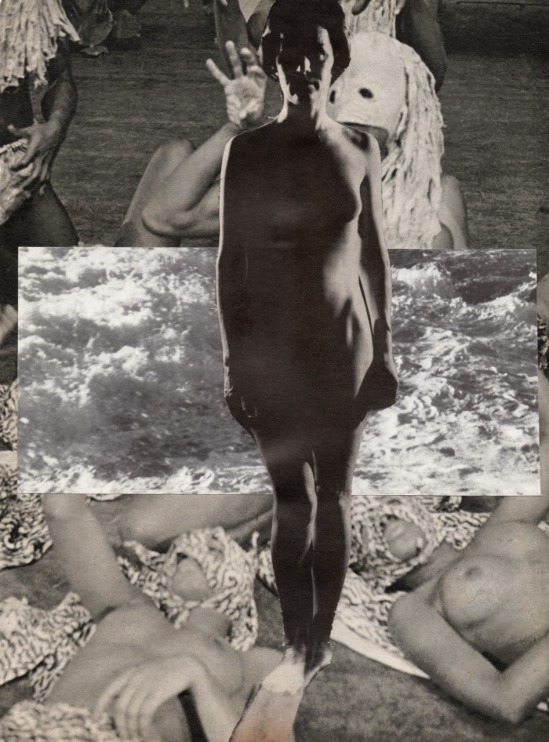
Raoul Ubac -Pierres île de Lesina (Dalmatie) ,1932/1935

« En 1932, Raoul Ubac entreprend de traverser l’Europe , à pieds, ( Italie, Suisse et Autriche…). En Dalmatie, sur l’île de Lesina, où il s’arrête quelques temps , ‘il effectue des « assemblages de pierres trouvées » qu’il photographie. “Cest là que naquit mon amour pour la pierre. J’y fis des assemblages de pierres trouvées. Je les dessinais et en fis des photographies”. La même année il s’inscrit à la Werkschule de Cologne où il apprend toutes les techniques photographiques (photogrammes, photomontages, solarisations, surimpressions, etc). Il réalise alors ses premiers photocollages comme cette image où le corps de la femme se mélange aux pierres de Dalmatie. » extrait ramanié du livre de Christian Bouqueret  « Raoul Ubac. Photographie », Paris, ed. Léo Scheer, 2000,

Raoul Ubac -Pierres de Dalmatie , Photocollage 1932/33  © Adagp, Paris

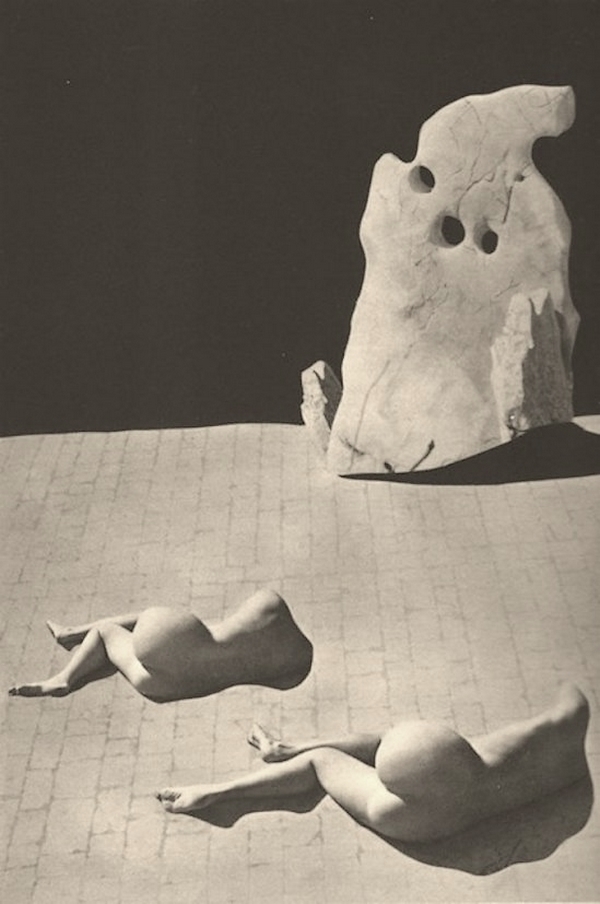
Raoul Ubac - Photomontage avec photographie des pierres de dalmatie , 1935.  Publiées dans Formes nues , Editions d'Art Graphique, Paris 1935.

Raoul Ubac – Photomontage avec photographie des pierres de Dalmatie , 1933-34.  Publiée dans Formes nues , Editions d’Art Graphique, Paris 1935. voir plus de photographies de ce livre Ici  © Adagp, Paris

Photographie de Raoul Ubac prise sur l’île de Lesina en Dalmatie vers 1935.

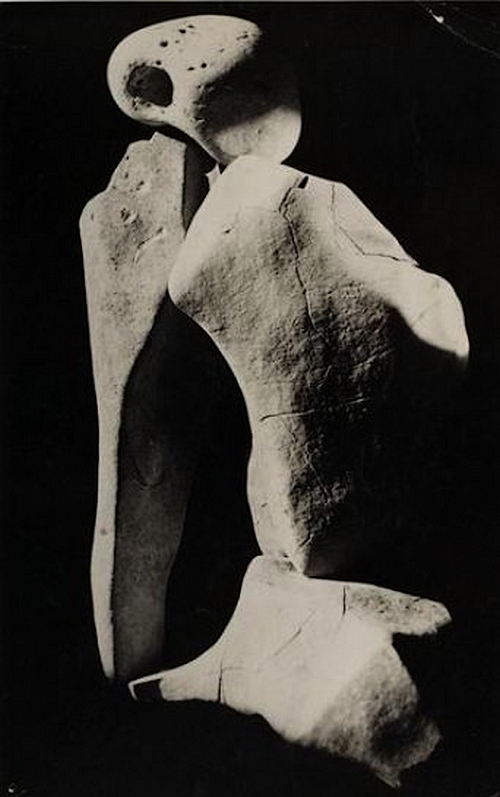
Raoul Ubac- Pierres dressées. prise sur l’île de Lesina en Dalmatie vers 1933 ( collection André Breton)  © Adagp, Paris

Raoul Ubac - Pierre de Dalmatie II, 1932

Raoul Ubac – Pierre de Dalmatie II, 1932 © Jacqueline Hyde © Adagp, Paris

Raoul Ubac - Pierre de Dalmatie I, 1932-33

Raoul Ubac – Pierre de Dalmatie I, 1932-33 © Jacqueline Hyde © Adagp, Paris

Raoul Ubac - Pierres de Dalmatie III,1933

Raoul Ubac – Pierres de Dalmatie III,1933 © Jacqueline Hyde © Adagp, Paris

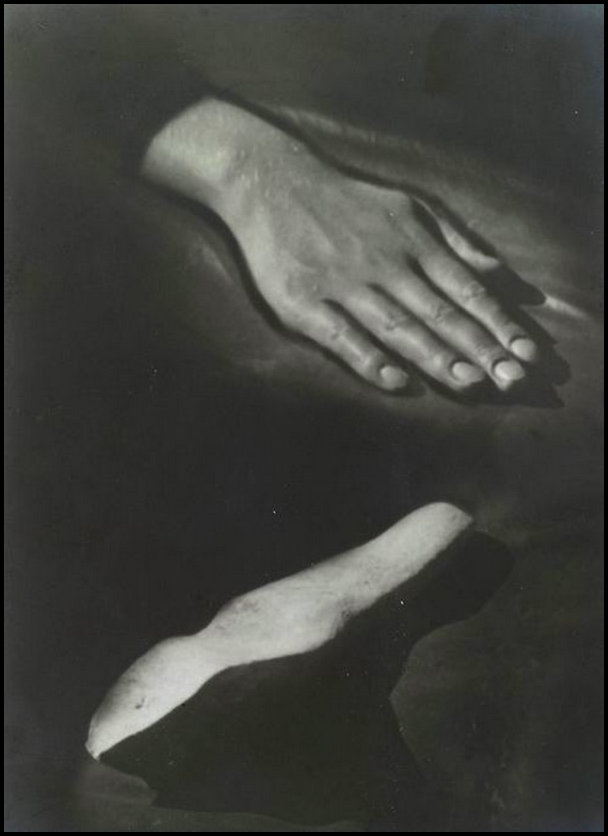
Raoul Ubac - Main et Pierre (de Dalmatie) , 1932-33

Raoul Ubac – Main et Pierre (de Dalmatie) , 1932-33 © Adagp, Paris

Laurence Le Guay ( Australian 1917-1990)

Le Guay commenced his career during the 1930s with surrealist photography,  and integred Dayne Studios in 1935 at the age of 18. He became a member of the prestigious Sydney Camera Circle and the Contemporary Camera Groupe, in 1938, which included Max Dupain and Olive Cotton, as well as several older photographers including Harold Cazneaux and Cecil Bostock. The Groupe was committed to practising and promoting a modern Australian approach to photography. Le Guay, like Dupain and other members, was interested in European modernism and wanted to find a way to use this style to create uniquely Australian images.

During the second war he was a war photographer for the RAAF. During WWII he was a war photographer for the RAAF.

After opening his studio in George Street, in Sydney , he became a partner with John Nesbett in 1947 and began to focus on fashion photography and other advertising work until the closure of the studio during the early 1970s. Up to this time Le Guay was Sydney’s leading fashion photographer. He then concentrated on publishing books on his photography, editing photographic books and magazines, and giving lectures.

He Awarded the Commonwealth Medal for his contributions towards photography in 1963, prominent Australian photographer   // From Book  by Newton, « Shades of Light » 1998


Laurence Le Guay -Model With Spiny Plant,1960s. Vintage silver gelatin print

Laurence Le Guay -Model With Spiny Plant,1960s. Vintage silver gelatin print

Laurence Le Guay- [Future Fashion], 1960s. Vintage silver gelatin print

Laurence Le Guay- [Future Fashion], 1960s. Vintage silver gelatin print

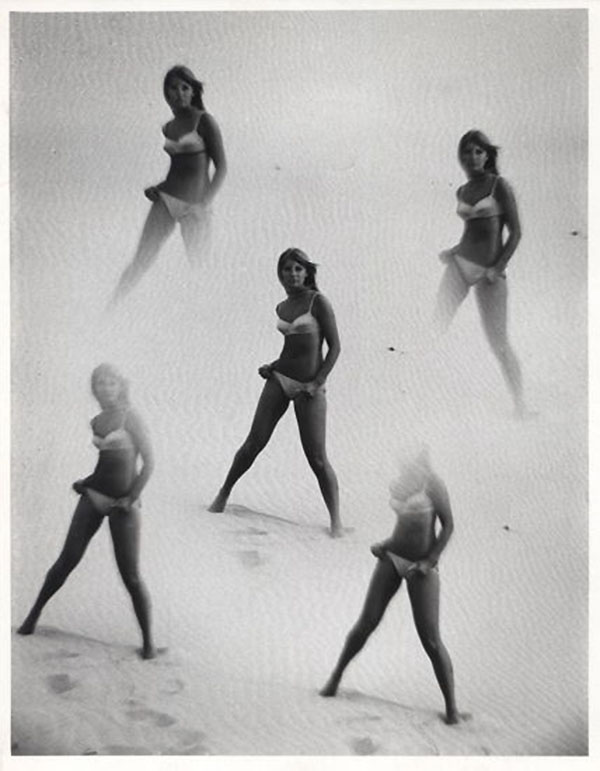
Laurence Le Guay- Quintet Of Bikinis, 1960s. Vintage silver gelatin print.

Laurence Le Guay- Quintet Of Bikinis, 1960s. Vintage silver gelatin print.

Laurence Le Guay- Marietta Nagel, Half-Indonesian Model, c1960s. Vintage silver gelatin

Laurence Le Guay- Marietta Nagel, Half-Indonesian Model, c1960s. Vintage silver gelatin

Laurence Le Guay- Marietta Nagel, Young Lovers In The Grass,1960s. Vintage silver gelatin print

Laurence Le Guay- Marietta Nagel, Young Lovers In The Grass,1960s. Vintage silver gelatin print

Laurence Le Guay- Dance movement , 1946


Laurence Le Guay- No. 2 Nude, 1949

Laurence Le Guay- No. 2 Nude, 1949

Laurence Le Guay- No. 2 Nude, 1949

Laurence Le Guay- No. 2 Nude, 1949

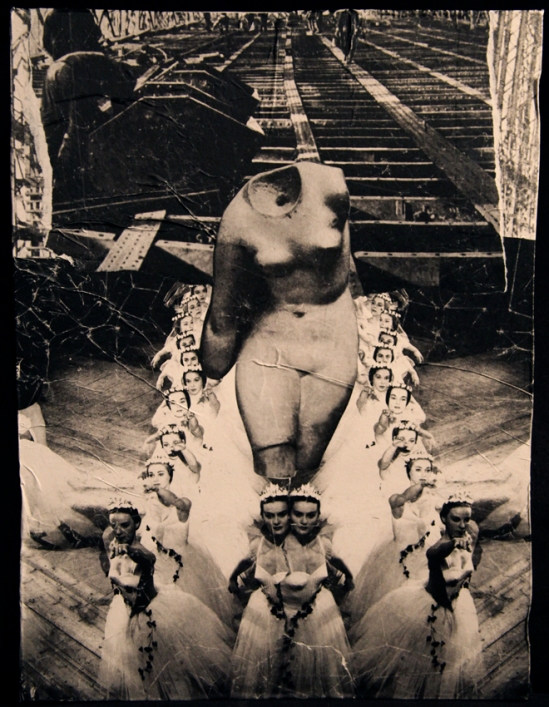
Laurence Le Guay- Sylphides 1940s photomontage, gelatin silver

Laurence Le Guay- Sylphides 1940s photomontage, gelatin silver


‘The progenitors’ is one of a series of montage works that Le Guay produced on the theme of modernism and the human condition. In the image, the nude man and woman are positioned as massive figures within an industrial landscape. The woman looks skyward with one hand pressed to her temple, while the man is seated at her feet and gazes up at her and the factory towers. The pose of the woman echoes the towers of the factory behind her, while the light and cloud suggest the enlightenment of the industrial world. The implication is that the couple are a modern Adam and Eve, with their ability to produce a new Australian race intrinsically linked to the productive capabilities of the modern industrial machines behind them.

« The title of Le Guay’s work potently suggests the complex mix of issues regarding race, heredity and modernity that circulated during the 1930s … A progenitor can mean a spiritual, political or intellectual predecessor and, in this context, the couple offer the viewer the reassuring promise of future prosperity. »  From Isobel Crombie in « Body culture: Max Dupain, photography and Australian culture, 1919–1939″, Peleus Press , 2004

Laurence Le Guay- The progenitors , 1938 gelatin silver photograph, toned montage

Laurence Le Guay- The progenitors , 1938 gelatin silver photograph, toned montage

Laurence Le Guay- No title (War montage with child and soldier) , 1939,gelatin silver photograph

Laurence Le Guay- No title (War montage with child and soldier) , 1939,gelatin silver photograph

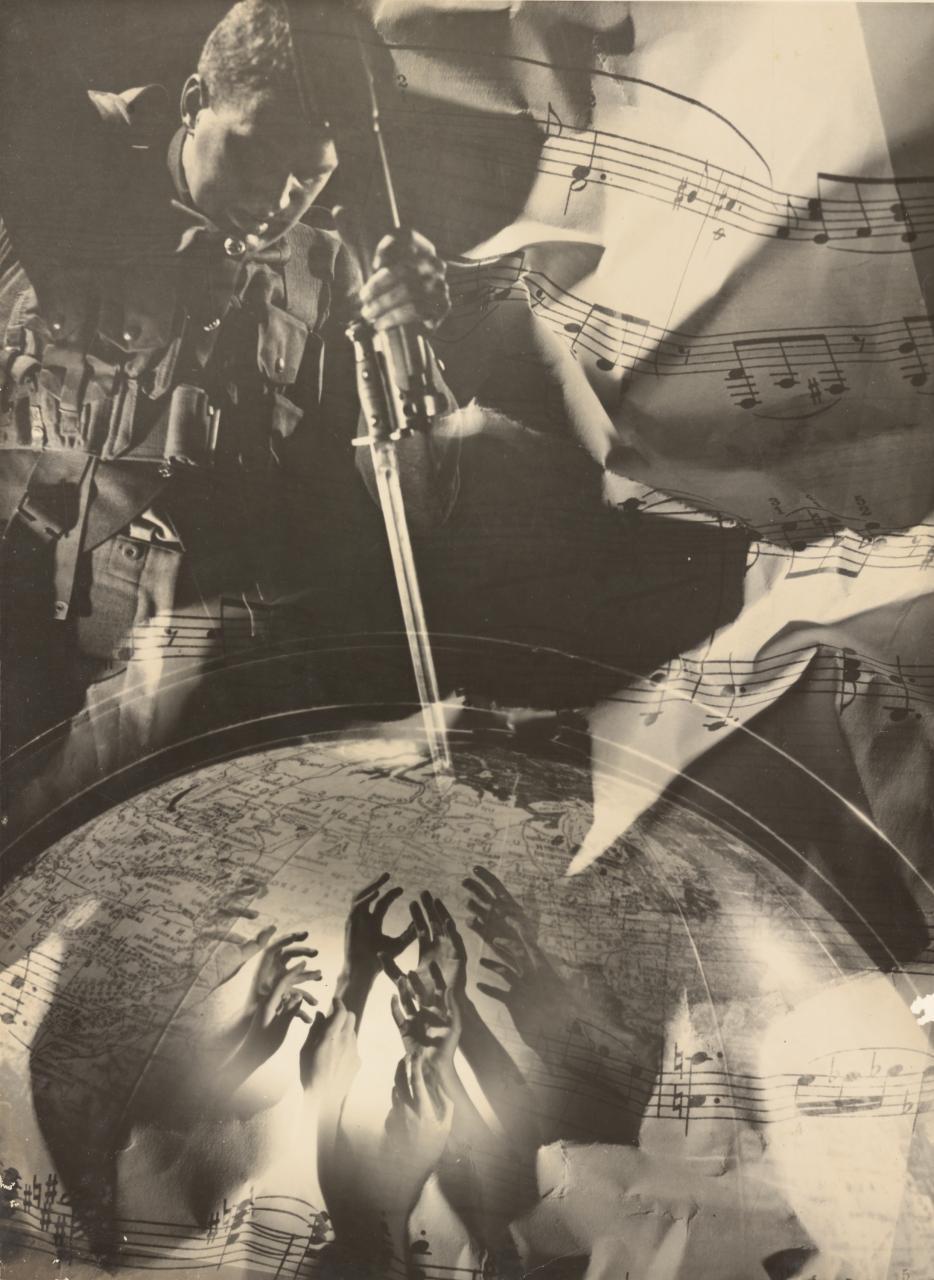
Laurence Le Guay- No title (War montage with globe), 1939 gelatin silver photograph

Laurence Le Guay- No title (War montage with globe), 1939 gelatin silver photograph

Laurence Le Guay- Background for Birth, Published in Photograms of the Year 1940

Laurence Le Guay- Background for Birth, Published in Photograms of the Year 1940


Site et Ici et Ici


Claude Cahun

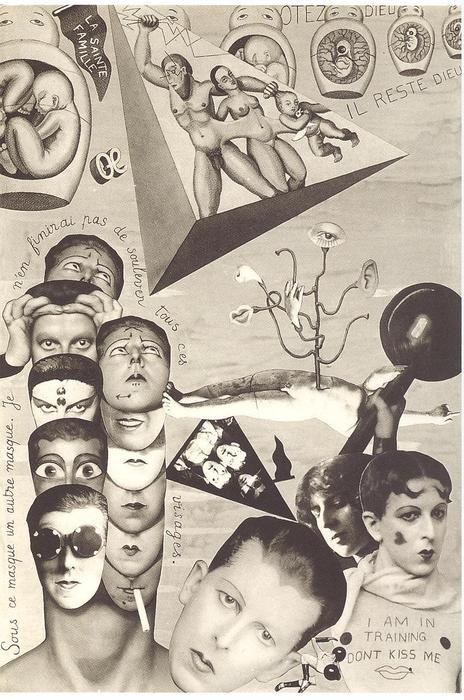
« Dans la nuit noire. En attendant de voir clair, je veux me traquer, me débattre […]. Je ne voudrais coudre, piquer, tuer qu’avec l’extrême pointe. Le reste du corps, la suite, quelle perte de temps ! Ne voyager qu’à la proue de moi-même. »

Claude Cahun, Aveux non avenus

Claude Cahun - Aveux non avenus , photomontage ( réalisé entre 1919 et 1929), publié en 1929

Claude Cahun – Aveux non avenus , photomontage ( réalisé entre 1919 et 1929), publié en 1929


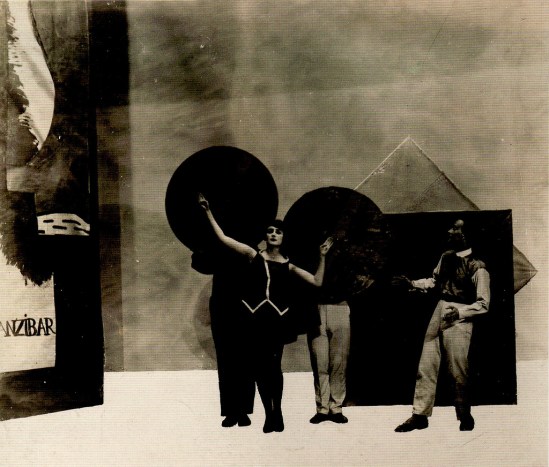
Jaroslav Rössler- scene from Les mamelles de Tiresias by Apollinaire, costumes and sets by Karel Teige, Otakar Mrkvička, František Zelenka, at Liberated Theater, Prague, 1926

Jaroslav Rössler– scene from Les mamelles de Tiresias by Apollinaire, costumes and sets by Karel Teige, Otakar Mrkvička, František Zelenka, at Liberated Theater, Prague, 1926

Stepán Bohumil (1913 – 1985)

« He was born in Křivoklát in Central Bohemia and studied at the Ukrainian Academy of Fine Arts and the private Rotter Advertising School in Prague before becoming a painter, graphic artist and illustrator.He published his first drawings in student magazine H2SO4. He exhibited figural composition in foyer of theatre D-38 in 1937. After the war he has worked on political posters and caricature.

In the early 1960s, like other Czechoslovakian graphic artists, he designed film posters that combine drawn and collage elements. Collage became his focus and his collage-drawings and cartoons appeared in publications such as the satirical magazine Trn (Thorn), Mladý svět (Young World) and Plamen (Flame), a literary magazine. His book projects based on this style include Praštěné pohádky (Wacky Fairy Tales, 1965) by Ludvík Aškenazy and Gulliverovy cesty (Gulliver’s Travels, 1968). In 1969, Štěpán emigrated to Munich, where he had a second career illustrating books and magazines; this also calls for research. Publications from his German period include a book of cartoons (1970) and Familienalbum (Family Album, 1971) composed in the surreal collage style of Galerie — it features a few of the same images. » By  Rick Poynor

Familienalbum (Family Album, 1971)

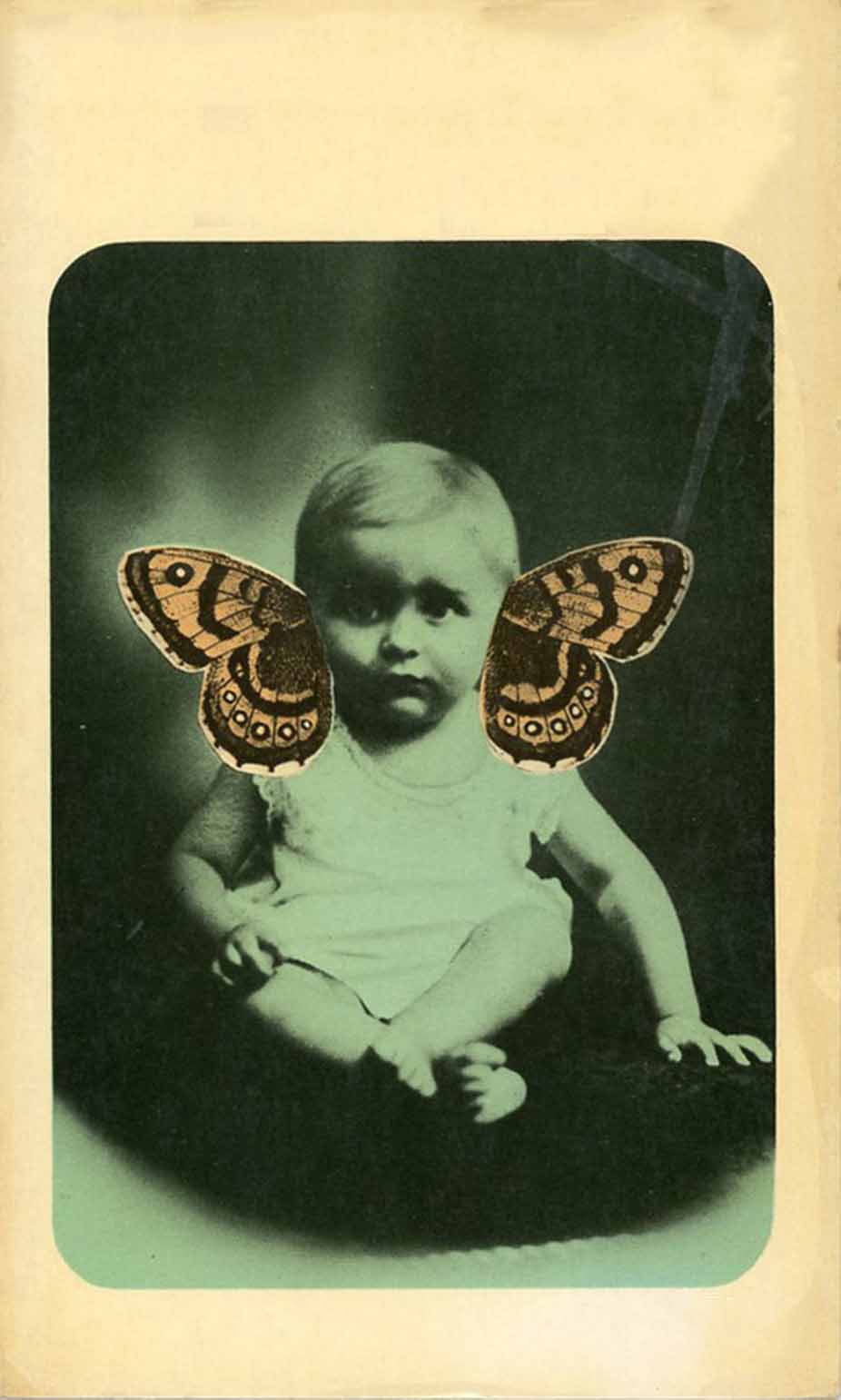
Stepán Bohumil-from Familienalbum by Bohumil Štěpán, published by Deutscher Taschenbuch Verlag, 1971 cover

Stepán Bohumil-from Familienalbum by Bohumil Štěpán, published by Deutscher Taschenbuch Verlag, 1971 cover

Stepán Bohumil-from Familienalbum by Bohumil Štěpán, published by Deutscher Taschenbuch Verlag, 1971  " Sister Amalie could not marry because she had a square head. But with a tablecloth she looked very respectable. A young man even shot himself because of her (when she removed the tablecloth).”

Stepán Bohumil-from Familienalbum by Bohumil Štěpán, published by Deutscher Taschenbuch Verlag, 1971
 » Sister Amalie could not marry because she had a square head. But with a tablecloth she looked very respectable. A young man even shot himself because of her (when she removed the tablecloth).”

Stepán Bohumil-from Familienalbum by Bohumil Štěpán, published by Deutscher Taschenbuch Verlag, 1971 “In our family, we usually reach an advanced age. Besides grandfather, great grandfather is still around. When he was 99 years old, we said he wouldn’t be around much longer. Today he is 199 and still with us.”

Stepán Bohumil-from Familienalbum by Bohumil Štěpán, published by Deutscher Taschenbuch Verlag, 1971
“In our family, we usually reach an advanced age. Besides grandfather, great grandfather is still around. When he was 99 years old, we said he wouldn’t be around much longer. Today he is 199 and still with us.”

Stepán Bohumil-from Familienalbum by Bohumil Štěpán, published by Deutscher Taschenbuch Verlag, 1971 “Relatives in Prague had a child prodigy. He aroused general attention, not however because of his artistry, but because of his appearance.”

Stepán Bohumil-from Familienalbum by Bohumil Štěpán, published by Deutscher Taschenbuch Verlag, 1971
“Relatives in Prague had a child prodigy. He aroused general attention, not however because of his artistry, but because of his appearance.”


Stepán Bohumil-from Familienalbum by Bohumil Štěpán, published by Deutscher Taschenbuch Verlag, 1971 “My Uncle Siegfried was a well-known personality. But although everyone knew him, no one knew him when he put his shoes on.”

Stepán Bohumil-from Familienalbum by Bohumil Štěpán, published by Deutscher Taschenbuch Verlag, 1971
“My Uncle Siegfried was a well-known personality. But although everyone knew him, no one knew him when he put his shoes on.”

Stepán Bohumil-from Familienalbum by Bohumil Štěpán, published by Deutscher Taschenbuch Verlag, 1971 “When Uncle Schwarzer flirted with Aunt, he always came home all sweaty, she made him so warm.”

Stepán Bohumil-from Familienalbum by Bohumil Štěpán, published by Deutscher Taschenbuch Verlag, 1971
“When Uncle Schwarzer flirted with Aunt, he always came home all sweaty, she made him so warm.”

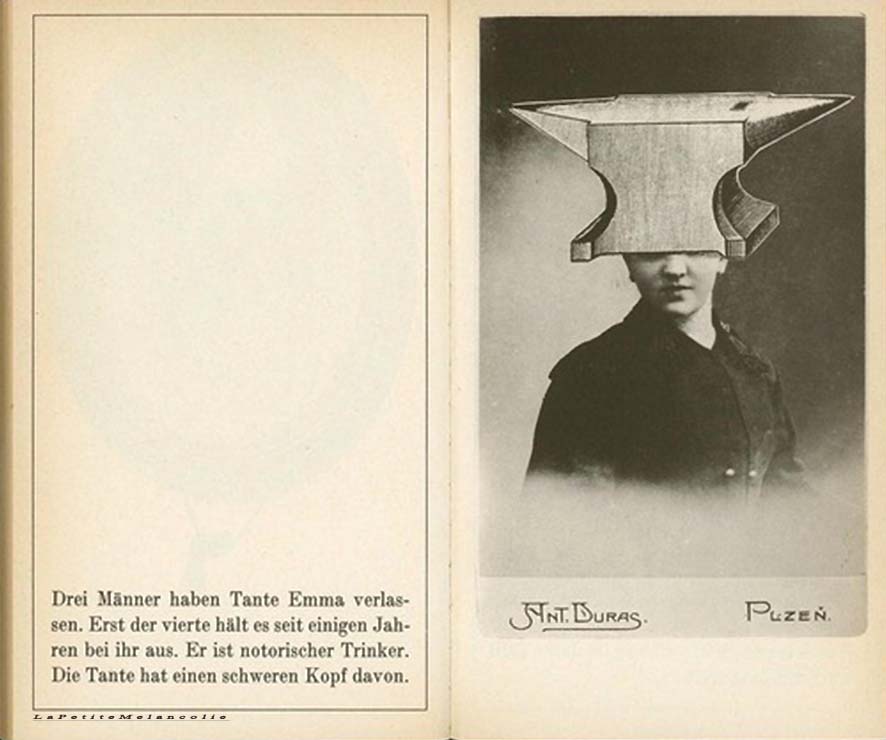
Stepán Bohumil-from Familienalbum by Bohumil Štěpán, published by Deutscher Taschenbuch Verlag, 1971 “Three men have left Aunt Emma. Only the fourth one could stand her for a few years. He is a notorious drinker. She has a heavy head because of it.”

Stepán Bohumil-from Familienalbum by Bohumil Štěpán, published by Deutscher Taschenbuch Verlag, 1971
“Three men have left Aunt Emma. Only the fourth one could stand her for a few years. He is a notorious drinker. She has a heavy head because of it.”

**********

Stepán Bohumil- Unfreiheitsgefühl ,for the satirical magazine PARDON in the 1960s

Stepán Bohumil– Unfreiheitsgefühl ,for the satirical magazine PARDON in the 1960s

gallery and here

Brianna Leigh Smith

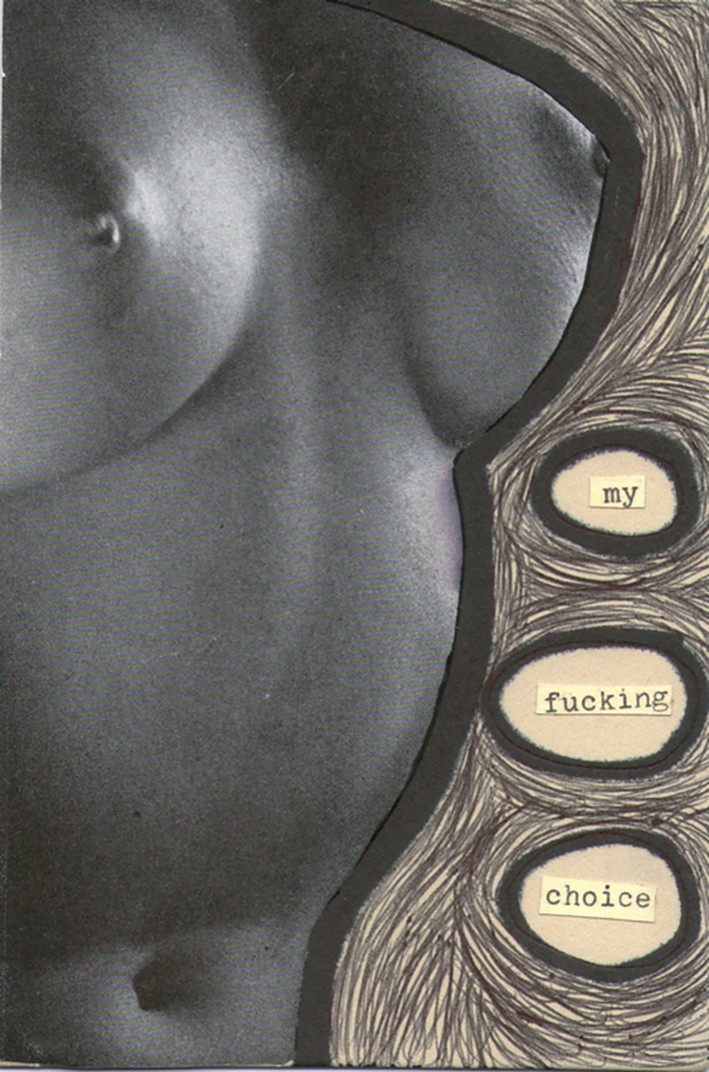
Brianna Leigh Smith – My body is not your vessel, 2012

Arturo H. Medrano


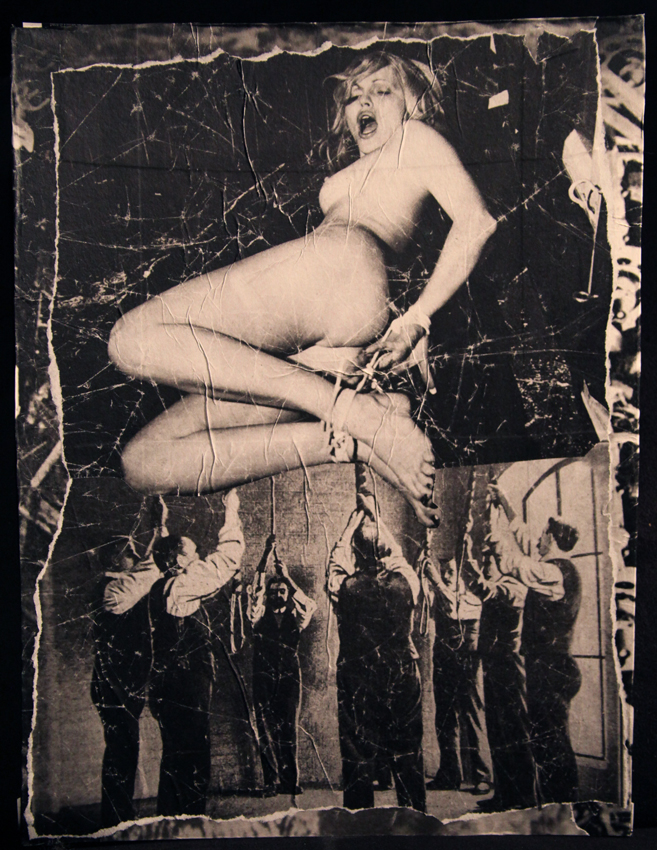
Bondage Culture – Collage no.2 “They Find Peace”

Bondage Culture – Collage no.2 “They Find Peace”

Gaëlle Faure

« Enfant, Gaëlle rêve d’être astronaute, paléontologue, détective, sculpteur ou peintre.
Son environnement familial lui fait très tôt goûter à deux univers, l’un scientifique et l’autre artistique, dans lesquels elle s’engouffre avec enthousiasme.
Son parcours ne pouvait alors qu’être atypique : des études universitaires d’archéo-anthropologie la mènent curieusement à une formation de graphisme.

Sa fonction de directrice artistique, depuis plus de 12 ans, lui permet alors d’enrichir ses marottes.
Créer devient son principal mode d’expression : photographie et collage la passionnent tandis que les meubles chinés trouvent entre ses mains une seconde vie.

Sa passion des vieux livres lui sert à débusquer des illustrations surannées au vocabulaire fort varié. Des pulps magazines, en passant par la chimie, la botanique, ou la sténographie, elle sait dénicher ses images dans les livres et magazines trop fanés pour trouver lecteur, et donner ainsi une seconde vie à des pépites depuis longtemps oubliées.
C’est la matière première de ses créations décalées. Chacune d’elles raconte sa petite histoire, avec sa douceur et son humour ravageur.

Dans ses collages, les expressions de la langue française jouent les rébus tandis que des pin-ups suspendues à des astéroïdes disputent la gloire à des chasseurs ayant perdu la tête, mais pas leur sens de l’humour. Mais point de passéisme au milieu de ses vieux papiers.
Gaëlle puise son inspiration dans les images du passé mais offre un traitement contemporain et décalé à ses anachronismes, en évitant toujours l’écueil de la nostalgie.

Si vous avez un jour le plaisir de l’accueillir chez vous, prenez garde toutefois à ce qu’elle ne déchire pas discrètement un bout de votre papier peint, surtout si celui-ci est fleuri et abîmé.

Gaëlle vit et travaille à Paris, comme indépendant. » via Gaëlle Faure website lien ci dessous

Mon choix est très exhaustif et ne représente pas le large éventail du travail de cette artiste Parisienne, rayonnant entre le collage, la photographie, le design, elle a plus d’une code à son arc, et de sublimes flèches !!! regardez donc…. et n’hesitez pas à aller decouvrir son site très complet.
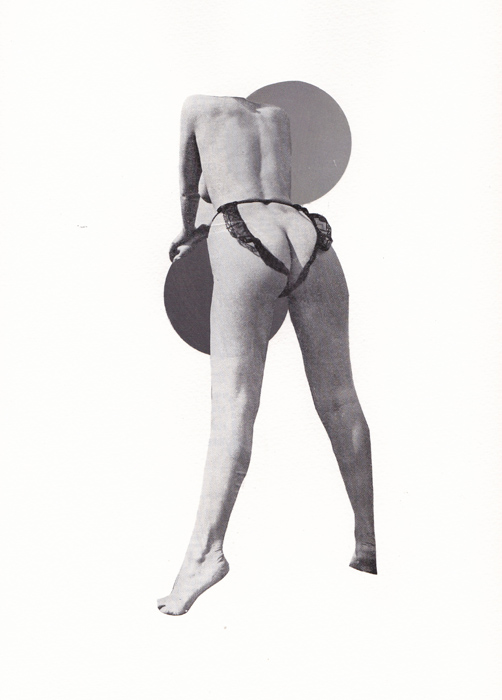
© Gaëlle Faure- Derrière,Série Histoires de fesses ,  mai 2012.

© Gaëlle Faure- Devant – derrière,Série Histoires de fesses , 2012

© Gaëlle Faure-  Les seins qui pointent , Série Histoires de fesses , 2012

© Gaëlle Faure-Série Histoires de fesses , 2012

© Gaëlle Faure- Exercices de la vue,Série Histoires de fesses , 2012

© Gaëlle Faure- Ronds de Jambes,Série Histoires de fesses , 2012

© Gaëlle Faure-Gambettes Série Histoires de fesses , 2012

© Gaëlle Faure-L’allongée ,Série Histoires de fesses ,2012

© Gaëlle Faure- hula-hoop, Juin,2012

© Gaëlle Faure-Sans Titre/Les-Erotiques, 2011

© Gaëlle Faure- Souvenirs de vacances, 2012

© Gaëlle Faure- Omelette, 2011

Tous droits réservés © Gaëlle Faure

Son site Gaëlle Faure

sur les réseaux sociaux Gaëlle Faure & Gaëlle Faure

Mikko Aspa

Mikko Aspa- Untitled collage, 2011

Mikko Aspa- Untitled collage, 2011


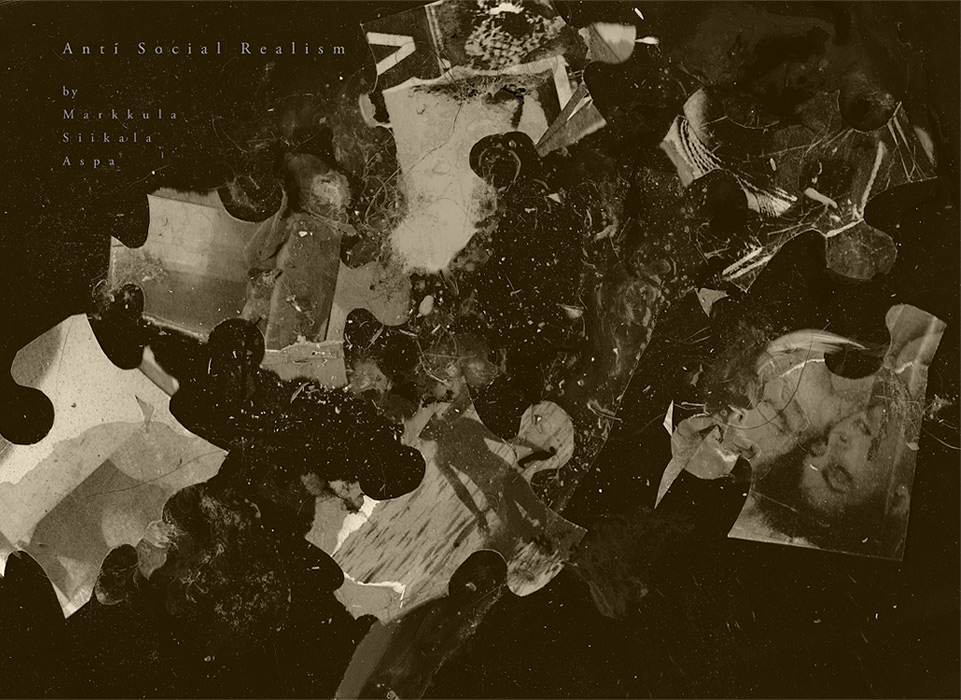
Mikko Aspa Anti-Social Realism by (Aspa, Markkula, Siikala)

Mikko Aspa – Anti-Social Realism by (Aspa, Markkula, Siikala)

Mikko Aspa- Anti-Social Realism by (Aspa, Markkula, Siikala)

Mikko Aspa-Anti-Social Realism by (Aspa, Markkula, Siikala)

Anti-Social Realism by (Aspa, Markkula, Siikala)

Anti-Social Realism by (Aspa, Markkula, Siikala)

Source et Plus

André Breton- Autoportrait L’écriture automatique, vers 1938 & Les pas perdus coagulent


“Je n’aime bien entendu, que les choses inaccomplies, je ne me propose rien tant que de trop embrasser.
L’étreinte, la domination seule sont des leurres.
Et c’est assez, pour l’instant, qu’une si jolie ombre danse au bord de la fenêtre par laquelle je vais recommencer chaque jour à me jeter.”

André. Breton – Les pas perdus coagulent

André Breton- Autoportrait L’écriture automatique, vers 1938 (photomontage avec l’actrice Phyllis Haver).

André Breton- Autoportrait L’écriture automatique, vers 1938 (photomontage avec l’actrice Phyllis Haver).

Hans Bellmer

Hans Bellmer – Paul ALTHAUS. Cover for Jack der Aufschlitzer. Rund zwei Dutzend Lieder mit Zeichnungen von Rudolf Schlichter,  Berlin Ed° Elena Gottschalk Verlag, 1924. (photomontage )

via Christies